A heavy diesel engine hums through the floorboards of a pickup truck idling on a gravel shoulder in western Pennsylvania. You tap the steering wheel, waiting for your transmission to clear, when your phone buzzes on the dashboard mount with an unfamiliar local exchange. You answer on speakerphone, barking a clear, measured greeting into the microphone while the defroster rattles against the windshield.
Two seconds later, a sharp digital tone clicks into the receiver, followed by flat dead air. The line drops before an interviewer or interactive automated prompt even introduces itself.
You likely assume the call dropped because of spotty rural cell tower coverage or an overzealous telemarketer algorithm. In reality, your voice reached a predictive dialer server rack in an air-conditioned facility hundreds of miles away with crystal clarity. Yet, you were systematically deleted from the sample pool before you could register a single opinion.
The culprit is a quiet technological compromise: automated dynamic noise gates tuned to strip out continuous ambient frequencies. What survey firms treat as routine acoustic signal cleanup has quietly become a massive structural filter that silences working people on the move.
The Clean-Room Illusion: Why Polling Algorithms Discard Hard Work
For two decades, public polling struggled through its first great crisis: the death of the landline. When survey houses finally adapted by transitioning their budgets toward cell phones and interactive voice response systems, they ran into a stubborn physical reality. Landline calls happened in quiet hallways or carpeted living rooms. Cell phone calls happen anywhere, and anywhere is notoriously loud.
To protect call-center staff from hearing damage and train natural language speech-to-text models on pristine audio, polling vendors deployed aggressive audio preprocessing filters. These digital noise gates measure incoming decibel levels and spectral consistency. If the background noise contains low-frequency hums, pneumatic hisses, or the distinctive rumble of an open highway, the software flags the line as unviable and instantly severs the connection.
Think of it as a screen door woven so tight it keeps out not just bugs, but the breeze itself. The pollster wants to measure public sentiment, yet their collection tools require a soundscape that belongs almost exclusively to white-collar remote workers sitting in carpeted, silent home offices.
- Franklin Roosevelt fireside scripts enforce dramatic voice drops with handwritten double underlines
- Congressional constituent office days shift lawmaker votes through coordinated local delegation visits
- James O’Keefe undercover videos spark fierce donor debates over nonprofit investigative tactics
- Lake Ontario shoreline legislation triggers urgent property rights battles over rising water baselines
- Iran president diplomatic outreach forces sudden Washington strategy pivots over frozen trade sanctions
When an automated dialer discards a call because of background noise, that interaction is coded not as a completed interview or even an active refusal, but as an unusable connection. It vanishes from the response denominator entirely, warping who actually counts as contactable across vast geographic zones.
The Frequency Trap: Inside Marcus Vance’s Acoustic Audit
Marcus Vance, a forty-two-year-old survey operations engineer based in Columbus, spent eighteen months auditing audio dropout logs across seven regional election cycles. What he uncovered was an acoustic profile that mapped directly onto economic lines rather than political ones.
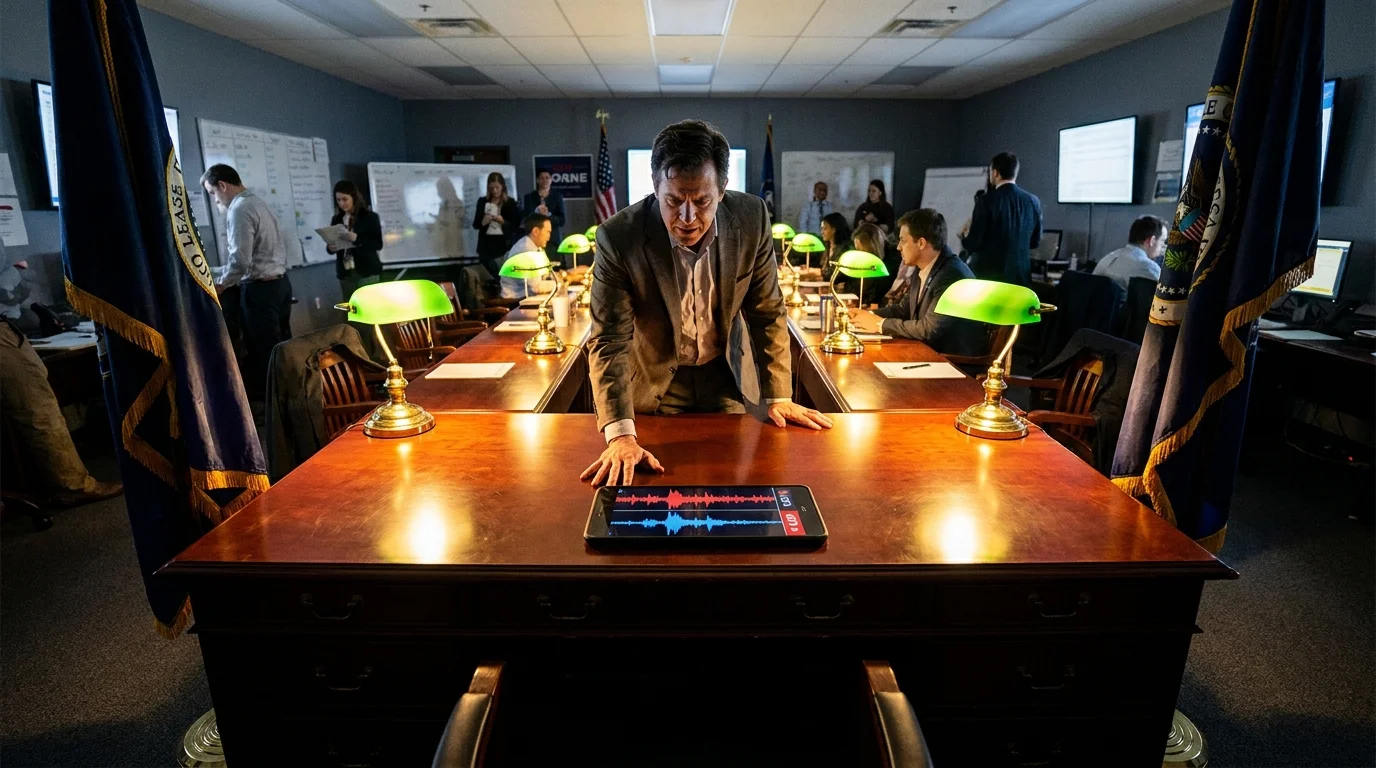
Marcus tracked thousands of automated calls that terminated within three seconds of pick-up. By pulling the raw waveform data before the server dropped the line, he discovered the disconnections were not user hang-ups. Instead, they were algorithmically generated rejections triggered by steady acoustic energy resting between forty and one hundred and twenty hertz.
That exact frequency window belongs to heavy equipment, commercial lawnmowers, tractor power take-offs, and older pickup truck exhaust systems. Marcus found that an ironworker answering on a hands-free headset or a grain farmer checking his phone on a combine was seven times more likely to get severed by an automated filter than an accountant sitting at a kitchen island.
The system was never designed to be biased; it was simply optimized for clean transcripts. But in chasing pristine waveforms, polling firms inadvertently engineered a system that silences working-class reality under the guise of technical efficiency.
Three Acoustic Environments Polling Consistently Ignores
The divergence between headline survey numbers and election-day turnout often boils down to which environments survive the audio processor. To understand how whole demographics get filtered out, look at the physical spaces where working people take their calls.
1. The In-Cab Commuter
Millions of rural and suburban blue-collar workers spend ninety minutes a day behind the wheel of older trucks and utility vans. Cabin acoustics in these vehicles feature low-end tire roar and wind turbulence against large side mirrors. When automated political surveys ring during peak afternoon drive times, standard mobile noise suppression struggles to separate voice formants from vehicle resonance. The polling dialer detects constant background volume, registers the channel as corrupted, and disconnects.
2. The Active Job Site
Framers, electricians, mechanics, and warehouse operators rarely sit at desks. When they answer a mobile survey, their microphones pick up ambient ventilation blowers, hydraulic lifts, and distant air tools. Because these noises lack the rhythm of human speech, speech-recognition survey bots treat the channel as high-noise interference. Rather than asking the participant to repeat themselves, modern predictive dialers are instructed to drop the call and roll immediately to the next number on the sheet to maintain cost-per-minute targets.
3. The Multi-Generational Rural Household
In rural and working-class homes where landlines have vanished, living spaces are dynamic. Background sounds from older wood-stove blowers, window air units, barking hunting dogs, and active family rooms create a dense acoustic backdrop. Polling engines running automated voice recognition flag these overlapping acoustic layers as non-human chatter or line cross-talk, promptly ending the interview before the first question finishes playing.
Reading the Gaps: A Tactical Toolkit for Polling Skeptics
If you want to understand what the polls are actually telling you, you have to look past the top-line percentages and examine the collection mechanics. When you see a poll showing a sudden, baffling drop in working-class or rural engagement, use this checklist to spot acoustic bias:
- Check the Contact Methodology: Look at the fine print for IVR (Interactive Voice Response) and automated mobile dialing. Fully automated interactive calls drop up to 30 percent more noisy-environment respondents than live-human telephone operators.
- Examine the Education Weighting: If a poll shows an unusually low raw sample of non-college voters before mathematical weighting is applied, the vendor likely used aggressive automated audio screening filters.
- Scrutinize Call Duration Medians: Healthy polling methodologies report stable call completion times. If average call durations skew under three minutes for mobile samples, the questions were either stripped to the bone or complex respondent answers were prematurely clipped by voice-gate thresholds.
- Look for Multi-Modal Balances: Trust surveys that pair cell phone interviews with secure text-to-web links. Text-to-web lets the diesel mechanic or field hand answer while their machine is running, bypassing the acoustic filter entirely.
The Human Voice Beyond the Audio Gate
Modern political data often suffers from an obsession with tidy numbers. In an effort to automate public opinion and produce flawless spreadsheet outputs on shoe-string operational budgets, the survey industry traded the messy, loud reality of daily labor for the quiet compliance of home offices.
When you watch pre-election polling swing wildly back and forth, remember the diesel engine idling on the gravel shoulder. The citizen in that cab is not politically disengaged, apathetic, or unreachable. They picked up the phone, spoke clearly into the microphone, and were ready to be counted.
Real public sentiment does not live in an audio isolation booth. The sooner survey models learn to listen through the rumble of work, the closer our numbers will match the genuine pulse of the country.
The loudest mistake in modern polling is assuming that a quiet room represents a clearer truth.
| Key Point | Detail | Added Value for the Reader |
|---|---|---|
| Dynamic Audio Gating | Automated polling dialers discard calls with persistent 40Hz-120Hz background noise. | Explains why answering your phone on a job site or in a truck often results in immediate hang-ups. |
| Demographic Acoustic Skew | Pristine audio environments are heavily concentrated among remote, white-collar demographics. | Reveals why headline polls systematically under-sample active trade and rural workers prior to statistical weighting. |
| Multi-Modal Verification | Surveys that supplement phone audio with text-to-web collection bypass acoustic filters. | Provides a clear criteria to determine which public polls are mechanically reliable. |
Frequently Asked Questions
Why do automated polling calls hang up right after I say hello?
Most automated survey dialers use aggressive noise-gate filters. If the software detects continuous background noise like a car engine, shop fan, or outdoor machinery, it flags the line as low-quality and cuts the connection instantly.Does this mean rural and blue-collar voters are ignored?
They are not intentionally ignored, but their daily environments make them far more likely to be algorithmically dropped from mobile phone samples, leading to under-representation in raw polling data.Why don’t polling companies just lower their noise thresholds?
Lowering noise gates makes automated speech-to-text transcription less reliable and increases call durations, which raises operating costs for survey vendors running tight budgets.How do pollsters try to fix this gap after the fact?
Firms use statistical weighting to inflate the value of the few working-class respondents who did complete the survey, but this can magnify small, unrepresentative sub-samples.Which survey methods avoid background audio bias completely?
Text-to-web surveys, door-to-door canvassing, and live-interviewer calls with high-tolerance headsets capture noisy-environment voters far more accurately than automated interactive voice systems.