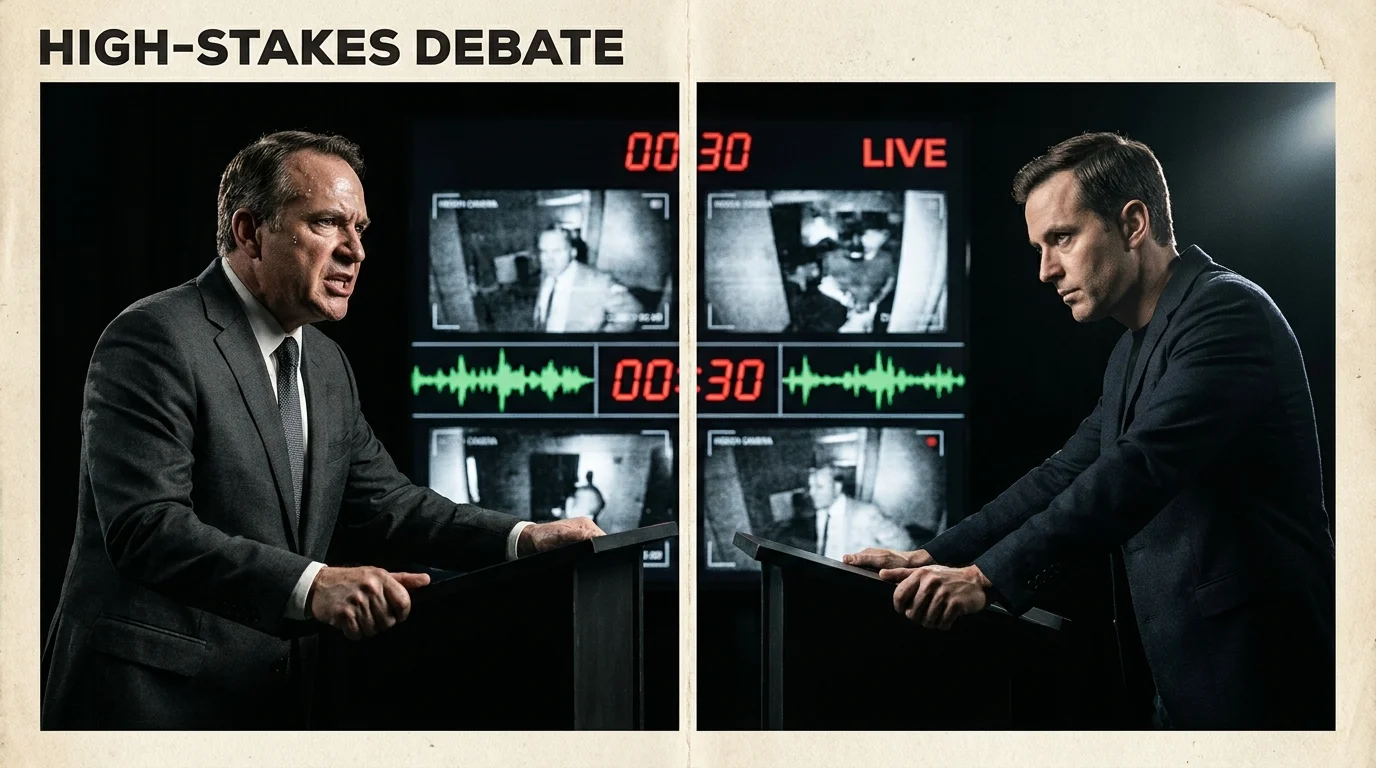
A muffled hum cuts through the dimly lit dining room as a concealed pinhole lens struggles to balance the harsh backlight of a restaurant chandelier. In the bottom left corner of the monitor, a thin green audio meter flickers erratically, spiking each time a server sets down a glass or an operative leans closer to coax a candid remark. It is grainy, shaky, and undeniably magnetic. When this raw footage hits social feeds, it does not just spark clicks; it triggers an immediate rush of adrenaline among political insiders and independent contributors alike.
You have likely felt the pull of these explosive clips. They present themselves as pure, unvarnished reality pulled directly from closed boardrooms and off-the-record campaign retreats. Yet behind the viral outrage lies a very different battleground—one measured not in retweets, but in six-figure pledges, legal indemnification clauses, and high-stakes donor meetings.
The release of new hidden-camera stings by James O’Keefe has exposed a silent fracture line across political finance. What looks like fearless watchdog journalism to a grassroots activist often looks like a balance-sheet catastrophe to an institutional foundation. As digital search volumes surge around these recordings, the real fight is quietly unfolding across mahogany boardroom tables where checks are written, held, or permanently cancelled.
The Balance Sheet vs. The Pinhole Lens: Rethinking Media Friction
For decades, political fundraising followed an unspoken law of predictability. Major donors gave to think tanks, legal funds, and traditional communication shops because institutional risk was kept at an absolute minimum. But modern guerrilla media turns that calculation upside down. Hidden-camera sting operations treat legal exposure not as a flaw to be avoided, but as the friction needed to spark viral liftoff.
When an investigator sits across from an unwitting target wearing a button-hole microphone, the resulting footage is designed to bypass editorial gatekeepers. For grassroots supporters, this direct line to unfiltered speech feels like authentic accountability. Yet for institutional political action committees, every secretly captured audio clip represents potential wiretapping suits, defamation claims, and two-party consent legal disputes that can drag nonprofit boards into costly discovery phases for years.
The Five-Dollar Donor and the Trust Fund Trustee
Consider Marcus Reed, a 52-year-old mid-tier wealth advisor from suburban Columbus who serves as treasurer for an independent conservative giving circle. Last spring, his group faced an internal revolt when half their membership demanded a reallocation of $150,000 away from standard direct-mail advocacy and toward independent investigative units using undercover methods. The younger members saw raw undercover feeds as the only tactic producing measurable cultural impact, while the veteran trustees refused to sign checks without strict editorial vetting and written legal indemnification. That single board meeting ended without a vote, paralyzing their entire budget cycle.
- Lake Ontario shoreline legislation triggers urgent property rights battles over rising water baselines
- Iran president diplomatic outreach forces sudden Washington strategy pivots over frozen trade sanctions
- Federal minimum wage proposals clash over regional living costs versus flat hourly floors
- Iran president diplomatic outreach forces sudden Washington strategy pivots over frozen trade sanctions
- Federal minimum wage proposals clash over regional living costs versus flat hourly floors
Marcus’s dilemma illustrates how modern activist methods divide political capital into two distinct camps:
Donor Profiles: How Checkbooks Are Splitting
The Grassroots Firebrand
Small-dollar contributors generally view hidden-camera confrontations as proof of courage. For an individual giving $25 a month, legal risk is an abstraction; they want unfiltered confrontation that breaks through political talking points. They measure return on investment purely through engagement spikes, view counts, and institutional panic.
The Institutional Purist
Traditional foundations and high-net-worth philanthropists operate under fiduciary duty. For these entities, a single adverse court ruling or an embarrassing outtake can jeopardize tax-exempt status under 501(c)(3) guidelines. Institutional capital craves clean attribution and verified sourcing over explosive, unvetted confrontation.
The Strategic PAC Pragmatist
Political action committees walk the middle line. They understand the unmatched voter mobilization power of a viral exposé during an active election cycle, but they demand firewall separation. Instead of directly financing undercover operations, they increasingly wait for independent releases, then amplify the aftermath through independent expenditure ads.
Mindful Navigation of Viral Exposé Cycles
Understanding the impact of sting journalism requires reading past the emotional surge of the reveal. When evaluating the credibility and institutional viability of an undercover media dump, adopt a clear, three-part verification framework:
- Check the Jurisdiction: Determine whether the recording was gathered in a one-party or two-party consent state to assess impending legal vulnerability.
- Analyze the Cut Frequency: Watch for unedited conversational pacing rather than rapid jump-cuts that obscure context.
- Track the Institutional Reaction: Note whether targeted organizations issue factual retractions or purely attack the recording methodology.
- Audit the Funding Structure: Look at whether the investigative entity is funded via 501(c)(3) educational grants, 501(c)(4) social welfare entities, or direct LLC commerce.
By applying this mental filter, you strip away the immediate theatrics and evaluate the true longevity of the report.
The Architecture of Modern Accountability
The persistent controversy surrounding undercover political journalism is not going to dissolve. Instead, it signals a permanent migration in how public accountability operates. The friction between chaotic, decentralized investigative units and cautious institutional treasuries reflects a broader struggle over who gets to set the terms of political debate.
When you understand the commercial and legal mechanics driving these exposés, the grainy footage ceases to be just an emotional flashpoint. You begin to see the intricate machinery of campaign strategy, donor psychology, and media survival playing out in real time.
The value of an exposé is not measured by the noise of its release, but by the legal and financial structures left standing in its wake.
| Donor Category | Operational Priority | Strategic Advantage |
|---|---|---|
| Grassroots Donors | Immediate Viral Reach | High voter activation and decentralized funding independence. |
| Institutional Foundations | Legal & Tax Compliance | Sustainable long-term advocacy protected from courtroom discovery. |
| Independent PACs | Narrative Amplification | Rapid response leverage during high-stakes voter turnout windows. |
Are undercover recordings legal in political reporting?
Legality depends strictly on state wiretapping statutes, specifically whether the recording takes place in a one-party or all-party consent jurisdiction.Why do traditional nonprofits avoid sting tactics?
Established nonprofits prioritize preserving tax-exempt status and avoiding expensive discovery proceedings in civil defamation suits.How do undercover videos influence election cycles?
They rapidly shift digital conversation, forcing candidates and political committees to respond to unscripted controversies on short notice.What is the difference between raw footage and edited clips?
Raw footage preserves context and conversational pauses, while edited packages highlight high-impact soundbites for social media distribution.How can ordinary readers verify hidden-camera claims?
Look for published unedited source tapes, cross-reference jurisdictional laws, and observe whether targeted figures dispute the facts or the capture method.