The damp chill of a November Tuesday morning smells like floor wax and burnt urn coffee inside the elementary school gym. You can hear the rhythmic shuffle of heavy winter boots against worn hardwood, accompanied by the low, mechanical drone of fluorescent tubes shivering overhead. You pull your driver’s license from your leather wallet, holding your train ticket in the other hand, running through the morning commute math in your head: five minutes to check in, two minutes behind the privacy shield, and ten minutes to catch the 7:14 express into the city.
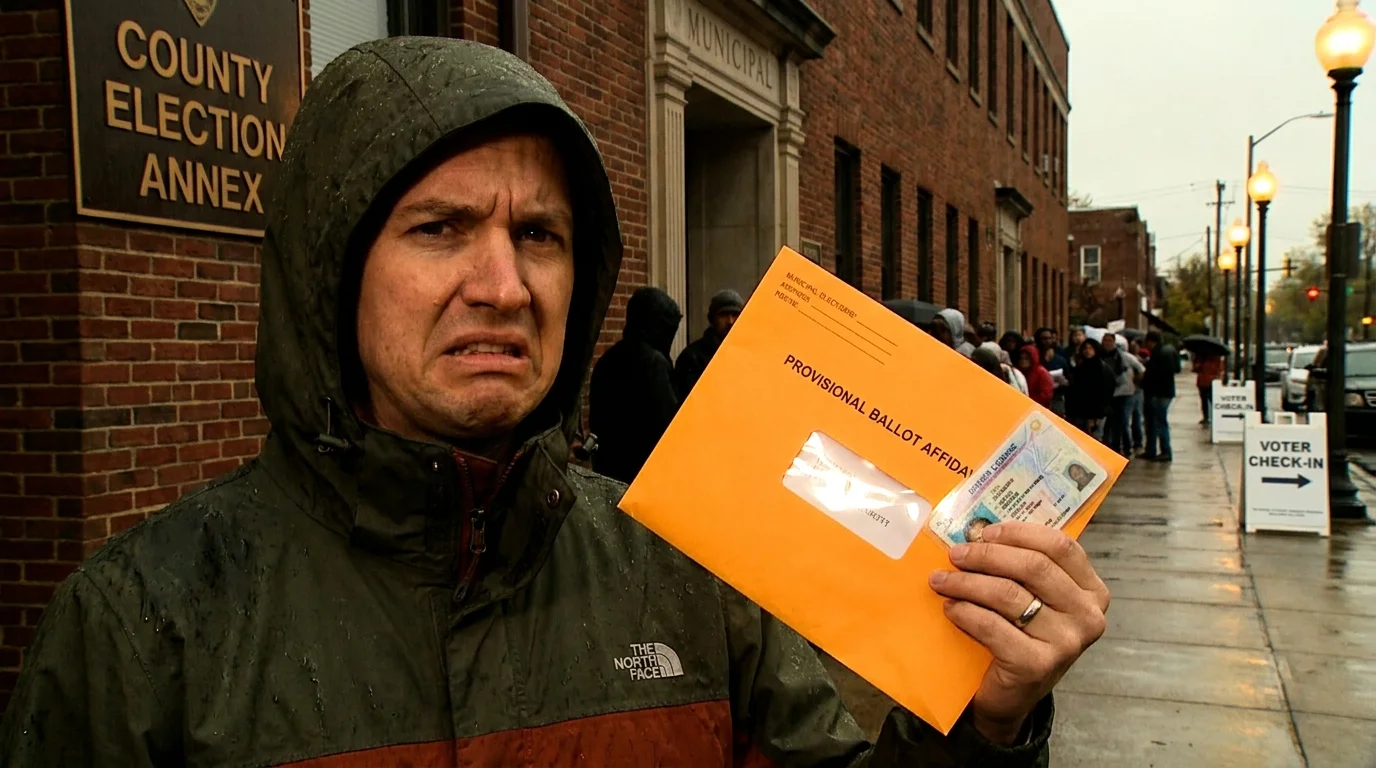
You step up to the folding table, state your name, and hand over your state identification. The poll worker runs an index finger down a freshly printed roster of computer paper, pauses, adjusts her wireframe glasses, and shakes her head. She types your details into an electronic tablet, only for a dull amber screen to alert her that your name has vanished from the active municipal register.
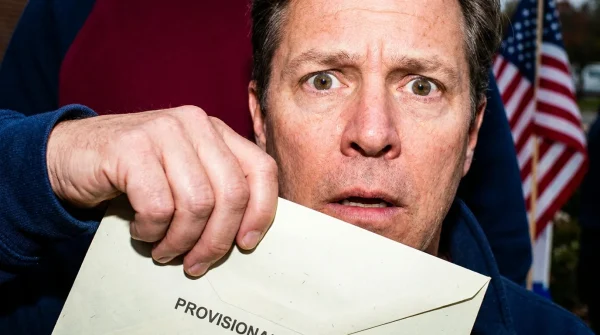
You are handed a ballpoint pen and a heavy manila sleeve labeled provisional ballot. In that quiet second, the clean efficiency of your modern morning collapses into procedural purgatory, all because you updated your apartment unit number on a state web portal four months ago to ensure your vehicle registration tags arrived on time.
The Ghost in the Registry: Understanding the Digital Handshake
Most citizens view their civic identity as an accumulated archive: once recorded, it sits permanently in municipal ledgers unless actively challenged or deliberately moved. The administrative reality functions more like a precarious set of gears, grinding quietly between disparate software platforms that rarely speak the same dialect.
When you update your residential address through the state motor vehicle portal, you assume the system performs an additive act. You believe the database mirrors your life, quietly tethering your updated lease to both your license plate and your voting precinct. Behind the digital curtain, however, motor vehicle software and county voter registry systems operate under opposing administrative philosophies. The motor vehicle database prioritizes immediate debt collection and driver tracking; municipal election engines prioritize strict list-maintenance hygiene mandated by state and federal laws.
When an address shift enters the system, automated validation scripts cross-reference the data with national postal change-of-address registries and municipal street index files. If your new residential filing lacks an exact, character-for-character match with the county clerk’s local boundary grid—whether due to a missing apartment designation, a hyphenated street name, or an administrative discrepancy—the system does not pause to ask for clarification. It simply tags your existing file as moved out of jurisdiction, flipping your active municipal status to inactive or purged before a human clerk ever glances at the record.
- Fourth Circuit injunctions force regional employers into conflicting morning payroll mandates
- FinCEN automated models freeze regular family mortgage applications under uncalibrated screening rules
- Pinellas County maps carve neighborhood voting coalitions across contested school board elections
- Chartwells dining contracts lock public school families into triple-cost meal tiers
- Stormwater utility advisory boards override elected town councils to enforce sudden land restrictions
Marcus Vance, a 41-year-old transit signal technician from suburban Bucks County, discovered this silent algorithmic fault line during a recent local primary. Vance had renewed his commercial driver’s license online after buying a home two miles down the road, ticking what he believed was the standard box to update his voter file. When he arrived at his precinct gymnasium, the poll book showed him wiped from the municipal precinct roll entirely, his active file having dissolved during a batch data transfer between state servers and county computers the third week of September. He was handed a provisional envelope, leaving him wondering whether his vote on a critical municipal water bond would ever be counted.
The Friction Points: How Routine Moves Trigger Invalidation
This silent database invalidation does not strike at random. It concentrates along predictable lines where routine administrative updates collide with rigid municipal boundary records.
For the Intra-County Renter
Moving between rental properties within the same municipality is the most common flashpoint for silent deregistration. Rental leases frequently use directional prefixes or secondary unit numbers that do not cleanly align with the master street address guide utilized by local election boards. When a motor vehicle system fires a batch update with a truncated unit number, automated data-hygiene protocols flag the entry as non-deliverable, stripping your active municipal voting status and quietly dropping you onto the inactive list.
For the New Homeowner Closing Near Deadlines
If you purchase a home within ninety days of an election, the timeline for deed recording, motor vehicle updates, and county voter book finalization compresses drastically. State motor vehicle systems batch-process address records on staggered weekly or bi-weekly schedules. If your updated homeowner address hits the state repository just as county election supervisors freeze their active rosters for poll book printing, your record ends up locked in administrative transit. You arrive at the table bearing a freshly minted license that contradicts the static paper poll book sitting before the election judge.
For the Multi-Name and Hyphenated Household
Clerical protocols inside motor vehicle databases routinely drop spaces, hyphens, and apostrophes to fit legacy file-size constraints. When those truncated strings pass into municipal voter databases that require an exact typographical match against Social Security records or birth certificates, the database reconciliation software flags the record as an unresolved discrepancy. The software resolves the conflict not by fixing the spelling, but by shelving your active registration pending manual documentation.
Navigating the Table: A Tactician’s Guide to the Poll Table
Avoiding the provisional ballot basket requires proactive navigation rather than passive reliance on cross-agency technology. Treat your civic registration with the same intentional verification you apply to your annual tax filings.
- Verify ninety days out: Run your status directly through your municipal clerk or county board of elections portal, never relying solely on state-level driver licensing confirmations.
- Audit the typography: Ensure your registered name and address match the exact formatting of your utility records and postal designations down to the apartment or suite syntax.
- Secure a physical paper trail: Always download and print the digital PDF confirmation showing your active municipal status dated within thirty days of the upcoming election.
- Demand the supplemental ledger: If your name is missing from the primary poll book, calmly request that poll workers verify the supplemental or emergency addendum ledger before touching a provisional envelope.
- Know the statutory remedy: If assigned a provisional ballot, ask the poll judge for the written precinct tracking number and the exact statutory deadline for providing cure documentation to the board of elections.
The entire verification workflow takes less than five minutes at your desk, insulating your morning commute from clerical roadblocks that otherwise derail your civic participation.
The Bigger Picture: Protecting Your Local Voice
When you take your place at a precinct table, you are not merely engaging in an abstract ritual; you are exerting direct legal influence over your municipal budget, your local school governance, and the safety of the roads you traverse each morning. Having that authority reduced to a provisional ballot envelope—an envelope that may remain uncounted if municipal canvassers cannot reconcile conflicting software records before certification deadlines—weakens your standing as a resident.
Understanding the invisible mechanics that govern your civic records returns control to your hands. When you treat the state’s sprawling digital apparatus not as an infallible overseer, but as a rigid, clumsy machine requiring deliberate maintenance, you protect your rights. Walking into your polling place armed with documented verification turns an anxious scramble into a calm, resolute act of democratic participation.
The digital bridge connecting driver licensing desks to precinct poll books is paved with administrative silences that only individual voter vigilance can bridge.
| Key Point | Detail | Added Value for the Reader |
|---|---|---|
| Data Batch Delays | Motor vehicle systems transfer record shifts in scheduled intervals rather than instantaneous live updates. | Prevents false confidence when moving within ninety days of an election. |
| Syntax Incompatibility | Omission of apartment designations or hyphens triggers automatic address reconciliation flags. | Enables exact typographical auditing of personal records before deadlines hit. |
| Provisional Invalidation | Provisional ballots cast in the wrong precinct due to software shifts are often discarded under state laws. | Protects your vote from being legally voided during post-election certification canvassing. |
| Autonomous County Oversight | County registrars maintain separate statutory authority over motor vehicle data feeds. | Directs you to the definitive administrative authority for verifying registration. |
Frequently Asked Questions
Does updating my driver’s license address automatically update my voter registration?
Not always. While the National Voter Registration Act mandates that motor vehicle agencies offer voter registration services, discrepancies between state driver databases and municipal election software routinely cause record drops or processing delays.Why was I given a provisional ballot after moving within the same county?
If your address change truncated your apartment number or shifted you across precinct lines without proper database synchronization, poll books will show you as inactive or registered elsewhere, legally requiring a provisional ballot.Can I refuse a provisional ballot if I know I am registered?
You cannot force an election judge to hand you a standard ballot if your name is absent from the active roster. However, you can demand that poll workers cross-reference the supplemental addendum or phone the central county board of elections for immediate clearance.How long do I have to cure or confirm a provisional ballot?
Cure windows vary by state, generally running between three to seven calendar days following the election. You must present matching proof of residency to the county board of elections within this timeframe for your ballot to be counted.How can I ensure my registration survives an address update?
Check your registration status directly via your county board of elections database thirty days after any driver’s license update, and retain a paper or digital copy of your municipal verification confirmation on election day.