The morning rush has a rhythm you could set a watch by. The low hum of the refrigerator, the sudden clatter of an aluminum thermos slipping onto the linoleum, and the sharp ring of your phone buzzing against the counter with a low-balance alert. You open the school district’s portal, squinting through the dawn light, only to find another transaction charge tacked onto what used to be a simple transaction. It feels like breathing through a pillow just trying to keep your child fed before the first bell rings.
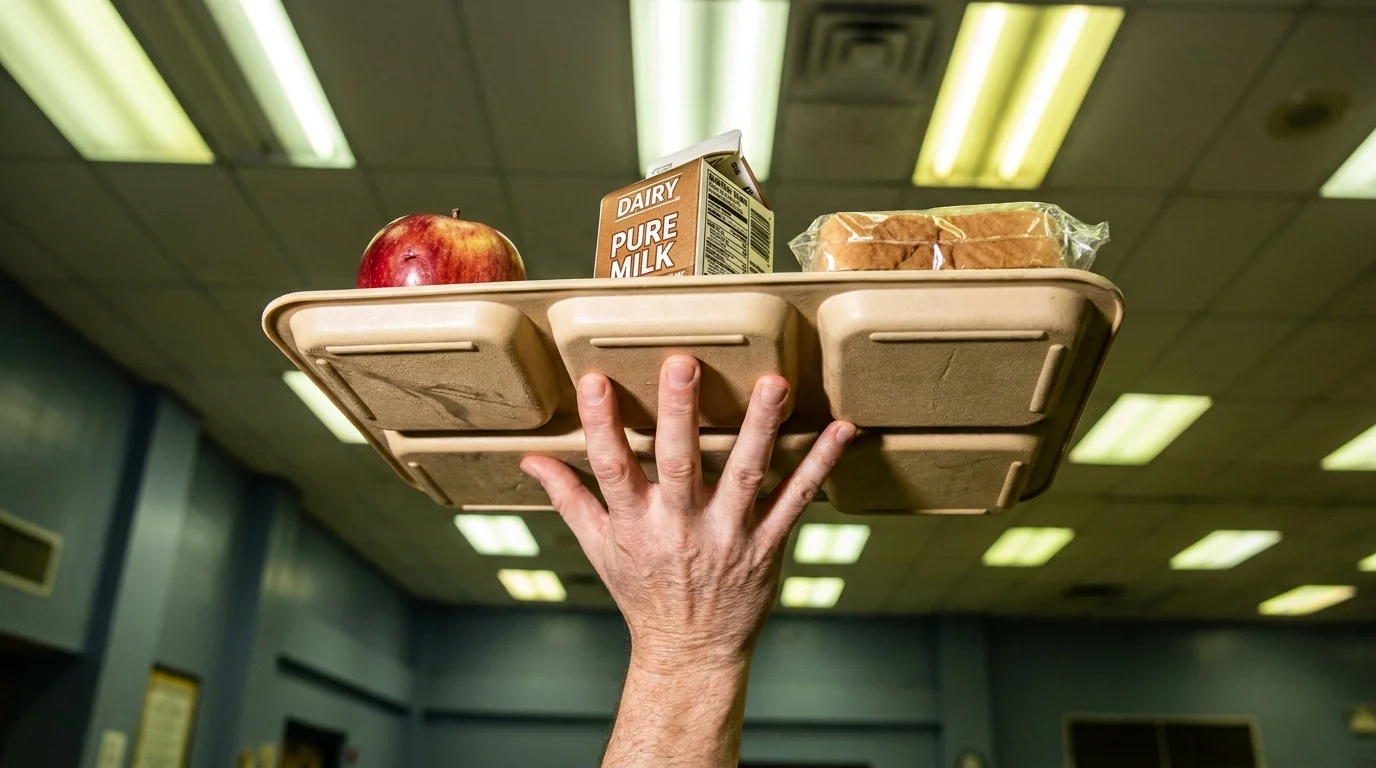
You probably assumed that public schooling offered a simple baseline: an honest hot meal funded by tax dollars, served on a molded plastic tray with a carton of cold milk. Instead, as the stainless-steel rollers clatter in the background, your household budget faces a quiet squeeze. The cafeteria floor smells faintly of bleach and steamed green beans, but beneath the familiar schoolhouse air sits a private corporate apparatus running on automated software and escalating fee structures.
When private food management outfits take the helm, the traditional neighborhood lunch lady stirring a cauldron of scratch stew disappears. In her place sits an outsourced operation driven by quarterly yields and captive foot traffic. You are not just paying for a carton of milk and a chicken patty; you are underwriting vendor margins negotiated hundreds of miles away in windowless boardrooms.
The Illusion of the Free Lunch Tray
For decades, school kitchens operated like public libraries: civic services meant to run quietly at cost, insulated from aggressive balance sheets. But when administrative belts tightened, districts welcomed private concessionaires under the promise of efficiency and savings. The transition rarely happens with a loud announcement; it slips in through thick contract binders voted on during late-night school board sessions while parents worry about bus routes.
Think of it as an expensive toll road built over a public street. Federal reimbursements continue to flow into the district from the National School Lunch Program, yet families suddenly discover that independent, lower-cost kitchen options have vanished. The private vendor secures exclusive rights across the entire campus, eliminating competitive outside catering, bake sales, or local food deliveries that might offer cheaper sustenance.
Once those culinary borders close, captive vendor mechanics take hold. The company slices menu tiers into baseline reimbursable staples and high-margin branded items. If your kid wants a lunch that resembles real, textured food rather than a flat gray nugget, you find yourself nudged toward a premium tier. A meal that cost three dollars just a few years ago quickly transforms into a nine-dollar daily charge, drained silently through a mandatory mobile payment portal that skims another convenience fee every time you replenish the balance.
- Stormwater utility advisory boards override elected town councils to enforce sudden land restrictions
- California disability insurance rate caps cut take-home wages through mandatory automated withholdings
- United Nations press confrontations split rival cable networks over reporter credential rules
- Westchester County apartment rezonings trigger explosive homeowner revolts across suburban school districts
- Bruen firearm licensing decisions freeze county concealed carry enforcement across northeastern suburbs
The Cafeteria Ledger: A View from the Steam Line
Consider Elena Ramirez, a 46-year-old head cook in an eastern Pennsylvania district who spent twenty-four years seasoning pots with garlic powder and black pepper before a private concessionaire took over her kitchen. She watched the delivery trucks swap whole produce and raw meats for pre-portioned plastic pouches designed to be dropped directly into boiling water, all while digital signs flashed new pricing tiers above the sneeze guard. Elena quietly showed a few trusted colleagues the internal inventory manifests: the district was billed double for proprietary brand-name frozen items while entry-level trays shrank down to the legal minimum calorie count.
The Triple-Tier Trap: How Every Household Pays Differently
Outsourced food contracts do not affect every family in the same manner. Understanding where your household sits in the vendor ecosystem reveals exactly where the financial friction builds.
For the Borderline-Qualifying Household
If your household income hovers just above the threshold for free or reduced-price meals, the squeeze is immediate and painful. You do not qualify for the federal safety net, yet you lack the disposable cash to ignore monthly student meal bills that rival a car payment. In this tier, parents often find their children skipping lunch entirely or racking up automated negative balances that follow them like collection notices on report card day.
For the Convenience-Driven Working Parent
When you work fifty hours a week, building homemade lunches every midnight is rarely sustainable. You rely on the electronic lunch account as a lifeline, trusting the school to provide nutritious fuel. Yet you notice that standard offerings sit cold and unappealing, pushing your children toward proprietary snack kiosks and branded beverage chillers that drain twenty dollars in forty-eight hours without providing actual nutritional density.
For the Independent Student Advocate
Older kids in high school often notice the disparity first. They observe how baseline trays look institutional while the appetizing hot lines carry steep a la carte markups. For student councils and active parents trying to organize alternate meal drives or community soup days, administrative contracts often contain non-compete clauses that legally forbid student organizations from serving competing food on district grounds during school hours.
Reclaiming Control of the Lunch Account
You do not have to accept automated billing fees and inflated food costs without a plan. Taking back your household’s lunch budget requires clear, mindful friction against an automated system designed to run on passive auto-deposits.
Start by auditing the exact ledger of your digital school account. Many parents set auto-replenish at fifty dollars, never realizing that the processing company extracts a three- to five-dollar transaction fee with every single swipe of your bank card.
- Audit your portal settings immediately: turn off automatic reloading to prevent unchecked bleed and inspect individual line-item snack purchases.
- Deposit funds via physical paper check directly with the school clerk, legally bypassing the digital processing fee mandated by the portal software.
- Request the full public vendor concession contract under state freedom of information laws to inspect guaranteed meal minimums and pricing caps.
- Organize with other parents at monthly budget hearings to demand competitive local bidding before dining contracts come up for automatic multi-year renewal.
Your practical toolkit requires no expensive gadgets. Keep a simple envelope system for cafeteria checks, set a calendar alarm for semester contract review deadlines, and download your district’s raw nutrition and pricing manifests directly from their open records archive.
The Value of an Honest Plate
When we look at a child’s school day, food is not merely caloric input; it is dignity, focus, and security. Letting public kitchens become captive profit centers changes the fundamental nature of common schooling, turning a shared civic space into an extractive commercial market. Resisting this shift is not about penny-pinching over a side of tater tots. It is about demanding that public dollars serve children, ensuring that every kid sitting on a cafeteria bench receives nourishing food without their family being quietly priced out of the room.
Public school kitchens were built to sustain learning, not to function as captive storefronts for outsourced corporate profit.
| Key Point | Detail | Added Value for the Reader |
|---|---|---|
| Captive Non-Compete Clauses | Contracts often bar independent food sales on campus grounds. | Explains why local food trucks or parent fundraisers cannot step in. |
| Tiered Food Quality | Split menus separate cheap reimbursables from costly a la carte items. | Helps you identify why your child’s daily spending spikes unexpectedly. |
| Electronic Gateway Fees | Software vendors charge fees on every digital wallet top-up. | Reveals how paper check deposits keep hard-earned money in your wallet. |
Frequently Asked Questions
Why are school lunch prices rising if my school receives federal funding?
Federal funds offset baseline production costs, but private dining contracts frequently designate premium food items as non-reimbursable a la carte tiers, transferring profit expectations directly onto parents.Can the school stop me from depositing money with cash or check?
Under most state public education guidelines, public schools cannot refuse legal currency or checks for school meal payments, allowing you to bypass third-party software transaction surcharges.What is a cafeteria non-compete clause?
It is a contractual stipulation where the school board agrees not to permit competing food sales, community donations, or outside catering during school hours, protecting the vendor’s captive customer base.How can I see what my district actually pays the dining company?
You can submit a formal open records request to your local school board secretary for the master dining service agreement and all corresponding vendor invoices.Do these contracts affect meal debt policies?
Yes, outsourced management contracts often enforce strict debt collection thresholds, meaning accounts that fall into the red face rapid administrative cutoffs or alternative substitute meals.