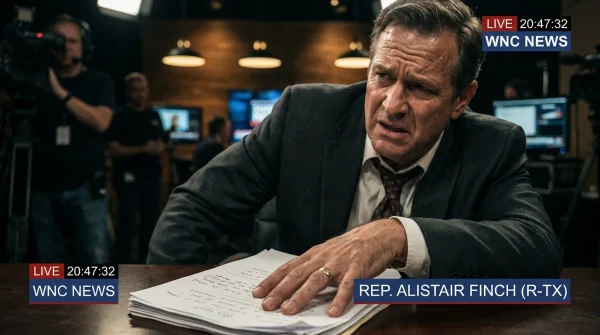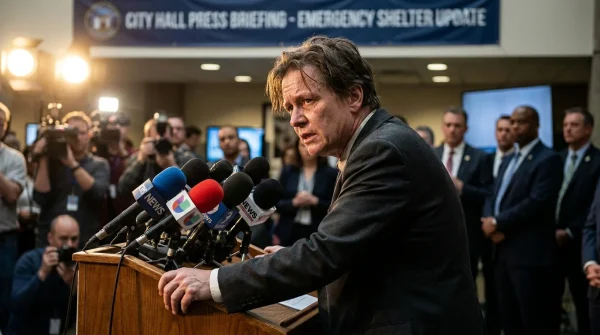
The carpet in the Senate chamber absorbs footsteps until the room feels unnervingly quiet, like an empty library after closing hours. Outside, cold rain slicks the sandstone steps of the Capitol, but inside under the pale yellow glow of the ceiling panels, the air smells of dry paper, stale coffee, and polished walnut. Most nights, late-stage procedural votes follow a scripted hum: staff members cluster near the rostrum, whips check tally cards against leather-bound folders, and leadership nudges members toward an orderly exit before midnight flight departures.
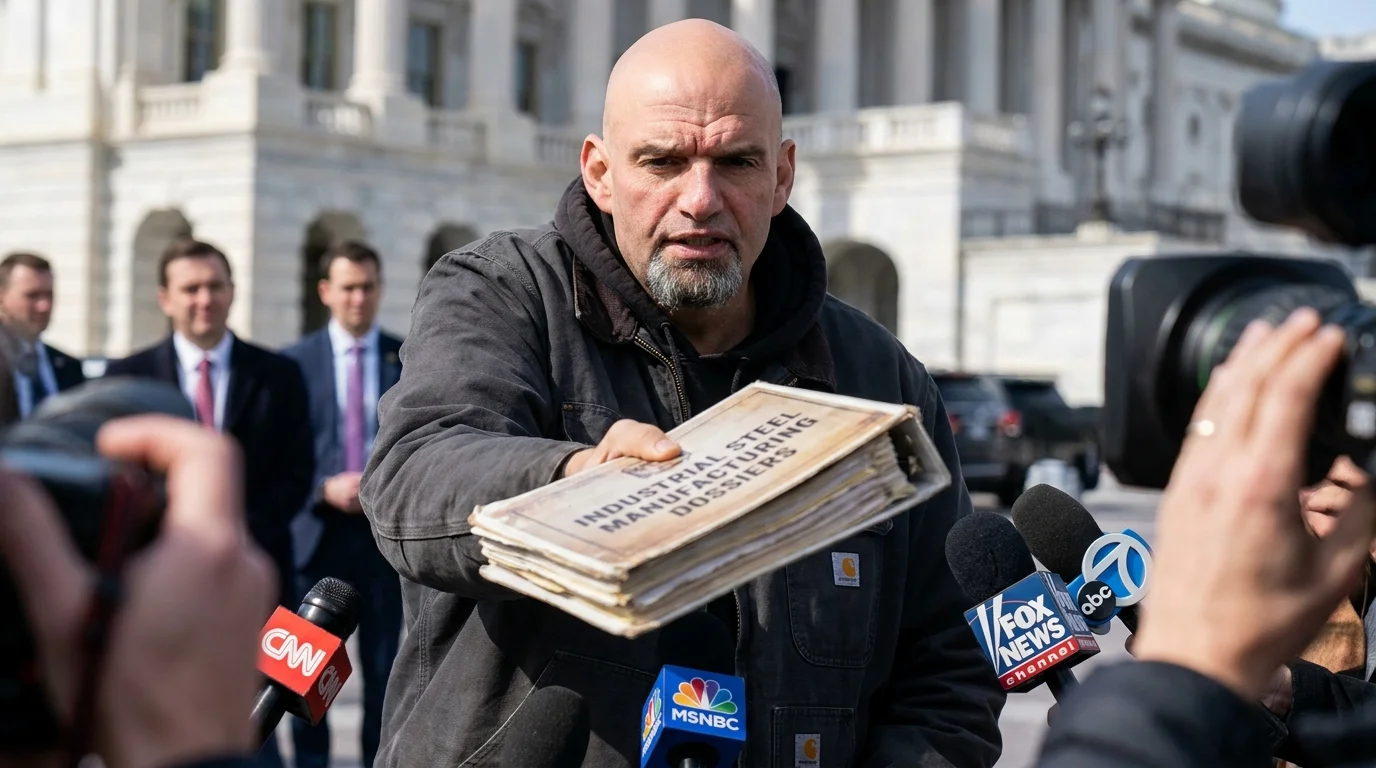
Then the rhythm breaks. Instead of another rubber-stamped procedural vote sliding past the clerk, an unyielding floor demand halts the entire conveyor belt. John Fetterman steps into the well of the chamber, deliberately stepping outside party lines and setting down an absolute boundary over domestic steel manufacturing permits and cross-border industrial buyout clearances.
You are watching the sudden fracture of party orthodoxy in real time. Washington operates on the assumption that regional industrial disputes can be traded away behind closed doors in exchange for green infrastructure concessions or international trade diplomacy. Yet when an unyielding voice from the Mon Valley decides that blast furnaces matter more than party harmony, the entire legislative calendar grinds against the wall.
The Blast Furnace Versus the Legislative Clock
Most voters assume party leadership commands absolute control over eleventh-hour deals through simple majority whips. You are taught that bills pass or die based on national party platforms drafted in air-conditioned retreat centers. But in the late-night friction of floor mechanics, power behaves like raw thermal physics rather than partisan consensus.
Consider a steel mill: you cannot simply switch off an integrated blast furnace when power gets expensive. If you cut the heat abruptly, the molten burden cools into a dead block of iron, destroying the kiln lining and costing hundreds of millions of dollars to resurrect. Pennsylvania steel communities know that industrial capacity is slow to build and almost impossible to revive once smothered. When leadership attempted to bundle fast-track permitting waivers with rubber-stamped foreign takeover protocols, Fetterman used the archaic rules of Senate procedure to freeze the machine in its tracks.
By withholding unanimous consent on late-stage regulatory fast-tracks, he forced committee chairs to confront an uncomfortable reality. You cannot lecture working-class manufacturing towns about economic resilience while simultaneously streamlining the paperwork that lets international conglomerates dismantle domestic production lines.
- James Talarico debate clashes trigger fierce floor arguments over private school voucher funds
- Michigan primary ballots shift national race momentum through early union worker turnout
- House Armed Services markups switch contested procurement language during closed midnight sessions
- Bank of America energy lending policies spark aggressive red state treasury contract boycotts
- Dario Amodei safety warnings force bipartisan shifts on federal artificial intelligence guardrails
The View from the Casting Floor
Consider Marcus Vance, 54, a metallurgic scheduling coordinator who has spent twenty-eight years monitoring basic oxygen furnaces along the Monongahela River. Vance knows the exact sulfur smell that signals a ladle burn, and he understands how corporate parent companies slowly divert capital expenditures away from American facilities toward offshore subsidiaries long before they officially announce a plant closure.
“In our line of work, a regulatory waiver tucked into page four hundred of an emergency funding package is not an efficiency measure,” Vance notes while tracing shipment ledgers. “It is an eviction notice signed six months before the locks actually change on the gate.” When floor demands in Washington expose those regulatory sleights of hand, they pull hidden transactions into the sunlight where local workers can finally read the terms.
The Fault Lines of Industrial Sovereignty
This floor rebellion exposes three distinct interest groups, each operating with conflicting agendas:
The Shop-Floor Protectionist
For industrial mill towns, the primary concern is operational permanence. Fast-track permitting sounds beneficial on paper, but when exemptions are granted without domestic production mandates, raw industrial sovereignty slips away into corporate balance sheets. For this group, slowing down the Senate is the only reliable way to preserve high-wage union security.
The Executive Branch Coalition
Party whips and administration negotiators prioritize international market stability and foreign investment diplomacy. Their objective is clean, predictable headlines and unencumbered trade partnerships with allied nations. When a home-state senator disrupts international acquisition clearances, it derails months of diplomatic posturing overnight.
The Downstream Logistics Network
Small fabrication shops, rail depots, and bridge contractors across the Midwest operate on thin supply margins. If national policy favors imported slabs over domestic melt-and-pour steel, these smaller regional operators become vulnerable to sudden maritime shipping bottlenecks and currency swings.
Mapping the Procedural Resistance
Understanding how a single senator locks up the federal machinery requires pulling back the curtain on procedural tools. You do not need backroom access to read the mechanics of legislative friction; you only need to know which levers matter:
- The Unanimous Consent Hold: By refusing to grant automatic voice votes, an individual lawmaker forces leadership to burn precious floor time on roll calls, collapsing the leadership’s tight schedule.
- The Permit Rider Dissection: Isolating domestic manufacturing stipulations from broad infrastructure authorizations exposes where multinational buyers attempt to dodge long-term domestic investment requirements.
- CFIUS Oversight Triggers: Demanding binding national-security reviews under the Committee on Foreign Investment in the United States prevents federal agencies from quietly approving corporate mergers during holiday recesses.
These actions require endurance and an appetite for political isolation. When you refuse to surrender regional payrolls for national platform consistency, the immediate reaction from party leadership is irritation, followed by private threats of lost committee assignments. Yet when the procedural leverage is applied correctly, leadership inevitably folds to keep the broader government funding apparatus from hitting a hard deadline.
The Reality of Domestic Production Leverage
This late-night showdown on the Senate floor is not just about procedural theatrics or Pennsylvania politics. It signals a fundamental reset in how domestic industrial policy gets debated in the United States.
For decades, legislative compromise meant trading tangible manufacturing jobs for abstract regulatory metrics. By turning a routine floor vote into an eleventh-hour gridlock, domestic steel advocates demonstrated that local economic security can still overpower high-level party directives. When you understand the institutional gears turning beneath the surface, you see that lasting leverage does not come from fitting neatly into a national coalition—it comes from holding the line on the things your community cannot afford to lose.
“Industrial capacity is not a political talking point; once you let an integrated furnace go cold, no piece of legislation can reignite that steel.”
| Key Point | Detail | Added Value for the Reader |
|---|---|---|
| Floor Leverage Mechanics | Refusal of unanimous consent on expedited permitting dockets. | Demonstrates how an individual senator can disrupt party leadership schedules without holding committee rank. |
| Manufacturing Permitting | Proposed fast-track waivers stripped of strict melt-and-pour standards. | Explains why regional labor unions oppose generic infrastructure permitting expansions that lack domestic sourcing rules. |
| Corporate Buyout Scrutiny | Elevating foreign industrial acquisitions into formal national security floor debates. | Reveals how CFIUS reviews can be forced by floor rebellion rather than administrative discretion. |
Frequently Asked Questions
Why did John Fetterman break with party leadership over this vote?
He broke ranks to safeguard regional domestic steel manufacturing jobs, arguing that streamlined federal permitting without strict domestic-origin rules encourages foreign takeovers that undermine local industrial payrolls.How does a single senator cause late-night gridlock on the Senate floor?
By objecting to unanimous consent requests, a senator forces the majority leader to file cloture, schedule time-consuming roll call votes, and burn dozens of legislative hours typically reserved for other priority bills.What is the connection between environmental permits and corporate acquisitions?
Large multinational firms frequently seek streamlined federal permits as a condition for purchasing domestic facilities, allowing them to shift production parameters without undergoing rigorous local environmental and labor impact reviews.Does this floor fight completely stop the foreign acquisition of domestic steel facilities?
It does not automatically cancel the transaction, but it triggers mandatory public debate, delays final administrative clearances, and creates leverage to demand binding employment and production guarantees.What does this mean for future bipartisan industrial policy bills?
It proves that manufacturing-state lawmakers from both parties are increasingly willing to derail their own party leadership to protect local industrial capacity, making future trade and permitting compromises much harder to pass quietly.