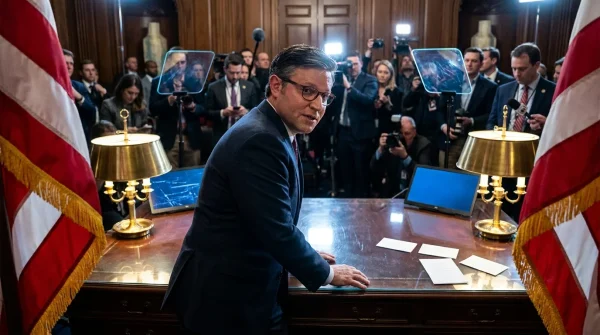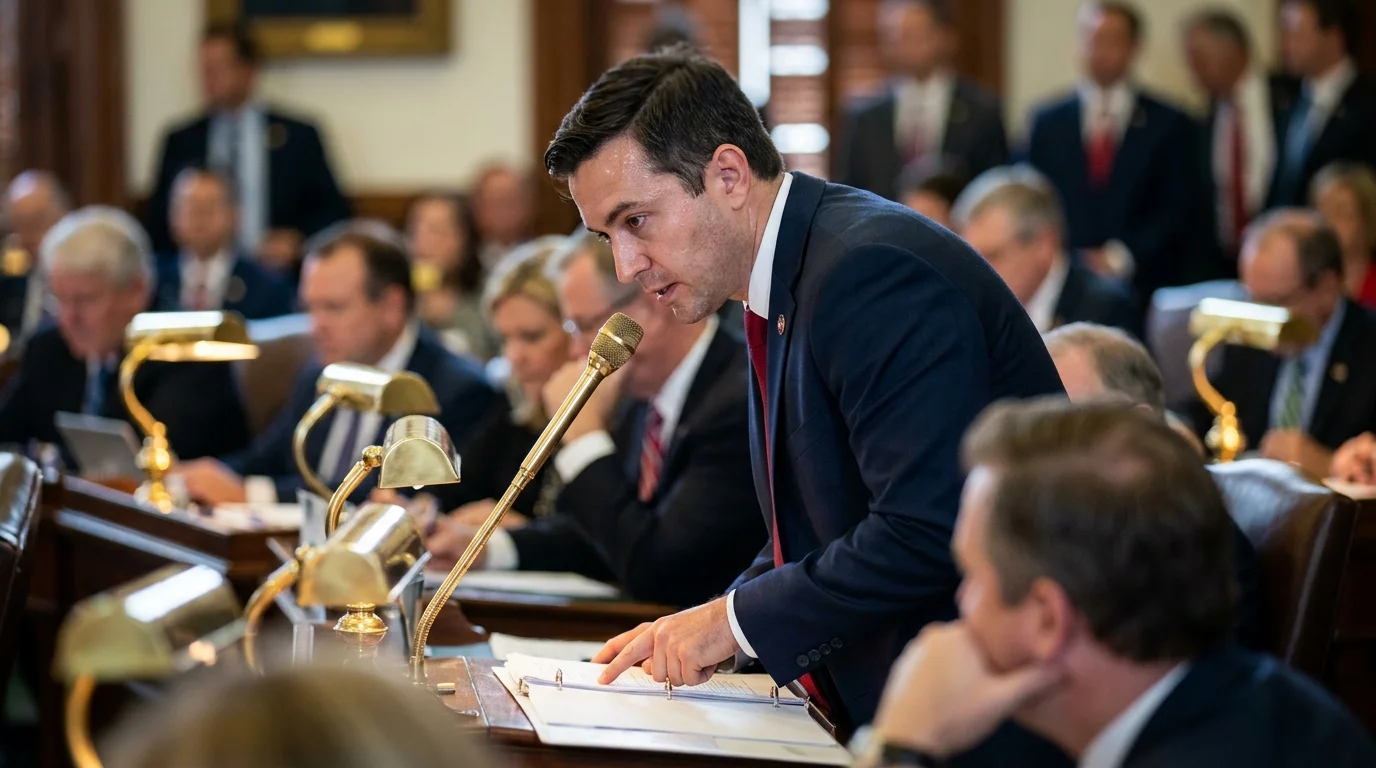
The air under the granite dome smells faintly of damp wool, sweet coffee from disposable styrofoam cups, and the dry hum of high-voltage overhead lights. When the gavel drops at three in the afternoon, it sounds less like an instrument of solemn law and more like a butcher chopping wood. You hear the paper rustling across hundred-foot mahogany desks, the low mutter of committee staffers leaning into leather chairs, and the sudden, sharp silence that falls across the gallery when a state representative takes the microphone.
Most people watching public debates on television expect polished soundbites or rehearsed legal recitations. You expect smooth talking points designed for twenty-second campaign ads, delivered with an unbroken smile. But when James Talarico stepped onto the house floor to interrogate the state’s proposed education savings accounts, the polite rhythm broke down within seconds. The debate stopped being a theoretical seminar on parental choice and became an unvarnished knife fight over the survival of small-town school districts.
You could see the temperature change in the posture of the committee leadership. Chairs were pushed back, microphones crackled with nervous adjustments, and the casual murmur of the chamber evaporated into absolute stillness. The central collision didn’t center on suburban test scores or elite prep academies; it drilled straight into the fragile economic mechanics of county seats where the local independent school district serves as the town’s only major employer.
The Balance Sheet Illusion of Student Subsidies
To grasp why this clash shook the capitol gallery, you have to shed the idea that legislative arguments are about principles. They are about plumbing. Think of a rural public school district not as an abstract civic ideal, but as an old iron water boiler in a winter frost. It requires a fixed amount of pressure just to keep the pipes from cracking, regardless of whether it heats ten rooms or twelve.
When a school voucher program strips thousands of dollars from that baseline budget under the premise of student mobility, the boiler does not burn half as much coal; it simply goes out. During his line of questioning, Talarico stripped away the market-choice talking points to expose this physical reality. In rural districts spanning hundreds of square miles, there are no competing private academies waiting down the gravel road. There is only a shuttered football field, empty yellow buses, and a tax bill shifted back to local property owners.
Marcia Henderson, a 54-year-old high school principal from a Panhandle community of twelve hundred people, sat in the third-row visitor gallery tracking every line. She had driven six hours south through pre-dawn rain, clutching a single legal pad filled with transportation route fuel costs. Her community operates a single consolidated K-12 campus that doubles as the town’s emergency shelter and evening community center. To her, every dollar carved out for private tuition was not an alternative choice, but a direct cut to diesel fuel and roof repairs.
- Michigan primary ballots shift national race momentum through early union worker turnout
- House Armed Services markups switch contested procurement language during closed midnight sessions
- Bank of America energy lending policies spark aggressive red state treasury contract boycotts
- Dario Amodei safety warnings force bipartisan shifts on federal artificial intelligence guardrails
- Mesabi Metallics mineral lease disputes trigger explosive voter backlash across northern mining towns
The Rural Fault Line: Dissecting the Chamber Factions
The sudden anger that erupted during the floor testimony exposed three distinct pressure points that broke traditional party discipline. You cannot understand state legislative battles without mapping where these political interests collide.
For the Frontier Districts
Lawmakers representing remote counties face an impossible math problem under universal voucher models. Without independent private campuses within an hour’s drive, public funds leave the county line entirely, moving into urban private schools while their local tax base absorbs unfunded operational mandates. For these representatives, defending public school dollars is not progressive politics; it is pure local survival.
For the Suburban Growth Corridors
Fast-growing outer suburbs see vouchers through a radically different lens. Parents in overcrowded subdivisions often look at tax-funded tuition credits as an immediate exit hatch from shifting attendance zones and bond elections. Here, the floor debate was framed as a battle over suburban tax equity, with representatives arguing their constituents deserve personal control over the public revenues they generate each month.
For the Legislative Leadership
House leadership found itself trapped between deep-pocketed national political action committees and rank-and-file members terrified of primary challenges back home. When Talarico pressed on whether private schools receiving state money would be subject to identical standardized testing and open-records scrutiny, the dais shut down debate early. Forcing a recorded vote on equal transparency threatened to split the majority coalition clean down the middle.
Mindful Civic Observation: Tracking Floor Maneuvers
Watching statehouse proceedings without getting pulled into performative rhetoric requires watching the margins. You must watch the physical maneuvers that happen off-camera to discern what is genuinely at stake for your household.
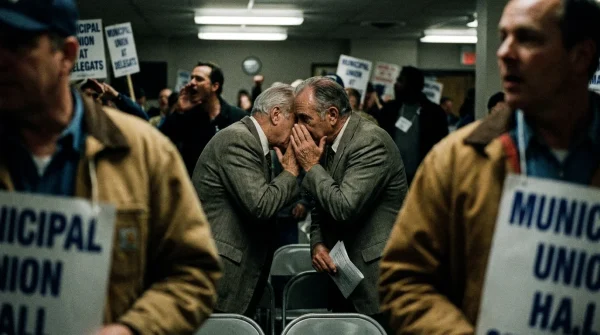
Notice who approaches the back rail during heated testimony. When debate turns explosive, party whips do not sit in their seats; they circulate through the floor, pulling wavering members behind the heavy curtains to check vote counts.
- Monitor the adoption of floor amendments designed to delay enrollment caps or insert rural district carve-outs.
- Track how often the microphone is intentionally silenced for procedural conferences at the speaker’s podium.
- Listen for shifts from policy merits to accusations of decorum violations, which invariably signal leadership is losing control of the floor narrative.
- Compare the immediate floor transcript with the statutory language filed in the committee substitute.
Use this tactical toolkit when evaluating legislative rhetoric on school funding: observe the net per-pupil allotment (not the gross voucher amount), track whether private voucher recipients must meet federal IDEA disability rights protections, verify the distance to the nearest accredited non-public school in your zip code, and calculate your county’s effective maintenance and operations tax rate change over the last three fiscal quarters.
The Bigger Picture: Reclaiming Local Sovereignty
When the floor microphones finally clicked off and the gallery emptied into the dusk, the debate had redrawn the boundaries of state education politics. What transpired was not merely an afternoon of passionate speeches or partisan sparring; it was a rare moment where the structural mechanics of community life were dragged into daylight.
Understanding these legislative collisions frees you from treating political news like entertainment. When you see exactly how statehouse policy adjustments alter school bus routes, teacher pension obligations, and your own annual property assessment, your civic perspective shifts. You no longer react to headlines with passive frustration. You begin watching the statehouse like an auditor, knowing that the real debate is never about lofty slogans, but about who holds the ledger when the gavel falls.
The most explosive fights in state government are never about grand philosophies; they happen the moment someone points out who has to pay for the empty desks.
| Key Point | Detail | Added Value for the Reader |
|---|---|---|
| Fixed Overhead Trap | Vouchers pull per-student cash while leaving building, bus, and utility costs unchanged. | Explains why local property taxes often spike after state funding cuts. |
| Accountability Double Standard | Private voucher vendors rarely face public open-records laws or state testing rules. | Gives you specific criteria to demand from your local state representative. |
| Rural-Suburban Coalition | Frontier conservatives and urban representatives frequently unite against voucher funds. | Reveals how local geography matters far more than traditional party labels. |
Frequently Asked Questions
What triggered the live confrontation between James Talarico and committee leadership?
The clash peaked when Talarico forced bill sponsors to concede that private schools receiving public voucher money would not be held to the same state testing or public transparency standards as rural public schools.Why do rural lawmakers consistently break ranks on private school vouchers?
Rural districts rarely have private school infrastructure nearby. As a result, public funds leave the county while local school operational costs remain identical, straining municipal finances.Do private school vouchers cover the entire cost of tuition?
Rarely. Most state voucher programs provide between seven and ten thousand dollars, which covers only a fraction of tuition at established private academies, often leaving lower-income parents unable to bridge the gap.What happens to public schools when students use vouchers?
State funding is tied directly to average daily attendance. When students depart, the district immediately loses state revenue, forcing local boards to either consolidate classrooms or raise local property tax rates.How can I verify where my state representative stands on this issue?
Review the official legislative journals for recorded roll-call votes on specific voucher amendments rather than relying on campaign mailers or general party platforms.