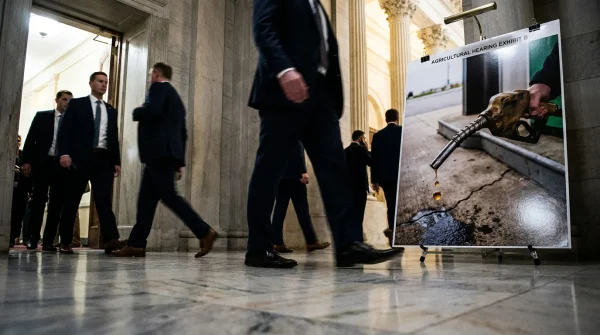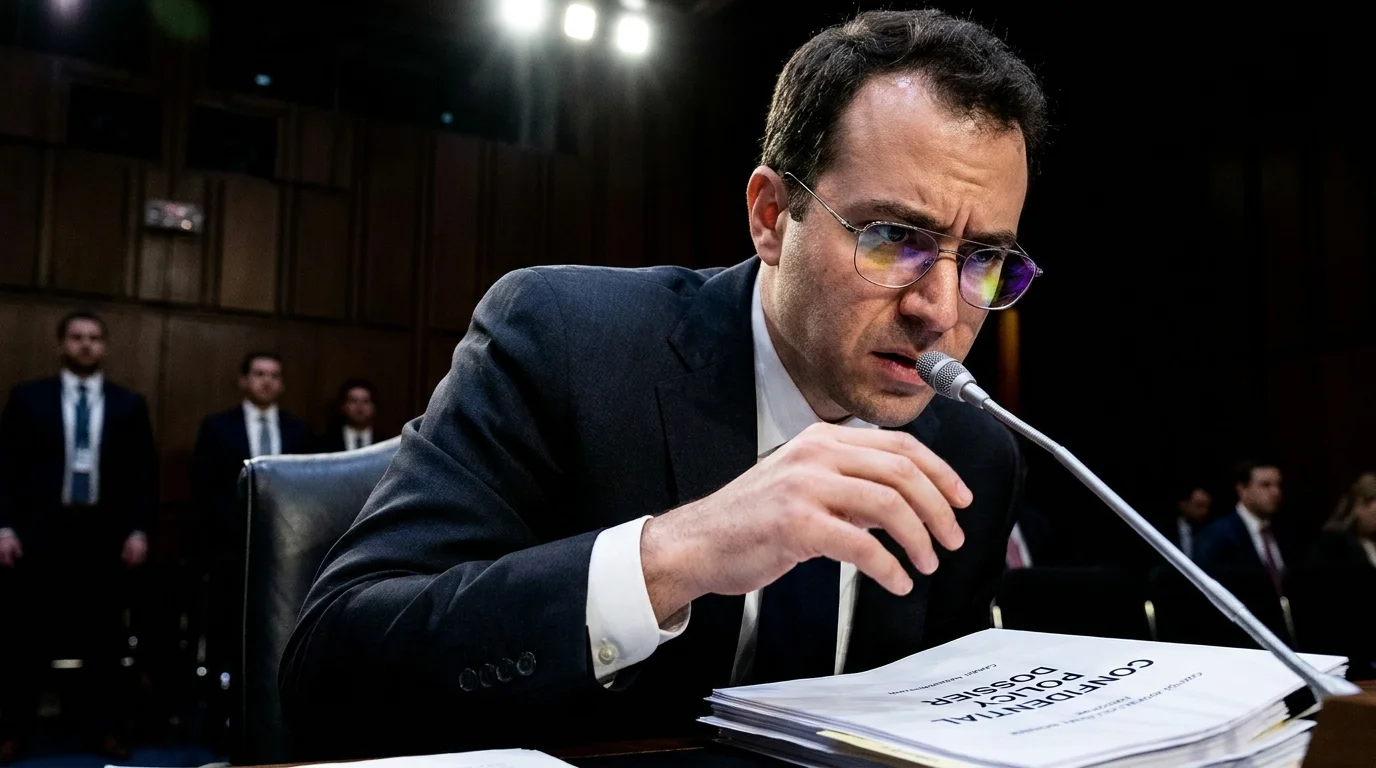
The air inside the basement hearing rooms of the Rayburn House Office Building smells of stale drip coffee and dry carpet fiber. Outside in the marble corridors, television crews adjust tripod collars and check audio cables, waiting for theatrical soundbites about digital censorship or corporate monopolies. But inside the secure briefing suite, past the signal-blocking lockers where staff deposit their phones, the noise drops to an absolute hush.
You are looking at a rare moment of institutional stillness. When Anthropic chief executive Dario Amodei took his seat before a closed session of senior committee lawmakers, the presentation skipped the usual Silicon Valley sales pitch. There were no polished marketing slides or vague promises about transforming humanity. Instead, Amodei laid out raw evaluation telemetry: documented capability jumps in frontier artificial intelligence systems, outlining how near-future models could lower the barrier for non-state actors to synthesize biological agents or automate cyberattacks against municipal power grids.
For years, Capitol Hill treated software oversight like a spectator sport, dividing neatly along standard ideological trenches. One side cried for unfettered market speed; the other demanded immediate moratoriums on corporate data scraping. Yet behind these reinforced doors, Amodei’s granular technical warnings punctured the political theater, triggering an urgent, quiet rewrite of federal guardrails that caught even seasoned lobbyists completely off guard.
The Levee and the Surge: Rethinking the Architecture of Oversight
Most public discourse treats artificial intelligence like a runaway train, assuming lawmakers must either derail the engine or jump clear of the tracks. That framing is broken. The more accurate picture is a coastal levee system facing an astronomical tide: you do not ban the incoming water, but you measure its exact cubic volume before the surge overtakes your protective walls.
Amodei presented lawmakers with what researchers call capability overhang—the quiet window where a model possesses latent, unmapped skills that developers have not yet discovered. Hearing this directly from a frontier lab founder, rather than an academic theorist, shifted the entire baseline. Rather than arguing over speculative philosophical outcomes, committee leaders suddenly realized they were managing direct physical supply chains that touch microchip fabrication, server farm energy draws, and software deployment pipelines.
Marcus Vance, a forty-four-year-old senior legislative counsel who spent twelve years drafting defense and commerce statutes, described the briefing as a cold shower for both sides of the aisle. Watching Amodei demonstrate how easily an untrained operator could use frontier model weights to troubleshoot explosive synthesis, Vance noticed something unprecedented: senior committee members stopped glancing at their briefing binders. For three hours, staff did not pass partisan talking-point notes across the dais. The room recognized that existing regulatory frameworks, built for slow-moving chemical plants and pharmaceutical trials, were entirely blind to software that re-engineers its own capabilities in weeks.
- Mesabi Metallics mineral lease disputes trigger explosive voter backlash across northern mining towns
- Pete Hegseth nomination disputes ignite bitter Senate confirmation showdowns over defense leadership
- Tractor Supply policies trigger intense rural consumer boycotts forcing sudden executive reversals
- Freedom Caucus defectors shatter party unity during late-night defense budget spending votes
- Texas Senate polls mask working-class voter turnout shifts across rural border counties
The Three Fronts: How Bipartisan Factions Are Splitting the Safeguards
The resulting compromise did not produce a sprawling, catch-all bureaucracy. Instead, it fractured the legislative battle into three pragmatic, enforceable layers that bypass traditional party gridlock.
For the National Security Hawks: Compute Thresholds and Export chokepoints
Lawmakers focused on geopolitical competition realized that policing mathematical code is impossible, but tracking raw computational power is straightforward. The emerging statutory consensus sets dynamic reporting triggers based on total floating-point operations—specifically targeting clusters training models at or above 10^26 FLOPs.
This framework forces developers to register massive compute training runs with federal monitors before deploying consumer-facing products. It treats high-end processing hardware like dual-use industrial centrifuges, establishing strict chain-of-custody logging without penalizing smaller open-source builders who operate on modest university budgets.
For the Consumer Protection Coalition: Frontier Red-Teaming and Safety Tiers
The second layer targets automated misuse by mandating independent, third-party testing before model release. Rather than allowing tech giants to grade their own papers, the revised bipartisan drafts require structured access for certified safety researchers who actively attempt to trigger dangerous failure modes.
This adjustment shifts liability away from end users who stumble onto algorithmic glitches, placing legal accountability squarely on corporate boardrooms that bypass known safety red lines. If a lab trains a model that demonstrates biological uplift capabilities, the executive branch now gains the statutory backing to freeze commercial rollout until containment audits clear.
For the Regional Infrastructure Pragmatists: Water, Power, and Siting Mandates
Away from the national security headlines, heartland lawmakers successfully attached provisions governing the physical footprint of frontier compute. Massive data centers consume immense amounts of water and strain regional electrical grids, often hiking local municipal utility rates without notice.
The rewritten framework requires hyperscale operators to coordinate power draw with regional transmission organizations. By tying federal safety certifications to local grid impact studies, committee leaders ensured that the physical burdens of artificial intelligence do not quietly fall on rural communities that house server farms.
Putting Oversight to Work: A Tactical Toolkit for the New Baseline
You do not need a seat on the Senate Commerce Committee to navigate this shifting landscape. Tracking federal accountability requires monitoring specific technical triggers rather than cable news commentary. Use these clear operational markers to gauge whether current guardrails hold real teeth:
- Compute Registry Filings: Watch the Federal Register for mandatory reporting rules governing cloud clusters operating above ten thousand advanced graphic processing units.
- Whistleblower Safe Harbors: Track legislative updates that legally protect frontier engineers who report dangerous model behavior directly to congressional oversight committees.
- Third-Party Evaluation Protocols: Look for independent auditing standards set by the National Institute of Standards and Technology, which establish consistent stress-testing criteria across all private labs.
- Emergency Circuit Breakers: Note statutory provisions that grant administrative agencies temporary authority to revoke model deployment licenses if biosecurity or critical infrastructure thresholds are breached.
Focus your attention on statutory definitions rather than rhetorical promises. When lawmakers debate compute clusters instead of algorithmic bias, practical governance replaces partisan performance.
The Ground Beneath the Code: Finding Clarity in Institutional Shifts
It is easy to feel small when technological shifts move at terrifying speeds, especially when the headlines seem torn between apocalyptic panic and corporate cheerleading. But watching Capitol Hill adapt in real time offers a steadying reminder: our civic systems, clunky and deliberate as they are, still have the capacity to listen when hard engineering replaces ideological posturing.
The bipartisan movement sparked by Amodei’s closed-door warnings proves that technical clarity can pierce political inertia. When you understand the levers of oversight—compute limits, independent auditing, and physical grid accountability—the future stops looking like an uncontrollable storm. It becomes what it has always been: a structural challenge that demands clear eyes, steady nerves, and guardrails built to last.
Real technological safety does not come from slowing human curiosity, but from building institutions strong enough to steer its power responsibly.
| Key Point | Legislative Detail | Added Value for the Reader |
|---|---|---|
| Compute Thresholds | Mandatory federal logging for models trained above 10^26 FLOPs. | Separates hobbyist open-source code from high-risk dual-use frontier systems. |
| Independent Red-Teaming | Third-party pre-release testing for biological and cyber uplift risks. | Removes corporate self-policing and establishes verifiable public safety benchmarks. |
| Whistleblower Protections | Legal immunity for engineers disclosing unmitigated frontier risks to Congress. | Ensures critical safety flaws reach oversight panels before catastrophic market release. |
| Grid Siting Transparency | Data center operators must submit regional water and power impact assessments. | Protects local homeowners and small businesses from footing unexpected municipal utility spikes. |
Frequently Asked Questions
Why did Amodei’s briefing carry more weight than typical industry testimony?
Unlike executives who prioritize share prices or broad theoretical debates, Amodei presented concrete technical benchmarks showing how near-future models could lower barriers to biological and cyber threats, grounding the issue in immediate national security realities.Does this legislative shift harm open-source software development?
No. The rewritten oversight framework specifically targets massive, hyperscale training runs using specialized hardware clusters, leaving ordinary software developers, academic labs, and open-source hobbyists exempt from high-tier compliance mandates.What is a compute threshold, and why is it used as a metric?
A compute threshold measures the total mathematical operations required to train an artificial intelligence model. It provides an objective, hardware-based yardstick that regulators can inspect physically without trying to read through proprietary algorithmic code.How do these guardrails affect consumer technology today?
Everyday tools like email draft assistants or workplace spreadsheets remain largely unchanged. The guardrails focus on frontier capabilities—experimental models with potential dual-use risks that operate well beyond consumer products currently on the market.Can future administrations undo these bipartisan standards through executive orders?
While executive orders can shift enforcement focus, embedding compute limits and red-teaming mandates into formal statutory law creates permanent regulatory footing that holds across changing presidential administrations.