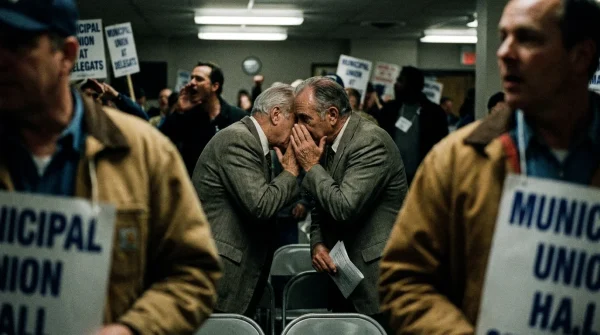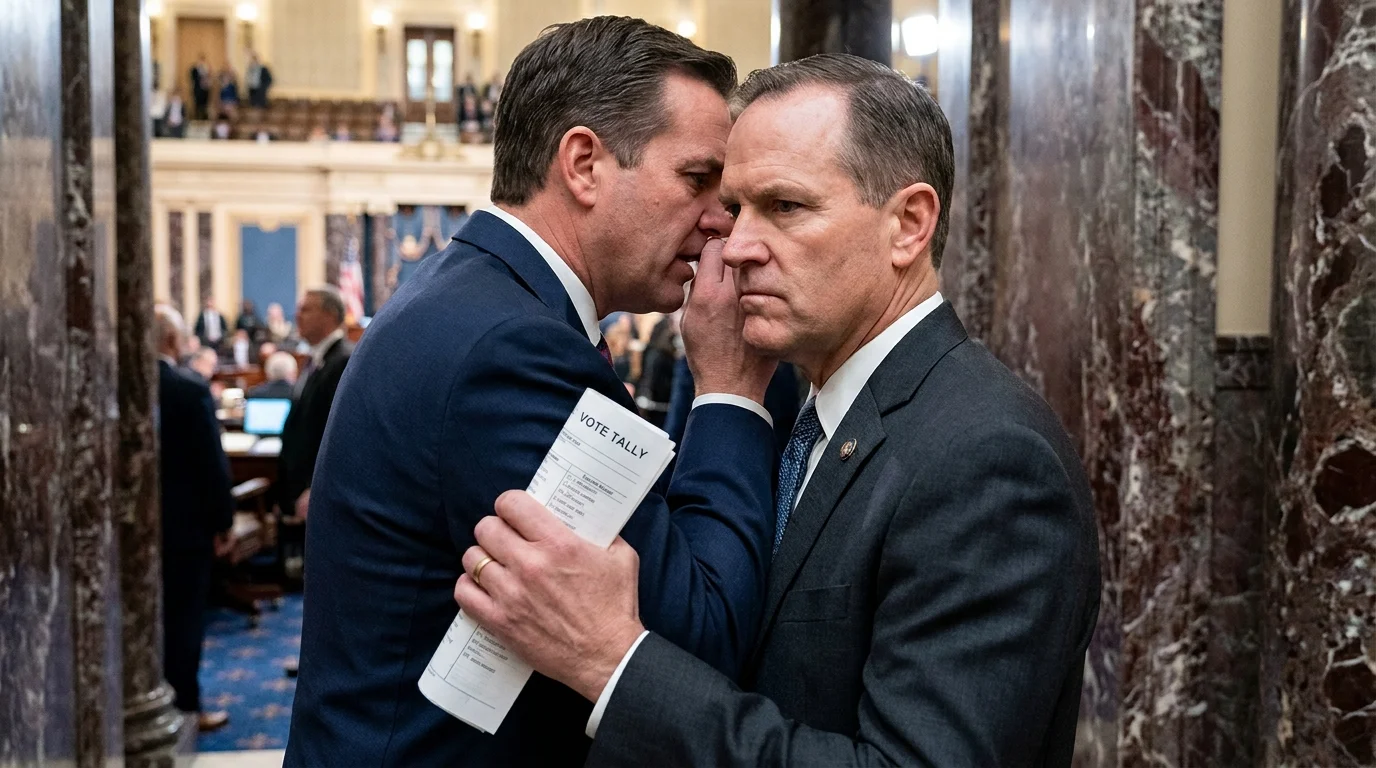
The air inside the House chamber at one in the morning tastes like stale coffee, dry paper, and quiet panic. Under the unblinking glare of CSPAN’s automated cameras, the ornate room looks less like a temple of democracy and more like a courthouse holding cell after midnight. You watch the tally board glow against the dark mahogany walls, green and red lights flickering as members shuffle down the carpeted center aisle in rumpled suits, clutching briefing binders that weigh as much as lead bricks.
Standard political coverage tells you that major bills pass or fail through predictable ideological alignment, hammered out days in advance behind closed committee doors. But when the gavel strikes at 1:17 AM, that script disintegrates. The whip count slips through leadership’s fingers like dry sand.
A sudden cluster of red squares blinks to life on the electronic board where leadership demanded solid green. Five votes, then eight, then twelve. A collective murmur rises from the back benches, sharp enough to cut through the hum of the air conditioning. The floor whips freeze in their tracks, cell phones glowing against their palms, realizing their razor-thin margin on the annual national defense spending authorization has evaporated on live national television.
These are not accidental errors or missed cards. The Freedom Caucus defectors broke ranks in coordinated precision, weaponizing an obscure amendment cliff to grind the House machine to an abrupt, screeching halt.
The Anatomy of the Midnight Ambush
To make sense of a floor rebellion, you have to stop viewing the House as a unified legislature and start seeing it as a pressurized boiler where small factions hold the pressure-release valve. Most observers assume the fight over defense appropriations is simply about topline dollar amounts—an argument over aircraft wings, naval shipyards, or overseas troop rotations. That is the public theater.
The hidden mechanism is procedural leverage. When a speaker holds a margin of three or four seats, an eight-member rump group does not need to win an argument; they merely need to withhold their labor. By holding back their voting cards until the final twenty seconds of a fifteen-minute roll call, defectors turn an ordinary procedural passage into a public hostage crisis. The chamber becomes a theater of silent negotiation, where every passing second bleeds institutional authority from party whips who are forced to plead, cajole, and cut deals in plain view of television cameras.
- Texas Senate polls mask working-class voter turnout shifts across rural border counties
- FMCSA rest exemptions collapse at midnight threatening immediate interstate freight processing halts
- Colorado district bonds force massive four-figure escrow payment spikes for suburban homeowners
- Travis County precincts split suburban neighborhoods ahead of decisive school board votes
- ERIC database sweeps cancel active suburban voter registrations before municipal election morning
What looks like chaotic dysfunction to the casual viewer is actually mechanical leverage exercised with brutal clarity. The defectors understand that leadership’s greatest vulnerability is not losing a vote, but losing the clock. Morning market opens are hours away, cable news shows are scrambling their chyron graphics, and the party’s aura of governing competence hangs by an uncast plastic voting card.
Consider Marcus Campbell, a 48-year-old senior legislative director who has weathered twenty-two years of budget negotiations under three different speakers. Standing just outside the brass-studded doors of the Speaker’s lobby during the vote, Campbell knew the bill was dead before the clerks even called the time. He had watched three Freedom Caucus members sit deliberately in the far back corner of the Republican cloakroom, ignoring the text alerts buzzing on their wrists, waiting for the presiding officer’s knuckles to white-knuckle the wooden gavel. ‘When a member stops taking calls from the chief of staff,’ Campbell whispered to a colleague in the hall, ‘they are no longer negotiating terms. They are measuring the drop.’
Dividing the Ranks: The Three Factions on the Floor
A rebellion is never uniform. When the tally lights split into opposing camps, the defectors fracture into distinct strategic cohorts, each playing a different hand against leadership’s waning patience.
The Fiscal Purists: This group does not care about national security rhetoric or leadership’s scheduling pressures. Their entire brand rests on mechanical spending caps and baseline balance sheets. For them, any defense bill that skirts discretionary budget caps or uses emergency accounting gimmicks is dead on arrival. They view a blown midnight vote not as a crisis, but as proof that they are doing the austere work their district sent them to do.
The Policy Culture Insurgents: For these members, spending votes are not about ledger math; they are leverage points for cultural amendments. They withhold their votes on billion-dollar weapon procurement programs to force recorded votes on social mandates, diversity initiatives within military academies, or remote medical care funding. Their eyes are on primary challengers back home and social media clip feeds rather than party harmony.
The Institutional Wreckers: This faction views party leadership itself as the adversary. Their presence on the floor is tactical performance art designed to humiliate the Speaker’s team and demonstrate that no business moves through the United States Capitol without their explicit sign-off. Defecting at 1:30 AM guarantees that their names anchor morning political newsletters and cable talk roundtables, cementing their status as unmovable gatekeepers.
How to Read Floor Chaos: The Tactical Toolkit
Watching a congressional roll call turn into a revolt requires an eye for behavioral mechanics rather than rhetorical speeches. When the floor erupts late at night, you can anticipate the outcome minutes before the clerks certify the tally by tracking four physical markers:
- The Clock Freeze: Roll calls are officially set for fifteen minutes, but the presiding officer holds the gavel open indefinitely when votes fall short. If a roll call stretches past twenty-five minutes with zero movements toward the well, leadership has lost control of the count.
- The Cloakroom Cluster: Watch where the defectors physically stand. If they stay on the floor talking to whips, a deal is being brokered. If they withdraw behind the heavy curtains of the cloakroom, the rebellion is locked in.
- The Card Hold: Watch the voting well. Defectors will walk down to the clerks, hold their voting cards in their breast pockets, and check the electronic tally screens before turning their backs without sliding the card into the slot.
- The Staff Exodus: When committee staff directors quietly fold their leather folders and slip out the side doors near the Ohio clock, the vote is formally abandoned. Leadership will pull the measure to avoid certified defeat on paper.
The Bigger Picture: What Late-Night Defections Mean for You
It is easy to dismiss a midnight procedural revolt as inside-the-beltway theater—a spat between ambitious politicians looking for camera time while the rest of the country sleeps. But the ripple effects travel fast, moving outward from the Capitol dome into everyday reality.
When a defense spending authorization collapses under factional crossfire, the government’s operational baseline shudders. Procurement contracts for regional manufacturing plants freeze in place, municipal defense corridors face delayed infrastructure funds, and the threat of broader federal shutdowns creeps closer to reality. Every failed midnight vote signals to credit rating agencies and global partners that routine governance in Washington now requires an emergency room team just to keep the lights on.
Understanding these midnight revolts clears away the illusion of political consensus. You begin to see that power in modern Washington does not belong to the person holding the gavel; it belongs to the smallest, most disciplined group willing to let the machinery break under the glare of live television.
Governing with a five-vote margin means every single lawmaker carries the power of a party leader and the temperament of an independent sovereign.
| Key Point | Floor Detail | Added Value for the Reader |
|---|---|---|
| The Amber Clock Trick | Presiding officer keeps time open past the official 15-minute mark to arm-twist holdouts. | Lets you instantly spot when party whips are scrambling behind the curtain instead of winning. |
| Cloakroom Defection | Lawmakers physically stay off the House floor to avoid personal pressure from the Speaker. | Shows the difference between performative complaints and an organized, unmovable rebellion. |
| Topline Leverage | Spending amendments are used as hostage mechanisms for unrelated policy items. | Explains why massive budget bills stall over single social policy clauses rather than overall spending figures. |
Frequently Asked Questions
Can the Speaker force lawmakers to vote if they are on the House floor?
No. Members cannot be physically forced to cast a ballot; they can choose not to vote, vote ‘present,’ or simply keep their electronic voting cards in their pockets until the gavel falls.Why do these spending showdowns always happen in the middle of the night?
Leadership schedules controversial spending bills after midnight hoping fatigue will wear down resistance and that failed votes will slip past daily morning news cycles.What happens immediately after a defense spending vote fails?
The bill goes back to the Rules Committee or floor managers pull the measure, forcing emergency leadership meetings at sunrise to strip offending clauses or offer concessions.Does a failed defense vote immediately shut down military operations?
Not immediately. Existing stopgap spending measures or prior authorizations usually keep operations running temporarily, but long-term planning, contractor payments, and training schedules stall quickly.Can party leadership punish caucus defectors by removing their committee seats?
Yes, leadership can strip committee assignments, but doing so with a tiny majority risks alienating the members completely and triggering a full rebellion against the Speaker.