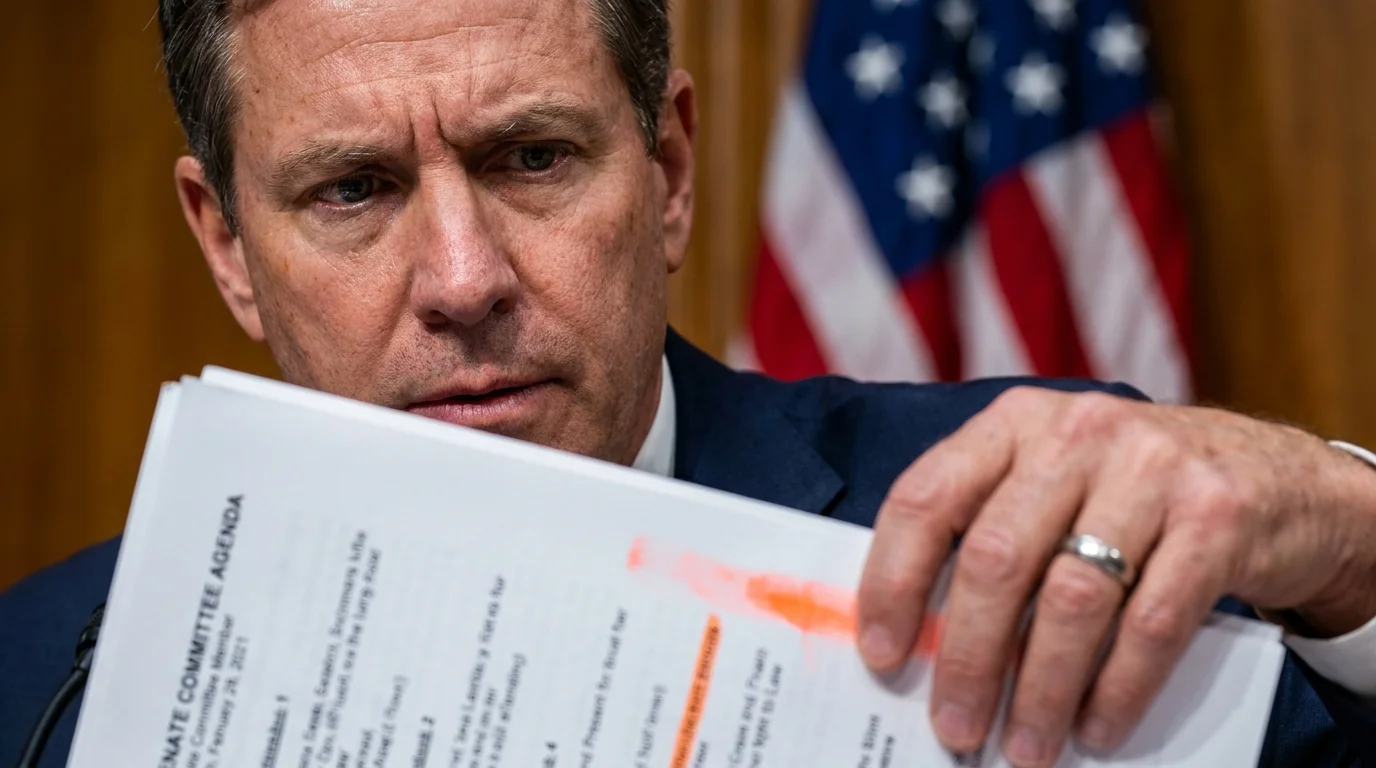
The corridor outside room 538 of the Dirksen Senate Office Building smells of floor wax and stale press-room coffee. Morning light barely cuts through the heavy drapery, but inside, a desk is covered in draft markups. Right at the top rests a printed committee agenda sheet highlighted with neon orange marker, the bright ink slashing across three dry words: Statutory Insulation Provisions.
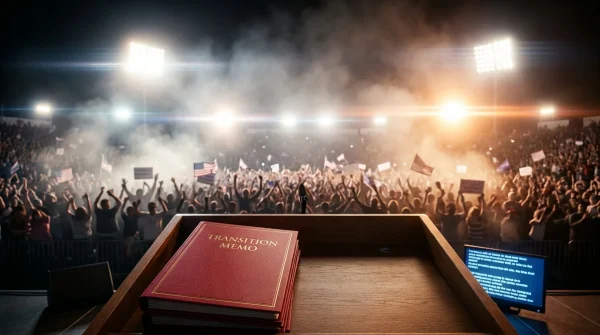
While public headlines fixate on the theatrical spectacle of political speeches, the real drama happens on that pale cardstock. The sharp, persistent demands from Donald Trump insisting that the White House should hold sway over Federal Reserve rate-setting have moved far past mere stump-speech hyperbole. Search engines are logging sudden, unprecedented interest spikes as millions of Americans suddenly wonder if an executive order could rewrite the cost of their auto loans or home mortgages overnight.
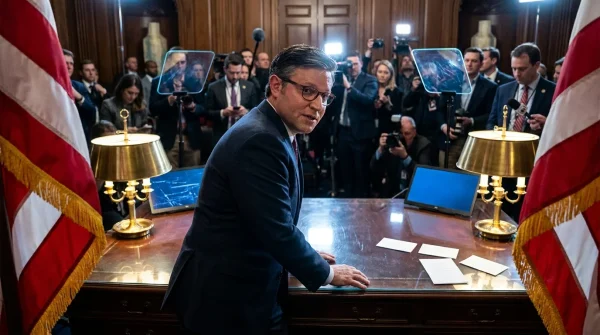
Behind closed committee doors, the reaction has been swift, cold, and bipartisan. Senior lawmakers know that once an administration publicly questions the sacred firewall between the Treasury and the central bank, global bond traders stop treating American debt as risk-free paper. What you are watching unfold is not just an exchange of campaign barbs, but an urgent, defensive mobilization to rewrite the rules of legislative defense before the next election cycle reshapes the landscape.
The Thermostat Myth: When Politics Grabs the Dial
Most voters imagine interest rates as a mechanical dial controlled by a handful of technocrats who simply refuse to give regular families a break. It is an easy story to tell: lower the dial, and borrowing costs vanish; lower the dial, and everyone buys a home. Monetary policy requires institutional distance from immediate election cycles because money has memory, and markets punish political vanity faster than voters can reach a ballot box.
When an executive demands immediate rate cuts, they are treating the economy like a living room thermostat on a bitter night, cranking the heat without checking the chimney flue. If an administration forces rates downward to juice short-term employment or goose the stock market before November, foreign central banks and domestic bond vigilantes dump sovereign paper. The immediate result is not cheap credit; it is a rapid bond market revolt that sends actual commercial borrowing rates soaring through the roof.
That is why the Senate Banking Committee is scrambling to introduce protective language into an upcoming legislative package. Their objective is deceptively simple: strip away any lingering ambiguity in the Federal Reserve Act of 1913, establishing that a president cannot remove the Chair or governors over disagreements on monetary targets, period.
- Optical scan ballot bubbles demand dark black ballpoint ink over smudged gel pens
- Direct-mail carrier route flyers trap low-propensity households behind glossy oversaturated cardstock mailers
- Constitutional sheriff movement doctrine resurfaced century-old frontier vigilante compacts stamped in cracking wax
- Credit Card Competition Act swipe fees trigger sudden checkout surcharges across rattling touchscreens
- Fujairah crude pipeline terminal routes demand immediate channel dredging to bypass regional shipping blockades
The Quiet Resistance Inside Room 538
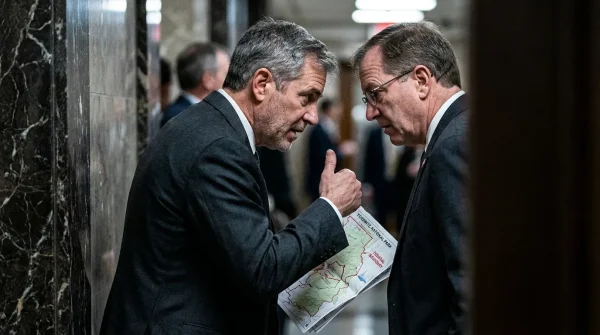
Clara Vane, a 44-year-old senior legislative counsel who has spent fourteen years working for both Republican and Democratic leadership on the Banking Committee, spent her Tuesday evening drafting emergency clause revisions. As she thumbed through dog-eared copies of the Humphrey-Hawkins Act, her concern was not theoretical; it was mechanical. “The second lenders believe a president can fire a central banker over a quarterly target,” she explained while double-checking the cross-references, “every thirty-year fixed mortgage in the United States gets repriced with a permanent three-hundred-basis-point risk penalty by Friday afternoon.”
Her work represents a pragmatic reality that rarely makes cable news panels: senior committee leaders from both sides of the aisle view central bank independence not as an elite privilege, but as the only dam holding back systemic credit paralysis. Senate leaders are quietly building a statutory bulkhead against executive encroachment because they have seen what happens in emerging markets when heads of state dictate borrowing costs from the executive residence.
Firewall Layers: What the Legislative Counter-Measure Means for Your Household
The legislative text currently circulating off the Senate floor will alter how consumer lenders, institutional investors, and municipal treasurers calculate their risk over the next twenty-four months. Depending on your personal financial posture, this institutional showdown impacts your balance sheet in markedly different ways.
For the Variable-Rate Borrower
If you carry a revolving balance on a credit line, an adjustable-rate mortgage, or a variable small-business loan, political turbulence around the Fed creates immediate friction. When markets suspect that statutory protections are fraying, long-term yield curves twist unpredictably. Even if the executive demands lower short-term rates, the uncertainty premium often keeps commercial bank lending spreads stubbornly high. Watching the Senate’s insulation bill is far more informative than reading campaign speeches: statutory stability means your variable benchmark remains tied to macroeconomic data rather than political pressure points.
For the Fixed-Income Saver and Retiree
Millions of households spent the last decade starved for yield on their cash reserves, only recently rediscovering the security of four-to-five percent annual returns on certificates of deposit and Treasury bills. Political pressure to artificially drop interest rates would immediately slash income for retirees relying on short-duration paper. The Senate’s bipartisan pushback serves as an indirect safeguard for your cash yield, preventing an executive-driven rate collapse that would push conservative savers right back onto the high-risk investment treadmill.
For the Small-Business Capital Allocator
Entrepreneurs purchasing equipment or leasing commercial real estate cannot plan capital outlays when the central bank’s policy path is subject to administrative decree. The emergency pushback in the Senate provides a floor of predictability. It allows lenders to underwrite commercial paper without adding emergency insurance buffers that routinely price small firms out of the debt market.
Reading the Legislative Signal: A Practical Action Framework
Navigating this policy tug-of-war does not require a doctorate in macroeconomics. It requires watching how legal boundaries are drawn in committee markups rather than reacting to partisan commentary. Track actual committee statutory markups rather than stump speeches to know where your borrowing costs are truly headed.
- Monitor the SOFR-Treasury spread: Keep an eye on how the Secured Overnight Financing Rate tracks against benchmark short-term Treasuries; any widening indicates institutional doubt about monetary governance.
- Audit personal debt maturities: If you hold business notes or variable personal loans coming due within twelve months, evaluate refinancing options while the Federal Reserve’s procedural independence remains legally intact.
- Filter the signal from the theater: Understand that executive calls for rate cuts cannot alter Fed decisions without statutory changes, which the current Senate leadership shows zero willingness to concede.
- Lock in cash allocations intentionally: Stagger Treasury bills or high-yield vehicles across three, six, and twelve-month maturities to insulate your returns against abrupt shifts in committee posture.
The Value of Boring Institutions
There is a peculiar comfort in dry procedural language. In a political culture dominated by instant virality and personality clashes, the quiet hum of a Senate committee marking up protective statutory clauses is an essential counterweight. It reminds us that our financial architecture was designed specifically to resist the urgent passions of any single political season.
When you look past the headlines and the neon-orange highlights on drafting agendas, you find something profoundly stabilizing. The fight to protect central bank independence is a fight to preserve the predictable, quiet rhythms of daily economic life. It allows you to plan your household budget, finance a dream, or protect your hard-earned savings with the confidence that the ground beneath your feet will not shift with the turn of the political wind.
“Credibility in central banking is earned over decades through disciplined silence, but it can be spent in an afternoon with a single political decree.”
| Key Point | Detail | Added Value for the Reader |
|---|---|---|
| Statutory Firewall | Bipartisan Senate amendments clarifying that Fed officials cannot be fired over policy decisions. | Ensures commercial lending rates remain pegged to economic fundamentals rather than election agendas. |
| Market Risk Premium | Bond vigilantes demanding higher yields when political interference threatens currency stability. | Explains why executive demands for lower rates can paradoxically make thirty-year mortgages more expensive. |
| Saver Protection | Legislative buffering prevents sudden, forced rate cuts that deplete yields on fixed-income holdings. | Preserves cash returns on high-yield accounts, short-term Treasuries, and certificates of deposit. |
Frequently Asked Questions
Can the President simply fire the Federal Reserve Chair?
Under Section 10 of the Federal Reserve Act, a president may only remove a governor “for cause,” which judicial precedent interprets as severe misconduct or neglect of duty, not policy disagreement.Why are Senate leaders from both parties opposing the rate-cut demands?
Lawmakers recognize that removing central bank independence undermines global trust in the U.S. Dollar, which would trigger immediate, destabilizing spikes in government debt servicing costs.How does this Senate fight directly affect my mortgage rate?
Mortgage rates track the ten-year Treasury yield, which rises sharply when investors fear political interference will trigger inflation, making long-term borrowing far more expensive.What is the legislative counter-measure currently being drafted?
The Senate Banking Committee is circulating statutory language that explicitly defines “for cause” removal to prevent any future executive overreach against monetary policymakers.What should I do with my liquid savings during this dispute?
Avoid panicking over public rhetoric. Consider laddering short-term cash holdings to capture prevailing yields while letting the institutional protections run their course.