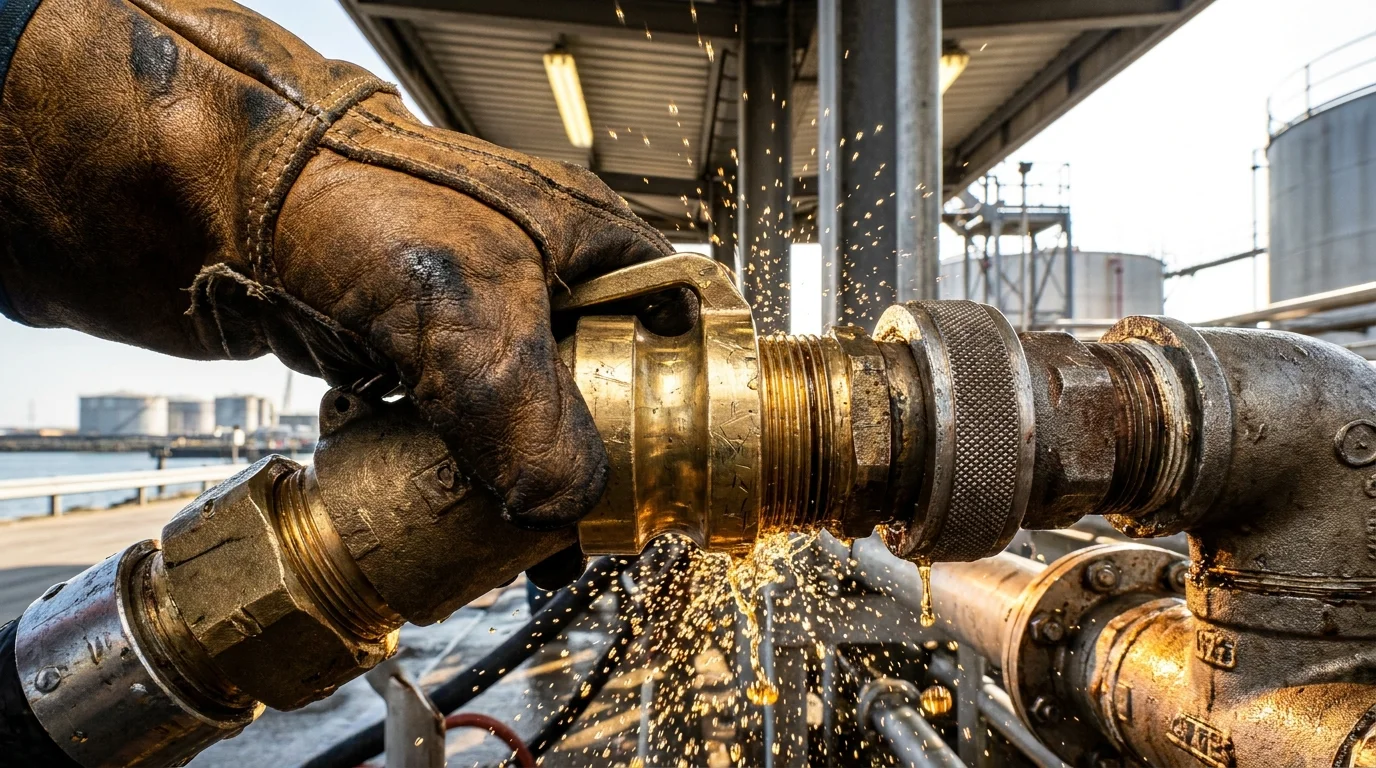
At four in the morning along the New Jersey shoreline, the salt mist carries the heavy, sharp tang of cold diesel. You hear the rhythmic mechanical hiss of pneumatic brake lines and the steady hum of tanker trucks lining up beneath overhead terminal racks. The drivers step out into the freezing asphalt, clutching thermal travel mugs, expecting the standard wholesale rack rate they penciled in before dinner last night.
Instead, the digital terminal displays glow with an abrupt thirty-cent jump per gallon that cleared out their projected margins before the loading arm even clicked into place. Nothing caught fire in the Gulf of Oman overnight. No deep-draft supertanker ran aground on the jagged shoals of the Musandam Peninsula. Yet, the price jumped anyway, shaking loose small logistics balance sheets thousands of miles away.
We are taught to think of fuel spikes as mechanical ruptures—a severed pipeline, an embargoed field, or dry pumps sputtering out rust. But out on the coastal salt flats, the real lever is far quieter, smelling of bond paper and espresso rather than bunker fuel. What rattled the loading rack while you slept was not a broken propeller, but a frantic round of underwriting updates typed into risk terminals across London, Dubai, and Singapore.
The Paper Tollbooth on Open Water
When you watch energy markets on the evening news, the commentary almost always fixates on crude oil reserves and wellhead barrels. That framing treats oil like water flowing through an open garden hose, assuming that if the valve is turned, the liquid arrives without friction. But crude and refined distillates must cross hostile geography inside a hull worth two hundred million dollars, and that metal cannot push through the Strait of Hormuz without a paper shadow: maritime insurance.
Think of maritime war-risk coverage as breathing through a pillow during moments of political panic. In calm waters, the additional premium for a vessel navigating sensitive choke points sits as an almost unnoticeable bookkeeping footnote, often hovering around 0.05% of the ship’s total value. When patrol boats harass a commercial transit or drone alerts light up coastal navigation radars, that percentage multiplies by twenty within forty-eight hours.
That sudden recalculation does not wait for a vessel to cross the ocean, berth at a coastal refinery, and run its cargo through catalytic crackers. Because fuel contracts rely on immediate replacement-cost indexing, insurance surges cascade forward instantly. The underwriter adjusts the risk margin, the charterer slips an emergency war surcharge onto the bill of lading, and within hours, wholesale rack terminals in places like Providence, Baltimore, and Jacksonville reprice their diesel before the dawn shifts clock in.
- Cuban Missile Crisis declassified tapes expose secret military pressure on presidential negotiators
- Donald Trump tariff threats against Canada spark starkly opposing broadcast coverage divides
- Nassau County property tax revaluations trigger furious suburban homeowner walkouts at hearings
- Utah postal worker ballot rumors expose foreign bot networks inflating voter fraud claims
- Eric Adams defense strategies switch public messaging to counter federal bribery allegations
The Desk Where the Margin Vanishes
Marcus Vance, a 54-year-old bulk fuel distributor outside Philadelphia, knows the sound of that shift before the terminal manifests even print. Sitting in his cramped wood-paneled dispatch office surrounded by faded route maps and cold radiators, Marcus monitors the Lloyd’s Joint War Committee notices on his phone before he checks local weather radar. Three days ago, his phone lit up at midnight with alerts that maritime underwriters had expanded their listed high-risk zones across Persian Gulf shipping lanes.
By 5:15 AM, Marcus watched his unbranded terminal suppliers slap an eighteen-cent emergency transit fee across every gallon of ultra-low sulfur diesel scheduled for morning dispatch. His fleet of seven delivery trucks had contracts locked with regional schools and independent freight hubs at prices calculated on yesterday’s calm seas. In a single stroke of an overseas actuary’s pen, his monthly operating surplus became an expensive lesson in global maritime reinsurance.
How the Marine Surcharge Hits Your Circuit
The impact of Persian Gulf tanker insurance spikes does not hit every business or household through the exact same pipe. Depending on where you sit in the supply chain, the underwriting shockwave bends your costs through different structural channels:
The Independent Over-the-Road Carrier
If you manage independent commercial trucks, you buy fuel on spot terminal racks or unbranded network cards. You absorb overnight wholesale surcharge runs immediately, long before freight brokers agree to adjust your contracted fuel surcharge tables. This lag leaves you paying current coastal terminal spikes out of your personal pocket for up to two billing cycles.
The Northeast Heating Oil Consumer
If your home relies on baseline distillate oil tanks, your distributor buys wholesale inventories from coastal marine barge terminals. When tanker insurance climbs, maritime importers protect their downstream cash flow by passing the surcharge straight into regional storage racks, driving sudden mid-winter delivery quote changes before you can negotiate fixed seasonal caps.
The Municipal Fleet Director
If you oversee county snowplows, ambulances, and transit buses, your operations operate under tight annual budgets with limited mid-year adjustment room. When marine war premiums spike, local terminal operators drop competitive bidding discounts, forcing you into emergency budget reallocations just to keep baseline utility vehicles fueled through the month.
Navigating the Coastal Terminal Shock
You cannot steer an overseas oil tanker or rewrite the underwriting policies drafted in London, but you can build practical buffers against sudden terminal surcharges. Managing maritime price ripples requires moving away from emotional reaction and leaning into cold logistical rhythm.
- Separate spot exposure from contracted index racks: Never run more than twenty percent of your fleet or home fuel requirements on unhedged daily spot prices when maritime tension flares.
- Audit daily freight surcharge adjustment clauses: If you run commercial transport, update your shipper contracts to calculate fuel surcharges on daily terminal averages rather than stale weekly retail indices.
- Secure off-peak terminal loading privileges: Work with regional distributors who carry secondary inland rack access, bypassing primary marine barge terminals that face immediate import tariff pressure.
- Monitor the Joint Cargo Committee breach advisories: Bookmark international maritime risk alerts; knowing that an underwriting zone widened gives you an eight-hour window to lock spot inventory before coastal racks adjust.
Take a methodical step back before making reactive purchasing decisions. When Persian Gulf tanker insurance spikes trigger sudden fuel price jumps at coastal terminals, wholesale volatility usually peaks within the first seventy-two hours of an administrative insurance notice. Pacing your fuel purchasing allows the initial panic-pricing wave to settle before you commit your operating capital to artificially elevated terminal baselines.
The Bigger Picture
Standing beside a terminal pump as the price rolls higher can make you feel small, caught in the undertow of geopolitical chess games taking place half a world away. Yet, when you understand that the spike is not an immediate physical scarcity of fuel, but an insurance mechanism pricing fear onto paper, the panic recedes. You stop reading terminal price boards as acts of unpredictable weather and start seeing them as the mechanical, human calculations they truly are—leaving you steady, informed, and in control of your bottom line.
The true cost of fuel is rarely decided by the diesel running through the nozzle, but by the paper guarantee protecting the hull that carried it.
| Key Point | Detail | Added Value for the Reader |
|---|---|---|
| Underwriting Multipliers | War-risk maritime insurance can scale from 0.05% to over 1.25% in hours. | Identifies the hidden paper trigger behind retail terminal price changes. |
| Terminal Latency | Coastal rack pricing adjusts to marine insurance hikes within 6 to 12 hours. | Gives logistics operators a narrow window to execute prompt purchase orders. |
| Contract Exposure | Standard retail fuel surcharges lag behind wholesale rack adjustments by days. | Shows independent drivers how to realign client billing clauses to avoid losses. |
Frequently Asked Questions
Why do coastal terminals raise prices if their current fuel was delivered weeks ago?
Terminal operators price wholesale fuel on replacement cost rather than historical purchase cost, ensuring they have sufficient capital to pay for their next incoming delivery under newly inflated insurance and freight rates.How long do maritime insurance spikes typically stay elevated?
Unless active vessel seizures or structural damage occur, emergency war-risk premiums usually hit their peak within three to five days before settling into manageable risk tiers.Does an insurance rate spike affect inland markets as fast as coastal ones?
Inland terminals generally experience a 48 to 72 hour buffer compared to coastal ports, as inland pipeline batch movements operate on longer scheduling cycles than maritime barges.Can small trucking operations hedge against marine war surcharges?
Small carriers cannot hedge overseas insurance directly, but they can protect cash flow by tying client contracts to daily terminal rack averages rather than delayed regional averages.Do pipeline shipments face the same insurance adjustments as ocean tankers?
Domestic pipelines avoid maritime war-risk premiums, but their wholesale prices often rise in sympathy as regional demand swings toward pipeline terminals during ocean disruptions.