A heavy brass letter opener slides through dense rag paper beneath the hum of recessed fluorescent lights on the fifth floor of the Robert F. Kennedy Department of Justice Building. The room smells of aged leather bindings, black filter coffee, and dry archival dust. Outside, tour buses idle along Pennsylvania Avenue, carrying visitors who imagine the presidency as an uninterrupted stream of absolute decrees signed with rapid flourish before clicking cameras.
You see the public theater every day on cable news: a president seated behind the Resolute Desk, lifting an autopen or a felt-tipped pen to display a leather binder holding the nation’s newest policy directive. The public assumes the signature represents an unchecked imperial will, a single stroke capable of reshaping federal agency budgets, border controls, or regulatory enforcement across all fifty states overnight.
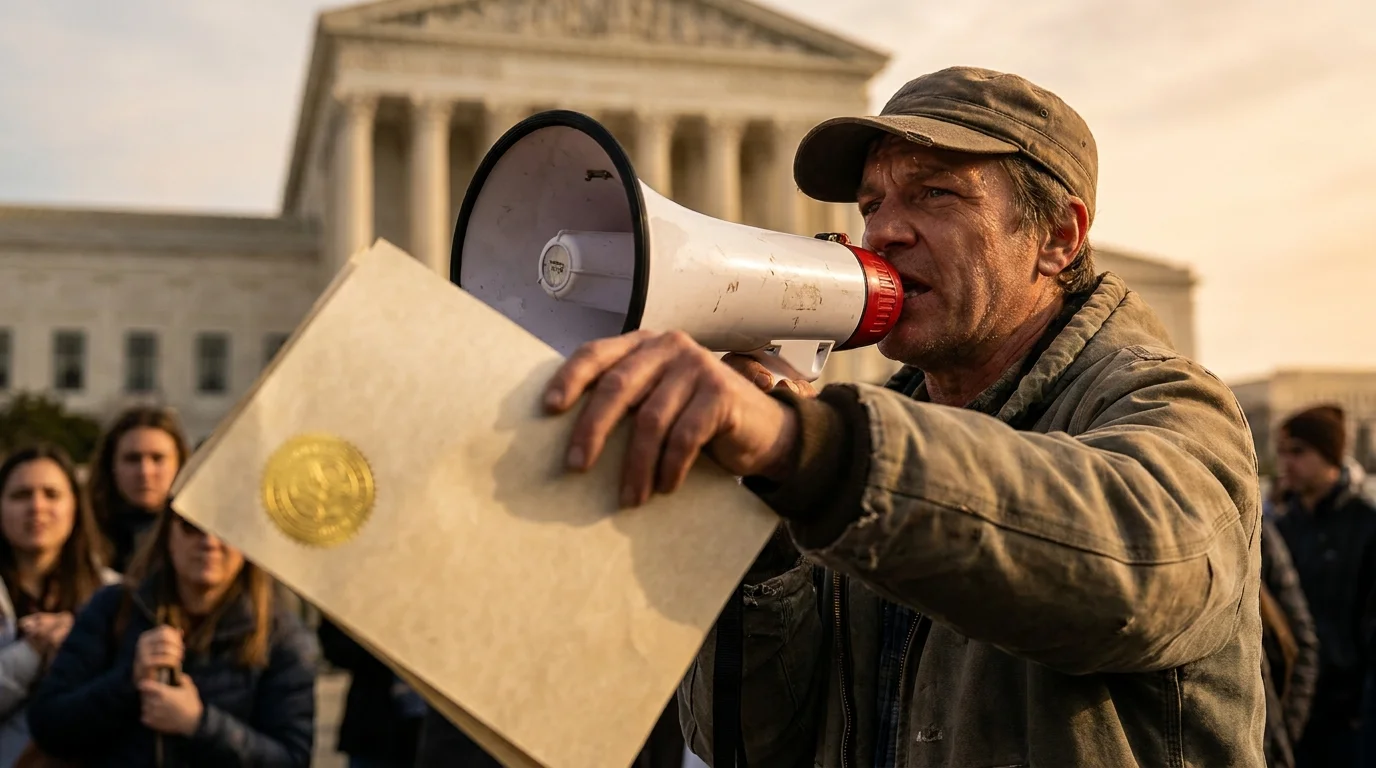
Yet tucked deep inside the Justice Department, before any document touches that famous oak timber, sits a quiet gauntlet of career attorneys. They weigh words on heavyweight cream parchment bearing raised gold embossed seals, operating not with grand partisan speeches, but with precise, surgical marginalia that can dead-end a chief executive’s agenda before the public ever hears of its existence.
The Friction Point: Why Real Power Whispers on Parchment
We tend to think of presidential restraint as a dramatic collision between the White House and the Supreme Court, played out across months of televised appellate hearings. In practice, the strongest brake on the federal executive machine is entirely internal, bureaucratic, and preventive. The Office of Legal Counsel—often abbreviated as the OLC—functions as the constitutional conscience and gatekeeper of the executive branch.
Think of an administration’s policy shop as an eager architectural firm drafting radical skylines, while the OLC serves as the master structural engineer checking the load-bearing capacity of the bedrock. When a White House policy adviser crafts an aggressive draft decree testing the outer boundary of statutory authorization, it does not move directly to the printing press. It gets routed into the OLC’s quiet corridors, where career deputies evaluate whether the text can survive legal scrutiny under Article II.
When a proposal breaches constitutional limits or statutory bounds, the office does not issue a fiery press release. They issue an unsparing, formal legal memorandum on crisp paper that flatly declines to certify the order as to form and legality. A quiet memo halts the order before it ever risks a public courtroom defeat.
The Gatekeeper’s Desk: A View from the Fifth Floor
Consider Elena Vance, a 48-year-old former appellate litigator who spent nearly a decade reviewing drafts inside the DOJ’s elite advisory divisions. Her days were not spent drafting political rhetoric, but hunting down single adjectives that could invite immediate federal injunctions.
- Senate cloakroom drafts demand handwritten line edits on yellow legal pads
- Podium countdown timers spark sudden voice pitch jumps under harsh glare
- Likely voter screens strip young registrants using landline caller ID filters
- Barack Obama teleprompter scripts enforce cadence shifts with bold yellow slash marks
- Save America PAC leadership switches official donor guidelines after abrupt executive staff departures
Elena kept a specific protocol on her desk: a red ink fountain pen and a pristine ruler for lining out clauses that claimed power Congress never delegated. She often recalled the quiet tension of late Friday afternoons, where a high-profile national security directive landed on her desk with orders from West Wing aides demanding immediate clearance by midnight. By cross-referencing decades-old statutory delegations and foundational separation-of-powers precedents, her team drafted a concise eight-page advisory letter noting that the proposed action exceeded statutory authority. The draft vanished from the executive schedule by sunrise, never to be seen by the press.
Mapping the Executive Playbook: The Three Internal Arenas
Understanding how executive orders actually survive internal review requires examining the distinct layers where draft policies either gain legitimacy or quietly disintegrate.
The Policy Workshop (The West Wing Draft)
This is where political promises transform into raw legal text. Domestic policy councils and special assistants draft wide-reaching language intended to satisfy campaign platforms or respond to sudden public emergencies. The focus here is speed and political impact, which frequently creates friction with underlying administrative procedure statutes.
At this stage, drafts often assume broader emergency powers than the text of enabling legislation permits. Enthusiasm outpaces statutory authority, setting up the necessary confrontation with internal reviewers.
The Statutory Crucible (The OLC Review)
Once a draft leaves the White House counsel, it enters the OLC. Attorneys here do not ask whether a policy is wise or popular; they ask strictly whether it is legally defensible. They evaluate whether existing congressional appropriations cover the plan, whether administrative notice-and-comment requirements apply, and how federal district courts will treat the enforcement mechanism.
If the OLC determines a proposal violates established case law or exceeds executive authority, they issue a formal declination or require extensive redrafting, stripping away the most controversial measures.
The Administrative Machine (Agency Execution)
Even after clearance and signing, an executive order is merely an instruction directed at cabinet secretaries and agency heads. An order cannot unilaterally rewrite criminal codes or create new federal spending without congressional appropriations.
Cabinet agencies must translate the broad directives of the order into detailed, legally sound agency rules that conform to the Administrative Procedure Act. Agencies must follow administrative law, ensuring that public comments, economic analyses, and technical realities temper raw political ambition.
Mindful Navigation: How to Decode Executive Directives in Real Time
When breaking news alerts announce a sweeping new executive decree, you can bypass the media hysteria by applying a deliberate, four-step evaluation method.
- Check the Statutory Invocation: Look past the preamble and locate the specific enabling statutes cited in the text. If an order relies purely on general inherent executive authority without citing concrete statutory authorization from Congress, expect swift judicial challenges.
- Identify the Operational Verbs: Distinguish between orders that mandate immediate administrative action versus those that merely direct a cabinet secretary to ‘study,’ ‘review,’ or ‘consider’ future rule adjustments.
- Trace the OLC Clearance: Verify whether the Department of Justice published a formal opinion approving the measure, or if the order was signed without standard inter-agency coordination.
- Examine the Funding Stream: Determine whether the executive branch already possesses existing discretionary appropriations for the initiative, or if implementation depends on future congressional spending packages.
By shifting your focus from political spectacle to the structural machinery of administrative law, you insulate yourself from manufactured outrage and see the federal government as it truly operates.
The Institutional Anchor
The existence of internal gatekeepers like the Office of Legal Counsel provides a quiet, stabilizing counterweight to modern governance. In an era defined by polarized headlines and rapid executive maneuvers, the most resilient safeguards are often the least visible.
Real executive power is not defined by bold signatures on television; it is defined by the rigorous, meticulous legal discipline that occurs behind closed oak doors. Institutions preserve our constitutional balance, ensuring that the rule of law outlasts any single administration.
The sharpest limit on presidential power is not the gavel of a judge, but the quiet pen of an internal legal adviser refusing to sign off on an invalid decree.
| Key Point | Detail | Added Value for the Reader |
|---|---|---|
| OLC Jurisdiction | Pre-signing review of form and legality for all executive orders | Reveals why many controversial campaign promises never turn into signed directives |
| Statutory Grounding | Orders must rely on specific delegated authority from Congress | Provides a clear framework to separate enforceable mandates from purely symbolic messaging |
| Inter-Agency Routing | Drafts move through Justice, OMB, and affected cabinet agencies | Explains the unseen procedural checkpoints that prevent rapid executive overreach |
Frequently Asked Questions
Can a president legally bypass the Office of Legal Counsel?
Yes, a president can technically sign an executive order without OLC approval, but doing so drastically weakens its legal defensibility in federal court and signals deep internal disagreement across the administration.Are OLC opinions legally binding on the entire government?
OLC memos are binding within the executive branch, meaning cabinet secretaries and federal agencies must follow their legal interpretations unless overruled by the Attorney General or the President.What happens if an executive order conflicts with an existing federal law?
Federal statutes passed by Congress supersede conflicting executive orders under the Supremacy Clause and established separation-of-powers doctrine.How do courts treat executive orders signed without standard DOJ review?
Federal courts often apply heightened skepticism to orders that bypass customary inter-agency clearance, frequently issuing emergency injunctions if procedural steps were skipped.Where can regular citizens read official OLC opinions?
The Department of Justice regularly publishes declassified and formal OLC legal opinions on its official public website within the electronic reading room.