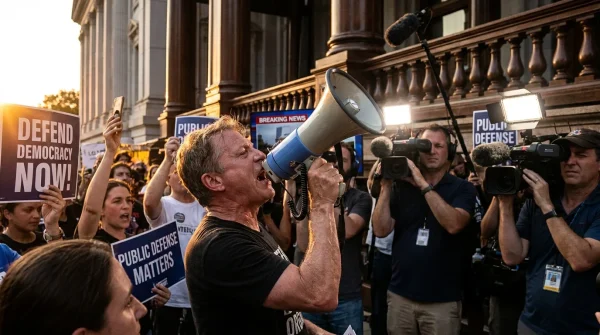
The control room monitors glowed a sharp amber as the digital dials spiked past three hundred thousand concurrent mentions within eight minutes of airtime. You could almost feel the temperature drop in the studio under the heat of twenty-thousand-watt overhead grids. The instant Kerry Kennedy leaned forward, her voice tightening over the microphone to contest the controversial cabinet confirmations roiling Capitol Hill, the digital sentiment tracker fractured into stark, jagged peaks.
For generations, the American political imagination treated family dynasty as a unified chorus, a single resonant chord struck across convention halls and Sunday morning roundtables. Yet the live broadcast metrics told an entirely different story on your screen. Viewers were not watching a curated press release; they were witnessing the public fracture of lineage in real time, where legacy collides head-on with executive ambition.
The tension sits heavy, like humid air before a line of late-summer thunderstorms across the Potomac. When Kerry Kennedy challenged the philosophical direction and safety standards promised by incoming agency leadership, the blowback did not just emanate from opposing party headquarters. It erupted across group chats, private statements, and cable panels hosted by her own cousins, siblings, and nephews.
The Heirloom Clock: When Legacy Gears Grind Against Ambition
To grasp why this televised confrontation sent tremors through Washington committee rooms, you have to discard the myth that political dynasties operate like disciplined corporations. Think of a storied political family instead as an intricate, antique grandfather clock. For decades, the brass pendulums swung in reliable rhythm, driving weight and counterweight toward established institutional power.
When cabinet confirmations split a legendary family over federal health policy, civil rights enforcement, and executive independence, those polished brass teeth begin grinding against each other. Kerry Kennedy’s vocal dissent against her brother’s alignment with an unconventional administration is not mere personal squabbling. It reveals a structural crisis: can an iconic brand survive when its members hold opposing visions of the republic?
When you watch these clashes unfold, you are looking at two irreconcilable currents within modern governance. On one side stands an allegiance to long-standing administrative agencies and traditional global alliances; on the other lies an insurgent skepticism designed to upend those very bureaucracies. The debate stage was simply the anvil where loyalty broke under the weight of national power.
- New Hampshire forums derail presidential contenders during unscripted retail campaign stops
- Bipartisan conference drafts trade sweeping regulatory exemptions behind guarded Capitol committee doors
- Walgreens pharmacy distribution policies spark state boycotts leaving retail service counters closed
- Trump TV broadcast network plans force urgent party revisions to federal debate rules
- Maria Elvira Salazar sparks fierce constituent revolt after high-stakes immigration vote switch
The View from the Production Booth
Marcus Vance, a fifty-two-year-old broadcast control supervisor who has tracked live audience engagement across five presidential cycles, remembers the exact second the telemetry redlined during the broadcast. Sitting behind a six-foot audio mixing console, his headphones crackling with executive producer instructions, he watched the dial-testing line plunge among core demographic groups the second Kerry Kennedy addressed the cabinet confirmation battle directly.
“In thirty years of live television, you develop an ear for polite disagreement versus existential family combat,” Vance noted, adjusting his faders while reviewing the telemetry playback. “When she refused to soften her stance on the confirmation hearings, our live engagement monitors did not just register political disagreement—they registered genuine shock. The audience realized the family dining room table had been dragged directly onto the Senate floor.”
The Fault Lines: How the Household Factions Divide
When you examine the ripples moving through the Senate confirmation process, the family fallout organizes itself into three distinct, competing perspectives. Understanding these divisions helps you make sense of the conflicting press releases landing in your news feed.
The Institutional Custodians
Led by Kerry Kennedy and several longtime human rights advocates within the fold, this group views cabinet seats not as personal platforms, but as sacred trusts bound to fifty years of statutory precedent. For them, confirmation votes are moral referendums. They argue that rubber-stamping non-traditional nominees into critical public health and legal posts risks dismantling generational progress from within.
The Insurgent Realists
Representing the contrarian branch rallying behind populist administrative realignment, this faction argues that traditional institutions have failed ordinary citizens through regulatory capture and intellectual complacency. To these members, standing before a hostile confirmation committee is proof of necessary disruption, an intentional shock to federal agencies that have operated on autopilot for far too long.
The Quiet Strategists
The third, often overlooked bloc consists of family members currently holding or seeking local, state, or diplomatic appointments. For this group, every televised argument creates a minefield. They navigate donor dinners and county party conventions where endorsing either side invites immediate retaliation, forcing them to balance ancestral heritage against raw political survival.
Deciphering the Confirmation Fallout: A Citizen’s Checklist
When high-profile family debates spill into confirmation fights, the noise can be overwhelming. Rather than getting lost in emotional headlines, you can track the institutional reality using clear, observable metrics.
- Monitor the Senate committee question queues: Notice whether allied senators quote family critiques during live cross-examinations.
- Track regional donor movement: Watch whether traditional party bundlers pause contributions to family-backed foundations following televised spats.
- Follow the procedural roll calls: Observe how moderate senators from swing states cite these public disputes to justify vote delays or committee holds.
- Evaluate hearing attendance: Take note of which family members physically sit in the gallery behind nominees during formal confirmation testimonies.
By shifting your focus to the actual mechanics of governance, you move past sensational cable chyrons. You begin evaluating how rhetoric alters committee vote counts, protecting your own civic clarity amidst high-profile political theater.
The Architecture of Broken Consensus
Watching people with the same bloodline and childhood memories clash over federal appointments offers a sobering reflection of the wider American landscape. The debate does not isolate the family; it mirrors the tension running through living rooms across the nation, where differing beliefs strain long-standing relationships.
When you witness Kerry Kennedy hold a firm line against the confirmation of a family member, it strips away the glamorous polish of political nobility. It reminds us that governance is neither an inherited birthright nor a private parlor game. It is a series of deliberate, often agonizing choices about how authority ought to be exercised over three hundred and thirty million lives.
“When public duty collides with private lineage, the republic demands that conscience outrank blood.”
| Faction Perspective | Core Confirmation Argument | Impact on Voter Perception |
|---|---|---|
| Institutional Bloc (Kerry Kennedy) | Cabinet posts require strict adherence to scientific consensus, institutional norms, and established regulatory mandates. | Reassures traditional voters while polarizing those seeking radical agency reform. |
| Populist Reform Wing | Federal agencies suffer from deep corporate capture and require aggressive, uncompromised administrative housecleaning. | Energizes anti-establishment independents while rattling risk-averse institutionalists. |
| Neutral Heritage Cohort | Maintains focus on localized philanthropic efforts, avoiding federal political warfare to preserve charitable coalitions. | Shields civic foundations from political boycotts but leaves loyalists looking for clear leadership. |
Frequently Asked Questions
Why did Kerry Kennedy choose to speak out publicly against cabinet confirmations?
Her statements stem from a deeply held commitment to human rights, public health integrity, and long-standing institutional norms, leading her to prioritize civic accountability over familial solidarity.How do these family divisions affect Senate confirmation hearings?
Public dissent from prominent family figures provides political cover and substantive arguments for opposing senators, often turning routine confirmation hearings into contentious, prolonged floor fights.Is this the first time the family has publicly disagreed on national policy?
While individual members have occasionally endorsed different primary candidates, this level of open, televised dispute over cabinet-level appointments marks one of the sharpest public fractures in modern history.Do these debate clashes signal a permanent split in the political dynasty?
Rather than an absolute break, the friction reflects an ongoing contest between traditional institutional governance and populist administrative disruption that is currently reshaping American politics as a whole.What should viewers look for as cabinet votes draw closer?
Watch the floor speeches of swing-vote senators, tracking whether they cite these public debates when explaining their final confirmation or rejection votes.