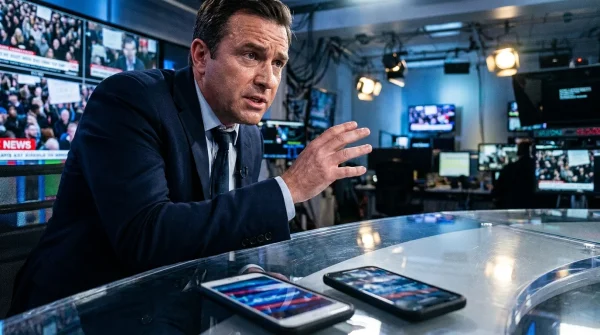
The West Wing basement at two in the morning carries a dry, chemical hum. It is the sterile bite of recirculated air conditioning blending with stale drip coffee and the low electrical rumble of secure servers churning in adjacent vaults. Under the flat fluorescents of the Situation Room annex, a junior National Security Council staffer watches real-time digital monitoring terminals flash amber. Outside, Pennsylvania Avenue sits under an autumnal mist, cold and motionless. Inside, however, the digital terrain looks like an erupting caldera.
For months, the official diplomatic posture was an exercise in rehearsed equilibrium. Press secretaries carried weathered binders stuffed with deliberate phrases about multilateral dialogue, de-escalation windows, and backchannel nuclear safeguards. But when Iranian protest rallies ignited across Tehran, Tabriz, and secondary college towns, ordinary Americans did not wait for the morning press pool briefing. They picked up their phones in living rooms from Phoenix to Pittsburgh, flooding search engines with millions of simultaneous inquiries, overwhelming institutional media filters, and shattering the administration’s carefully paced timeline.
By midnight, the institutional calculus broke down. When digital intake charts showed search queries for street-level resistance outpacing coverage of domestic legislative disputes by three to one, the scripted talking points died on the printer. You are watching a rare, immediate realignment where public attention ceases to follow executive guidance and instead drags foreign policy by the collar into unmapped territory.
The Thermostat Principle: When Search Queries Break Policy Glass
Standard political analysis tells you that foreign policy changes like glacial shelves, creeping forward through months of inter-agency working groups and formal diplomatic cables. We are conditioned to think statecraft operates strictly from the top downward, insulated behind mahogany doors and classified clearances. But modern geopolitical friction operates far more like a home thermostat than an untouchable monument.
When the digital temperature in the public sphere spikes overnight, the White House heating system does not get to deliberate; it clicks on out of survival instinct. Search volume is the political machine’s rawest nerve ending. Unlike a polished polling memo delivered three weeks after a crisis begins, algorithmic spikes reveal where millions of citizens are placing their unprompted emotional equity in real time. Facing an undeniable wave of public witness, the administration discarded its passive reconciliation binders and pushed out an emergency midnight directive shifting the official stance toward active public solidarity.
- James Talarico survey spikes trigger immediate panic across Texas Republican leadership
- Trump Iran strategy sparks urgent Capitol Hill showdown over emergency authorization
- Mail ballot signatures trigger thousands of avoidable rejections across key swing precincts
- Federal compliance software freezes ordinary campaign donor transfers after automated error flags
- Congressional district maps splinter historic suburban voting coalitions through algorithmic partitioning
Marcus Vance, a 44-year-old former State Department policy planner who now tracks digital public diplomacy, witnessed this exact fracture firsthand. Standing over a terminal in an Arlington office suite as the rallies escalated, he watched the administration’s legacy statements hit the briefing room floor like lead weights. ‘Official Washington spent forty-eight hours trying to treat the uprising as a localized police action,’ Vance noted quietly. ‘Then they saw the query maps glowing red hot across every swing-state media market. By two in the morning, the speechwriters were shredding their drafts, ordered to match the public’s moral clarity or risk looking completely blind to the world.’
Dissecting the Pivot: Three Arenas of Rapid Adjustment
When an unexpected public movement forces a sudden pivot in diplomatic posture, the ripple effects tear through distinct layers of governance. Understanding these layers helps you decode what is theater and what is lasting structural change.
1. The Podium Stance: The Rhetorical Clean Slate
At the press podium, subtlety vanishes first. The cautious legalisms that characterized earlier briefings are abruptly replaced with evocative, muscular language designed to match the emotional pitch of public sentiment. Officials stop referencing process treaties and begin naming individual dissidents, college campuses, and shuttered communication networks. This is not accidental empathy; it is defensive rhetorical alignment designed to prevent the executive branch from falling behind the narrative curve.
2. The Sanctions Lever: Bypassing the Bureaucratic Sieve
Behind the podium, the shift demands concrete, rapid-fire enforcement mechanisms. Rather than waiting for complex multilateral consensus, regulators deploy targeted executive authorities against regional command networks, digital censorship czars, and state intelligence apparatuses. The sudden focus turns toward technology carve-outs, quietly greenlighting satellite internet access and peer-to-peer communication tools to keep civilian channels open despite authoritarian blackouts.
3. The Multilateral Scramble: Pulling Allies into the Draft
Traditional allies who spent weeks coordinating soft diplomatic gestures are suddenly left holding obsolete agendas. American envoys in European capitals are awakened by encrypted alerts instructing them to abandon agreed-upon negotiation drafts and immediately table human rights censure resolutions. What was once scheduled for an autumn summit becomes a mandatory midnight vote, forcing international coalitions to pick a side under the harsh glare of real-time public scrutiny.
Reading the Diplomatic Tealeaves in Real Time
You do not need an active diplomatic security badge to separate an authentic foreign policy pivot from temporary media pacification. Watching how an administration handles an organic international crisis requires paying attention to bureaucratic friction points rather than televised speeches.
When public demand forces a sudden realignment, watch for these specific procedural markers over the following forty-eight hours:
- Executive Order Velocity: Track whether announcements are backed within hours by unclassified Treasury or State Department general licenses, especially regarding telecommunications exports.
- Bilateral Joint Declarations: Observe whether allied capitals issue identical language within twelve hours, confirming that Washington traded diplomatic leverage to force rapid global alignment.
- Legislative Consultation Waivers: Take note when leadership sidesteps standard committee briefings to issue emergency certifications, citing acute national security developments.
- Language Continuity Tests: Compare the precise adjectives used by the National Security Council spokesperson on background calls against the formal text submitted to the United Nations.
The tactical reality comes down to speed and infrastructure. Real policy shifts occur when a midnight memo forces civilian regulatory agencies to adjust their operational guidelines before sunrise, turning public outrage into statutory reality before the Sunday morning political shows can even draft their panels.
The Clarity of the Unfiltered Window
There is a profound reassurance in realizing that established policy consensus is far more brittle than it looks. When ordinary people lean into a moment, seeking out raw information about civilians risking everything thousands of miles away, the sheer weight of that curiosity creates its own political gravity.
Understanding this dynamic frees you from the illusion of helpless observation. Foreign policy platforms are not carved in granite tablets by untouchable thinkers; they are living instruments tuned continuously to the public conscience. When the noise outside the gates grows loud enough, even the most insulated institutions must drop their scripts, listen to the street, and rewrite the record in real time.
The sharpest turns in statecraft rarely begin in committee rooms; they happen when the public demands that power acknowledge what it has spent months pretending not to see.
| Key Point | Detail | Added Value for the Reader |
|---|---|---|
| Search-Driven Agendas | Massive real-time search volume outpaced domestic news cycles, forcing an overnight policy rewrite. | Demonstrates how organic digital curiosity directly disrupts insulated diplomatic messaging. |
| Midnight NSC Revisions | Strategic talking points were discarded at 2:00 AM to align with emerging street-level realities. | Reveals that White House foreign policy is reactive to public sentiment, not purely predetermined. |
| Operational Follow-Through | Platform pivots move from rhetorical support to sanctions and technology exemptions within hours. | Gives you concrete metrics to measure whether an official announcement has actionable legislative teeth. |
Frequently Asked Questions
How can public search trends influence closed-door diplomatic policy?
Executive communications teams monitor real-time regional and national query spikes as an indicator of direct voter engagement. When an unprompted international event surges past domestic concerns, the administration must adjust its messaging immediately to avoid appearing out of touch or morally detached from the electorate.What was contained in the reported midnight policy memo?
The directive instructed foreign policy spokespeople and allied liaisons to abandon conditional de-escalation talking points, ordering immediate rhetorical alignment with grassroots protesters and expediting telecommunications export licenses to bypass local censorship.Does a sudden platform shift permanently derail long-term diplomatic talks?
Not necessarily, but it freezes formal negotiations in place. State departments must recalculate their leverage and public exposure, meaning backchannel discussions often go completely silent until domestic political visibility around the protests recedes.Why did the administration act before formal polling data arrived?
Traditional polling takes days or weeks to field, verify, and package. Digital query momentum and decentralized video streaming create instant accountability, forcing officials to make calculated tactical pivots within hours rather than waiting on lagging data.How can I verify if a foreign policy pivot is real or just symbolic spin?
Look at the administrative paperwork. If an announcement is accompanied by concrete Treasury Department sanctions, export license modifications, or emergency United Nations resolutions within forty-eight hours, the shift is operational rather than purely rhetorical.