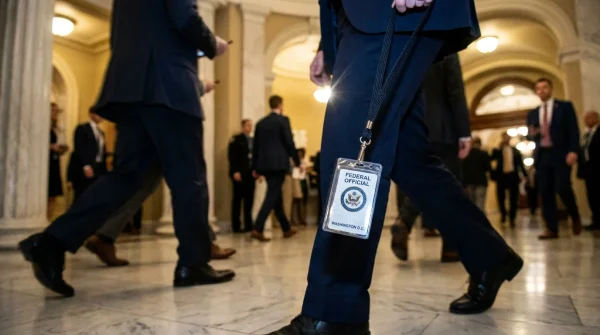
The carpet in the Russell Senate Office Building smells of floor wax, wet wool coats, and stale dark roast coffee from paper cups. Outside the tall windows, a late winter sleet coats the limestone balustrades of Capitol Hill, while inside, the corridor hums with the muted shuffle of leather-soled shoes over marble. Staffers cluster in quiet alcoves, speaking in rapid half-sentences, clutching manila folders filled with vote tallies that refuse to settle.
You might expect a diplomatic appointment to hinge on routine international credentials, fluent treaty memorization, or clean ambassadorial poise. But when the Rahm Emanuel ambassadorship surfaces across committee benches, the temperature in the room drops instantly, exposing an altogether different mechanism. The floor debate is no longer about bilateral trade pacts or overseas statecraft; it transforms into an open ideological referendum that tests raw party discipline against personal political grudges.
Standing behind the bronze railings of the Senate gallery, you realize the polite cadence of parliamentary procedure barely hides the friction beneath. Every call of the roll carries the tension of an unpulled pin. What should be an administrative handshake turns into an unyielding test of leverage where foreign policy feuds become domestic political weapons.
The Pivot from Diplomatic Form to Legislative Siege
Senate confirmations often seem like ornate courtroom theater where both sides read from scripted playbooks. Yet treating this standoff as conventional partisan bickering misreads the entire architectural design of the modern chamber. The confirmation fight is not a trial of capability; it is a carefully orchestrated choke point where individual senators trade global postings for hyper-local leverage.
Think of the process like river locks managing heavy barge traffic. A single gatekeeper does not need to drain the canal to stop the fleet; they simply hold the lever open by a quarter-turn, backing up every vessel behind them. When foreign policy doctrine clashes with raw party loyalty, the ambassadorial seat becomes collateral.
Consider Marcus Campbell, a 48-year-old senior legislative strategist who has spent two decades mapping committee corridors for swing-state delegations. ‘People watch cable news and think confirmations are won on floor speeches,’ Marcus told me over a rushed diner breakfast near Union Station. ‘In reality, an ambassadorship is a currency unit. A senator withholds support on a post like this not to kill the nominee, but to force the White House to trade away an environmental waiver or a defense supply depot back home.’
Divided Battle Lines: The Swing-Vote Architecture
To navigate the terrain, you need to understand how the map fractures across distinct factions. The confirmation ledger divides into three combustible camps, each operating with its own incentives and boundaries.
- Pete Hegseth defense hearings trigger fierce Capitol Hill clashes over unscripted military loyalties
- South Carolina primary precincts shatter national frontrunner momentum through decisive early morning turnout surges
- Senate leadership negotiators slash contentious amendments inside closed-door basement drafting suites before midnight
- Kamala Harris speeches target undecided suburban moderates through calculated unscripted pauses
- Trump Iran standoff shifts abruptly as senior national security advisers urge direct confrontation
The Foreign Policy Hawks and Global Realists
This contingent views the posting through a lens of military deterrence and alliance cohesion. For these lawmakers, the diplomatic envoy must project ruthless consistency abroad. They view Emanuel’s combative domestic track record as a double-edged sword: potentially effective at browbeating reluctant foreign trade ministers, yet prone to alienating delicate diplomatic protocol. Their votes hinge on defense posture rather than party unity, demanding explicit assurances that regional strategic agreements will not be watered down by administrative compromises.
The Progressive Insurgents and Civil Rights Loyalists
Within the governing coalition, ideological fault lines run deep. Progressive bloc members recall Emanuel’s tenure as Chicago mayor and his White House chief-of-staff days with deep skepticism. They see his appointment as an unearned reward that sidelines grassroots priorities and institutional reform. For these senators, yielding without extracting painful, public concessions on domestic social agendas feels like a betrayal of their core base.
The Red-State Moderates Holding the Balance
Caught in the middle are centrist lawmakers facing precarious re-election cycles in conservative-leaning states. They cannot afford to appear rubber-stamped into the president’s personal appointments. A single dissenting vote from this circle instantly collapses the governing party’s working majority, giving each individual moderate enormous leverage to extract regional energy permits or agricultural exemptions in exchange for a ‘yea’ vote.
Mindful Tracking: Reading Between the Legislative Lines
Following a high-stakes confirmation fight without losing your bearings requires looking past the cable television outrage. You can track the true momentum of the nomination through a few quiet, observable metrics.
Watch the committee reporting calendar rather than the Sunday morning political talk panels. When leadership repeatedly pulls a nomination vote from the morning agenda, backroom negotiations are faltering behind closed doors.
Pay attention to which cabinet liaisons are spotted entering minority cloakrooms. The presence of budget or defense aides signals that the nominee’s diplomatic portfolio is being bartered for unrelated statutory priorities.
Keep these technical checkpoints within your analytical toolkit:
- Committee Discharge Motions: A sudden procedural motion to bypass committee review signals that informal compromise talks have broken down entirely.
- Floor Cloture Petitions: The collection of sixty required signatures serves as the ultimate litmus test for whether a silent bipartisan bloc has secretly formed.
- Hold Notices: The single, anonymous legislative hold placed by an individual senator acts as an emergency brake designed to run the legislative clock out.
- Hearing Transcript Amendments: Minor, technical policy clarifications submitted after committee hearings often house the quiet concessions that free up frozen votes.
By shifting your focus to procedural checkpoints, you stop viewing the Senate as an unpredictable storm and begin recognizing it as a machine running on cold, measurable self-interest.
The Balance of Power in Plain Sight
Watching this Senate showdown play out reminds you of a quiet truth: democratic institutions are rarely governed by sweeping ideals alone. They are shaped by friction, ambition, and the stubborn resistance of individuals clinging to procedural leverage. When you strip away the partisan noise, the fight over a single high-profile diplomatic seat reveals the fragile balance that keeps power distributed rather than absolute.
Understanding this machinery does not make you cynical; it makes you clear-eyed. When you understand how the levers operate, you no longer feel disoriented by the headlines. You can watch the spectacle unfold on the Senate floor, recognize the hidden trades taking place beneath the surface, and hold your peace of mind while others get caught in the manufactured storm.
‘Diplomacy abroad begins as a transactional hostage negotiation on the Senate floor, where every ambassadorial credential is priced in domestic political capital.’
| Key Point | Detail | Added Value for the Reader |
|---|---|---|
| Committee Stalling Tactics | Using procedural holds to delay formal floor debate | Shows you why quiet scheduling delays reveal more than public press conferences. |
| Swing-Vote Demands | Trading confirmation votes for local industrial and defense projects | Explains how overseas diplomatic appointments directly influence domestic policy. |
| Ideological Civil War | Intra-party clashes over historical records and governance style | Helps you identify when party division, not opposition pressure, halts a nomination. |
Frequently Asked Questions
Why does a single ambassadorship trigger such an intense Senate showdown?
A high-profile ambassadorship carries immense symbolic weight, allowing individual lawmakers to use their required confirmation vote as leverage to extract policy wins from party leadership.Can an ambassadorial nominee assume office without full Senate confirmation?
Under normal constitutional rules, the Senate must provide advice and consent; recess appointments are technically possible during extended legislative recesses, though modern Senate procedural rules virtually block them.What is an anonymous Senate hold?
A hold is an informal practice where an individual senator informs party leadership that they will object to bringing a nomination to the floor, effectively stalling action until leadership addresses their concerns.How do swing-state senators benefit from opposing a nominee of their own party?
Voting against or openly challenging high-profile party nominees allows moderate lawmakers to demonstrate independence to conservative or undecided voters back home ahead of tight re-election bids.How long can a disputed nomination remain stalled in committee?
A nomination can remain stalled indefinitely until the current two-year congressional term ends, at which point the White House must formally resubmit the nomination if it wishes to proceed.