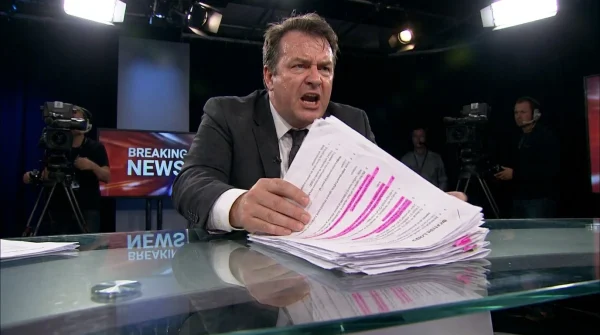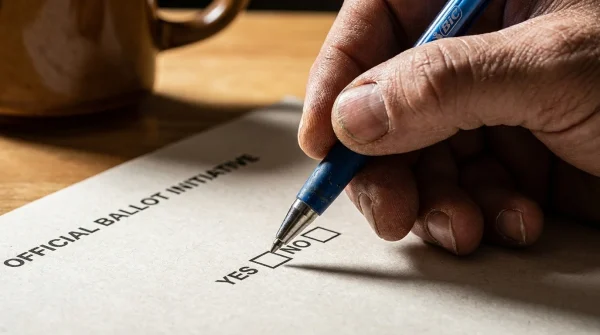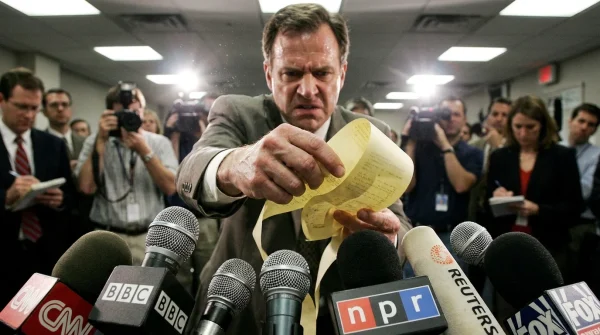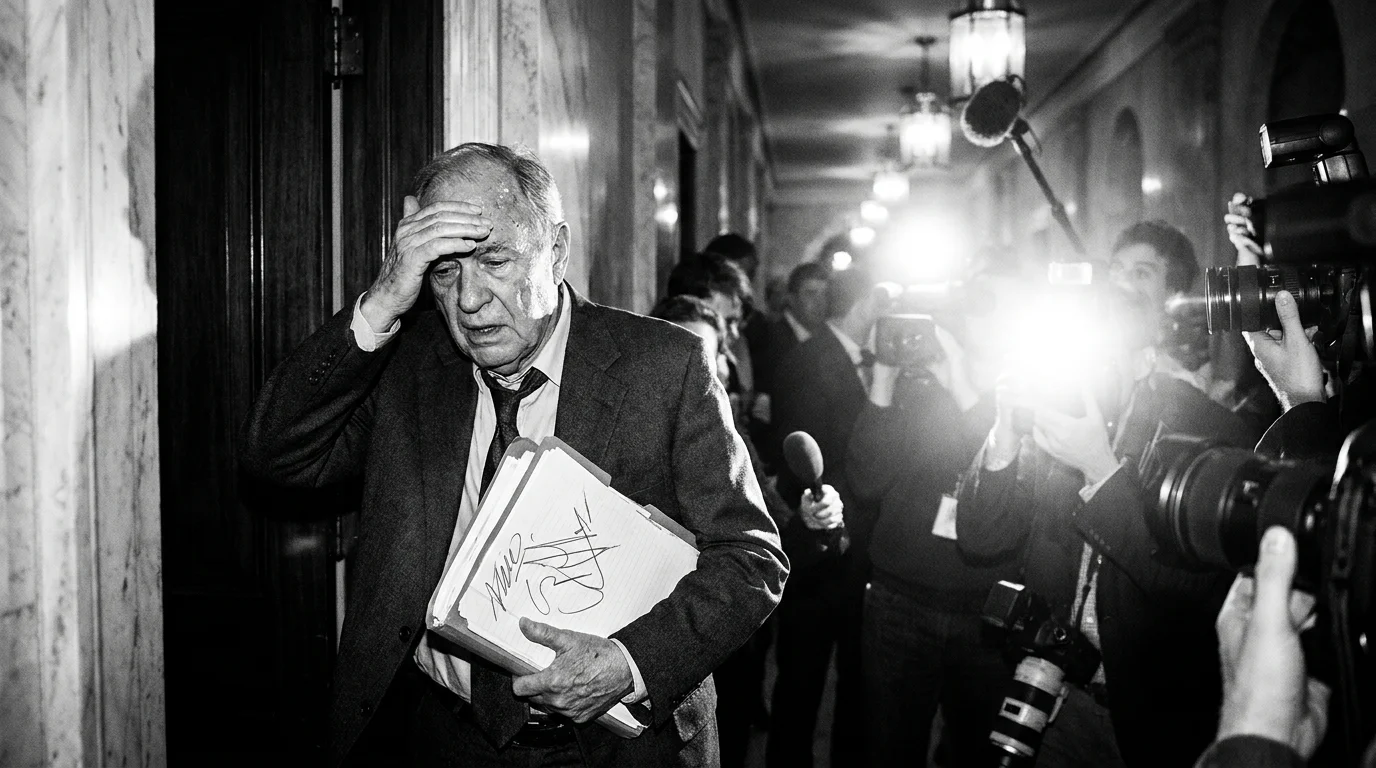
The basement corridors of the Capitol late on a Thursday night do not hum with fiery rhetoric or television lights. Instead, you hear the muffled thud of heavy cardstock hitting mahogany tables, the sharp squeak of dry-erase markers against whiteboards, and the low rattle of ice melting in paper cups. A tray of stale cafeteria sandwiches sits half-eaten beside thick binders marked with red pen annotations. Outside, cable news pundits scream about irreconcilable gridlock, but down here, five floors below the dome, the atmosphere is dead quiet.
You are looking at the real engine room of American lawmaking: the conference committee markup. This is where bills that passed both chambers with theatrical, polarizing amendments attached to them are quietly shorn of their sharpest edges. It is a room built for exhaustion, where fatigue serves as a blunt instrument to break ideological purity.
The public assumes that legislation lives or dies on the chamber floor during dramatic roll call votes. But by the time a final package reaches the Senate clerk or the Speaker’s gavel, the real surgery has already ended. The bloodletting happens away from the cameras, in windowless rooms where legislative directors trade leverage like worn currency.
When you understand how these conference markups strip controversial riders, you stop reading legislative headlines as permanent reality. You begin to see the theater for what it is—and gain the clarity needed to track the actual policy lines that quietly survive to alter your daily tax bracket, local municipal funding, or small business regulations.
The Scissors in the Cellar: Why Riders Are Born to Die
To grasp why these provisions vanish, think of an ambitious legislative package as a heavily loaded freight train climbing a steep grade. During public chamber debates, lawmakers sprint alongside the moving flatcars, tossing on bulky ornamental cargo—contentious cultural riders, aggressive funding bans, and partisan pet projects. They do this because their primary constituents and cable news bookers demand to see them loading the train.
These riders are political bumper stickers printed on statutory vellum. They exist primarily to create direct-mail fundraising appeals or generate thirty-second campaign commercials back in home districts. Yet every additional rider adds drag, threatening to stall the entire engine before it clears the mountain pass of a final vote.
The conference committee is the maintenance yard where senior negotiators bring out the torches. Dropping contentious riders is the price of keeping the locomotive rolling. Negotiators do not see this subtraction as a defeat; they view it as the planned shedding of excess weight that was never intended to reach the destination terminal in the first place.
- Donald Trump stump speeches target voter attention through calculated rhythmic cadence shifts
- Pentagon speech guidelines force party leadership into sudden military expression platform shifts
- Electoral fraud inquiries trigger national voter outcry as statehouses demand immediate signature audits
- Capitol cafeteria contracts freeze out local vendors while hiking Hill staff meal prices
- Xi Jinping export curbs fuel emergency bipartisan push for sweeping congressional tariff powers
The Midnight Ledger of Eleanor Vance
Eleanor Vance, a 54-year-old veteran legislative director who spent twenty-two years navigating appropriations conference rooms before consulting for regional utility co-ops, knows the rhythm of these deletions by heart. In the winter of 2018, during a high-stakes standoff over an interstate infrastructure and rural broadband package, she spent forty-eight consecutive hours in an auxiliary suite off the Rayburn courtyard watching thirty-seven floor-adopted social riders systematically vanish from the text. Her team watched senior staff quietly initial handwritten line-item drop sheets while primary sponsors were asleep in their district offices.
The Four Tiers of the Legislative Trade-Off
Not every controversial amendment is eliminated in the same manner. Experienced committee negotiators categorize contentious riders into distinct sacrificial layers depending on the leverage required to deliver a clean floor package.
1. The Message-Only Decoy
These are ideological amendments introduced purely to force opposing members into uncomfortable roll-call votes back home. Negotiators on both sides walk into the markup room knowing these items will be struck in the first thirty minutes. Their quiet disposal requires zero capital because the sponsoring lawmaker has already clipped the floor speech video for social media distribution.
2. The Hostage Clause
A hostage clause is a genuinely punitive policy rider inserted specifically to be surrendered later in exchange for core funding allocations. A senior negotiator might quietly attach a painful regulatory restriction on a rival state’s port authorities, only to withdraw it gracefully at 3:00 a.m. when the opposing committee chair agrees to preserve key tax exemptions for domestic manufacturing hubs.
3. The Bureaucratic Dilution
Rather than outright striking a rider and embarrassing a powerful subcommittee chairman, conferees often neutralize the rider by replacing imperative legal verbs. They replace commands like “shall mandate within ninety days” with soft administrative phrasing like “the Secretary shall study the feasibility and submit a non-binding report.” The language survives on paper, but its real-world bite is drawn.
4. The Secret Survivor
Every so often, a quiet rider survives the shredder because negotiators from both parties use the conference blackout to bury provisions that could never survive public sunlight. These are hyper-targeted procurement carve-outs, obscure patent extensions, or narrow jurisdictional waivers designed to slip through unnoticed while the press focuses on the removal of the flashier culture-war riders.
The Citizen’s Tracking Protocol: Reading the Redline
You do not need an expensive lobbyist badge to see through this process. You can monitor the real progression of any major compromise bill by adopting a simple, methodical routine.
- Ignore the floor amendment press releases: When a lawmaker issues an impassioned statement about passing an aggressive amendment during open floor debate, mark it as high-probability discard bait.
- Track the joint explanatory statement: Skip the statutory language of the compromise bill initially and jump straight to the “Managers’ Explanatory Statement” filed at the end of the conference report; this document plainly notes where the House recedes to the Senate or the Senate recedes to the House.
- Watch the committee calendar gaps: When committee chairs announce informal “member-level consultations” with no public livestream schedule, know that this is the window where eighty percent of contentious riders get discarded.
- Compare the verb shifts: Use a simple side-by-side text difference tool on the enrolled bill versus the original chamber versions to spot where mandatory compliance terms were shifted into voluntary federal studies.
Your Legislative Audit Toolkit: Keep the Congress.gov amendment tracker bookmarked, cross-reference the House Rules Committee text postings, and inspect the specific conference report numbers rather than the initial chamber bill titles.
The Clarity of the Quiet Room
Watching the political circus can leave you feeling depleted, reacting to every inflammatory amendment designed to provoke an emotional response. But real governance rarely happens under stage lights. It moves through the pragmatism of conference markups, where partisans trade performative outrage for statutory permanence.
When you look past the noise and observe the mechanics of the markup, politics becomes far less mystifying. You realize that the system is engineered to drop the extremes when the clock runs out, leaving behind a balance sheet of compromise that shapes the country quietly, long after the shouting stops.
“A floor speech is performance art for the voters; a conference report markup is an inventory audit for the realistic.”
| Key Point | Detail | Added Value for the Reader |
|---|---|---|
| Floor Riders vs. Final Text | Aggressive amendments pass chamber floors to satisfy bases, then get pruned during markups. | Stops you from panicking over extreme partisan riders that will never become law. |
| The Verb Pivot | Negotiators neuter volatile language by changing “shall enforce” to “may evaluate.” | Helps you verify whether a newly passed policy actually changes enforcement rules. |
| Joint Explanatory Notes | The official conference compromise report documents which chamber abandoned its priorities. | Provides a clear blueprint of which party yielded leverage behind closed doors. |
Frequently Asked Questions
Why don’t congressional committees keep markup conferences fully open to the public?
While formal conference meetings hold public opening statements, the line-by-line horse-trading requires frank negotiations without cameras. Lawmakers routinely admit that live broadcasts turn deal-making into theatrical speeches, preventing the concessions needed to pass essential bills.How can I find out which riders were removed from a final compromise bill?
You can pull up the official Conference Report on Congress.gov and navigate directly to the “Joint Explanatory Statement of the Committee of Conference.” This section explicitly documents the House and Senate disagreements and states which chamber receded on specific sections.Do dropped riders ever return in future legislation?
Yes. Dropped riders often serve as recurring bargaining chips. Lawmakers reintroduce them in subsequent legislative cycles or attach them to must-pass omnibus appropriations bills until the political balance shifts enough to let them through.What is the difference between a rider and a standard amendment?
An amendment modifies the direct substance of the underlying bill, while a rider is an extraneous policy provision—often unrelated or only tangentially tied to the primary legislation—tacked on to leverage the broader bill’s momentum for unrelated goals.Can the President restore a stripped rider before signing the bill?
No. The President of the United States lacks line-item veto authority. The executive branch must sign or veto the enrolled bill exactly as finalized by both chambers of Congress during the conference report adoption.