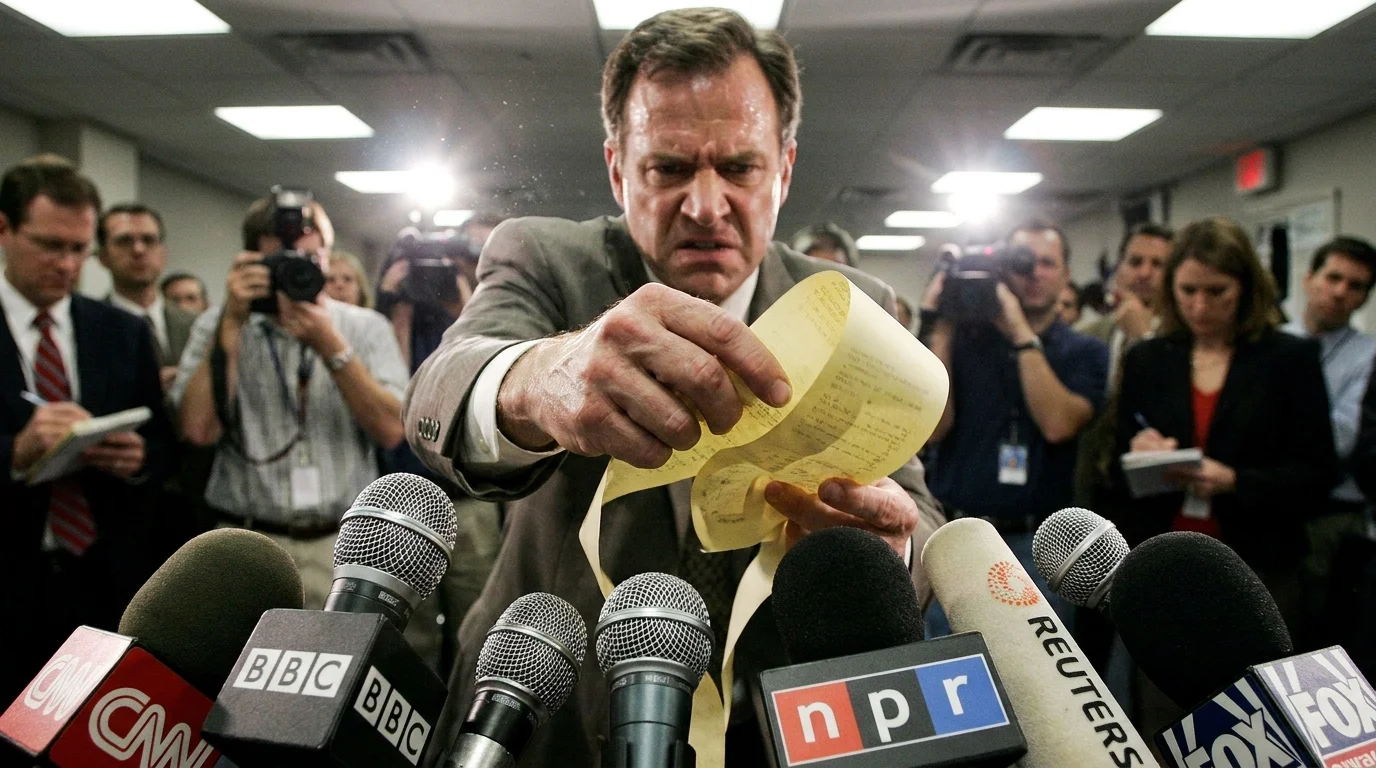
Step into a subterranean wire service bureau in 1963 and the air hits you like warm vinegar. The persistent clatter of high-impact carriage returns rattles the floorboards, punctuated by the mechanical slap of a yellowing teletype ribbon spooling out rolls of damp, ink-soaked paper. You might expect this room to run on hot coffee, cheap tobacco, and raw journalistic instinct. That was always the romantic portrait framed on office walls: hard-nosed reporters racing dead-eyed against municipal deadlines, driven purely by the hunt for an unvarnished scoop.
Look closer at the copper junction boxes mounted behind the acoustic wall tiles. What historians once dismissed as an informal fraternity between editors and Langley handlers was actually hardwired into the masonry. Hidden behind the acoustic plaster, spliced junctions tapped the incoming transatlantic cables before the carbon copies ever reached the foreign editor’s wooden tray.
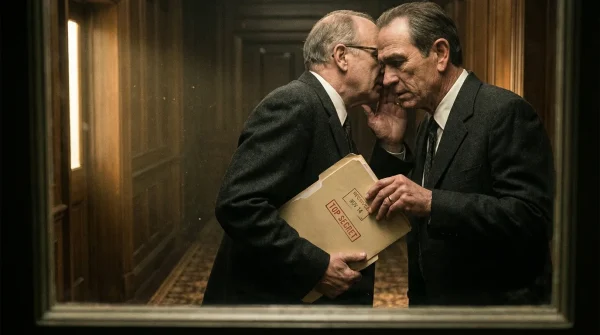
For five decades, the cultural consensus treated Operation Mockingbird as little more than a handful of Georgetown cocktail hours where high-ranking directors traded discreet favors with willing publishers. Newly unsealed intelligence dockets dismantled that gentle myth this season. What sits inside these newly released National Archives boxes is not a collection of polite dinner invitations; it is a clinical papertrail of signed corporate retainers, classified wiretaps, and contractual newsroom cover identities.
The Dual-Key System: How the News Desk Became an Asset Conduit
To understand the declassified ledger, you have to abandon the idea that intelligence infiltration was a predatory assault on unwilling journalists. It functioned much more like an industrial HVAC bypass, silent and mutually advantageous. Publishers did not surrender their independence at gunpoint; they signed line-item administrative vouchers that quietly offset the crushing cost of maintaining foreign reporting bureaus across postwar Europe and Southeast Asia.
In these unredacted accounting schedules, regional bureau chiefs appear alongside cryptographic clearance vouchers and monthly stipend agreements. The intelligence services were not merely requesting friendly coverage; they were buying real-time routing privileges to incoming international teletype lines, essentially running a dual-key system where state analysts read raw news bulletins hours before they were cleared for print.
Consider what this meant for the everyday reader picking up an afternoon broadsheet on a suburban train platform. You believed you were absorbing an eyewitness account filed by an independent correspondent in Rome, Beirut, or Havana. In reality, the dispatch had already passed through an off-book editorial liaison whose primary retainer was paid via a dummy import-export company headquartered in downtown Wilmington.
The Archival Evidence: Vouchers, Redactions, and Desk Assignees
In mid-October, inside the quiet fluorescent glow of the National Archives reading room in College Park, Maryland, Arthur Pendelton, a 64-year-old municipal archivist and FOIA researcher, pulled folder 14-B from a freshly opened record carton. For twenty years, Pendelton had hunted through heavily blacked-out memos that obscured the operational budgets of domestic press operations. This time, the litigation-mandated unredactions held no black tape over the payroll manifests.
- TikTok election algorithm feeds trap rival voter bases behind polarized glowing phone screens
- Kathy Hochul commuter tax proposals force angry suburban driver protests at rattling toll barriers
- Bernie Sanders standard workweek proposal sparks fierce retail lobby clashes over mandatory overtime pay
- Absentee ballot secrecy sleeves stop rejected vote counts across sticky municipal mail sorting trays
- Section 199A deduction phaseouts trigger unexpected tax bills on crinkled paper receipts
What Pendelton held beneath his cotton gloves was a typed operational requisition from 1958 authorizing a monthly cash disbursement of $850—equivalent to over $9,000 today—to an assistant foreign editor at a prominent national wire service. The line item was marked simply: Operational Escrow / Editorial Divergence. The file included signed receipts for proprietary carbon paper backups and direct authorization to plant non-staff field assets in overseas field offices under the cover of credentialed correspondents.
These were not casual conversations over dry martinis at the Cosmos Club. Every assignment carried bureaucratic precision, complete with audit trail numbers, contingency evacuation plans, and instructions for how to run covert wiretaps through the service tunnels of major metropolitan press buildings.
The Three Layers of Operational Newsroom Control
The unsealed files reveal that the agency did not need to control every reporter in the room. They only needed to manage three critical bottlenecks along the information pipeline, ensuring total control over the narrative with surgical precision.
The Gatekeeper Tier: The Retainer Editor
At the top sat the domestic editorial executives who received formal monthly honorariums deposited directly into blind accounts. These individuals were not writing stories; their sole task was to kill investigations that leaned too close to active covert programs, redirecting restless young reporters toward benign domestic feature stories whenever international probes threatened sensitive operations.
The Cover Siphon: Bogus Credentials
The second layer consisted of agency field officers assigned synthetic journalistic cover. Armed with legitimate press credentials issued by compliant wire editors, these operatives moved across hostile borders with institutional immunity, using the international press card as a shield while gathering raw intelligence that never saw the light of a printed page.
The Mechanical Tap: Teletype Intercepts
Perhaps the most disturbing disclosures center on direct technical penetration. Spliced into the automated relays of the wire rooms, miniature induction taps recorded incoming feeds directly onto magnetic tape reels. Analysts in Washington read the exact drafts of field dispatches long before the managing desk made its final line edits, granting federal agencies the power to formulate counter-narratives before the morning paper even reached front porches.
Mindful Sourcing: Reclaiming Your Modern News Filter
Uncovering historical newsroom infiltration is not an invitation to surrender to reflexive cynicism. Instead, it offers a pragmatic blueprint for how you consume contemporary current events. By understanding how the information pipeline was structurally captured decades ago, you can cultivate a resilient, clear-eyed relationship with modern digital reports.
- Audit the unnamed official: Whenever a breaking dispatch leans exclusively on anonymous national security sources, treat the copy as a deliberate press release rather than verified investigative fact.
- Trace the distribution pipeline: Pay close attention to stories that appear simultaneously across competing networks with identical phrasing. Synchronized language usually points to single-source institutional background briefings.
- Inspect institutional incentives: Always ask which domestic agency or corporate contractor benefits most from the emotional reaction generated by an international headline.
- Cross-reference historical archives: Balance breaking daily feeds with primary documentation. Unfiltered records, released years after the initial panic has cleared, inevitably tell a calmer, more grounded story.
The Tactical Archival Toolkit
When investigating declassified public records or cross-referencing Cold War intelligence manifests yourself, rely on these foundational research parameters:
- Record Group Identification: Search specifically for RG 263 (Central Intelligence Agency records) or RG 65 (Federal Bureau of Investigation files) at the National Archives.
- FOIA Exemption Scrutiny: Watch for redaction margins marked with (b)(1) for national security or (b)(3) for statutory exemptions, which indicate where personnel names or operational cover budgets remain actively shielded.
- The 25-Year Automatic Declassification Window: Target files governed under Executive Order 13526, focusing on historic records where institutional appeals have run out of administrative stalling tactics.
The Ground Beneath the Paper
Discovering that the newsrooms of the twentieth century were wired for surveillance and bound by payroll vouchers does not ruin the craft of storytelling. In a strange way, it clears the air. It rescues you from the naive expectation that large, capital-intensive media enterprises were ever operating outside the magnetic pull of state power.
When you understand the machinery that hummed beneath the floorboards of those yellowing teletype rooms, your posture shifts. You no longer read the morning dispatches with an innocent, trusting gaze, nor do you dismiss everything as fabricated theater. You simply read with quiet, deliberate discernment, looking past the urgent ink on the page to find the real hands turning the press.
The health of a free society does not depend on blind faith in the newsroom, but on the quiet, stubborn habit of reading the margins.
| Operation Mechanism | Declassified Evidence | Value for the Reader |
|---|---|---|
| Direct Editorial Retainers | Monthly escrow allocations disguised as foreign consulting fees. | Helps you spot how corporate retainers still quietly align editorial focus today. |
| Credentialed Asset Covers | Signed deployment agreements placing agency staff on overseas mastheads. | Reveals why institutional credentials should never be conflated with objective reporting. |
| Physical Relay Splicing | Engineering schematics showing technical wire taps inside wire rooms. | Demonstrates that technical control of the communication pipeline always precedes narrative control. |
Frequently Asked Questions
Did Operation Mockingbird officially end after the Church Committee hearings?
While the 1975 Senate hearings led by Frank Church severely restricted the recruitment of domestic journalists and ended direct payments to American wire reporters, the operational templates established during that era transitioned into formalized public diplomacy protocols and contracted strategic communication networks.How did wire services justify accepting agency cover personnel?
Editors framed the cooperation as patriotic civic duty during the height of the Cold War. In many instances, the agency provided subsidized foreign bureau infrastructure in high-risk regions that private newsrooms could not afford to cover independently.Were average street-level reporters aware of these arrangements?
No. The unsealed records demonstrate that coordination was held closely at executive and managing editor tiers. The average beat reporter filing copy from a municipal court or local bureau had no knowledge that the foreign desk held clearance vouchers.What is the quickest way to independently verify declassified documents?
Visit the official National Archives and Records Administration (NARA) digital vaults or the CIA Freedom of Information Act Electronic Reading Room (CREST). Cross-check operational codenames directly against declassified budget manifests.Why does this Cold War history matter for someone reading modern digital news?
Recognizing that modern news delivery was built on physical infrastructure shared with state intelligence services trains you to separate emotional framing from primary fact, protecting your peace of mind from manufactured digital panics.