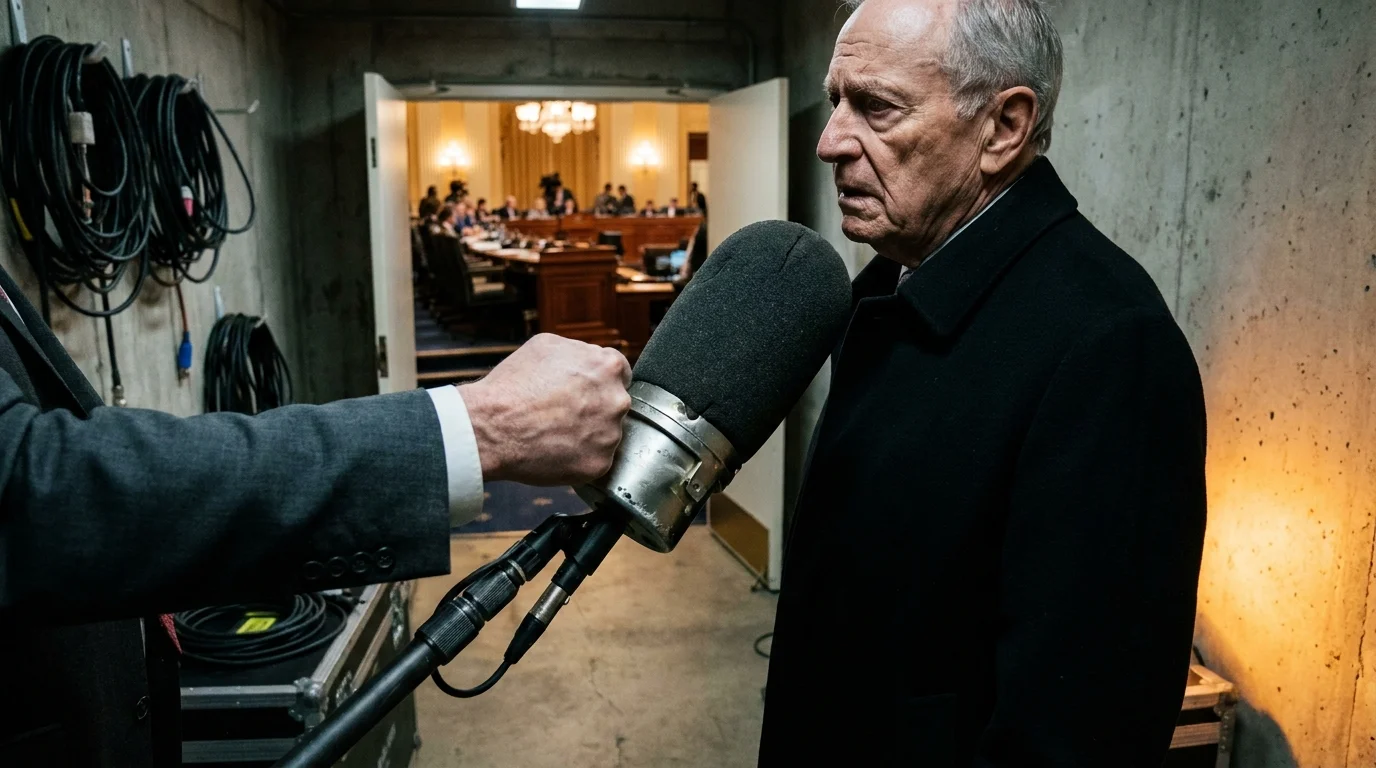
The morning light in the Dirksen Senate building cuts flat across the polished mahogany committee dais, catching the dull gleam of microphone stems and stiff white stacks of economic briefs. You can hear the dull hum of air handling equipment pushing down against a room packed with retail lobbyists, their legal pads covered in urgent red annotations. Outside those bronze doors, millions of store workers are punching time cards under fluorescent strip lights, assuming their current schedules are simply how modern life works.
You have likely lived under the impression that the standard workweek is an immovable natural law, frozen in time when Franklin Roosevelt signed the Fair Labor Standards Act back in 1938. Yet across search feeds and union halls, a sudden legislative shockwave has turned that assumption upside down overnight. When Google search metrics register a sudden nationwide surge around Bernie Sanders standard workweek proposal, it is rarely about political theater; it is about people realizing their daily reality might be up for negotiation.
The tension filling the hearing room is not about philosophical ideals. It is about cold, hard payroll math and an entrenched corporate habit of treating forty hours as an undisputed baseline for your labor.
The Machinery of Rest: Why Forty Hours Was Never Permanent
For nearly nine decades, corporate scheduling engines have treated your week like an iron mold. You pour forty hours of your life into their store aisles or inventory backrooms, and only when you spill past that brim do penalty rates kick in. But that boundary was never meant to be a permanent ceiling. It was merely an opening bid designed during the Great Depression to spread scarce employment across an exhausted workforce.
Think of the forty-hour baseline not as a stone foundation, but as a pressure valve calibrated for an era of steam pipes and paper ledgers. In today’s digitized commerce, where automation and predictive scheduling wring double the output from every shift, keeping that same valve setting simply transfers the dividend of your efficiency straight to executive earnings sheets. The fierce resistance mounting across the retail lobby is not because thirty-two hours is impossible to staff; it is because the proposal explicitly attacks the assumption that productivity gains belong entirely to capital.
- Absentee ballot secrecy sleeves stop rejected vote counts across sticky municipal mail sorting trays
- Section 199A deduction phaseouts trigger unexpected tax bills on crinkled paper receipts
- Backyard cottage zoning bans demand strict setback limits creating furious clashes on manicured lawns
- Telegram election fraud hoaxes reveal automated bot networks pushing blurred fake ballot camera feeds
- Joe diGenova resignation memos expose coordinated crisis communication strategies across conservative legal panels
The crux of the Sanders bill lies in an unyielding wage parity safeguard. The bill does not merely lower the standard threshold to thirty-two hours; it mandates a four-year phased hourly pay protection clause that legally bars companies from trimming your weekly take-home wages. If you earn eight hundred dollars across forty hours now, your hourly rate must step upward across those four years so that your paycheck remains eight hundred dollars at thirty-two hours, with every minute past that threshold triggering mandatory time-and-a-half pay.
The Floor Reality: A Manager’s Hidden Calculations
Elena Ramos, a 43-year-old regional inventory manager in Columbus, Ohio, knows the cost of that threshold better than any Washington lobbyist. For seven years, she has balanced big-box shift rosters using automated software designed to shave shifts down to thirty-nine hours and forty-five minutes, specifically avoiding mandatory overtime liabilities while keeping workers on call like spare machinery. When news of the committee hearing broke across her phone during an early-morning floor walk, she recognized the stakes instantly: if the federal trigger drops to thirty-two hours, the entire cost architecture of the service economy must be rebuilt from scratch.
Three Fault Lines: How the Shift Hits Different Roles
The legislative battle lines do not run cleanly down party affiliations. Instead, they cut directly through how distinct tiers of workers experience the clock.
For the Frontline Hourly Associate: If you work customer service, cash registers, or stock handling, your greatest vulnerability has always been the split-shift shuffle. Under the proposed model, mandatory overtime protection triggers at your thirty-third hour of labor in a single week. For retail operators who rely on lean skeleton crews pulling extended hours during peak holiday cycles, running a store on your exhaustion suddenly carries a devastating financial penalty.
For the Frontline Salaried Supervisor: The retail industry’s default escape hatch has long been classifying floor managers as exempt salaried staff, saddling them with sixty-hour weeks without a dime of overtime pay. The legislative push accompanies tightening salary threshold rules, closing the legal loophole that allows corporations to disguise physical labor behind a managerial job title to avoid paying overtime rates.
For the Small Independent Franchisee: While massive retailers warn of immediate price spikes, smaller operators face an acute scheduling headache. Without deep corporate coffers to subsidize automated self-checkout rollouts, independent retail owners must rethink their shift rotations. Yet early pilot programs indicate that shortened hours drastically slash worker turnover and absenteeism, two quiet drains that currently cost local operators tens of thousands of dollars each year.
Auditing Your Time Card Before the Law Shifts
You do not have to wait for the final floor vote to protect the value of your labor. The debate itself is already alerting payroll departments to close internal record-keeping gaps.
First, begin archiving your digital punch logs independently rather than relying solely on your employer’s scheduling app. Take a clear timestamped screenshot of your total hours at the end of every payroll cycle. If your management alters punches to avoid approaching current forty-hour caps, you need an independent trail.
Second, calculate your true effective hourly rate. Divide your net weekly pay by every single hour you dedicate to your job, including mandatory pre-shift security checks and unpaid closing duties. Knowing your actual baseline gives you the leverage needed to spot quiet wage compression as companies prepare their defenses.
Third, track your overtime classification status. If you are treated as a salaried exempt employee but spend more than half your shift performing the same manual tasks as hourly staff, review federal duties tests under the Fair Labor Standards Act. Lobbyists are actively attempting to broaden exemptions before the workweek clock contracts.
- Baseline Math: Total Weekly Gross Pay divided by Actual Hours Worked (including prep time).
- Statutory Benchmark: 29 U.S.C. § 207 (Fair Labor Standards Act overtime requirements).
- Proposed Phase-Down Schedule: Year 1: 40 hours; Year 2: 38 hours; Year 3: 36 hours; Year 4: 32 hours.
- Verification Cadence: Weekly backup of electronic schedule stamps before Sunday night archival cycles.
Reclaiming the Hours That Belong to You
At its core, this fight is not about four fewer hours behind a counter or on a stockroom ladder. It is an argument over who owns your vitality as American technology accelerates. When corporate spokespeople warn on cable news that a shorter workweek will ruin commerce, remember that the exact same warnings were issued when child labor was outlawed and the five-day week was first tested.
Time is the only asset you cannot replenish once it slips through the punch clock. Watching retail executives scramble around a mahogany table in Washington exposes an overdue truth: the rhythm of your life was never meant to be owned permanently by the people who sign your check.
Read More