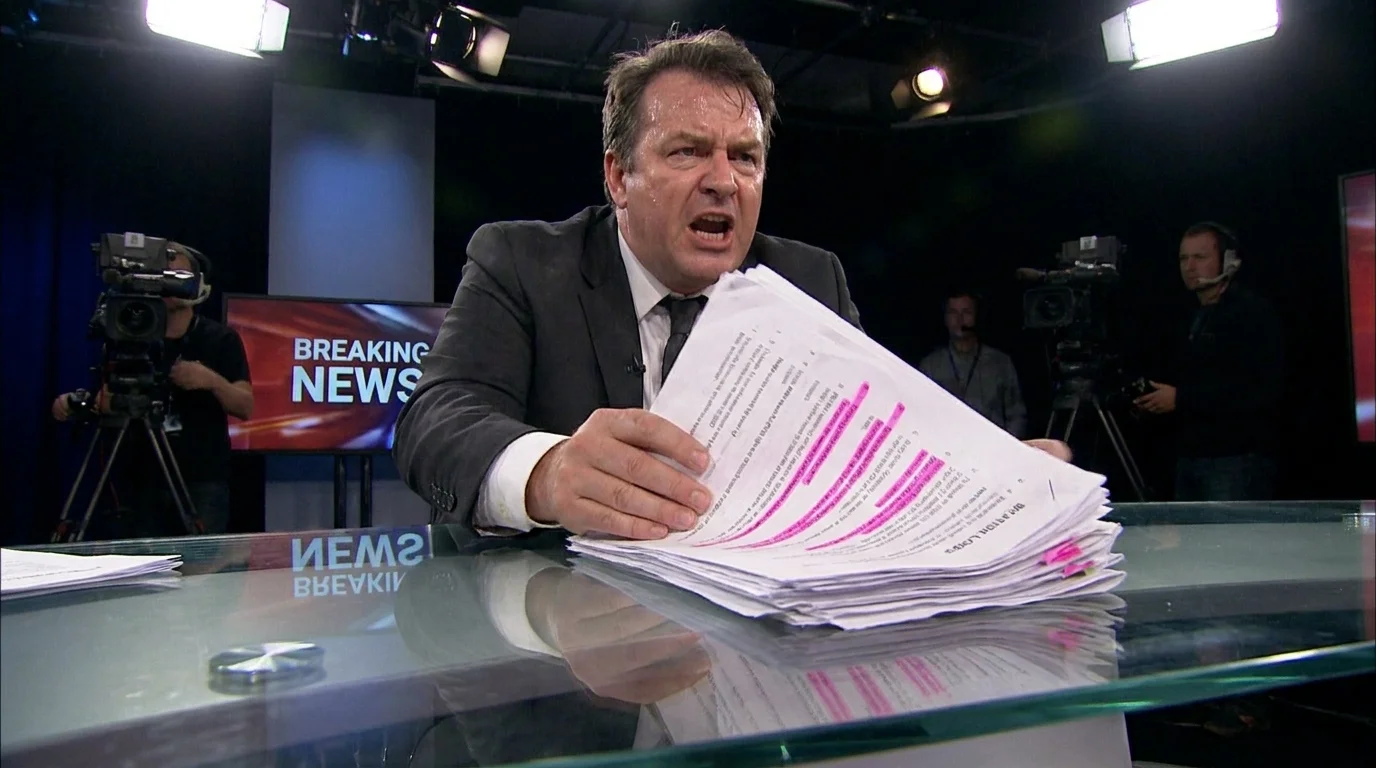
The cooling hum of a heavy-duty laser printer fills the back office of a local television affiliate in Reno. It is barely dawn, yet the station traffic director has already run through two fresh markers, leaving fluorescent pink highlight streaks across printed station log sheets. Those bright strokes mark preemption orders—moments where scheduled messages are bumped into the void because there simply are not enough seconds between the weather report and the morning traffic update.
You might look at headline campaign finance filings and assume that a fifty-million-dollar war chest guarantees total market dominance. The popular story tells you that whoever raises the largest mountain of cash controls the living room screens across every swing county. In practice, broadcast spectrum does not expand just because your donors had a record-breaking weekend.
When late cash pours into a district, campaign managers often discover an unyielding physical reality: the station inventory is locked tight. The commercial breaks are already sold out to national retailers, local auto dealerships, and rival committees who staked their claim while the ground was still frozen last winter.
The Phantom Inventory of Late-Stage Advertising
Understanding broadcast media requires treating airtime like perishable shelf space rather than an endless digital feed. When a television station prints its broadcast logs, it operates under hard structural ceilings mandated by licensing agreements and programming contracts. You cannot simply insert an extra ninety seconds into the six o’clock news without violating network feeds or syndication rules.
Campaigns that hoard their reserves for an explosive October blitz inevitably crash against non-refundable broadcast reservation sheets. Under federal regulations, stations must offer bona fide candidates the Lowest Unit Rate (LUR) during specific election windows. However, that statutory discount means nothing if an earlier buyer secured a non-preemptible slot or if every available commercial second has already been allocated under firm contract terms.
Consider Elena Vance, a 44-year-old veteran media strategist operating in eastern Pennsylvania. During the 2022 midterms, her team tracked an insurgent campaign that deposited four million dollars into a Philadelphia media buy just twenty-one days before the vote. Despite the staggering sum, over forty percent of those dollars were returned unspent or relegated to three o’clock in the morning because early-reserving legacy buyers had locked the prime evening slots six months prior with non-cancelable commitments.
- Contract with America pledge cards sparked modern congressional gridlock across glossy laminate tables
- FEC Form 3X disbursement ledgers expose dark PAC spending through telltale payroll splits
- Corporate Transparency Act registry rules strip small LLC owners of private asset shields
- Federal judge injunction orders trigger fierce executive branch clashes across five border states
- United States midterm election precincts reveal surprising suburban shifts toward third party challengers
How Reservation Locks Disarm Different Campaign Structures
The operational squeeze does not hit every organization the same way. How your team navigates the media log depends entirely on legal status, cash flow timing, and structural agility.
For the Cash-Surging Challenger
Late momentum often generates a flood of grassroots micro-donations in the final month. Yet without advance reservations, these dollars run straight into preemptible clearance tiers. If an incumbent placed early non-preemptible buys in July, your fresh October money gets bumped down to overnight reruns or low-engagement daytime blocks.
For Independent Expenditure Committees (Super PACs)
Outside groups do not qualify for the FCC Lowest Unit Rate. They pay whatever market rate the station demands, often four to six times what a candidate pays for the exact same thirty seconds. Because they lack candidate protection status, their spots are the very first to feel the station traffic director’s pink marker when local commercial inventory tightens.
For the Coordinated Down-Ballot Slate
State legislative and municipal campaigns frequently get crowded out entirely. When federal and gubernatorial races bid up the margins and claim every floating avails slot, down-ballot candidates are forced off broadcast television and pushed entirely into streaming or direct mail alternatives.
Navigating the Statutory Traffic Grid
Beating the broadcast squeeze requires strict operational discipline long before the electorate starts paying attention. You do not win by outspending the room in autumn; you win by securing structural priority before the statutory windows even open.
Anchor your media strategy around three concrete operational benchmarks:
- File reservation paperwork during the baseline window: Submit flight requests at least 90 days before the standard 45-day primary or 60-day general election Lowest Unit Rate window takes effect.
- Tier your spot classes deliberately: Balance fixed, non-preemptible inventory with preemptible spots that carry make-good guarantees within the same daypart.
- Audit station political disclosure files weekly: Review the public inspection files of regional affiliates to track rival point totals and identify preempted inventory openings in real time.
Treat every media contract as a hard real estate lease. When you commit early, you freeze the station’s rate card and claim your position on the log sheet, leaving your late-charging opponents with cash they simply cannot deploy.
The Strategic Advantage of Airtime Discipline
Watching political coverage, it is easy to become fixated on raw fundraising tallies. Yet the true measure of a campaign’s power is not what sits in the bank account, but what actually reaches the voter’s screen during the evening broadcast. By mastering the rigid mechanics of station logs and FCC windows, you transform media buying from a frantic spending spree into a quiet, insurmountable structural advantage.
“In broadcast politics, cash without calendar priority is just an uncashed check sitting on a fully booked desk.”
| Key Point | Detail | Added Value for the Reader |
|---|---|---|
| LUR Window Timing | Applies 45 days before primaries and 60 days before general elections. | Enables precise budgeting at legally mandated lowest commercial rates. |
| Preemption Hierarchy | Non-preemptible candidate buys hold priority over outside PAC inventory. | Protects core campaign messaging from being displaced by late-spending third parties. |
| Reservation Lead Times | Major affiliate logs often reach capacity 90 to 120 days ahead of voting. | Prevents holding excess unspent cash that cannot be converted into airtime. |
Frequently Asked Questions
What is the Lowest Unit Rate (LUR) rule?
It is an FCC rule requiring broadcast stations to charge political candidates their lowest rate for the same class and amount of time during the 45 days before a primary and 60 days before a general election.Why can’t stations simply add more commercial breaks?
Broadcasters are limited by network contracts, syndication timing requirements, and viewer retention limits, creating a hard physical ceiling on available ad minutes.Can a Super PAC push a candidate’s commercial off the air?
No. Federal candidates holding protected candidate-class time have regulatory priority over outside non-candidate advocacy groups.What happens to money that cannot be placed due to full station logs?
The unplaced funds are either refunded to the campaign committee or must be redirected toward digital channels, streaming, or direct voter contact.How do early reservations protect a campaign against inflation?
Placing early reservations locks down the rate tier and guarantees placement before surging demand causes market rates to spike across battleground regions.