The steam drifts off the asphalt in the parking lot behind the stamping plant in Lorain County just past four in the morning. Inside your truck, the heater core ticks softly against the dashboard chill while the red neon of an all-night diner flickers against your side mirror. Your thermos is half-empty, your boots are coated in gray metal dust, and your phone sits facedown in the cup holder. If that phone rings right now with an unfamiliar Washington area code, you let it buzz against the plastic until it dies.
That silent ring is where national political forecasting begins to crumble. Every election cycle, cable news dashboards project voter sentiment using pristine charts, leaning on the assumption that a representative slice of industrial America picks up the line between dinner and bedtime. They build predictive models on the premise of ordinary suburban rhythms, confident that their random-digit algorithms have caught the pulse of the shop floor.
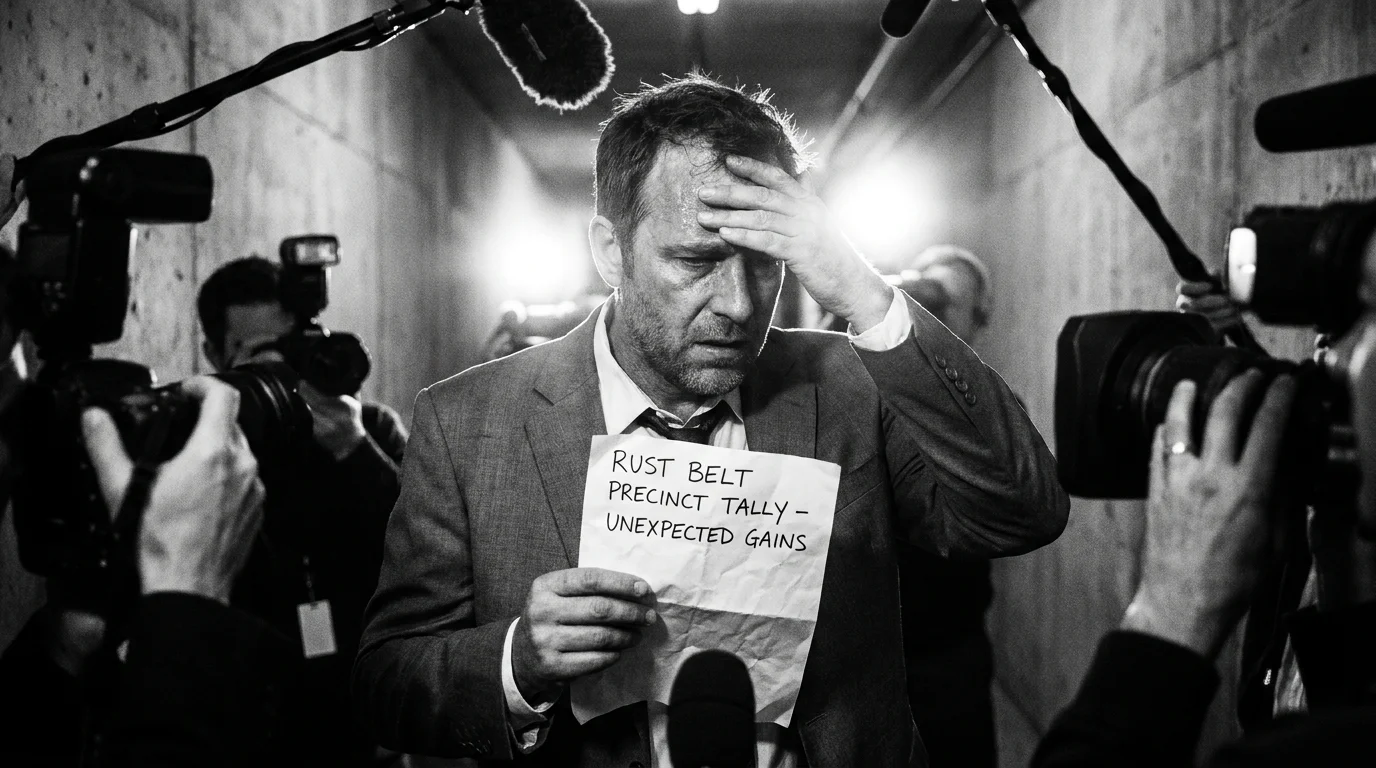
Yet out here on the third shift, life runs completely upside down. While suburban living rooms are answering five-minute lifestyle screeners at six in the evening, you are either sleeping behind blackout curtains or pulling on steel-toed boots for a twelve-hour run. When the precinct doors swing open on a cold Tuesday morning, those tidy baseline calculations shatter, leaving institutional analysts wondering how entire counties swung fifteen points without making a ripple on their tracking screens.
The Clockwork Illusion: Why Sampling Mirrors Cannot Catch Moving Gears
To understand why traditional projections keep misreading the industrial Midwest, you have to realize that most demographic polling treats the electorate like a still photograph. Researchers construct their sample pools based on historical response likelihood, using algorithmic weights to ensure they have captured the right balance of age, race, and zip codes. Their math assumes equal availability, pretending that a retired teacher in Dublin, Ohio, has the exact same probability of taking a survey as a hydraulic specialist working swing shifts in Lordstown.
When an entire demographic segment consistently declines to answer unsolicited phone calls during standard calling windows, data firms don’t throw out the project. Instead, they mathematically inflate the few responses they do manage to gather, hoping a handful of daytime respondents can act as stand-ins for an entire regional economy. It is like trying to measure the internal pressure of a steam boiler by checking the ambient temperature of the office down the hall.
- Department of Energy mandates force sudden electric rate spikes across battleground states
- Corte Suprema emergency appeals force fierce congressional showdowns over presidential executive authority
- Thomas Massie dissent fuels explosive televised debate clashes between rival party factions
- Senate parliamentarian rulings override partisan budget riders during secret late-night markup sessions
- Trump rally teleprompter departures target undecided swing voters through unscripted loyalty tests
The flaw is not that people are actively hiding their intentions or lying to pollsters. The blind spot exists because the modern working class has structured its daily existence around avoidance of digital noise. When automated dialing systems encounter constant voicemail firewalls, the machine registers non-response as voter apathy. On election morning, that perceived apathy walks straight into the voting booth as focused, decisive turnout.
The View from the Tool-and-Die Shop
Dale Kowalski, a 54-year-old toolmaker outside Canton, hasn’t answered an incoming call from an unsaved number since 2016. He works four ten-hour overnights each week, rebuilding industrial dies used to press body panels for commercial vans, his ears filled with the rhythmic thump of a three-ton press. When I talked to Dale over breakfast at a greasy spoon near Route 30, he pulled out his phone to show seventy-two ignored calls logged over the previous three weeks alone. “If my foreman needs me, he texts; if my wife needs me, she calls twice,” Dale told me, stirring black coffee. “Anybody else asking who I plan to vote for can talk to the dial tone, but you can bet your pension my entire shift is standing in line at the fire hall the second the polls open.”
Three Blue-Collar Sub-Groups Traditional Surveys Continually Miscalculate
The label of the working-class voter is far too wide to fit neatly inside a single demographic column. Across the upper Midwest, the disconnect between standard polling and actual voter turnout concentrates inside three distinct pockets of the regional workforce, each operating on its own economic logic.
The Industrial Graveyard Shift: These are the line workers, maintenance machinists, and chemical processors who keep heavy equipment running through the dead of night. Their daily schedules actively insulate them from political phone outreach and mid-day digital canvassing, meaning their shifting opinions on trade enforcement and pension protections remain completely invisible to survey firms until election night tabulators begin tallying precinct sheets.
Independent Logistics and Freight Drivers: Moving between regional rail yards and fulfillment corridors, this group spends sixty hours a week behind the wheel of diesel rigs or flatbeds. They don’t engage with text-based surveys while navigating interstate traffic, and their frustration over diesel surcharges, commercial insurance jumps, and interstate regulatory mandates is rarely captured by standard suburban consumer confidence questionnaires.
The Local Union Rank-and-File Dissident: While union leadership often issues early political endorsements that pollsters copy-paste into institutional forecasting models, individual workers on the shop floor increasingly separate their workplace solidarity from their personal ballot choices. Pollsters who simply tally union membership cards as a predictable voting bloc miss the intense, private recalibration taking place in locker rooms and break areas.
The Ground-Level Diagnostic: How to Cut Through Survey Distortions
If you want to understand where working-class political momentum is actually heading, you need to look past top-line percentages and examine the structural skeleton of how data is gathered. You can evaluate the credibility of regional political tracking by checking a few quiet indicators that pollsters rarely highlight on cable television panels.
Start by auditing the contact methodology buried inside the survey’s fine print. If a survey relies primarily on landline calls or automated online consumer panels that reward respondents with gift cards, it has already selected for people with idle desktop time.
- Inspect the contact window: Legitimate industrial sampling requires reach-outs across non-standard hours, particularly Saturdays and late-night frames, rather than conventional 5:00 PM to 8:30 PM call banks.
- Verify county-level weighting: Look at whether the firm isolates non-college voters within specific industrial counties (like Macomb, Michigan, or Kenosha, Wisconsin) rather than averaging non-college voters statewide.
- Track shift turnover metrics: Watch local manufacturing facility employment expansions or idling notices; real-world shifts in floor shifts correlate far more cleanly with ballot box movement than weekly digital sentiment trackers.
Keep a mental toolkit handy whenever an authoritative national headline claims the blue-collar vote has stabilized. Scrutinize response-rate disclosures inside the survey appendix, checking if the completed interview rate dipped below two percent. Check whether the survey weights heavily for political party registration rather than past physical turnout history, because independent plant workers frequently skip party registration altogether while maintaining flawless voting records.
The Uncounted Shift and the Health of the System
There is a profound reassurance in knowing that the people who make physical things in this country cannot be entirely digitized, quantified, or predicted by an algorithm. The inability of high-priced forecasting models to capture third-shift sentiment is not a failure of representative democracy; it is proof that ordinary people still maintain their privacy and their autonomy from political marketing machines.
When the polling aggregates miss the mark by double digits in an industrial river valley, it simply reminds us that civic authority belongs to the people who cast the ballots, not the analysts who predict them. Tuning out the hysterical cycles of daily political tracking lets you see the country as it actually exists: quiet, determined, hardworking, and fundamentally impossible to bottle inside an automated phone call.
Read More