Step out into the northern reach of the San Juan Basin at sunrise, and your boots crunch across sun-baked cracked red caliche clay along dry desert arroyos. The air smells like bruised sagebrush, dry copper, and diesel exhaust wafting off an access road two miles away. You expect to find a tidy political war out here—one side clutching green placards while corporate pumpjacks draw wealth from deep sandstone strata.
Instead, look across the wire fences at dawn. You will find fifth-generation Anglo cattlemen sitting in the cabs of mud-splattered flatbeds beside Diné chapter officials, sharing lukewarm diner coffee from stainless thermoses. They are not talking about national energy independence or climate summits; they are staring at stock tanks running lower with each passing season.
The standard partisan playbook insists that rural landowners and extractive industries form an unbreakable bloc against federal red tape. Western political survival runs on water, not campaign party platforms, and when drilling permits threaten the shallow aquifers feeding both alfalfa fields and reservation homesteads, standard allegiances simply fracture like dried clay.
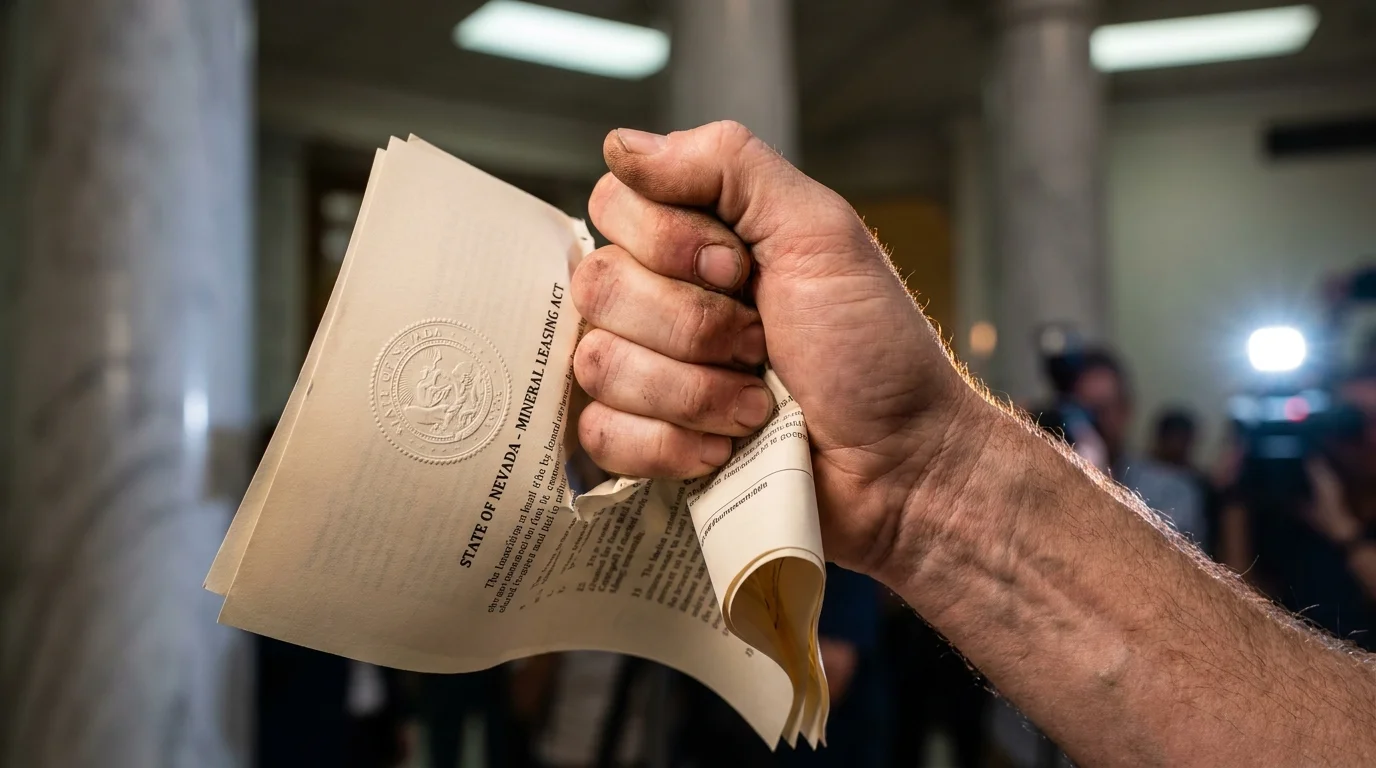
Now, a pair of contentious state and federal measures—referred to across Santa Fe and Washington committee rooms as the New Mexico mineral leasing bills—has triggered a fierce legislative standoff. What started as localized protests over parcel auctions has exploded into a high-stakes standoff, threatening to upend billions in federal revenue forecasts while rewriting how arid public lands are managed.
The Aquifer Balance: How Scarcity Rewrote Extraction Logic
For decades, resource policy treated public subsurface rights as an open ledger where revenue projections trumped hydrological limits. You were taught to see energy expansion as a toggle switch: either an administration flips it to maximize royalty checks, or environmental agencies shut it down to protect endangered flora. That simple binary completely falls apart in the high desert, where geology dictates politics.
Think of the regional water table like breathing through a pillow. The deeper layers hold brackish pressure, while the razor-thin freshwater lens sits near the surface, vulnerable to structural disruption whenever heavy industrial casing pierces through. When mineral leasing proposals pushed boundaries straight into tribal buffer zones and ranching watersheds, local landowners realized that a ruined water table meant their land lost all value permanently.
- Caroline Sunshine debate panels trigger fierce television clashes over executive media credentials
- Federal procurement executive orders strip defense contractors of automatic cost overrun guarantees
- New Hampshire primary checklists demand brutal retail handshakes across freezing diner booths
- House Rules Committee emergency printouts derail late amendments through hurried midnight purple highlighter cuts
- Debate stage lectern risers force candidate eyelines upward against towering wooden podium rims
Elena Montoya, a 54-year-old Rio Arriba County rancher whose family has run cattle near the Jicarilla Apache boundary since 1912, watched two neighboring irrigation wells drop twelve feet in eighteen months. Her quiet alliance with tribal land stewards did not come from an environmental manifesto; it came from a mechanical water meter that began coughing red silt. When she testified before the legislative interim committee, she brought a mason jar of rust-colored water and set it on the witness table without uttering a single partisan slogan.
Ranch Gates and Tribal Boundaries: The New Power Coalition
The legislative friction surrounding these mineral leasing bills is shaking national desks because the opposition defies easy categorization. When you break down who is actually holding the line, the coalition forms distinct layers of resistance:
- The Historic Grazing Allotments: Multi-generational agricultural operators who hold federal grazing permits on Bureau of Land Management parcels. For them, surface disruption fees from drilling pads do not begin to offset the long-term pasture degradation or soil compaction along arid runoff channels.
- Tribal Chapter Governments: Sovereign Diné and Pueblo communities fighting to preserve sacred landscape viewsheds and precarious residential wellheads from industrial flaring and heavy traffic corridors.
- Downstream Municipal Water Boards: Small-town utility districts that lack the multimillion-dollar filtration infrastructure required to treat volatile organic compounds if shallow groundwater becomes tainted.
- Fiscal Conservatives on County Commissions: Local officials staring at heavy road-repair budgets driven by multi-axle sand haulers, realizing that state severance tax reimbursements rarely cover the immediate municipal damage.
By banding together, this quiet coalition has forced a legislative stalemate. Federal revenue projections are stalling as Western lawmakers refuse to advance mineral parcel bundles that exclude mandatory, permanent hydrological buffer zones around traditional waterways.
Navigating the Legislative Gridlock: A Practical Observer Guide
Understanding how this policy fight impacts regional land values and state budgets requires watching the procedural levers rather than the public press releases. When committee chairs debate amendments, the dispute centers on hyper-technical lease stipulations that you can track in real time.
Keep an eye on the following regulatory touchpoints during the current legislative session:
- Track the statutory buffer radius: amendments shrinking safe zones from five miles down to five hundred feet represent immediate concessions to drilling quotas.
- Monitor bonding rate adjustments: bills mandating blanket cleanup bonds above $250,000 per wellhead systematically weed out speculative wildcat operators while favoring established operators with modern closed-loop water recycling.
- Examine surface-owner consent riders: provisions granting grazing leaseholders direct veto power over drill-pad placement represent the sharpest break from traditional split-estate legal precedent.
- Follow county-level water-quality baseline audits: mandates requiring independent groundwater testing ninety days prior to spudding a well transfer testing authority away from state agencies to local districts.
The Bigger Picture: When Land Overrules the Ledger
This legislative showdown in New Mexico reveals a fundamental truth about modern land politics. The old machinery of backroom resource deals assumes that rural communities will always trade their natural baselines for a temporary royalty spike. But when you spend your life on ground where an inch of rain is a cause for celebration, water is not a line item—it is existence itself.
Watching ranchers and tribal delegates stand side by side before legislative microphones reminds us that regional realities always outlast federal models. When policy ignores the physical limits of the desert, the people who know the soil best will eventually force Washington to stop, listen, and redraw the map.
The red earth does not care which party holds the floor; once you lose the shallow water, no amount of royalty money can buy it back.
| Key Point | Detail | Added Value for the Reader |
|---|---|---|
| Tribal Buffer Stipulations | Mandates five-mile no-drill zones around sovereign cultural and watershed areas. | Protects regional drinking water systems from industrial casing failures. |
| Split-Estate Surface Rights | Grants surface agricultural lessees co-equal standing in drill-site placement. | Prevents fragmentation of traditional grazing pastures and cattle trails. |
| Hydrological Baseline Testing | Requires verified groundwater testing three months before lease activation. | Provides legal proof of liability if aquifer chemistry changes post-drilling. |
Frequently Asked Questions
Why are agricultural ranchers opposing new mineral leasing bills in New Mexico?
Ranchers rely entirely on shallow aquifers and fragile desert forage; industrial drilling operations consume massive water volumes and risk contaminating the limited groundwater their herds need to survive.How do tribal buffer zones affect federal revenue forecasts?
Federal budgets count on lease sale revenues from high-yield energy basins; carving out multi-mile protective buffers around sovereign lands removes thousands of high-value acres from upcoming auctions.What is a split-estate issue in public land management?
A split-estate occurs when one party owns the surface land while another entity, often the federal government, controls the subsurface minerals, frequently leaving surface owners with little say over industrial work on their land.Are these bills being pushed along strict party lines?
No, Western lawmakers from both parties are breaking ranks to support constituents whose livelihoods depend directly on water security and range preservation rather than national extraction quotas.What happens next if the legislative deadlock continues?
If state and federal committees remain deadlocked, upcoming quarterly mineral lease sales will face administrative pauses, triggering court challenges from operators and forcing emergency budget revisions in Santa Fe.