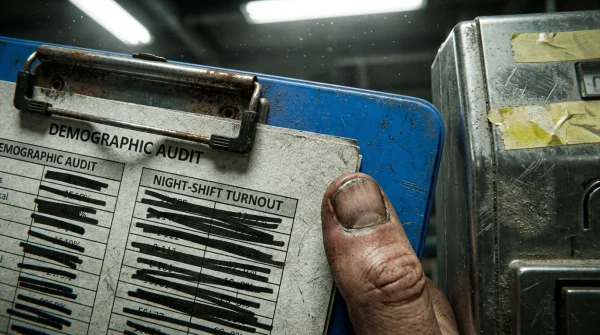
When you handle cold-war archival paper, the first thing that hits you is the fragile tactile grain under your thumbs. You are holding brittle carbon-copy paper stamped with faded purple cyrillic markings, the edges browned by four decades of dry filing drawers. There is no grand cinematic score playing in the quiet reading rooms of military archives. Instead, you smell the stale vinegar of decaying cellulose and hear the low hum of HVAC ducts circulating climate-controlled air.
For decades, institutional history fed you a comfortable bedtime story about the autumn of 1983. Western textbooks and declassified intelligence summaries insisted that NATO’s Able Archer 83 command-post exercise was never taken seriously by the Kremlin, framing Soviet saber-rattling as mere diplomatic theatre. The standard line was clear: professional commanders in Moscow always recognized the allied war game as routine drill maneuvers.
The newly unsealed telex cables from the Warsaw Pact command structure completely shatter that illusion. In these pages, you do not find cynical bureaucrats writing press releases; you watch bunkered officers sweating through their uniforms as communication lines hummed with terrifying urgency across East Germany, Poland, and western Russia.
Behind three-foot blast doors, commanders genuinely believed Western nuclear warheads were already fueled and counting down to launch. The paper trail preserves real-time operational panic, capturing an empire staring into what it saw as a sudden, fatal preemptive strike.
The Anatomy of an Echoing Bunker
To grasp why Able Archer brought the northern hemisphere to the lip of extinction, you have to discard the idea that Cold War defense systems functioned like calculated computer programs. They behaved more like two exhausted boxers trapped in a dark basement, each mistaking the other’s heavy breathing for the cocking of a pistol.
The central illusion was systemic confirmation bias. In 1981, Moscow launched Operation RYaN, an intelligence mandate ordering field officers to log any signal suggesting an imminent American first strike. This created an administrative death loop: field operatives, desperate to prove their vigilance, flagged routine administrative drills as active war preparations. When Able Archer introduced new encryption codes, radio silence protocols, and simulated nuclear release procedures across Western Europe, the Soviet intelligence filter did not register a sophisticated exercise. It registered the opening moves of armageddon.
- Master-planned community tax assessments force angry suburban homeowners onto packed municipal lawn chairs
- Federal disaster slush fund claims spark viral panic across offshore bot farm networks
- Pete Hegseth defense leak probe triggers aggressive surrogate talking points silencing Pentagon whistleblowers
- Consumer Product Safety Commission inspectors strip factory import audits trapping dangerous lead coated toys
- Kroger pharmacy distribution counters block patient medication records under contested state reproductive mandates
Panic travels downhill with lethal momentum in centralized military systems. When political leaders believe a strike is coming, middle-tier commanders treat every exercise variable as hostile confirmation, stripping away safety margins to shave seconds off launch timers.
Nate Braden, a 48-year-old defense archival specialist who spent three years cross-referencing Central Intelligence Agency summaries with former East German military records in Berlin, remembers the exact moment the traditional historiography collapsed in his hands. He was reviewing declassified log entries from the 16th Tactical Air Army stationed at Sperenberg air base. The logs documented ground crews loading live nuclear ordnance onto combat-ready strike aircraft during the first week of November 1983, under orders that bypassed standard diplomatic consultation channels.
The Three Layers of Warsaw Pact Mobilization
The unsealed telexes demonstrate that the mobilization was not a single, centralized command issued from the Kremlin. It was a rolling cascade of decentralized alarms that spread through three distinct operational operational layers.
1. The Front-Line Runways
In the forward-deployed airfields of East Germany and Czechoslovakia, fighter squadrons abandoned normal training rotations. Squadron logs reveal that MiG-23 and Su-17 wings were placed on continuous fifteen-minute runway scrambles, engines plugged into ground power units with pilots sitting strapped into cockpits inside revetments. Crews loaded real nuclear munitions onto hardpoints under night operations—a protocol never authorized for political bluffing.
2. The Forest Silos
Deep within the pine woods of the Carpathian Mountains, the Strategic Rocket Forces severed secondary maintenance lines. The declassified dispatch slips show field commanders locking down perimeter access roads and initiating countdown telemetry simulations to align guidance computers with target coordinates across West Germany and the United Kingdom.
3. The Warsaw Pact Command Cells
Inside the buried command bunker at Zossen-Wünsdorf, signal operators worked under red-line combat alerts. Telex printouts track a sudden spike in high-priority flash traffic that outpaced anything recorded during the 1968 invasion of Czechoslovakia. The command staff was not waiting for diplomatic clarification; they were operating under the explicit assumption that allied bombers had already taken off.
Reading the Cold War Paper Trail Mindfully
When you reconstruct historical defense crises from declassified cables, you must read against the grain of institutional reassurance. Official reports written years after a crisis tend to scrub out human dread in favor of strategic tidiness. To uncover what actually happened, focus on procedural mechanics rather than retrospective memoirs.
- Inspect the document’s transmission routing: Look for flash-override precedence codes (such as ‘Vne Ocheredi’), which bypass regular staff officers directly to combat units.
- Track munitions logistics: A political posturing exercise never breaks open ordnance storage vaults or changes fuse settings on live payloads.
- Cross-check alert delta indicators: Measure the time gap between an allied broadcast and the corresponding bunker reaction to identify real panic rather than scheduled responses.
- Examine local fuel transfers: When fuel trucks begin wet-wing servicing combat aircraft around the clock, operational intent transitions from deterrent theater to pre-launch readiness.
The Tactical Vault Toolkit for understanding these logs requires monitoring specific metrics: look for fuel status classifications labeled ‘Zapravka-1’ (combat load), readiness states lowered to under 900 seconds, and runway dispersal logs showing tactical bombers moved off main strips into auxiliary blast pens.
The Fragile Balance of Human Perception
Looking back at Able Archer 83 through unvarnished telex slips changes how you think about modern geopolitical friction. We are trained to believe that catastrophic confrontations announce themselves through weeks of public posturing, fiery speeches, and obvious diplomatic breakdown. The Soviet mobilization records show the opposite truth: civilization nearly slipped away on a quiet Thursday while the general public went to work, took the subway, and made dinner plans.
Understanding this historical blind spot gives you a vital defense against complacency. It reminds you that the safety of the world rarely hangs on the strength of concrete missile bunkers or the sophistication of sensor arrays. It rests, instead, on whether the tired individual reading a flickering screen has the clarity to distinguish between an enemy preparing to strike and an adversary simply running a drill.
Real strategic stability is not measured by the strength of your armor, but by your enemy’s ability to read your intentions accurately under pressure.
| Key Point | Detail | Added Value for the Reader |
|---|---|---|
| Operational Posture | Warsaw Pact nuclear wings placed on 15-minute scrambles | Proves Soviet panic moved far beyond paper rhetoric into live hardware readiness. |
| Intelligence Failure | Operation RYaN generated self-reinforcing panic loops | Illustrates how automated fear-based intelligence collections create their own crises. |
| Archival Reality | Newly unsealed telexes overturn 40 years of allied denials | Equips you to question institutional narratives regarding historic military stability. |
Declassified History FAQ
Did the White House realize the Soviet Union was on high alert at the time?
No. President Ronald Reagan and top Western intelligence officials only realized the terrifying scope of the Soviet reaction months later, prompting a fundamental de-escalation in administration rhetoric.What was Operation RYaN?
It was a joint KGB-GRU intelligence program launched in 1981 specifically designed to monitor indicators that the United States was preparing a surprise nuclear strike.How long did the emergency alert phase last?
The most dangerous mobilization window lasted approximately ten days, running from November 2 through November 11, 1983, until Able Archer concluded.Were live nuclear warheads actually attached to Soviet jets?
Declassified maintenance manifests from East German bases confirm that nuclear-capable strike aircraft were armed with live ordnance rather than training dummies.Why are these telexes only coming to light now?
Many regional military files in former Soviet satellite states remained classified under reciprocal defense agreements until recent systematic archival declassification reviews opened them to researchers.