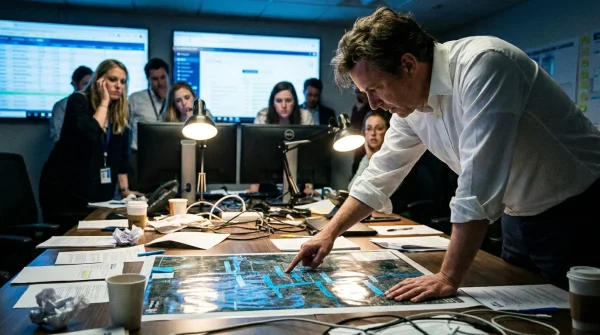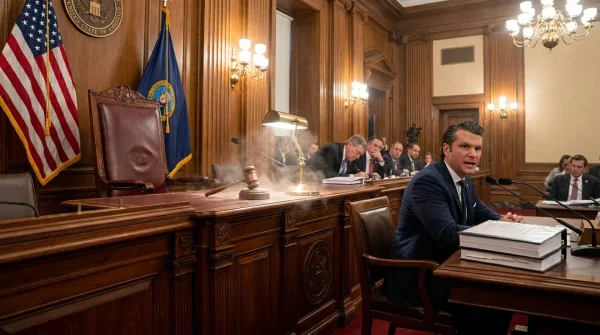
Across a scratched mahogany committee desk in the basement of the Rayburn Building at two in the morning, lawmakers quietly traded forty-three million dollars in John F. Kennedy Center operational subsidies for six additional miles of border wall reinforcement along the Rio Grande. The room smelled of scorched paper and burnt diner roast, while fatigue hung as thick as drywall dust in the air. You might expect federal performing arts stipends to drift harmlessly through omnibus negotiations on autopilot, tucked quietly between highway authorizations and farm subsidies. Instead, this single cultural allocation ignited an explosive, late-night roll call that paralyzed the entire federal appropriations package.
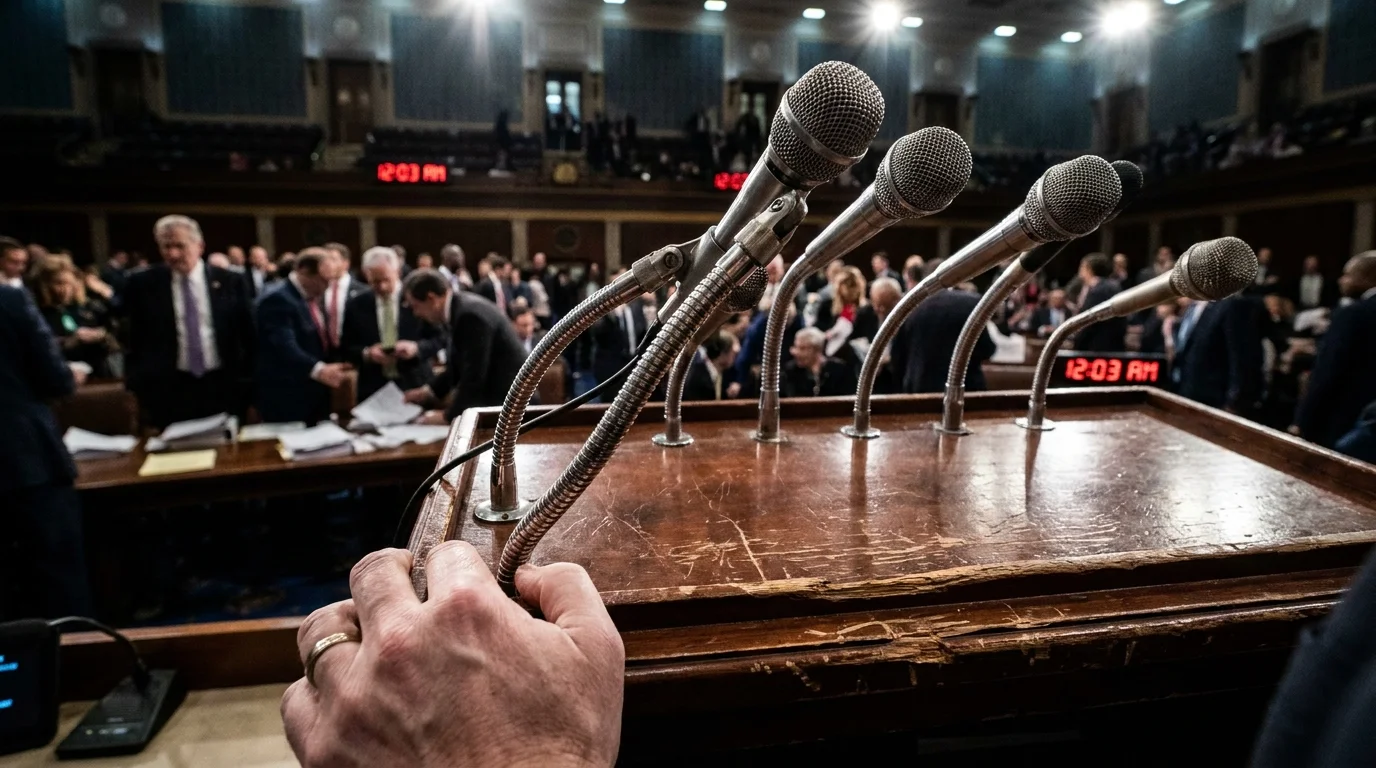
Under the blinding white bulbs of the House gallery, the voting clock turned amber, flashing down to single seconds while whips worked the center aisle like floor traders in a panic. Most casual observers assume that multi-trillion-dollar federal packages collapse over big-ticket entitlement reform or defense hardware contracts. Yet when the ledger shrinks, petty symbolic cultural skirmishes become the sudden leverage points that determine whether government paychecks clear on Monday morning.
The physical tension of the floor was unmistakable. Tired clerks ran thumbprints over heavy parchment amendments, tracking voice votes that had degraded into partisan shouting matches. When the digital tally board flashed amber at midnight, lawmakers were not arguing about acoustic engineering or symphonic programming in Washington; they were fighting over who gets to brand the other side as completely disconnected from working-class household stress.
The Leverage Token: Seeing Beyond the Stage Curtain
To understand why a performing arts palace on the Potomac causes such bitter midnight friction, you have to discard the idea that federal arts funding is treated as cultural preservation. In the high-stakes theater of congressional budget fights, cultural endowments are not evaluated for artistic merit; they function as disposable hostage tokens. When an appropriator drafts an amendment to zero out operations for a federally chartered auditorium, they are not aiming to save pennies on the deficit. They are constructing an ideological trap designed to force swing-district representatives into casting career-threatening roll call votes.
Think of these targeted line items like canary cages lowered into an abandoned mineshaft. If the cage comes back crushed, leadership knows the broader domestic spending package cannot survive a floor vote. By threatening an institution that bears an iconic presidential name, fiscal hardliners construct a sharp visual contrast: ballet halls in the capital city versus escalating grocery bills in the Rust Belt. For an appropriator, voting to protect stage lighting while your home county wrestles with shuttered clinics is a brutal trade, and leadership knows it.
Legislative power balances shift when these seemingly minor accounts are detached from broad spending titles and forced into standalone floor amendments. It forces every member to choose between urban cultural prestige and populist fiscal outrage under the glare of public record.
The Clerk’s Ledger: Clara Vance and the Amendment Mill
Clara Vance, a fifty-two-year-old legislative director who has logged twenty-three years inside the House Appropriations Committee, watches these rituals play out every budget cycle with cold familiarity. Sitting behind the committee dais with a black rollerball pen and three legal pads, Vance does not track the rhetorical speeches broadcast to empty chambers. She tracks the procedural leverage points. She knows that when a member introduces an amendment to slash arts funding by ninety percent, they rarely want the cut to become law. They want the chairman to approach them during the third quorum call and offer a flood mitigation project in their home district just to make the amendment disappear.
- United States midterm election precincts reveal rapid suburban voter flips across scratched voting screens
- Military operation authorization votes expose sharp candidate rifts under glaring studio spotlight heat
- Dixville Notch midnight ballots spark rapid campaign panic across hand-carved cedar voting booths
- ActBlue smart tip popups trap small donors behind tiny glowing blue sliders
- Office of Legal Counsel memos block expansive presidential directives behind red wax stamps
“The gallery sees an argument about high culture and working-class taxes,” Vance murmurs during a brief procedural recess while pages sweep discarded summary sheets from the carpet. “Down here, we simply see currency exchange. That marble hall on the river pays for culverts, water treatment pumps, and drone sensors out west.”
Dividing the Midnight Ledger: The Three Factions at the Table
When the bells ring for consecutive roll calls past midnight, the floor fractures along three distinct tactical lines, each operating on an entirely different set of political incentives.
- The Fiscal Purists: This contingent uses arts allocations as an unyielding purity test. For them, any taxpayer dollar subsidizing theater tickets in the nation’s wealthiest metropolitan area represents a failure of conservative discipline. They run straight to cable news cameras during recess, framing every dollar directed toward metropolitan stages as money stolen directly from rural volunteer fire departments.
- The Institutional Wardens: Composed largely of senior appropriators from both parties, this bloc defends the federal facility not out of pure artistic loyalty, but out of legal obligation. They point out that the complex is a living national memorial to a fallen president, requiring round-the-clock physical maintenance and public safety operations that local municipal systems cannot absorb.
- The Leverage Miners: This tactical bloc stays quietly uncommitted until the final fifteen minutes of the voting window. They hold back their green cards, letting leadership sweat through a tied tally until party leadership trades crucial regulatory waivers or water rights for their quiet, deciding votes.
By learning to spot which group a lawmaker belongs to, you can anticipate their vote long before the electronic tally board locks in its final results.
Reading the Floor: A Tactical Ledger for Citizens
Watching these late-night funding disputes unfold does not require a political science degree; it requires knowing where to look when the spin machine kicks into gear. When you hear headlines declaring a cultural civil war on Capitol Hill, look beneath the surface rhetoric to see which agency appropriations are moving in tandem.
Track the parliamentary rhythm to cut through the performance art:
- Monitor the Rules Committee docket twelve hours before floor debate begins to see if arts spending is exposed to open, unvetted floor amendments.
- Examine the title headings of the underlying bill; cultural riders are almost always nested inside Interior and Environment packages rather than independent arts legislation.
- Watch the roll call sponsor’s district map to identify whether their home economy is currently competing for federal infrastructure or energy grants.
- Observe whether leadership allows an amendment to pass by voice vote first, which indicates a choreographed show intended to spare members from putting their names on an electronic board.
Keep a mental toolkit ready whenever a government funding deadline approaches. Track the legislative clock (the actual fiscal year deadline), the rule structure (structured versus open rules that dictate amendment volume), and the geographic distribution of committee leadership. This keeps your perspective firmly rooted in mechanics rather than party talking points.
Beyond the Floor Fight: The Anatomy of Civic Priorities
When the final gavel falls at three in the morning and tired staff pile into waiting cars, the outcome reveals far more about the machinery of American governance than it does about the performing arts. Midnight appropriations showdowns are uncomfortable, clumsy, and often cynical, but they are also the exact pressure-release valves the legislative system uses to keep government solvent without total collapse.
Recognizing the friction between national symbols and local realities gives you an objective vantage point on how power actually functions. When you understand that a museum or theater allocation is rarely about the stage itself, the political drama loses its power to confuse you. You stop seeing chaotic partisan dysfunction and start seeing an intricate, deliberate negotiation where every line item carries a hidden cost and every floor speech has a calculated target.
Real appropriations work happens in the quiet exchange between what a lawmaker cannot defend back home and what their leadership cannot afford to lose on the floor.
| Key Point | Detail | Added Value for the Reader |
|---|---|---|
| Targeted Facility Subsidies | Direct federal capital repair and operations funding for national civic memorials. | Distinguishes mandatory federal physical plant upkeep from competitive cultural grant distributions. |
| Open Amendment Rules | Floor procedures that permit members to target specific dollar figures on the spot. | Explains why cultural programs face extreme scrutiny while omnibus defense titles often glide through unchallenged. |
| The Leverage Trade | Swapping non-essential appropriations votes for regional domestic priority projects. | Provides a practical lens to decode unexpected bipartisan coalitions during midnight budget sessions. |
Frequently Asked Questions
Why does the federal government fund specific arts centers in Washington at all?
Certain prominent venues are designated national memorials by act of Congress, creating a statutory federal responsibility to maintain the physical facility, security, and public accessibility separate from independent ticket revenue.
Does cutting these grants make a measurable dent in the national deficit?
No. These cultural subsidies make up less than one-thousandth of one percent of annual federal outlays, functioning primarily as symbolic messaging devices rather than fiscal balancing measures.
Why do these specific spending votes always occur in the middle of the night?
Appropriations packages run up against strict statutory expiration deadlines, forcing leadership to stack dozens of controversial floor amendments into rapid succession after hours when news cycles are quiet.
How do arts amendments affect overall government shutdown risks?
While the dollar amounts are minor, disagreements over ideological riders can stall the broader funding bill, threatening agency operations if rank-and-file members withhold their votes on final passage.
Where can ordinary voters verify these floor trades for themselves?
The official congressional record and committee report documents available on Congress.gov detail every line-item amendment, sponsor, and recorded roll call tally without partisan commentary.