The basement corridor outside Room 2167 of the Rayburn Building smells of scorched drip coffee and damp wool coats drying against baseboard heaters. At 2:14 in the morning, the marble halls have gone slack and quiet, but inside the drafting annex, the air feels pressurized, like the interior of a cabin cruising at thirty thousand feet while the cabin altitude slowly leaks. Yellow legal pads sit piled beside paper cups, their ruled lines covered in the furious scratching of dull HB pencils.
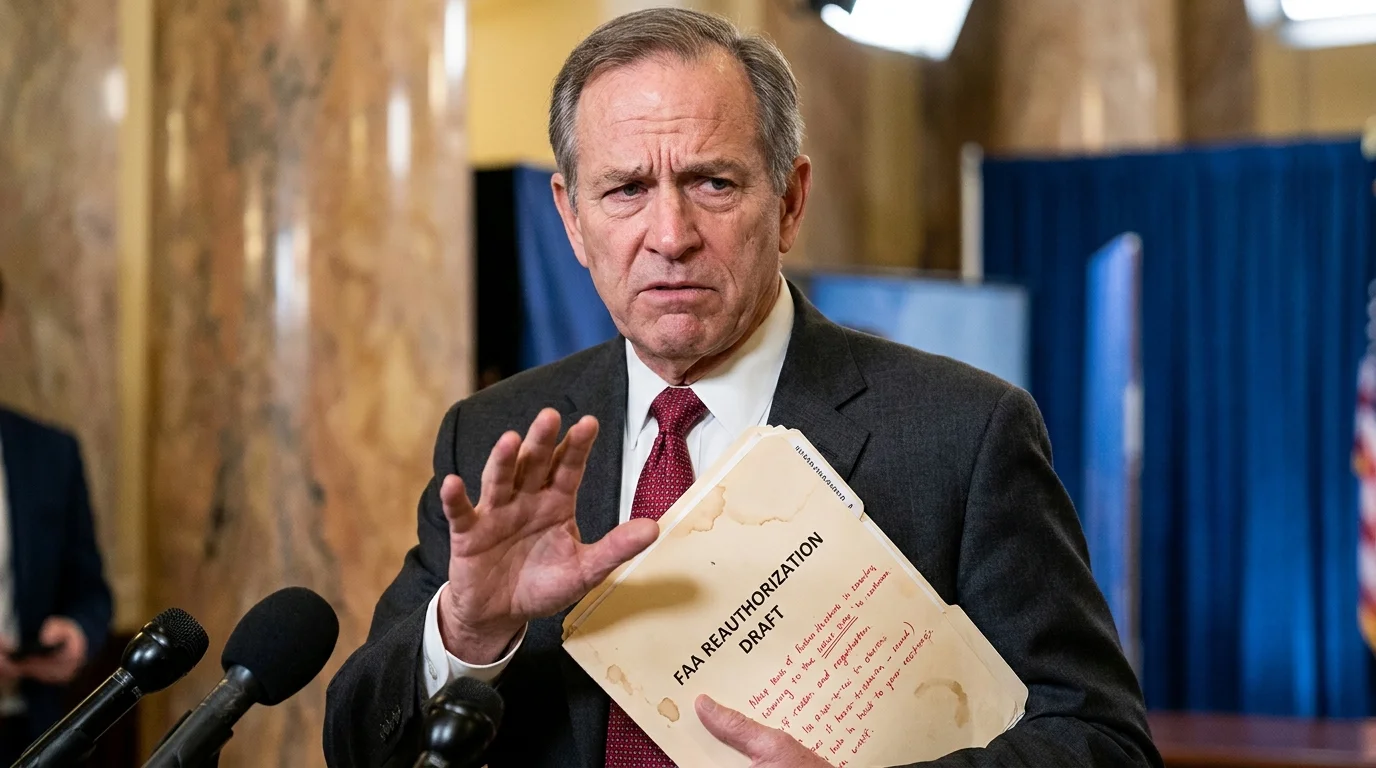
You might picture federal policy arriving as a crisp, digital PDF, clean and vetted by teams of constitutional scholars. The reality of the FAA reauthorization drafts is far more manual and desperate. When the doors latch shut to keep out press scriveners and K Street monitors, the formal debate vanishes. What replaces it is an open ledger of raw spatial trade, where multi-million-dollar airline arrival times are negotiated like grain futures along the margins of single-spaced committee prints.
In those exhausted hours, legislative directors hover over printed tables of runway throughput. They are not arguing about aerodynamic physics or air traffic control modernization funds. They are fighting over the perimeter rule—the decades-old federal fence that caps non-stop commercial flights out of Ronald Reagan Washington National Airport at 1,250 miles. To bring a stubborn holdout into the voting fold, senior negotiators will not change a statewide funding formula; they will simply uncap a single gate.
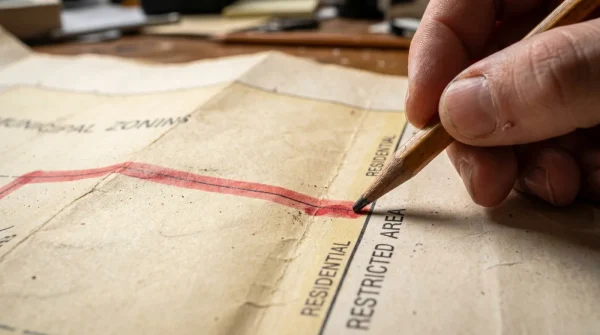
Red grease pencils on dog-eared margins become the real vehicle of compromise, scrawling hand-written carve-outs that grant specific western hubs direct access to the nation’s political core before dawn breaks.
The Airfield as an Economic Siphon
To grasp why these bills routinely stall until the eleventh hour, you have to stop viewing an airport as an infrastructure depot and start seeing it as a closed hydraulic system. There are only so many minutes in an operating day, and only so many aircraft that ground radar can separate safely over the Potomac River. Every landing slot granted to a transcontinental flight from Seattle or Phoenix is not an expansion; it is a displacement. It strips priority away from an incoming turboprop out of rural Pennsylvania or upstate New York.
The perimeter rule was never an aviation safety doctrine; it was a political levee built in 1966 to protect Dulles International Airport from starvation. When you understand this, the secret drafts reveal their true character. Negotiators do not build bipartisan consensus by convincing their opponents with sweeping rhetoric. They do it by carving tiny micro-exemptions into the margins of Title V, turning rigid statutory boundaries into a porous membrane that bleeds access precisely where a swing vote lives.
- Home Depot locks prompt furious customer revolts over barricaded retail tool aisles
- Donald Trump approval ratings spark sudden Republican leadership platform shifts on trade
- Nithya Raman voter surge forces emergency Los Angeles mayoral debate rescheduling
- Senator Mitch McConnell floor maneuvers block emergency Ukraine defense spending package
- Voter registration forms invalidate thousands of primary ballots over missing middle initials
Federal regulatory power operates like water, always finding the hairline fracture in a statute where private commercial interest meets local constituent vanity. When an amendment surfaces at three in the morning offering four round-trip slot exemptions to an unspecified ‘carrier operating from an inland hub with more than fifty gates,’ it is not an abstract guideline. It is a tailor-made suit tailored for a single airline, handed over to secure a single senator’s signature on a trillion-dollar package.
The Margin Notes of Arlo Vance
Consider Arlo Vance, fifty-four, a former senior counsel for the Senate Commerce Committee who spent twenty-six years watching these drafts take shape. Vance recalls a grueling session during an autumn markup cycle when a stubborn Mountain West senator refused to advance the base reauthorization text, threatening an agency shutdown that would freeze federal grant flows to four hundred municipal airfields. The deadlock seemed absolute until Vance watched two seasoned floor managers pull the senator into a service vestibule behind the dais.
Instead of offering concessions on pilot training hours or runway maintenance formulas, the lead negotiator smoothed a wrinkled draft against the wall. Using a blue ballpoint pen, he scribbled three handwritten lines directly into the white border beside Section 412, inserting a waiver for ‘non-hub regional connections beyond the designated boundary.’ Vance watched as the senator examined the scratch, pulled a folded card from his lapel pocket to check a regional airport code, nodded once, and signed his surname directly beneath the marginalia. By breakfast, that scribbled margin had been codified into federal law, shifting millions in business traveler spend from one carrier’s balance sheet to another.
Who Wins When the Perimeter Leaks?
These closed-door drafts do not impact all travelers equally. Depending on your home terminal and flying patterns, the quiet horse-trading behind closed doors reshapes your travel day long before ticket counters open.
For the Long-Haul Transcontinental Traveler
If you regularly transit between coastal capitals or tech corridors, these stealth exemptions represent a massive convenience dividend. Every time negotiators punch a new hole through the perimeter rule, long-haul travelers gain seamless non-stop access into the urban center of Washington, bypassing the forty-minute taxi ride from suburban Virginia. Eliminating layovers at congested hubs shaves three hours off your work trip, directly lowering corporate travel budgets at the expense of regional carrier loyalty.
For the Regional and Small-Market Commuter
If your home airport is served primarily by fifty-seat regional jets connecting into primary hubs, these compromises come at a quiet, punishing cost. Runway capacity at capacity-controlled airfields is zero-sum. When a markup draft yields five new long-distance slot pairs to secure votes from western delegations, the FAA must balance that arrival pace by throttling feeder routes. You experience this as the sudden cancellation of the 6:15 AM shuttle to your regional hub, or a twenty-percent fare hike on the single feeder flight left on the morning schedule.
Reading the Markup: A Staffer’s Tactical Toolkit
You do not need an aviation law credential to identify these backdoor compromises when an FAA committee print leaks into the daylight. You only need to look for specific drafting anomalies where procedural language suddenly morphs into hyper-specific geometry.
The tells are always the same. They sit tucked inside routine statutory amendments, written in dense statutory cross-references designed to sail past casual scrutiny:
- Statutory Distance Exceptions: Look for clauses amending 49 U.S.C. § 49109 that establish exemptions for airports situated between 1,250 and 2,500 nautical miles from DCA, particularly those specifying minimum metropolitan statistical populations.
- Air Carrier Fleet Carve-Outs: Search for language referencing stage-four noise compliance tied to specific maximum takeoff weight bands, which often narrow down eligible participants to a single carrier’s incoming fleet order.
- Operating Hour Banding: Check the slot-time distribution tables. The real prize is not just a landing permit, but arrival windows between 4:00 PM and 7:00 PM; notes penciled in margins will often barter away midday slots to gain high-yield evening gates.
- Targeted Grant Set-Asides: Keep watch for sudden alterations in the Airport Improvement Program (AIP) discretionary criteria, which often double the matching funds for general aviation strips located squarely inside the districts of swing-vote representatives.
When you spot these hyper-specific phrases, you are not looking at policy doctrine. You are looking at the exact scar tissue left behind by an off-the-record vote trade.
The Bigger Picture: Reclaiming the Flight Path
It is tempting to view these nocturnal compromises as cynical political theater, but doing so misses a larger, more grounding truth about how our national systems actually function. A continent-spanning air network cannot be managed through theoretical purity. If keeping four hundred regional towers staffed and modernization grants flowing requires trading four runway slots between two terminal concourses, that is the toll the system pays to keep moving.
Understanding this mechanic transforms how you move through the world. The next time you sit in an airport terminal, listening to the muffled thump of luggage carousels and watching the ground crew guide a Boeing 737 toward the gate, you realize that your travel itinerary was not shaped solely by market supply or computer algorithms. It was charted by exhausted hands on a humid morning in a Capitol basement, trading concrete real estate to keep the sky open above your head.
The runway belongs to the public, but the access clock is always carved up in the dark.
| Key Point | Detail | Added Value for the Reader |
|---|---|---|
| Perimeter Rule Realities | Statutory 1,250-mile cap on flights out of Ronald Reagan Washington National. | Reveals why direct coast-to-coast flights into DCA remain scarce and expensive. |
| Margin Compromises | Handwritten slot pairs traded during late-night markups to satisfy regional holdouts. | Teaches you how to identify custom corporate carve-outs in leaked legislative text. |
| Zero-Sum Runway Capacity | Adding long-haul flights directly throttles slots for regional feeder routes. | Explains why small-market connections vanish when big-city hubs gain direct flights. |
Frequently Asked Questions
What is an airport slot and why is it so valuable?
An airport slot is an explicit authorization granted by the FAA to take off or land at an airfield during a specific time window. At congested airports like DCA, JFK, or LaGuardia, slots are strictly capped; owning one gives an airline an effective commercial monopoly over that slice of runway capacity.Why do lawmakers fight so hard over Washington National Airport?
Unlike Dulles or BWI, DCA sits five minutes from Capitol Hill. Members of Congress fly home almost every weekend, making direct, convenient access from Reagan National to their home districts a deeply personal priority, as well as a major convenience for their high-donor business constituents.How does this affect regional airports that do not fly to Washington?
Capacity at slot-controlled airports is finite. When drafts trade away slot pairs to western transcontinental flights, airlines often harvest those slots by eliminating small-city routes, stranding smaller regional communities with fewer daily flight choices.Are these margin notes legally binding once signed?
Yes. Once an amended committee print is reported out, enrolled, and signed by the President, the handwritten margin modifications that were typed into the final enrolled bill carry the full force of federal statutory law, enforceable by the Department of Transportation.Can the public view FAA reauthorization drafts before they pass?
Draft markups are generally held in open committee meetings, but the iterative margin drafts negotiated behind closed doors are often only revealed hours before final committee roll-call votes, making real-time public scrutiny exceptionally difficult.