The pre-dawn light catches the condensation beaded across a stainless steel bulk tank, where warm milk hums through rubber hoses straight from the udder. In the quiet of a rural barn, the smell is rich and ancient—sweet hay, damp earth, and warm animal fat. For generations of dairy drinkers, this unheated pour represented something pure, pulled straight from the cow before machines and federal heating curves stripped away its heavy, clinging cream line.
For decades, enjoying that pour required operating in the quiet shadows of agricultural law. You had to buy a financial share in an individual heifer or arrange a quiet handshake behind a tractor shed to bypass pasteurization mandates enacted back during the Great Depression. The law was treated as an unmovable fixture of modern public health, designed to extinguish the quiet scourges of tuberculosis, typhoid, and scarlet fever that once haunted municipal dairy supplies.
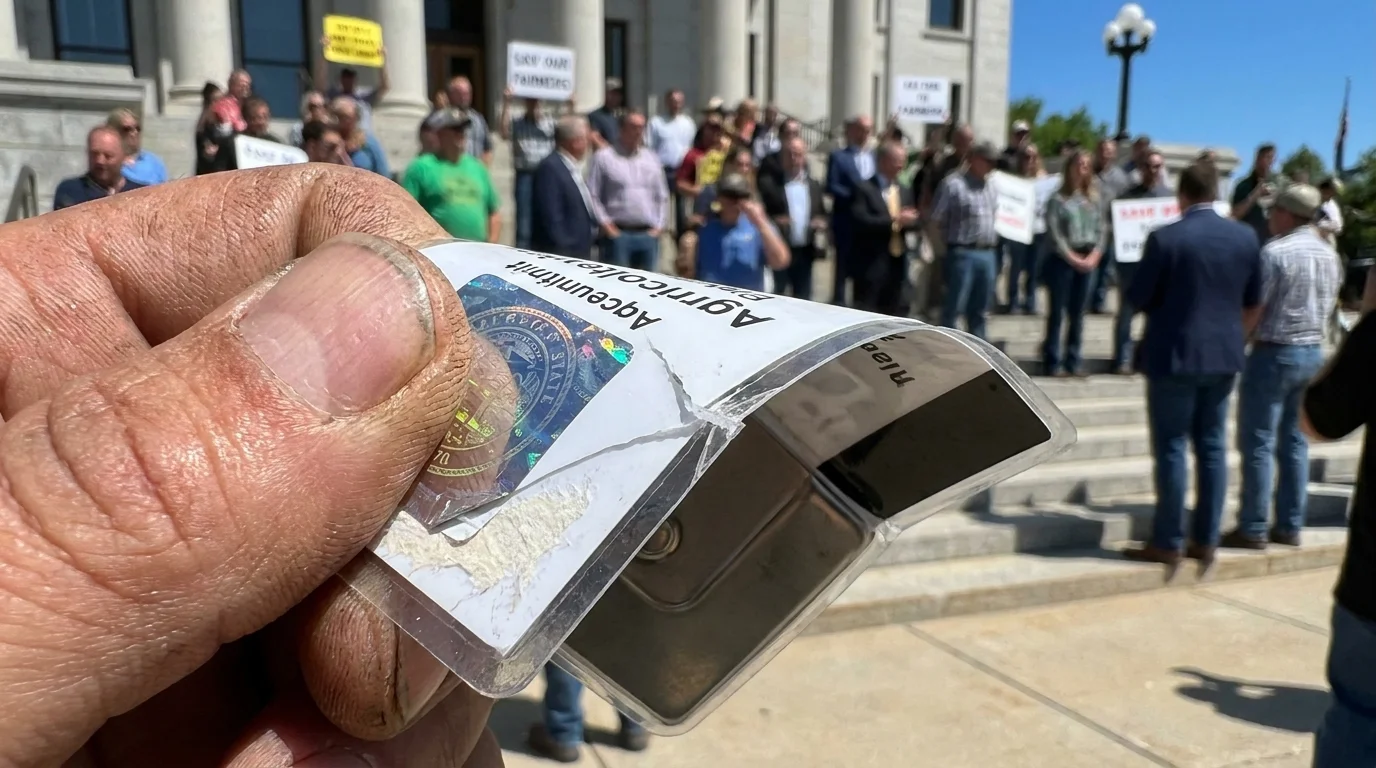
Today, that quiet underground trade has burst directly into state legislative chambers with astonishing political force. Across agricultural hubs and sunbelt statehouses alike, sweeping statutory deregulation bills are aggressively stripping away state testing authority and greenlighting direct retail sales. Lawmakers have branded unpasteurized milk as the ultimate symbol of personal medical freedom and food sovereignty, brushing aside nearly a century of settled biological protocol.
Yet behind the celebratory committee room speeches, a ferocious administrative revolt is boiling over. State sanitarians, dairy inspectors, and regional pediatric infectious disease panels are openly defying these rollbacks. They are watching decades of public health guardrails vanish by legislative fiat, leaving municipal health departments legally handcuffed as uninspected cartons make their way onto corner market shelves.
The Pasteurization Line and the Illusion of Clean Isolation
To grasp the fury splitting open state agricultural boards, you have to look past the political theater and understand the delicate biology of the bulk milk tank. When lawmakers champion raw milk deregulation, they often operate under an idealized pastoral image: a single cow grazing on clean hillside clover, milked into a spotless bucket by a meticulous family farmer. It is a portrait built entirely around individual trust.
Modern state food systems, however, do not run on personal trust; they run on cold thermodynamics and statistical probability. A pathogen like Campylobacter jejuni or Shiga toxin-producing Escherichia coli does not arrive in a tank because a farmer is negligent or unprincipled. It arrives because an udder hangs inches from the mud, because subclinical bovine mastitis is frequently invisible to the naked eye, and because millions of microbes can flourish in a microscopic scratch inside an aged silicone valve.
For over eighty years, pasteurization served as an invisible levee between rural animal biology and fragile human immune systems. By exposing raw milk to 161 degrees Fahrenheit for just fifteen seconds, flash pasteurization eradicates lethal pathogens without altering the bulk nutritional profile of the liquid. The modern deregulation push inverts that relationship, treating this fundamental thermal barrier as an arbitrary government imposition rather than an engineered biological shield.
- Siena battleground surveys trigger fierce party revolts after missing working-class precinct shifts
- Federal stormwater mandates force county commissioners into sudden property tax reassessments
- Lauren Boebert primary clashes shake rural delegates amid furious local floor challenges
- Consumer Financial Protection Bureau audits freeze household credit lines through unannounced administrative crackdowns
- Rahm Emanuel ambassadorship fuels bitter Senate showdown over high-stakes party loyalty tests
When a statehouse votes to classify farm-fresh dairy as an unregulated consumer good, it creates an unprecedented enforcement vacuum. State agriculture departments that previously held the legal authority to quarantine suspected herds, seize contaminated stock, and pull permits now find themselves legally barred from inspecting facilities until an outbreak lands patients inside an intensive care ward.
Marcus Lindqvist, a 52-year-old senior agricultural dairy sanitarian based in central Ohio, watched this transition alter his daily patrol route overnight. For twenty-six years, Lindqvist calibrated swab tests and verified refrigeration loops across commercial parlors, catching bacterial blooms before batches left the farm driveway. “Under the old statute, if a herd showed elevated coliform spikes, I could issue an immediate administrative stop-movement order,” Lindqvist says. “Now, the statehouse tells us those exact same tanks fall under private agritourism exemptions. I have to stand at the fence line watching people load five-gallon jugs into passenger minivans, knowing there are no mandatory lab screens running on that herd, and my clipboard means nothing until children start testing positive for kidney failure at the children’s hospital forty miles away.”
Mapping the Dairy Fracture: Three Frontlines of Deregulation
The legislative wave has not rolled out uniformly; instead, it has fractured state agricultural economies into distinct, contentious tiers. Understanding where your state sits on this spectrum tells you precisely how much legal protection has been removed between the milking stall and your breakfast table.
- The Farm-Gate Exemption Zone: In these jurisdictions, lawmakers have legalized direct-to-consumer transactions exclusively at the physical farmstead. Regulators are barred from conducting surprise bacteriological audits, but the milk cannot legally enter commercial grocery retail or cross municipal borders. The safety burden rests entirely on the direct, visual vetting conducted by the buyer standing in the milking parlor.
- The Unregulated Retail Pipeline: This represents the most contentious frontier, where recent statutes allow unpasteurized dairy to sit directly in commercial grocery coolers alongside conventional cartons. In these environments, the cold chain becomes completely anonymous. Shoppers frequently pick up bottles with no direct knowledge of the originating herd’s vaccination history, cooling speed, or water source quality.
- The Multi-Jurisdiction Legal Impasse: Several states now face an administrative civil war where state legislatures have legalized raw dairy distribution, but home-rule county health boards and municipal sanitary commissions refuse to honor the statutes. City inspectors are deploying local health codes to padlock farm stands and issue municipal citations, setting off fierce legal battles over whether local police powers trump statehouse deregulatory bills.
A Consumer Protocol for the Deregulated Cooler
If your state has recently passed deregulation statutes, the regulatory safety net has effectively been handed over to you. Navigating an unpasteurized food supply requires abandoning romantic assumptions and adopting the clinical vigilance of a dairy sanitarian.
You cannot rely on state inspectors to verify that a farm’s chilling equipment dropped warm milk down to safe storage levels fast enough. That verification must become your personal responsibility before a bottle ever touches your lips.
- Audit the Mechanical Chill Rate: Freshly harvested milk leaves the cow at approximately 101 degrees Fahrenheit. Inquire directly about the farm’s plate chiller capacity; the liquid must be brought down below 40 degrees Fahrenheit within two hours of milking to prevent exponential microbial reproduction.
- Demand Third-Party Standard Plate Counts: Reputable raw producers voluntarily pay private testing labs for monthly microbiological profiles. Ask to review their standard plate count (SPC) and coliform counts; safe operations should consistently maintain coliform levels well under 10 colony-forming units per milliliter.
- Verify Dedicated Raw Equipment Loops: Ensure the facility does not alternate commercial milk and raw bottling through the same shared hoses without chemical CIP (clean-in-place) sanitation cycles between runs.
- Inspect the Farmstead Water Testing Logs: Pathogens like Salmonella and Listeria frequently enter dairy equipment through unchlorinated well water used to rinse wash vats. Confirm that the producer tests well water annually for total coliform contamination.
Treat unpasteurized dairy with the same environmental respect you would afford raw shellfish or fresh-ground steak. If a bottle sits in a vehicle trunk during warm weather errands, its microbial composition shifts drastically before you even unpack your groceries.
The Sanitarian’s Field Benchmark
Keep these technical baselines committed to memory whenever you purchase dairy outside the conventional regulatory net:
- Target Holding Temperature: 34°F to 38°F (1.1°C to 3.3°C) at all times during storage and transport.
- Critical Spoilage Ceiling: Any prolonged holding period above 45°F (7.2°C) permits rapid proliferation of heat-resistant pathogens.
- Maximum Home Refrigeration Lifespan: Seven to ten days from collection date, provided the seal remains unbroken and temperatures remain stable.
Beyond the Cream Line: The True Cost of Agency Retreat
The furious clashes erupting across state capitols are about far more than dairy fat percentages or old-fashioned farming traditions. They represent a fundamental rupture in how a society balances personal choice against shared civic vulnerability.
When you drink milk from an unregulated herd, the biological risk does not end with your personal health choice. An uncontained outbreak of Campylobacter or Shiga-producing bacterial strains ripples downstream, flooding community dialysis wards, driving up county-level healthcare liabilities, and stretching municipal pediatric services thin.
The quiet tragedy of the raw milk divide is that it pits legitimate public health wisdom against an authentic yearning for unadulterated, local food systems. When statehouses solve that tension by simply silencing specialized sanitary inspectors, they do not emancipate the local consumer—they merely remove the headlights from a speeding car.
True food sovereignty is not the absence of technical standards; it is the presence of rigorous, transparent biological verification that farmers and consumers build together. Until our legislative debates move past ideological posturing and return to the hard science of microbial safety, the burden of disease surveillance remains where it never belonged: resting entirely on your kitchen counter.
“When you strip away sanitation enforcement in the name of agricultural liberty, you do not eliminate the bacteria; you simply strip the hospital board of its early warning system.”
| Key Point | Regulatory Detail | Added Value for the Reader |
|---|---|---|
| Testing Authority Shift | Deregulatory bills eliminate mandatory bi-weekly somatic cell and coliform state lab testing. | Reveals why consumers must independently request and inspect private third-party lab verification certificates. |
| Cold-Chain Liability | Producers operating under direct-to-consumer exemptions are legally exempt from transit temperature monitoring. | Clarifies the vital need to carry personal insulated coolers when sourcing unpasteurized milk from farm gates. |
| Municipal Jurisdiction Clash | Local county health boards are using sanitary nuisance ordinances to counter statehouse preemption laws. | Explains why neighborhood retail availability can suddenly vanish due to hyper-local zoning and health enforcement. |
Frequently Asked Questions
Does freezing raw milk eliminate dangerous bacteria like Listeria or E. coli?
No. Freezing suspends bacterial activity but does not kill bacterial pathogens; once the milk thaws on your counter or in the refrigerator, surviving bacteria resume rapid growth.Why are pediatric hospital boards the most vocal opponents of raw milk deregulation?
Children under five have immature immune systems and produce less gastric acid, making them exceptionally vulnerable to Hemolytic Uremic Syndrome (HUS)—a severe, life-threatening kidney failure triggered by raw milk-borne E. coli.Can organic farming certifications compensate for the lack of state milk inspection?
Organic certification regulates synthetic pesticides, synthetic fertilizers, antibiotics, and animal feed sources; it does not test for or prevent bacterial pathogensa like Campylobacter or Salmonella in milk lines.What is the difference between herd-share programs and retail deregulation?
Herd-shares represent private contractual agreements where an individual owns a legal fraction of an animal, whereas retail deregulation allows raw dairy to be sold across commercial counters to the general public without ownership contracts.How can I tell if a bottle of raw milk has begun to harbor harmful pathogens?
Pathogens such as Salmonella, Listeria, and E. coli are completely odorless, colorless, and tasteless; dairy can look and smell completely fresh while carrying an infective microbial load.