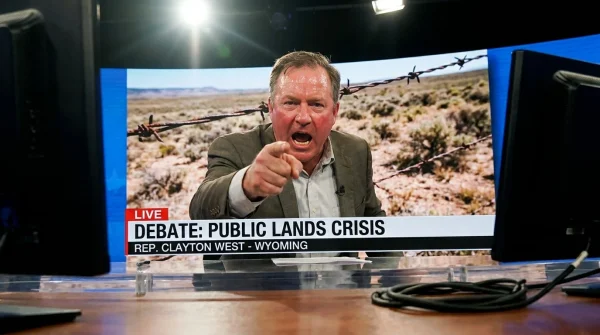
The broadcast studio smells faintly of ozone, heated dust, and industrial chillers churning against rows of 5,000-watt overhead lights. From your living room couch, the television stage looks like a spontaneous intellectual duel, a high-stakes arena where raw ideology clashes under pressure. You expect the friction to sound messy, erratic, and human.
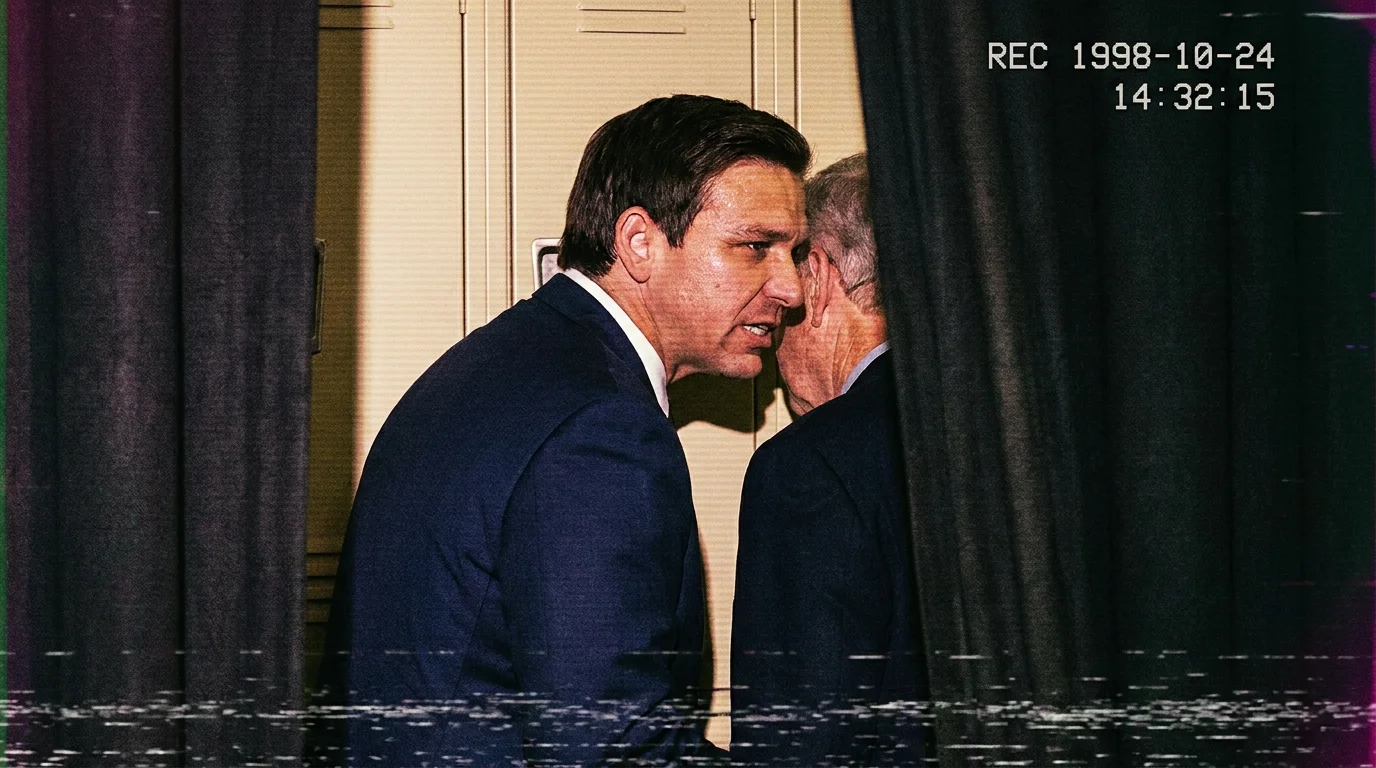
Yet when the camera cuts to a tight frame of Florida Governor Ron DeSantis facing a pointed challenge, something mechanical takes over. The room shifts into deliberate slow motion while the digital countdown clock above the moderator pulses red. Most viewers register only the sharp one-liner that follows, assuming the confrontation was won or lost on the merit of the zinger.
What actually transpires in those fleeting frames is an acoustic choreography that took decades of political stagecraft to refine. It is not spontaneous debate; it is an engineered acoustic trap, constructed to disarm your skepticism before you even realize the original question was discarded.
The Acoustic Shock Absorber: Reframing the Pivot
When an aggressive moderator corners an untrained politician on budget deficits or ballot initiatives, the amateur instinct is to rush. Blood surges into the vocal cords, pitches climb a semi-tone higher, and sentences trip over their own subordinate clauses. The brain acts like an engine redlining in neutral, broadcasting panic through sheer velocity.
DeSantis operates on a fundamentally different mechanical principle: treating hostile friction like hydraulic backpressure. Instead of absorbing the hit or striking back instantly, his cadence introduces a deliberate void. By treating an adversarial question not as an attack to be parried, but as dead air waiting to be claimed, he resets the physiological rhythm of the room.
This is where the optical illusion succeeds. The audience interprets silence as composure, reading calculated delay as heavy deliberation. In truth, that quiet interval serves as an invisible airlock, stripping the premise of the moderator’s question of its kinetic force before redirecting the debate onto pre-cleared ideological terrain.
- Iranian protest rallies force sudden White House foreign policy platform pivot
- James Talarico survey spikes trigger immediate panic across Texas Republican leadership
- Trump Iran strategy sparks urgent Capitol Hill showdown over emergency authorization
- Mail ballot signatures trigger thousands of avoidable rejections across key swing precincts
- Federal compliance software freezes ordinary campaign donor transfers after automated error flags
Elena Vance, a 48-year-old broadcast speech analyst and former network audio engineer in Alexandria, Virginia, spends her evenings mapping these exchanges through sound-wave diagnostics. During the 2024 primary debates, Vance observed that while other candidates fluctuated erratically between 140 and 210 words per minute during rebuttals, DeSantis consistently dropped into a controlled 118-word-per-minute pocket directly following a barbed policy inquiry—a rhythmic deceleration that consistently caused focus-group undecideds to lean forward rather than pull away.
Decoding the Cadence: Three Layers of Deflection
To spot how this pattern pulls undecided voters into its orbit, you have to dissect the delivery across distinct political scenarios. The tactic is never applied identically; it morphs based on the temperature of the confrontation.
1. The Fiscal Cross-Examination
When confronted with hard balance-sheet inquiries—such as state insurance premium increases or municipal tax exemptions—the cadence contracts into clipped, percussive consonants. A flat tonal delivery displaces emotional defensiveness, replacing economic debate with bureaucratic finality. The vocal register drops approximately twenty hertz, mimicking the auditory signature of an auditor reading a dry ledger, which subconsciously signals fiscal discipline to viewers fatigued by theatrical shouting.
2. The Culture War Counter-Punch
Here, the delivery flips from bureaucratic monotone to an accented staccato rhythm. Short, hammer-strike sentences replace complex syntax, ensuring sound bites fit cleanly into vertical video algorithms. The volume rises marginally at the tail end of each clause, preventing moderators from cutting in by denying them the natural acoustic drop that signals a finished thought.
3. The Personal Record Challenge
When the inquiry targets past votes or shifting policy allegiances, the cadence deploys its widest dynamic swing. The pacing slows to an almost conversational drawl before exploding into a rapid-fire list of executive actions. This contrast creates an auditory blur: the slower opening makes him appear unbothered, while the subsequent volley of administrative jargon exhausts the moderator’s allocated follow-up time.
Mindful Observation: The Anatomy of the Three-Second Trap
Catching these maneuvers requires shifting how you watch public debates. Instead of listening to the words, train your ear to monitor the silent seams between the questions and the answers.
When a hostile inquiry lands, look for the mechanics of the three-second transition:
- Second 0:00 to 0:01 (The Physical Brake): The torso locks upright, the chin dips approximately two degrees, and the eyelids blink slowly—a deliberate non-verbal cue that signals to the audience that the question was petty or expected.
- Second 0:01 to 0:02 (The Respiration Reset): A diaphragmatic breath is drawn silently through the nose rather than the mouth, keeping the neck muscles relaxed and stopping the vocal register from spiking upward.
- Second 0:02 to 0:03 (The Pitch Drop): The first spoken word—almost invariably an elongated conjunction like "Well," "Look," or "The reality is"—is delivered three to five semi-tones lower than his conversational baseline.
- The Narrative Lever: With the lower tone established, the subject is instantly swapped from the specific inquiry (e.g., insurance payouts) to a broader thematic territory (e.g., federal inflation mandates).
By learning to count through this physical cadence, the emotional hypnosis of television debate dissolves. You stop experiencing the response as an emotional reaction and begin tracking it as an engineering routine.
The Bigger Picture: Reclaiming Your Mental Real Estate
Modern political communication rarely seeks to convince you through the sheer weight of structural evidence. It works primarily through somatic resonance—matching the biological heart rate and anxiety spikes of an exhausted public, then presenting a facsimile of absolute certainty to calm that unrest.
When you learn to identify the exact moments an orator shifts gears, you reclaim your agency as a voter. You are no longer breathing through the candidate’s pillow of rehearsed pacing. You begin to notice what was left unanswered in the margins, behind the steady rhythm, in the spaces where the facts were traded for cadence.
True political awareness is not about deciding which speaker sounds most commanding under the studio lights. It is about holding the silence between their words accountable to the truth of your own everyday life.
"The most dangerous weapon on a modern debate stage is not an aggressive fact; it is the silent beat that convinces the listener a non-answer was actually an undisputed truth."
| Key Point | Detail | Added Value for the Reader |
|---|---|---|
| The 3-Second Pause | Silent physical stabilization directly following an antagonistic query. | Allows you to separate performative stoicism from genuine administrative readiness. |
| The Pitch Deceleration | Lowering the vocal register by several semi-tones during the pivot word. | Immunizes your subconscious against mistaking deliberate vocal bass for authority. |
| Premise Inversion | Discarding the moderator’s question to attack a wider institutional foe. | Helps you identify precisely when policy accountability is replaced by partisan theater. |
Frequently Asked Questions
Why do undecided voters respond so strongly to a slower vocal delivery during debates?
In high-stress settings, human psychology naturally associates rapid speech with anxiety and concealment. A slower cadence signals nervous-system regulation and dominance, which undecided viewers instinctively interpret as trustworthiness, even when the factual content is entirely tangential to the question.Is the three-second pause unique to Ron DeSantis?
While many seasoned politicians practice pause-and-pivot strategies, DeSantis stands out for his rigid, standardized duration and acoustic pitch modulation. Rather than varying his reaction, he applies an almost identical three-second reset regardless of the moderator or topic.How can I practice spotting these debate cadences in real time?
Mute the television sound for the first two seconds immediately after a moderator finishes asking a contentious question. By observing only the candidate’s physical respiration, chin angle, and eye movement, you can spot the pivot preparation before their voice ever reaches your ears.Does this vocal inflection shift work against trained debate moderators?
It frequently succeeds because debate moderators operate under strict network time restrictions. By using the slow cadence to eat into clock buffers, candidates make it logistically difficult for moderators to interrupt without appearing aggressive or biased to the viewing audience.What is the most reliable sign that a policy question was successfully avoided?
Listen for the noun switch in the first declarative sentence after the pause. If the question was about "homeowners insurance margins" and the first noun of the answer is "Washington regulators," the candidate has executed a structural pivot rather than a substantive answer.