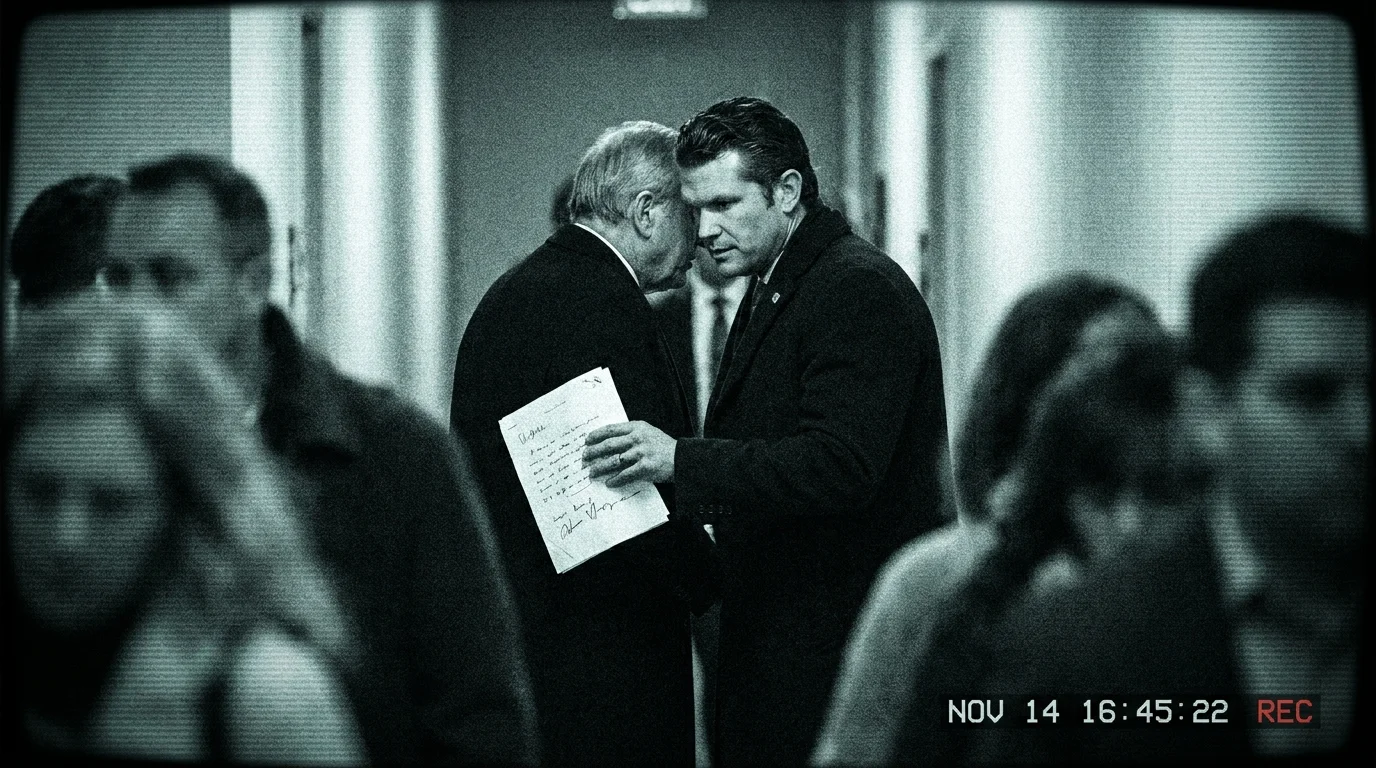
The corridor outside the Senate Armed Services hearing room carries an uncanny chill whenever the calendar turns to high-stakes defense votes. Footsteps echo against polished limestone, drowned out only by the low hum of television crew generators and the sharp rustle of briefing binders being clutched by staff aides. In the public eye, nomination fights look like raw ideological warfare, played out in three-minute cable clips under hot studio lights.
Yet if you step away from the banks of microphones, the real atmosphere smells of burnt office coffee, damp wool coats, and quiet calculation. The public watches the Pete Hegseth confirmation fight through a screen of partisan bluster, waiting to see whether traditional defense doctrine will hold or buckle. Power never changes hands cleanly; it gets weighed, negotiated, and traded in draft memoranda across cluttered conference tables.
You might assume conservative senators broke ranks purely over temperament or controversial policy declarations. What actually played out was far more transactional than theatrical. The surface-level resistance from a handful of veteran committee conservatives was not a desperate bid to save the old Pentagon order, but a calculated play to secure absolute control over the levers of military governance before handing over the keys.
The Theater of Friction and the Ledger of Hostages
Consider the Senate confirmation process not as an ethical gauntlet, but as a high-end pawnshop. When a nominee triggers an intra-party fracture, mainstream commentary frames it as an existential moral reckoning. In reality, a handful of recalcitrant votes on a defense panel transforms ordinary senators into sovereign gatekeepers who hold immense, temporary leverage over the entire executive branch.
The apparent chaos of conservative infighting concealed a methodical squeeze. These committee holdouts did not intend to derail the Pentagon ticket; they intended to extract binding, structural insurance. By threatening to withhold their ballots on the committee floor, they forced the nominee’s inner circle to sign off on specific personnel boundaries, operational guarantees, and budgetary firewalls that no public hearing could ever elicit.
Arthur Vance, a 58-year-old former Armed Services Committee counsel who spent twenty-four years drafting defense authorization language, knows this choreography by heart. “When a senior senator looks troubled on television,” Arthur noted while looking across the Russell Building atrium, “they aren’t soul-searching. They are waiting for a signed letter promising that their pet weapons platform stays funded and their preferred three-star general doesn’t get purged.”
- John Fetterman splits party ranks after challenging Senate leadership on federal border policies
- Trump $5,000 checks proposal sparks intense congressional spending battles across divided factions
- Voter registration address mismatches freeze provisional ballots across crowded swing state precincts
- SALT deduction cap rollback slashes suburban property tax refunds across high-income districts
- New Hampshire independent voters derail frontrunner campaign momentum through decisive moderate swings
Mapping the Holdout Fault Lines
To grasp what this realignment means for the armed forces and your wallet, you have to look past the political parties and examine the three distinct conservative camps that wrestled over this confirmation.
The Institutional Traditionalists
These are the senior defense hawks whose careers are tethered to existing military command structures, NATO commitments, and long-range weapons contracts. For this group, the nominee represented an unpredictable disruption to joint chiefs protocols. Their price for advancement was not cosmetic: they demanded explicit loyalty guarantees protecting the career civil-service defense bureaucracy and preserving long-term procurement lines for legacy aerospace and shipbuilding programs in their home states.
The Strategic Realists
Less concerned with cultural rhetoric, this faction focuses on the Pacific theater and the industrial defense base. They demanded binding tactical guardrails to ensure that ideological reshaping inside the Department of Defense would not divert logistical attention from naval readiness or munition stockpiles. Their eleventh-hour pacts hinged on who will occupy the civilian Undersecretary seats that actually run logistics, acquisitions, and technology.
The Populist Reformers
This bloc wanted an axe taken to Pentagon bureaucracy, social policies, and what they consider runaway defense waste. While the public assumed they were in total alignment with the nominee, they also extracted pledges. They insisted on specific audit benchmarks and rapid personnel reviews within the first ninety days, ensuring their anti-establishment base saw immediate cultural trophies.
How to Track the Real Pentagon Realignment
Now that the nomination clears these internal hurdles, the consequences will ripple across defense spending, service branch leadership, and domestic regulatory power. You do not need a high-level security clearance to see how these secret backroom concessions take shape. You simply need to watch the trail of paper where the promises become policy.
- Watch the Deputy and Undersecretary nominations: The key holdouts extracted veto power over second-tier Pentagon leadership. Look at who gets named to Acquisitions and Sustainment; that is where the committee traditionalists cashed their chips.
- Monitor the National Defense Authorization Act (NDAA) markup amendments: The legislative concessions made during the confirmation showdown will surface as tiny, obscure riders in the next defense budget draft, quietly ring-fencing specific bases and commands.
- Audit service branch leadership retention: Check the retirement announcements of flag officers over the coming six months. The holdouts demanded formal promises that senior military promotions would not be held hostage to partisan litmus tests without prior committee notification.
Tracking the actual paperwork reveals the hidden architecture of power far better than following the daily political talking points.
Beyond the Noise of the Confirmation Floor
It is easy to feel fatigued by the endless cycle of Washington confirmation drama, viewing it as just another exercise in hyper-partisan soundbites. But learning to read the quiet transactions beneath the noise restores your sense of clarity. Institutions protect themselves through friction, not by grand public speeches, but through tiny clauses signed in eleventh-hour panic behind heavy committee doors.
When you understand that conservative party fractures were not an ideological breakdown but an aggressive renegotiation of leverage, the defense posture makes immediate sense. The Pentagon is not being steered off a cliff; it is being hemmed in by an invisible network of backroom guarantees. You can navigate the headlines with calm, grounded awareness, knowing that the real story is never the spectacle on the dais, but the quiet ledger kept in the margins.
“In Washington, genuine power is never surrendered on the senate floor; it is quietly pawned in the back rooms for paper guarantees.”
| Faction / Key Point | Eleventh-Hour Concession | Real-World Impact |
|---|---|---|
| Institutional Hawks | Veto power over civilian Undersecretary of Defense roles and Joint Chiefs protocols. | Prevents wholesale civilian purges and preserves traditional military chain-of-command rules. |
| Industrial Base Centrists | Written guarantees for multi-year aerospace, naval, and munition contract lines. | Shields local manufacturing jobs and state defense infrastructure from unilateral executive budget shifts. |
| Populist Reform Faction | Binding 90-day institutional audit and rapid review of internal DOD diversity directives. | Delivers fast, visible administrative adjustments to satisfy grassroots voter demands without breaking core military logistics. |
Frequently Asked Questions
Did the conservative holdouts actually consider voting down the nomination?
Rarely does a committee member of the governing party intend to kill a flagship nomination outright. Instead, they weaponize their potential negative vote to extract executive branch concessions, personnel vetoes, and program protections they could never win through regular debate.What were the specific loyalty pledges demanded before the vote?
Committee holdouts demanded written and verbal commitments that the nominee would respect traditional military advice, safeguard existing defense manufacturing appropriations in their districts, and clear senior civilian appointments with committee leaders prior to formal submission.How does this internal clash change national defense priorities?
Rather than executing a swift, unchecked disruption of the Pentagon, the leadership will be forced to operate within boundaries set by veteran committee chairs. This means defense policy will likely follow a split path: aggressive rhetorical reforms coupled with steady, conventional spending on legacy programs.Why do these deals happen behind closed doors rather than in public hearings?
Public hearings are designed for media messaging and constituent posturing. Honest leverage negotiations involve state-specific spending, base protections, and high-level personnel deals that would appear self-serving or legally murky if debated in front of cameras.How will everyday taxpayers feel the effects of this confirmation fight?
The concessions secured by defense traditionalists guarantee that major procurement programs remain intact, meaning defense budget top-lines will continue to grow, insulating local defense economies while keeping federal spending at historic highs.