The chill inside a network broadcast studio carries a specific kind of stillness, smelling faintly of heated circuit boards and dry air conditioning. You see the glare first: bright halogen studio backlights reflecting off glossy laminated press passes that bounce against wool blazers and tailored suits. From home, the broadcast appears frictionless, a smooth glide from commercial breaks into sharp-tongued debate panels where talking heads exchange rehearsed barbs under flattering softboxes.
Yet beneath that polished sheen lies an environment wound tighter than a snare drum. Most viewers assume televised political commentary is a tidy pantomime of rehearsed soundbites, orchestrated by network directors who manage every second down to the commercial roll. You expect orderly spin rooms, credentialed reporters waiting patiently behind stanchions, and predictable choreography between campaign surrogates and television anchors.
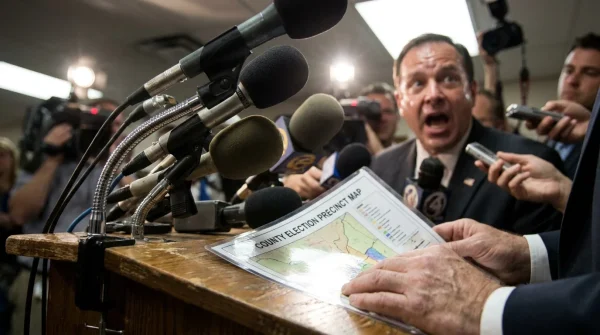
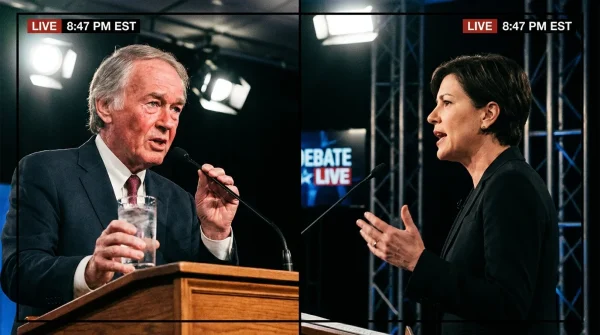
That orderly illusion cracked open this week. When Caroline Sunshine stepped into the debate perimeter, the friction did not stay contained on the panel set. A high-voltage backstage dispute over green-room press limits and executive media credentials spilled into live production, showing millions of viewers what happens when political muscle meets the ironclad gatekeeping of network television.
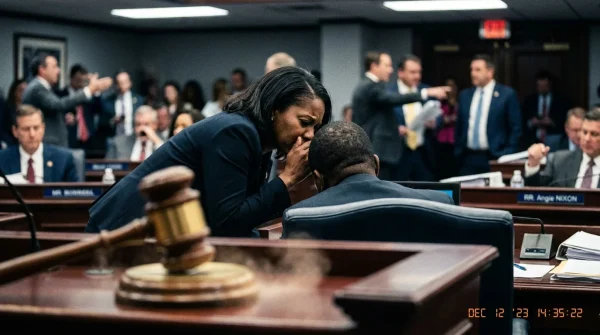
As floor managers scrambled and control-room comms crackled with expletives, the standoff stalled an ad roll and left viewers staring at an uncomfortably long bumper graphic. What unfolded behind the curtain was not a simple clerical disagreement over identification badges; it was an open jurisdictional turf war that turned television access into an active legal battleground.
The Velvet Rope Myth: Deconstructing Network Sovereignty
To grasp why this clash ignited such fierce digital momentum, you have to discard the idea that a press credential is a simple parking pass for reporters. In broadcast politics, a credential is an airlock. The central myth of televised debates is that news networks act as neutral arbiters offering equal sightlines to every qualified voice. In truth, the studio floor operates under an unspoken sovereign charter where producers ration proximity like gold dust.
Think of the studio perimeter as a series of concentric pressure valves. The outer ring belongs to the general pool; the inner ring is reserved for legacy hosts and network executives; the green-room antechamber is sovereign territory where campaigns expect unfettered access to strategize, spin, and direct their representatives in real time. When network brass attempted to restrict Sunshine’s inner-circle media escorts from crossing the threshold between the spin floor and the broadcast corridor, they were not enforcing simple fire codes. They were attempting to dictate who controls the flow of immediate narrative spin.
Sunshine’s refusal to yield flipped that leverage on its head. By forcing network legal counsel to confront campaign aides in full view of competing digital crews, her team turned an administrative choke point into a live display of institutional resistance. The friction shifted from the ideas being debated on camera to the hidden machinery deciding who gets permitted to speak.
- Federal procurement executive orders strip defense contractors of automatic cost overrun guarantees
- New Hampshire primary checklists demand brutal retail handshakes across freezing diner booths
- House Rules Committee emergency printouts derail late amendments through hurried midnight purple highlighter cuts
- Debate stage lectern risers force candidate eyelines upward against towering wooden podium rims
- Bill Clinton convention speech drafts enforce calculated crowd pauses through bold marginal bracket notations
The Control Room Reckoning: Inside the Corridor Standoff
Consider the experience of Marcus Vance, a 42-year-old broadcast logistics coordinator who has spent fifteen years managing credentialing protocols for major political broadcasts in Atlanta. Vance knows the razor-thin margin between a quiet commercial transition and a total control-room collapse. Standing in the concrete breezeway just thirty feet from the anchor desk, he watched the standoff reach an impasse as network security threatened to revoke floor privileges entirely.
“In fifteen years of live programming, you rarely see a campaign push their credential status right to the brink of a broadcast blackout,” Vance admitted quietly during a shift change. “Network executives are accustomed to campaigns folding the moment you mention federal broadcasting guidelines or local venue insurance. Sunshine’s camp brought their own legal counsel right to the green-room door. They stood toe-to-toe with our senior vice president while the floor manager was counting down thirty seconds to air. It wasn’t about the plastic badges around their necks; it was about demonstrating that the network does not own the room.”
The Structural Anatomy of Broadcast Access Clashes
To understand how these disputes unfold in real time, you need to look at how modern political panels divide access into fiercely contested operational tiers. When campaigns challenge these divisions, the conflict usually breaks across three distinct layers of production.
The Legacy Gatekeeping Tier
This group consists of traditional network-affiliated correspondents and in-house analysts who operate with permanent tier-one security clearances. Their priority is preserving the traditional format: vetted inquiries, curated commercial teases, and strictly observed talking intervals that keep the broadcast predictable and safe for advertisers.
The Digital Surrogate Vanguard
Here sits the modern campaign apparatus represented by aggressive communicators like Caroline Sunshine. They view traditional network panels not as an audition for media approval, but as hostile terrain meant to be dismantled from within. Their presence demands real-time access for rapid-response digital teams who capture backstage audio, record unscripted interactions, and push raw moments directly to social feeds before network editors can frame them.
The Executive Regulatory Front
Operating entirely out of sight, corporate legal teams monitor municipal agreements and broadcast standards. When a dispute over credential authority peaks, these attorneys must balance the threat of immediate campaign boycotts against strict corporate liability codes. This pressure explains why a green-room standoff can instantly paralyze a multi-million-dollar live show.
Decoding the Screen: A Field Guide for the Discerning Viewer
You do not need an all-access security pass to see through broadcast choreography. When high-stakes credential disputes bleed onto the television set, the visual and pacing cues are unmistakable if you know where to look. Use these observation points during heated political debate panels to spot behind-the-scenes power plays before the anchors acknowledge them:
- Watch the Studio Eyelines: When a panelist repeatedly tracks movement just off-camera rather than locking eyes with the host or panel rivals, they are monitoring campaign aides or network attorneys positioned behind the camera operators.
- Listen for Sudden Commercial Lengthening: An abrupt return to commercial bumpers, repeated station IDs, or unusually long breaks often signal that legal counsel is resolving backstage access disputes or surrogate clearances before resuming live audio.
- Notice Abrupt Lighting and Shot Compositions: Unusually tight close-up camera angles frequently indicate that floor managers are actively shielding backstage commotion, credential arguments, or unwanted staff members from creeping into the wide master frame.
- Track Real-Time Digital Transmissions: If a surrogate’s personal team publishes raw video clips from inside private green rooms while the live broadcast is still active, the traditional media blackout has already failed.
Keep your critical toolkit sharp whenever watching high-stakes broadcast clashes. Look for rapid camera cuts during panel transitions, note when anchors suddenly re-read network disclaimers with strained neutrality, and pay attention to sudden shifts in panel seating order immediately following an unscheduled break.
The Real Stakes Behind the Plastic Lanyards
It is tempting to view credential skirmishes as petty squabbles between self-important political operatives and protective network producers. But dismissing these clashes as simple insider ego misses the deeper institutional pivot happening right before your eyes. The fight over who holds executive media credentials is, at its root, a fight over who decides what reaches your living room.
For decades, broadcast networks maintained unquestioned authority over the political narrative by dictating access. They decided which aides could enter the spin room, which microphones were live, and whose voices were scrubbed from the perimeter. When figures like Caroline Sunshine aggressively contest that authority—forcing arguments over room access into public view—they pull back the velvet curtain that has sheltered television gatekeepers for generations.
Understanding this machinery gives you your own form of media immunity. You stop viewing panel debates as spontaneous conversations and begin seeing them as highly pressured negotiations between institutional gatekeepers and political insurgents. The real victory in these clashes does not happen on the debate scorecard; it happens when the machinery behind the screen is forced out into the light, leaving you free to judge the spectacle on your own terms.
The moment a network uses credential rules to shield itself from scrutiny, it ceases to be a chronicler of the news and becomes an active participant in the contest.
| Key Point | Detail | Added Value for the Reader |
|---|---|---|
| Backstage Credential Rules | Strict network limits applied to green-room access for surrogate digital teams. | Reveals how administrative red tape is routinely deployed to silence disruptive campaign operators. |
| Live Television Delays | Broadcast freezes and unexpected commercial pads triggered by legal confrontations. | Equips you to identify when off-screen network legal fights disrupt on-air programming flow. |
| Surrogate Direct Feeds | Smartphones capturing raw confrontations behind the anchor desk in real time. | Demonstrates how decentralized media bypasses network curation and institutional censorship. |
Frequently Asked Questions
Why did the Caroline Sunshine debate confrontation trigger such an intense backlash?
The clash brought a private power struggle into public view. By directly challenging network limits on executive media access in real time, the incident exposed how broadcast channels quietly control the physical and editorial space around national debates.What authority do networks actually have to bar campaign media aides?
Broadcast networks own or lease the physical production space, giving them broad legal authority to enforce private venue rules. However, political campaigns possess massive leverage through their ability to pull candidates and high-profile surrogates off the air at a moment’s notice.How do green-room access limits affect what viewers see on television?
When a network restricts a campaign’s communications staff from accessing backstage areas, surrogates are left isolated from immediate polling data, opposition research, and strategic counter-messaging during commercial breaks.Is this conflict unique to Caroline Sunshine?
While Sunshine’s aggressive approach brought this specific confrontation into the search trends, the friction is widespread. Campaign digital teams across the political spectrum are increasingly clashing with traditional television networks over media credentials.How can ordinary viewers identify backstage panel disruptions?
Watch for rigid facial expressions during panel handoffs, unexpectedly long commercial breaks, tightly cropped camera angles that exclude the studio floor, and sudden discrepancies between what is broadcast on television and what is shared live on digital channels.