Omitting your signature on the inner flap of a provisional ballot affirmation envelope immediately voids your vote under state canvassing laws. Reaching for a quick felt-tip gel pen instead of standard black ballpoint ink creates microscopic bleed-through that triggers automatic optical scanner rejections in county verification rooms.
You stand inside the humming gymnasium of your local precinct, fluorescent tubes humming overhead while a line of restless neighbors shifts behind you. The poll worker hands you a heavy paper packet, its stiff yellow paper creasing under your fingers as you step toward a cardboard privacy booth. It feels like an ordinary bureaucratic handoff—a comforting routine that makes you assume the hard part is over once the slip drops into the secure metal box.
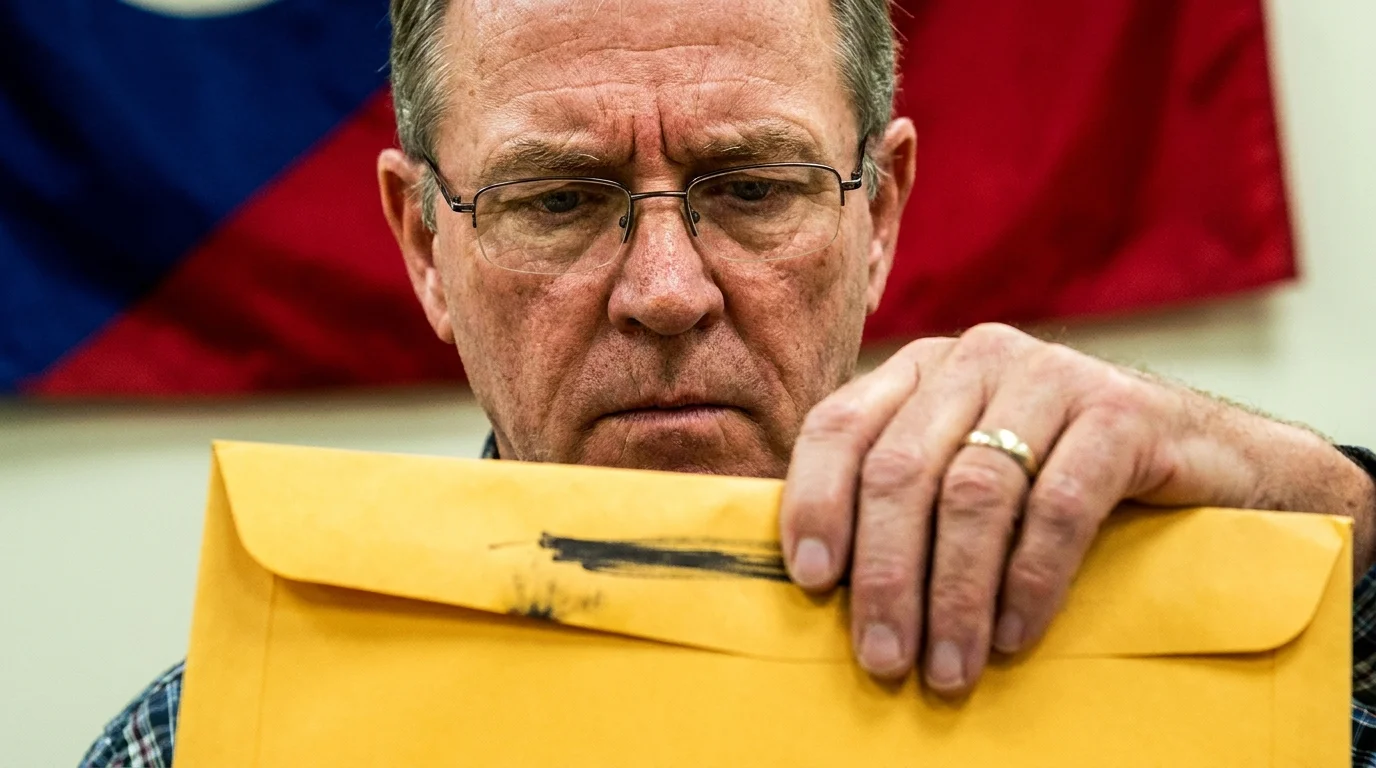
Yet across counting facilities nationwide, election workers regularly witness smudged carbon ink across yellow security envelope flaps during tight certification windows. That faint smear turns a valid vote into an unresolved administrative challenge before the ballot ever touches a precinct scanner.
Believing that physically depositing your provisional ballot guarantees it gets tallied is the single most widespread misconception in modern voting. The plastic seal on the precinct drop box registers physical receipt, but your envelope remains a sealed legal affidavit waiting for strict forensic validation.
The Security Envelope as a Legal Firewall
Most voters treat election envelopes like standard postal sleeves, assuming the paper inside holds all the authority. In reality, the affirmation envelope functions as a sworn court document standing between your choices and the official tally.
When a poll worker cannot verify your registration immediately—whether due to an unexpected redistricting change or an administrative lag in processing your DMV address update—the state shifts the burden of identity proof entirely to the paper casing. If the exterior verification grid lacks a precise date or uses ink that smears across the barcode tracks, the bipartisan review board cannot legally open the packet. Your choices stay sealed permanently inside an airtight bureaucratic vault.
- Pete Hegseth Pentagon leadership changes switch official Defense Department protocol on military promotions
- Appropriations manager amendment packets reverse disputed federal budget earmarks behind closed doors
- USPS whistleblower mail ballot concerns demand immediate federal sorting audits before primary deadlines
- Statehouse constituent petition sheets force lawmaker votes through physical hand delivered binders
- Dual-frame telephone polling screens strip rural turnout data through aggressive landline call filters
Thinking of the envelope as a technical firewall completely changes how you approach the booth. It demands the exact same deliberate muscle memory you would use when closing on a home mortgage or signing a legal settlement.
The Canvass Room Secret Behind Rejected Sleeves
Marcus Vance, a 52-year-old municipal canvass supervisor in Allegheny County, spends the forty-eight hours following every November election hunched over industrial sorting tables beneath cold warehouse lighting. Vance and his bipartisan review partner inspect thousands of contested outer sleeves, armed with high-resolution signature capture monitors and state motor vehicle database logs.
“People rush because they feel self-conscious holding up the line during their lunch break,” Vance explains quietly. “They grab whatever liquid ink rollerball happens to be loose in the bottom of their bag, scribble their daily cursive shortcut, and lick the seal while the ink is still wet. By the time that packet travels five miles in a transport bin, the signature barcode is blurred, and the signature itself fails the five-point biometric comparison against their voter registration card.”
Three Vulnerability Traps That Disqualify Ballots
Administrative rejections do not happen at random. They cluster around three distinct procedural missteps that catch hurried voters off guard during stressful precinct visits.
1. The Cross-County Boundary Error
If you recently moved across town and cast a provisional vote in a precinct tied to your new home before your registration updates, election boards verify only the races where your old and new districts overlap. Failing to complete the previous-address box on the affirmation flap forfeits your right to have local municipal questions and legislative seats counted.
2. The Rapid Signature Mismatch
Your legal voter signature is almost certainly the crisp, complete version you recorded on a digital stylus pad at the driver’s license bureau years ago. When you produce a hurried scribble across a textured security envelope, automated signature-matching software flags the variance, throwing your ballot into the manual challenge queue.
3. The Fluid Gel-Ink Bleed
Liquid gel rollers and felt markers saturate fibrous envelope stocks, causing pigment to seep through the paper grain into the barcode zone on the reverse side. Optical batch sorters reject these distorted markings instantly, requiring emergency manual review by election judges who must adhere to rigid statutory deadlines.
Mindful Steps to Guarantee Your Vote Counts
Securing your provisional ballot requires a deliberate, step-by-step routine inside the booth. Treat the process like a precision mechanical task rather than a quick chore.
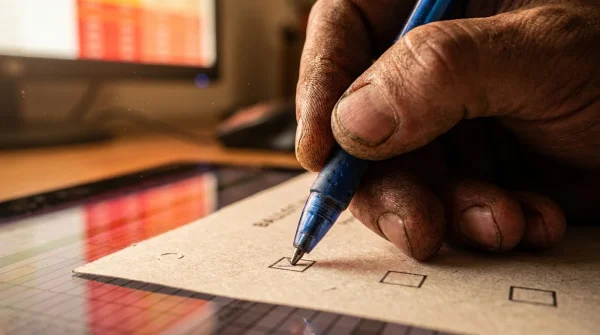
- Inspect the Pen: Use only a standard oil-based black ballpoint pen; avoid hybrid gels, rollerballs, and fountain pens that transfer wet pigment under envelope pressure.
- Complete Every Designated Box: Fill out your full legal name, permanent residential address, date of birth, and daytime contact number clearly in block capital letters.
- Match Your Official Signature: Replicate the full, deliberate signature found on your driver’s license rather than your shorthand casual initials.
- Check the Inner Flap: Verify that the interior affirmation statement is signed and dated before pressing down the adhesive strip.
- Retain Your Tracking Receipt: Tear off the serial-numbered stub along the perforated edge and store it safely in your wallet before walking away.
The Real Weight of Procedural Precision
Modern elections are increasingly decided along narrow margins where a few dozen administrative tallies determine school board policies, local infrastructure bonds, and congressional majorities. When you take the extra ninety seconds to verify your envelope details, you remove your civic voice from the mercy of arbitrary clerical challenges.
Democracy is often framed as a high-minded debate about values and visions, but its true mechanism rests on the crisp bite of a ballpoint pen against paper. Taking personal ownership of that physical interface turns an anxious provisional ballot into an undeniable, certified vote.
“A ballot without a clean, verifiable affirmation envelope is simply an unread letter left at the courthouse door.”
| Key Point | Detail | Added Value for the Reader |
|---|---|---|
| Ink Selection | Standard oil-based black ballpoint ink only | Prevents bleed-through and optical scanner barcode errors |
| Identity Matching | Full signature matching state DMV records | Bypasses manual canvassing challenges and cure delays |
| Tracking Stub | Unique multi-digit receipt code retained by voter | Enables real-time verification through county web portals |
Frequently Asked Questions
What is the difference between a standard ballot and a provisional ballot?
A standard ballot is scanned immediately at the precinct, while a provisional ballot is sealed in an affirmation envelope until election officials verify your voter eligibility after poll closing.Why do election workers require black ballpoint ink on envelopes?
Black ballpoint ink uses quick-drying oil pigments that do not smudge during high-speed automated sorting or bleed through paper fibers to corrupt security barcodes.What happens if my signature on the envelope does not match my registration?
State law requires election offices to flag the discrepancy and issue a notice allowing you a short statutory window to cure your signature with additional identification.Can I track whether my provisional ballot was officially counted?
Yes, you can enter the identification number from your tear-off tracking receipt into your county elections office portal within 7 to 14 days following the election.Does a provisional ballot take longer to process than a standard mail-in ballot?
Yes, provisional ballots undergo individual manual verification against voter databases before review boards authorize opening the inner envelope for tallying.