The damp heat off the Rio Grande Valley asphalt settles early, carrying a sharp, vinegary edge you only notice when something is going terribly wrong. Along the industrial access roads of Pharr and McAllen, Texas, hundreds of tractor-trailers idle bumper-to-bumper, their refrigeration units vibrating the humid dawn air. Inside the cavernous receiving bays, the quiet is deafening. There are no forklifts beeping in reverse, no rhythmic thud of wooden pallets hitting levelers.
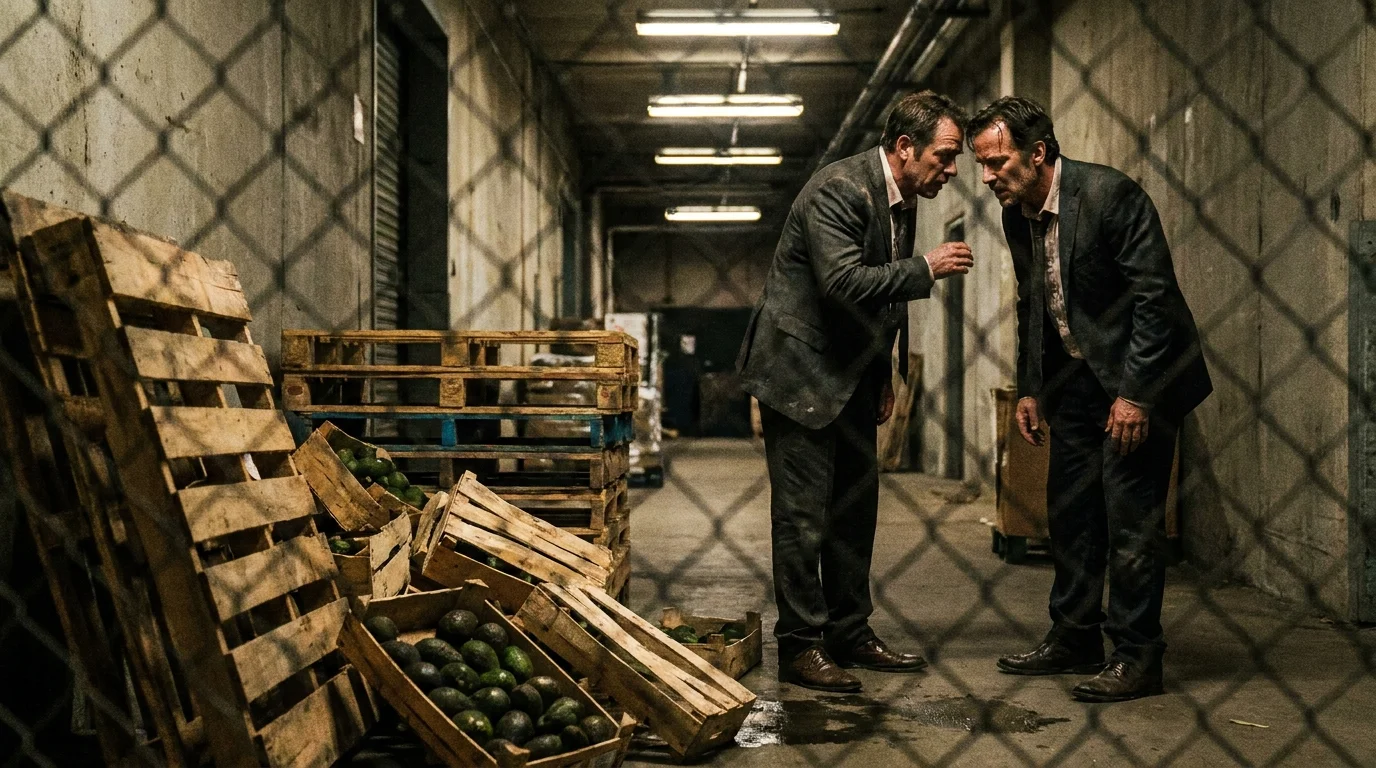
Instead, stack upon stack of wooden crates filled with bruised green avocados sit stranded on bare concrete loading docks. At 78 degrees Fahrenheit, perishable Hass fruit does not wait for international trade disputes to settle their differences. It ripens, softens, and begins to rot in the southern heat within forty-eight hours.
While television soundbites frame border tariffs as decisive diplomatic chess moves, the physical reality plays out on concrete floors thousands of miles from the Capitol. You see the immediate fallout in dark breakrooms and empty time-card racks: payroll losses drain warehouse balance sheets before the foreign export boards even receive formal notice of the trade action.
The Tourniquet Fallacy: When Domestic Hubs Absorb the Blow
The standard political narrative treats import tariffs like an invisible shield dropped along an international boundary line. The assumption is clean and simple: make cross-border goods expensive, pressure the foreign administration, and protect the home front. Yet when you walk through a border logistics corridor, you realize cross-border trade acts far more like a shared circulatory system than an isolated two-way street.
When emergency enforcement measures or retaliatory tariff schedules land without operational lead times, they act as an accidental tourniquet on domestic trade hubs. The foreign grower already pocketed the farm-gate purchase price weeks ago in Michoacán. The party holding the decaying asset, paying the non-refundable cold-storage electric bills, and absorbing the idle labor costs is the American logistics operator sitting three miles north of the checkpoint.
The administrative bottleneck turns routine clearance lanes into dead-end parking lots. Because tariff classifications require secondary inspections and bond verification, processing times jump from twenty minutes per rig to upwards of nine hours. For a perishable crop like avocados, every hour spent sitting under the South Texas sun erodes shelf life, slashes market grades from premium to processing-grade, and triggers immediate contract cancellations from retail grocers across the country.
Hector Ramirez, 48, has managed cold-storage operations along the Hidalgo port corridor for twenty-two years. On a normal Tuesday, his packing facility cycles through seventy-five thousand cartons of avocados, employing one hundred and eighty hourly floor sorters and material handlers. When the tariff enforcement hold hit this past week, his bay doors went dark by 9:30 AM. Ramirez stood in an empty warehouse calculating $42,000 in direct daily overhead and unrecoverable payroll obligations while twenty-six refrigerated loads sat stalled on the bridge approach, losing an estimated $1.1 million in retail value with every passing day.
- Raw milk interstate transport bills spark fierce statehouse clashes over pasteurization standards
- EPA lead pipe replacement mandates force local town budgets into massive property tax hikes
- AIPAC primary spending blitzes derail veteran House incumbents with rapid television ad buys
- EPA lead pipe replacement mandates force local town budgets into massive property tax hikes
- CFPB overdraft fee rules strip checking account buffers triggering sudden deposit fee spikes
Mapping the Damage Across the Distribution Grid
To understand why a policy announcement in Washington ripples so violently through local communities, you have to break down how individual nodes along the border corridor absorb sudden trade barriers. The damage does not disperse evenly; it strikes specific operators with pinpoint severity.
1. Primary Cold-Chain Hubs and Repack Facilities
These border-adjacent warehouses operate on high volume and thin, three-percent handling margins. They rely on predictable throughput to cover heavy capital investments in blast chillers, forced-air cooling systems, and specialized hydro-cooling equipment. When inspections freeze intake docks, these hubs face immediate disaster.
Fixed refrigeration power costs remain identical whether a cold room holds ten thousand pallets or ten. Meanwhile, warehouse operators must pay standby stipends to certified forklift drivers and USDA-licensed quality inspectors simply to prevent their trained workforce from scattering to other regional industries.
2. Independent Freight and Drayage Haulers
Short-haul drayage drivers who move containers across the international bridges operate on per-trip compensation. When border customs gates stall under tariff clearance audits, a driver who normally completes four turns a day drops to a single crossing.
The driver burns diesel while idling in secondary inspection queues, earning thirty dollars for an eight-hour shift while their equipment financing, commercial liability insurance, and fuel surcharges continue to accrue. Over three days, an owner-operator can see an entire month of operating margin wiped out on a two-mile stretch of asphalt.
3. Secondary Regional Wholesalers and Processors
Further inland, secondary distribution centers in San Antonio, Dallas, and Houston face immediate supply gaps. Without raw green inventory arriving daily to feed ripening rooms, commercial gas-ripening chambers sit half-empty, burning natural gas inefficiently while processing contracts default.
These facilities cannot easily pivot to alternative sourcing. South American ocean freight requires three weeks of transit lead time, and domestic production cannot match the baseline volume demanded by national restaurant chains and grocery networks.
Navigating the Chokepoint: A Survival Blueprint for Logistics Teams
Surviving sudden regulatory posturing requires treating cross-border policy not as an unpredictable weather event, but as a known operational hazard that demands proactive mitigation. Protecting your facility requires tight operational discipline and precise inventory staging.
When tariff enforcement alerts emerge, operational teams must move fast to safeguard cash flow and protect existing warehouse capital:
- Activate Immediate Temperature Holds: Drop staging cold-room temperatures down to 40°F (4.4°C) to slow down fruit ethylene generation without inducing chill injury, buying an extra 72 hours of inventory holding buffer.
- Shift to Staggered Labor Scheduling: Transition floor teams from fixed eight-hour shifts to rolling four-hour call blocks with guaranteed two-hour show-up pay to minimize daily payroll exposure while preserving crew loyalty.
- Audit Bonded Warehouse Capacity: File for temporary Foreign Trade Zone (FTZ) status or customs-bonded storage designations ahead of time, allowing cross-dock storage without immediately triggering tariff cash-outlays at the physical crossing point.
- Invoke Perishable Force Majeure Clauses: Standardize carrier and receiver purchase contracts with explicit regulatory delay triggers, shifting inventory spoilage liability away from the logistics middleman when government border clearance times exceed six continuous hours.
The following parameters represent your baseline operational safety thresholds during border tariff actions:
- Maximum Safe Idling Window: 6 hours before drayage fuel consumption turns the run negative.
- Critical Pulp Temperature Floor: 38°F to avoid vascular browning in green Hass stock.
- Daily Unrecoverable Payroll Exposure: $180 to $240 per unutilized warehouse worker per shift.
- Demurrage Penalty Trigger: 24 hours of chassis detention on uninspected border trailers.
The Human Ledger Behind the Policy Soundbite
Trade negotiations are inherently messy, but when policy is wielded purely as a blunt rhetorical instrument, the fallout always lands on the people closest to the ground. Long before foreign finance ministries reassess their economic calculations, the price is paid by warehouse shift supervisors, independent truck drivers, and local packing plant crews working in border towns.
True supply chain resilience is not about ignoring political theater; it is about recognizing that policy announcements made on television have immediate, physical consequences on the loading dock. When you understand the operational mechanics of the border economy, you stop looking at trade tariffs as abstract economic debates and start seeing them for what they truly are: real friction, real spoilage, and real payrolls lost on the concrete floor.
“A tariff on perishable inventory is never paid by a foreign flag; it is paid in real time by the warehouse owner holding the rotten fruit.”
| Logistics Node | Immediate Operational Bottleneck | Added Value for the Reader |
|---|---|---|
| Border Cold Storage | Unscheduled refrigeration power draw on stalled inventory | Identifies specific holding temperatures (40°F) to stretch fruit viability by 72 hours. |
| Drayage Haulers | Per-trip income collapses due to 9-hour inspection queues | Calculates exact break-even idling windows to prevent negative-revenue runs. |
| Repack Warehouses | Sudden daily payroll drains ($40k+) with zero daily inbound volume | Provides flexible four-hour shift staging protocols to protect cash reserves. |
Frequently Asked Questions
Why do avocado tariffs cause plant shutdowns so much faster than other trade goods?
Avocados are highly perishable living organisms that emit ethylene gas as they ripen. Unlike dry manufacturing components or non-perishable goods that can sit indefinitely in a bonded yard, fresh avocados lose grade classification and commercial value within 48 to 72 hours without continuous specialized cold-chain management.Who legally owns the avocado inventory while it sits stalled in border customs?
Ownership depends on the Incoterms used in the purchase agreement. In most cross-border produce transactions, the US-based importer or wholesale distributor takes title once the truck reaches the border crossing, meaning domestic American businesses absorb 100 percent of the spoilage loss during inspection delays.Can border warehouses pivot to domestic avocado crops during a tariff standoff?
Domestic production (primarily from California) accounts for less than 10 to 15 percent of total US consumer demand and is highly seasonal. Border warehouses in Texas cannot logistically or economically replace Mexican volume with domestic fruit without severe structural shortages.How do border delays impact average consumer grocery prices?
When border throughput drops by even twenty percent over a three-day period, regional wholesale spot prices spike immediately. Retail grocers pass these procurement premiums directly to consumers, resulting in sudden thirty to fifty percent price surges per piece at the supermarket within seven days.What is a bonded warehouse, and how does it help during tariff spikes?
A customs-bonded warehouse is a secured facility authorized by US Customs where imported goods can be stored, repacked, or manipulated without paying duties until the items enter the domestic commercial market. This setup allows logistics operators to hold cargo legally while disputing classifications or awaiting policy resolutions.