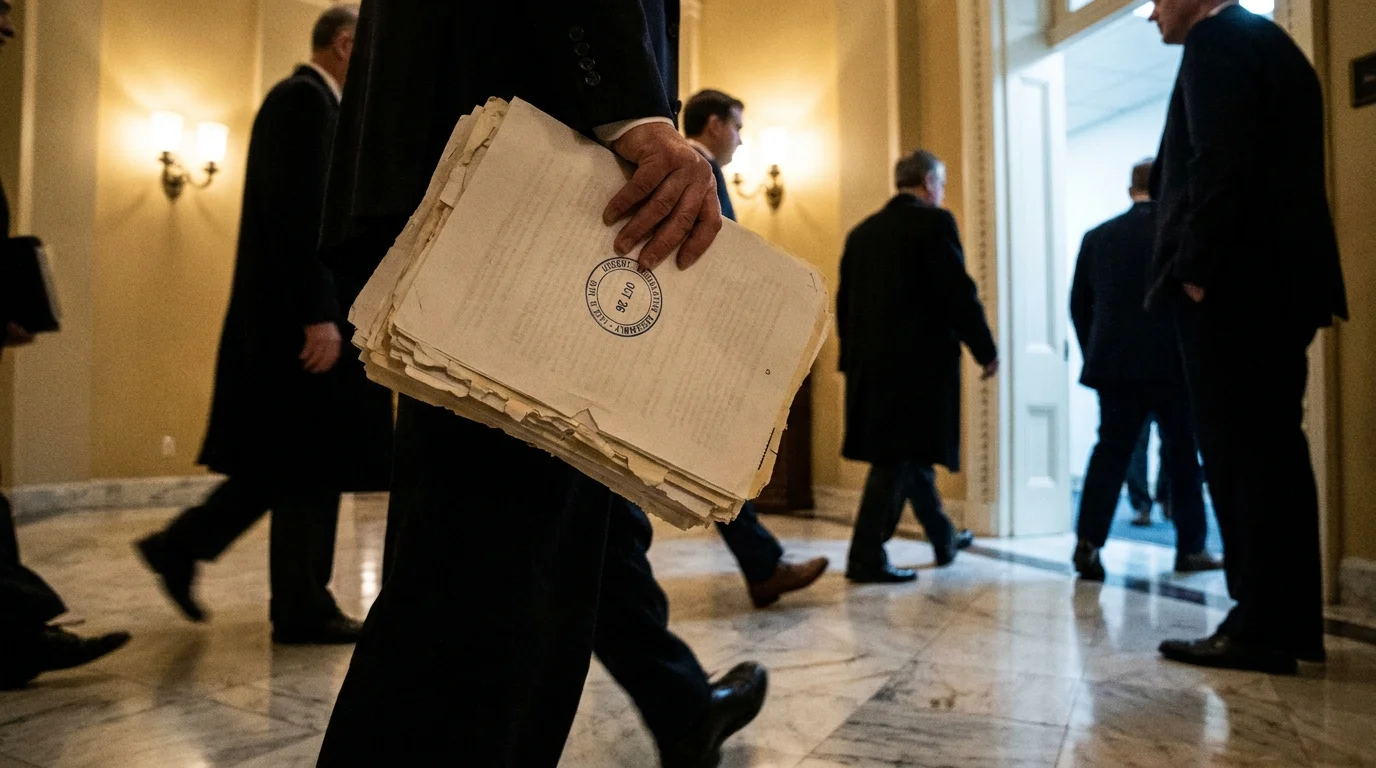
The Capitol basement past 2:00 AM does not sound like a television debate or a floor vote. It hums with the dull mechanical rhythm of heavy industrial printers and the dry slide of heavy off-white parchment paper across laminate folding tables. Fluorescent tubes hum softly overhead, casting long shadows across neat stacks of bound folios waiting for blue ink stamp marks from the Office of the Enrolling Clerk. This quiet room is where the real compromises take physical form, far away from podiums and television cameras.
You are often told that laws pass in broad daylight through floor debates, gavel bangs, and televised roll calls. Yet the exact wording that binds federal agencies and shapes household taxes regularly relies on a much quieter, administrative stage known as the engrossment desk. Here, nonpartisan staff attorneys and legislative clerks perform the meticulous work of merging dozens of disparate, handwritten floor amendments into a single, cohesive enrollment draft before delivering it to the executive branch.
In those exhausted hours between a midnight vote and morning signature ceremonies, single-sentence technical corrections slip quietly into multi-thousand-page compromise packages. These are not grand backroom conspiracies, but the necessary mechanical glue that makes conflicting amendments hold together legally. Understanding how this administrative machinery functions is your best safeguard against sensational headlines that mistake technical legislative reconciling for sinister legislative sabotage.
The Machinery of Meaning: Redlines as Shock Absorbers
To grasp why these late-night edits happen, you have to look at statutory drafting not as a rigid monument, but as an engine that expands and contracts under political heat. When two rival party leaders finally shake hands on a compromise bill at 1:30 AM, they rarely agree on a polished manuscript. They agree on a raw ledger of conceptual amendments, handwritten margin notes, and competing clauses that would collapse under immediate judicial review without careful reconciliation.
This is where the engrossment process serves as the legislative system’s quiet shock absorber. The clerks do not alter the policy intent of the lawmakers; rather, they eliminate syntactic collisions that arise when two contradictory sub-sections pass simultaneously during open floor proceedings.
What an untrained observer might interpret as a stealth rewrite is often the grueling work of fixing broken cross-references, clarifying ambiguous punctuation, and resolving conflicting date triggers. Without this administrative buffer, dozens of bipartisan public works programs and fiscal compromises would stall in the courts before reaching federal implementation.
- Debate podium spacing tape traps candidates inside narrow television camera sightlines
- Voter registration matching models strip rural turnout signals under rigid demographic assumptions
- Barbara Jordan speech drafts enforce rhythmic pauses with heavy pencil brackets
- Kristen Welker FCC complaint filings switch network broadcast standards amid sudden party regulatory threats
- Dolly Parton flag lowering debate sparks sudden statehouse clashes over official gubernatorial protocol powers
The Midnight Ledger: A Clerk’s Quiet Vigil
Consider the reality of Marcus Vance, a 48-year-old senior engrossing clerk with over two decades of quiet service in state and federal legislative print shops. On the final night of an omnibus fiscal session, Marcus sits with three distinct draft versions of a massive environmental appropriations package spread across his desk. His task is not to debate the policy merits, but to cross-check every single cross-reference against existing statute volumes.
Marcus works with a red ballpoint pen, a mechanical ruler, and an exacting eye for dangling dependent clauses. When a senator scribbles a last-minute amendment changing a reporting deadline from ‘ninety days’ to ‘three months,’ Marcus must ensure that four downstream enforcement clauses adjust their operational timelines accordingly. It is precise, unheralded labor where a misplaced comma could trigger millions of dollars in unintended compliance litigation.
Navigating the Legislative Layers: Where Wording Shifts Occur
Not every late-night adjustment serves the same function. Depending on the size of the bill and the speed of its passage, administrative redlines fall into distinct procedural categories that impact how the final law takes root.
The Mechanical Correction Layer
This is the most common form of late-night intervention. It involves purely clerical corrections authorized under standing legislative rules:
- Renumbering conflicting sections that were introduced by rival committees.
- Repairing statutory citations that pointed to outdated regulatory code books.
- Standardizing capitalization and formatting across disparate amendment riders.
The Harmonization Layer
When two amendments pass that use different terms for the exact same entity—such as ‘regional transit authority’ in Title II versus ‘metropolitan transportation district’ in Title IV—the desk reconciles the nomenclature to prevent agency confusion.
The Concurrent Resolution Safety Valve
When an edit goes beyond clerical formatting and touches an obvious substantive oversight, staff cannot unilaterally change the text. Instead, they draft an emergency concurrent resolution—a rapid-fire corrective instrument passed via unanimous consent—to authorize the precise correction before the enrolled bill receives its official seal.
Mindful Reading: How to Track the Real Statutory Paper Trail
You do not need a law degree to spot the difference between a routine administrative fix and a significant policy shift. You simply need a calm, methodical routine for reading public legislative journals.
Instead of reacting to viral social media screenshots of draft changes, trace the paper trail directly through official government tracking portals.
- Compare the ‘Engrossed in House/Senate’ print against the final ‘Enrolled Bill’ text available on public legislative repositories.
- Search the Congressional Record for ‘Technical Corrections’ or ‘Enrollment Corrections’ resolutions passed on the same legislative day.
- Look for formal explanatory statements submitted by committee chairs into the official record alongside late-night substitute amendments.
By keeping this tactical checklist handy, you can evaluate legislative changes with clarity:
- Check the Timestamps: Note the gap between the final floor vote and the official enrollment signature.
- Verify the Resolution: Search for accompanying House or Senate Concurrent Resolutions authorizing corrections.
- Consult Committee Reports: Compare the redlined text against the official joint explanatory statement of managers.
The Bigger Picture: Trusting the Architecture Behind the Noise
It is easy to feel cynical when reading rapid reports about late-night legislative revisions. Modern political commentary thrives on framing every administrative procedure as an urgent crisis or a hidden manipulation. Yet when you understand the quiet, nonpartisan craft of engrossment, the narrative shifts entirely.
The administrative desk is not a place of subversion; it is the vital workshop where chaotic political promises are transformed into enforceable, durable civic language. By paying attention to the mechanics rather than the political theater, you gain genuine clarity on how public policy actually comes to life.
The durability of a compromise depends less on the rhetoric that passes it than on the precision of the quiet hands that engrave it into the public record.
| Key Point | Detail | Added Value for the Reader |
|---|---|---|
| Engrossment Desk Role | Compiles all approved floor amendments into a single, unified text. | Clarifies why physical bills change appearance between preliminary votes and final delivery. |
| Administrative Authority | Limited to typographical, structural, and non-substantive cross-reference repairs. | Helps you distinguish between routine technical cleanup and unauthorized policy alterations. |
| Corrective Resolutions | Formal procedural vehicles used when substantive drafting errors require quick fixes. | Provides a concrete public search term to independently verify contentious legislative updates. |
Frequently Asked Questions
Can legislative clerks change the actual policy meaning of a bill?
No. Clerks operate under strict nonpartisan statutory rules that limit their authority to technical, clerical, and cross-reference corrections. Any substantive change requires a formal corrective resolution approved by lawmakers.Why do these edits happen during late-night sessions?
Major compromise packages often pass during extended legislative deadlines, meaning floor amendments are adopted right up to the final hours. The engrossment team must work immediately through the night to prepare the text for official enrollment.What is the physical difference between an engrossed bill and an enrolled bill?
An engrossed bill represents the final version passed by a single chamber (House or Senate). An enrolled bill is the single, identical text agreed upon by both chambers, printed on specialized archival parchment for executive signature.Where can ordinary citizens view technical legislative corrections?
Official public platforms like Congress.gov or state legislative websites publish every version of a bill, allowing you to compare the text at each distinct stage of consideration.What happens if a significant drafting error slips past the engrossment desk?
If an error is discovered after enrollment and enactment, Congress must either pass a standalone technical corrections bill or the implementing executive agency must resolve the ambiguity through formal administrative rulemaking.