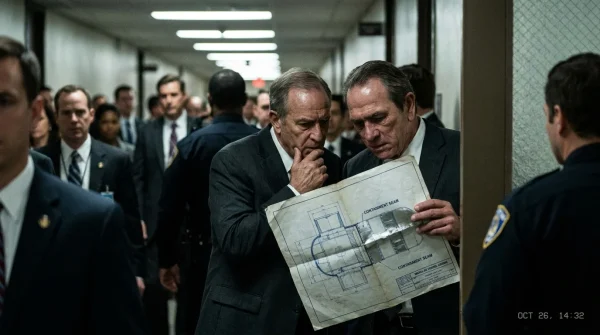
The basement hearing rooms of the Rayburn House Office Building smell perpetually of lukewarm drip coffee and industrial carpet cleaner. Late on a Thursday evening, the only sound cutting through the low hum of the HVAC unit is the rhythmic snap of heavy three-ring metal fasteners. Staff directors in wrinkled poplin shirts shuffle through stacks of marked-up amendments, their margins crowded with scribbled dollar tallies and cross-references to Title 22 of the United States Code.
You might picture Capitol Hill foreign policy debates as sweeping ideological clashes delivered from behind mahogany podiums. In reality, the most consequential shifts happen quietly across ledger sheets, where tiny changes in statutory definitions decide whether millions of dollars in stabilization grants move across international borders or lock up indefinitely in escrow.
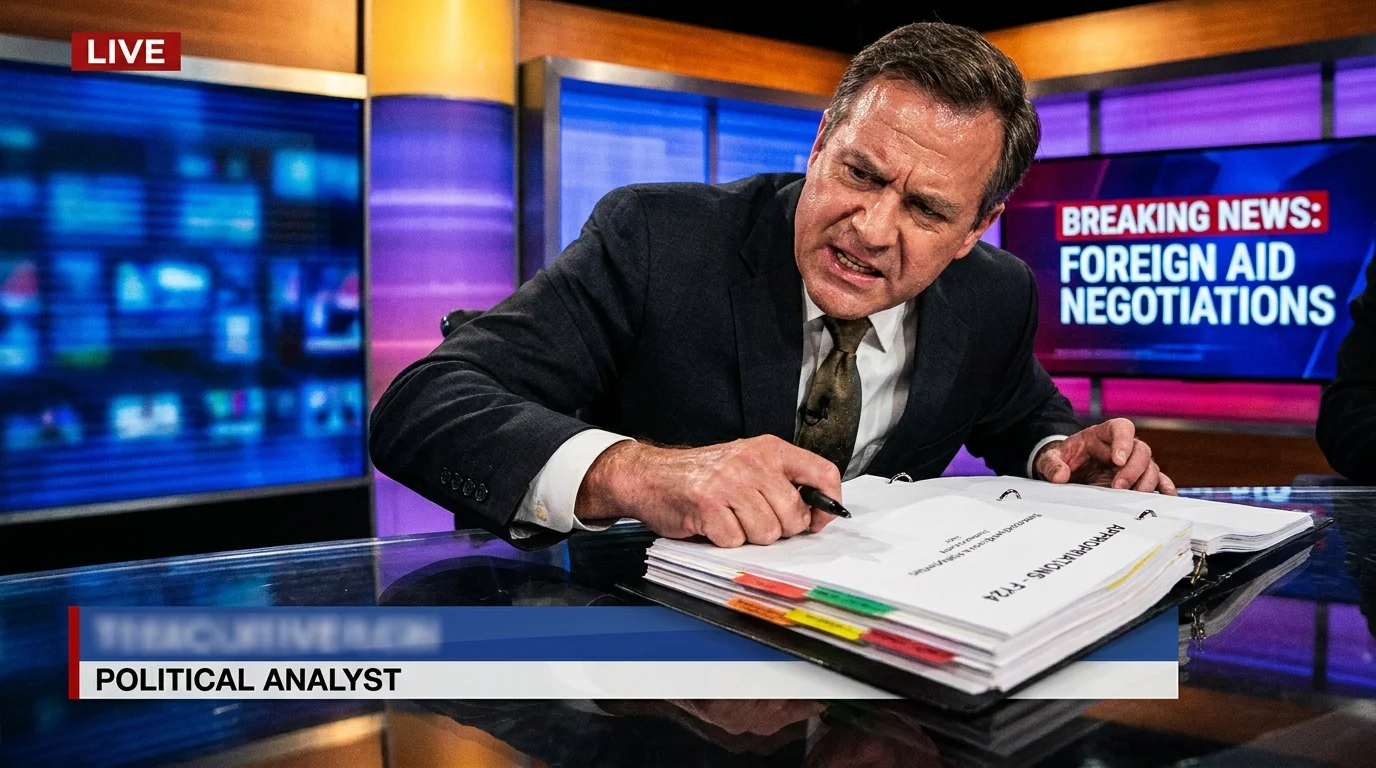
Right now, that exact friction is coming to a head over the newest proposed revisions to the 2018 Taylor Force Act. At the center of the dispute sits a numbered appropriations binder with dog-eared financial audit pages, revealing how obscure banking checkpoints have quietly evolved into the most contested perimeter of American diplomacy.
The Anatomy of the Impasse: Money as a Foreign Policy Tripwire
To understand why a few dozen words in a spending rider can bring committee markups to a standstill, you have to look at the plumbing of international development finance. Public debates often treat foreign assistance like a valve that opens or shuts with a single vote. Yet the legislative machinery functions far more like a series of interconnected pressure locks, where a drop in compliance pressure at any single valve freezes the entire pipeline.
Under original statutory frameworks, assistance benefiting specific governing authorities remains barred until verified certifications prove that non-state payment systems to individuals tied to political violence have ended. The emerging amendment packages, however, push past direct government-to-government transfers. They target the connective tissue of international assistance: the multilateral trusts, regional non-governmental organizations, and third-party escrow accounts that deliver clean water, medicine, and emergency food rations.
What appears on the surface to be a standard legislative dispute over oversight is actually a fundamental argument about friction. For one faction, administrative friction is the ultimate virtue—an ironclad guarantee against indirect fungibility. For the other, that same friction represents a quiet bureaucratic death sentence for humanitarian relief, stranding innocent civilians behind layers of unworkable forensic banking mandates.
- Precinct poll book check-ins block unregistered voters over tiny address hyphen mismatches
- TargetSmart voter scoring models force field organizers onto cracked suburban front porches
- Federalist No. 10 pamphlets sparked modern factional voting across yellowed colonial newsprint
- FEC candidate search tools expose deceptive super PAC shell names within minutes
- Energy Policy Act tax credits strip homeowners with unexpected heat pump installation clauses
Elena Vance, 44, a veteran appropriations counsel who spent twelve years structuring foreign assistance riders for the House Foreign Affairs Committee, remembers when these statutory safeguards were first drafted. Standing outside a closed-door reconciliation meeting, she tapped the spine of a four-inch audit binder and pointed to an annotated disbursement clause. Her assessment was plain: when you draft statutory triggers that treat every intermediary bank transaction as a direct political endorsement, you don’t just eliminate fraud; you bring every humanitarian supply convoy to a dead stop at the border.
Platform Showdown: Compliance Hawks vs. Strategic Flexibility Proponents
The current battle lines on Capitol Hill have split committee rooms into two sharply defined camps, each working from a distinct operational playbook regarding humanitarian accounts and statutory safeguards.
The Strict Compliance Platform
Advocates of uncompromising enforcement argue that financial fungibility makes traditional firewalls meaningless without invasive, real-time forensic accounting. Their primary objectives center on total risk elimination across all secondary and tertiary funding pathways:
- Expanded Definition of Direct Benefit: Classifying municipal infrastructure repairs, water sanitation projects, and grid stabilization initiatives as de facto budgetary relief for local governing authorities.
- Automated Clawback Mechanisms: Mandating that any third-party financial institution processing grant funds must return 100 percent of disbursed capital if secondary vendor audits reveal a single compliance lapse within a 36-month window.
- Strict Pre-Obligation Certification: Requiring explicit, personal sign-offs from cabinet-level officials before any frozen stabilization funds can be routed into regional humanitarian pipelines.
The Diplomatic Flexibility Platform
Conversely, proponents of strategic flexibility assert that absolute zero-tolerance banking triggers dismantle the United States’ ability to project soft power and avert acute regional crises. Their alternative framework prioritizes operational agility while maintaining targeted verification standards:
- Protected Humanitarian Carve-Outs: Shielding emergency medical aid, pediatric nutrition, and basic sanitation grants from automated statutory freezes through standing administrative waivers.
- Independent Escrow Intermediaries: Directing stabilization capital through vetted international monitoring bodies rather than local or municipal banking networks to bypass governing authorities entirely.
- Post-Disbursement Remediation: Replacing immediate clawback triggers with corrective review periods, allowing non-governmental organizations to fix sub-grantee reporting gaps without losing active project funding.
Tracking the Trigger: How the Banking Clawback Operates
The sharpest point of contention in the current draft legislation is an intricate clawback trigger attached to third-party bank disbursements. Understanding its mechanics reveals why non-profit field operators and compliance attorneys are watching this markup with intense scrutiny.
In standard international grant administration, federal agencies obligate funds to a prime contractor or international organization, which then draws down capital through commercial correspondent banks. Under the proposed statutory revisions, that transaction pathway changes significantly:
- Initial Drawdown: Funds are transferred into an authorized intermediary bank account under specific programmatic milestones.
- Secondary Vendor Verification: The financial institution must run real-time biometric and identity audits against updated federal watchlists for every sub-contractor, truck driver, and warehouse operator receiving project compensation.
- The Trigger Event: If an audit reveals that a secondary vendor resides within an excluded administrative registry, the bank’s automated compliance protocol trips immediately.
- The Clawback Execution: The commercial bank is legally obligated to freeze the master account and return all unspent tranches directly to the United States Treasury within 72 hours, bypassing standard administrative appeal processes.
The Human Ledger: Why Technical Language Carries Lasting Weight
It is tempting to view these legislative showdowns as dry, partisan theater designed purely for cable news soundbites and campaign mailers. Yet when you peel back the layers of formal statutory jargon, you find that appropriations riders are where philosophical arguments collide directly with the physical world.
When a funding line item locks up in an escrow account due to an unworkable statutory condition, water treatment plants run out of replacement filtration membranes. Mobile medical clinics run low on basic antibiotics. At the same time, when oversight mechanisms lack teeth, taxpayer dollars risk subsidizing political structures that undermine regional stability and international law.
Mastering the intricacies of these legislative battles gives you a clear lens on how power truly functions in Washington. It is not always found in the grand floor speeches or landmark signing ceremonies; more often, it lives inside the precise, exacting terms negotiated quietly on dog-eared audit pages late into the night.
“True oversight is not measured by how tightly you can lock an account, but by whether your safeguards actually advance the peace you claim to build.”
| Key Point | Detail | Added Value for the Reader |
|---|---|---|
| Statutory Scope | Expands strict oversight rules beyond direct aid to cover multilateral trust funds and regional NGOs. | Explains why independent humanitarian groups are directly caught in current Capitol Hill negotiations. |
| Clawback Mechanism | Requires third-party banks to automatically freeze and return funds upon any sub-tier compliance flags. | Clarifies the exact operational mechanism causing financial institutions to decline humanitarian wire transfers. |
| Waiver Authority | Debate centers on whether the State Department retains discretionary national security waiver power. | Identifies the key executive branch leverage point that will determine how the final compromised bill is enacted. |
What is the Taylor Force Act?
Enacted in 2018, it is a federal statute that conditions certain economic assistance to specific regional entities on the verified termination of payments to individuals convicted of acts of terrorism.Why are new amendments being debated now?
Lawmakers are divided on whether existing statutory restrictions adequately prevent indirect funding through third-party intermediaries, prompting new proposals to tighten banking compliance rules.What are frozen humanitarian accounts?
These are appropriated federal funds held in administrative escrow because statutory certification requirements or compliance reviews have temporarily halted their international transfer.How do these amendments impact non-governmental organizations?
If enacted with strict clawback provisions, international relief organizations face increased administrative costs, heightened legal liabilities, and potential abrupt freezes on active field programs.What is the likely path toward a legislative compromise?
Negotiators typically bridge this divide by pairing stricter downstream financial auditing requirements with targeted, high-level humanitarian waiver authorities for essential medical and nutritional aid.