The glow of an illuminated monitor cuts through the quiet dark of your living room, washing your keyboard in pale blue light. On your feed, a sleek fifteen-second video ad finishes playing, signed off with a warm, patriotic voiceover and a tiny disclaimer: Paid for by the Coalition for Clear Horizons PAC. It feels polished, authoritative, and intentionally vague.
Most people swipe past, accepting the generic name as an impenetrable brick wall. You open a secondary browser tab instead. In the quiet hum of the evening, a blinking search bar highlights against the austere, slate-gray backdrop of the official Federal Election Commission database.
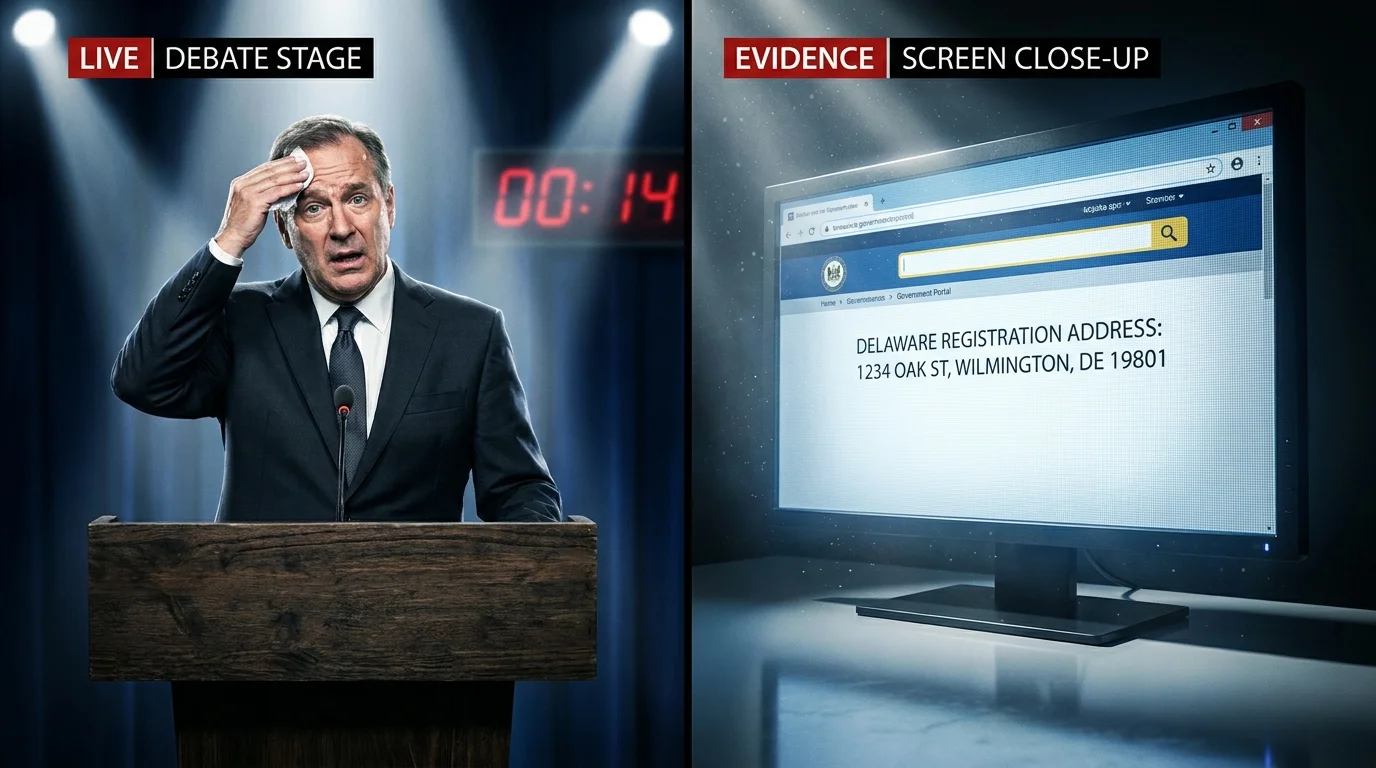
Within three keystrokes, the polished video ad loses its corporate sheen. The paperwork surfaces: a bare Delaware filing address, a single bank account in Virginia, and a sudden transfer of funds from an out-of-state holding entity that took place forty-eight hours before the ad went live. What appeared to be a spontaneous civic movement is simply a single donor operating behind an off-the-shelf naming template.
The Shell Game: Why Generic Acronyms Are Built to Dissolve
Political ad buyers do not choose bland names by accident; they choose them because ambiguity creates instant trust. When an organization calls itself ‘Citizens for Common Sense Growth,’ your brain naturally fills in the blanks with reasonable, everyday values. The structure operates like a series of empty shipping containers: identical on the outside, easily swapped between ports, and completely anonymous until someone breaks the customs seal.
The standard assumption is that untangling these groups requires a legal degree or proprietary investigative software. In reality, the regulatory framework forces every political action committee to leave a clean paper trail. The moment a committee spends money to influence an election, it must file a Statement of Organization (Form 1). That single document functions like a ship’s manifest, listing custodians of records, connected organizations, and affiliated bank accounts that marketing teams work hard to obscure.
The Researcher’s Ledger: Finding the Single Signature
Sarah Lindqvist, a 42-year-old open-source intelligence researcher based in Alexandria, Virginia, spends her evenings mapping these exact paper trails for community newsrooms. She often reminds local organizers that political committees are notoriously lazy with operational logistics. They frequently share identical treasurers, matching suite numbers in commercial strip malls, and identical filing dates across dozens of supposedly distinct campaigns.
- Energy Policy Act tax credits strip homeowners with unexpected heat pump installation clauses
- Strait of Hormuz shipping corridors stop commercial tanker passage triggering urgent Capitol Hill showdowns
- White House ballroom construction spending derails local district budgets amid sudden voter backlash
- Alvin Hellerstein hush money decision sparks fierce debate clashes over state court jurisdiction
- Debate lectern riser blocks trap short candidates behind glaring blue backlight panels
‘You are never looking for a shadowy secret,’ Lindqvist explains while tracing an expenditure line on her screen. ‘You are simply looking for the shared treasurer whose name appears on fifteen different filings. Once you see that one individual manages the checkbook for three rival-sounding groups, the illusion breaks wide open.’
Dissecting the Ad Flow: Three Ways to Track the Paperwork
Different political operations rely on distinct structural disguises depending on where they deploy their capital. Recognizing the category instantly tells you where to point your query.
1. The Single-Candidate Pop-Up
These groups materialize four weeks before a primary and vanish the morning after. They exist purely to run negative advertisements that a candidate’s official campaign prefers not to sign directly. On the portal, these groups reveal themselves through concentrated independent expenditures with zero long-term overhead or staff salaries.
2. The Multi-State Conduit
Rather than funding local candidates directly, large donors often route contributions through pass-through committees registered in non-reporting jurisdictions. In the search tool, spotting the connected committee line allows you to bypass the intermediate acronym and see the original funding source in seconds.
3. The Permanent Dark-Money Hybrid
These entities pair a 501(c)(4) social welfare branch with a federal Super PAC. While the nonprofit arm does not disclose its donors publicly, the federal PAC must disclose every transfer it receives from that parent entity, including exact dates, transfer amounts, and itemized administrative fees.
Tracing the Paperwork: The Five-Minute Verification Flow
Pulling back the curtain on a suspicious committee takes less time than watching a television commercial block. Follow this exact rhythm whenever an unfamiliar political ad lands on your screen:
- Capture the Exact Disclaimer: Note the precise legal name listed in the ‘Paid for by’ box at the bottom of the ad. Minor spelling changes often differentiate active committees from dormant ones.
- Navigate to Candidate and Committee Search: Enter the name into the official FEC disclosure portal under the ‘Committees’ tab rather than individual candidates.
- Inspect Form 1 (Statement of Organization): Open the initial registration PDF to find the treasurer’s legal name, official email domain, and physical depository bank.
- Review Schedule A (Receipts): Filter contributions by ‘Entity Type’ to instantly isolate massive lump-sum transfers from smaller individual grassroots donors.
- Check Disconnected Operating Expenditures: Look at who receives the money under Schedule B to discover which digital production firms and consultants are actually running the messaging.
Your Tactical Verification Toolkit
- Official Portal: FEC.gov /data/committees/
- Key Document: Form 1 (Line 6: Connected Organization / Affiliated Committee)
- Timing Metric: 24-hour and 48-hour notice filings (Form 24) submitted right before voting days
- Red Flag Marker: Registered agent addresses matching commercial mailbox rental storefronts
Reclaiming Clarity in an Algorithmic Stream
The modern political feed is engineered to induce a state of passive reaction, urging you to share, panic, or dismiss without context. Taking five minutes to inspect the raw regulatory filings breaks that cycle immediately. It transforms political communication from an emotional barrage into an observable, mechanical transaction.
When you understand who pays for the digital ink, the noise recedes. You no longer need to guess the motives behind a sudden wave of targeted advertisements or wonder whose interests are being served. The documents sit in the public ledger, waiting quietly for anyone willing to spend a few moments checking the ledger.
“Transparency is not an abstract democratic ideal; it is a mechanical muscle you build by checking the public record yourself.”
| Key Point | Detail | Added Value for the Reader |
|---|---|---|
| Form 1 Statement | Identifies treasurers, custodians, and affiliated groups. | Exposes shared corporate infrastructure across groups. |
| Connected Committee Line | Reveals parent organizations funding the PAC. | Bypasses deceptive acronyms to find the primary backer. |
| Schedule B Filings | Itemizes all vendor and consulting payouts. | Shows which PR firms are orchestrating the campaign narrative. |
| 48-Hour Notices | Captures last-minute money infusions before elections. | Catches stealth funding surges before ballots are cast. |
Frequently Asked Questions
Can a Super PAC legally hide its primary donor names on federal filings?
No. Super PACs must disclose all direct donors who give over $200. However, they can receive donations from 501(c)(4) nonprofits, which do not publicly list their individual members.Why do so many political committees register with Delaware or Virginia addresses?
These states have established corporate filing systems and professional political law firms that act as registered agents, allowing committees to establish legal compliance quickly.How long does it take for a new political donation to appear in the search tool?
Regular reports are filed quarterly or monthly, but independent expenditures made within 20 days of an election must be disclosed within 24 to 48 hours.What is the quickest way to confirm if an ad disclaimer is fake?
If searching the exact name from the ad disclaimer yields zero records on the official committee portal, the entity has failed to file a legal Statement of Organization.Does searching committee records cost money or require special credentials?
No. The Federal Election Commission search tools are completely free, open to the public, and accessible without creating an account.