The kitchen table on a Tuesday morning carries a familiar rhythm. Sunlight cuts across the wood grain, warming the steam curling off your ceramic mug as you slide your absentee voting packet from its crisp envelope. The paper feels substantial in your hands—dense, toothy eighty-pound stock engineered to slide smoothly through industrial sorting tracks. You uncap a black pen, fill the ovals with deliberate care, and slide the finished sheet inside the cardboard sleeve.
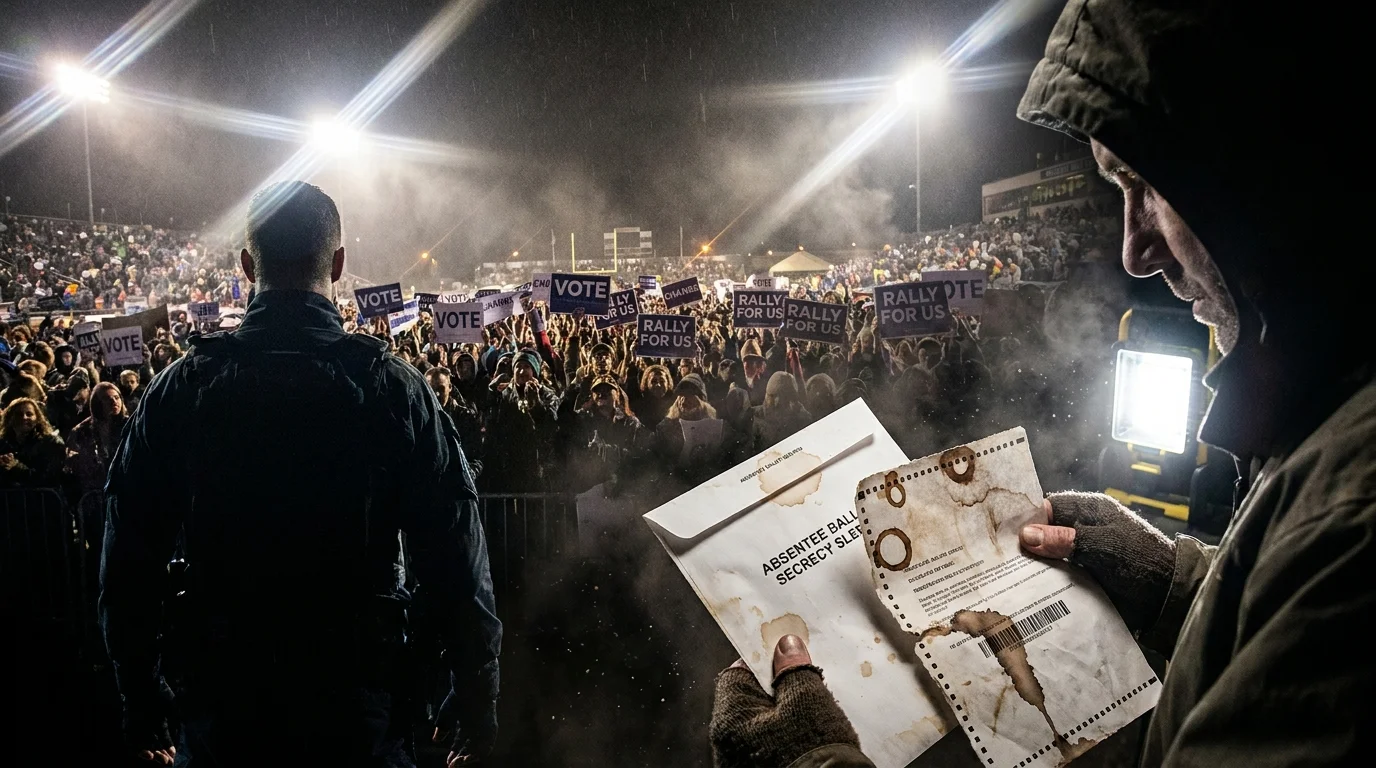
Then, the mundane happens. You set your mug down an inch too close. A thin rim of condensation and dark roast drips down the ceramic base, leaving dark brown coffee rings soaking into the white fibrous ballot paper edges. You pat it dry with a napkin, watch the damp spot fade into a pale tan shadow, and seal the outer envelope with complete confidence that your vote is secure.
That faint stain, however, sets off an invisible chain reaction inside your local county elections warehouse. What looks like a harmless kitchen mishap transforms the moment high-speed optical scanners pull that paper through their intake tracks at twenty miles per hour.
The Illusion of the Tamper-Proof Packet
You are taught to treat mail-in voting as a purely postal convenience: receive, mark, seal, drop. Yet election logistics operate on a rigid optical-mechanical standard that treats every square millimeter of the document as sensitive data infrastructure. The paper envelope and the inner secrecy sleeve do not just guard your privacy; they act as a rigid physical carrier for machine-readable timing marks.
When liquid touches ballot stock, the cellulose fibers expand unevenly, causing micro-warping across the sheet. Even if the paper dries flat to the touch, the optical density changes. High-speed digital imaging sensors read registration barcodes—the small grid patterns along the perimeter that tell the machine your precinct, ballot style, and orientation—by measuring contrast down to precise gray-scale thresholds. A dried stain acts like a smudge of grease on a camera lens, scattering the sensor’s LED light and turning crisp timing tracks into illegible visual noise.
When those timing tracks fail to register within milliseconds, modern central-count scanners do not guess your intent. They route the entire ballot into an unread exception bin.
- Opposition research dossiers derail unvetted primary candidates through dog-eared manila folders
- Silent Majority bumper stickers resurfaced 1968 suburban voter grievances with faded orange lettering
- Reverse image metadata tools expose altered political photos with jagged pixel halos
- Section 199A deduction rules strip small business owners with hidden taxable income phaseouts
- Kennedy Center renovation funding forces fierce Capitol Hill showdowns over federal cultural spending
Inside the Adjudication Cage with Elena Cruz
Elena Cruz, a 51-year-old county election supervisor with fourteen years of processing experience in southwest Ohio, knows the exact sound a damaged ballot makes when it hits a commercial scanner. It is a sharp, fluttering stutter followed by an automated amber warning light on her terminal. In her warehouse, ballot processing teams handle tens of thousands of mail packets during the final push before deadline night.
“People assume an absentee ballot is rejected only if someone signs the wrong name,” Cruz explains as she inspects an intake batch. “In reality, the physical condition of the sheet accounts for a massive chunk of our manual adjudication workload. If a stray liquid mark bleeds across the bottom margin, the intake camera cannot locate the index points. The secrecy sleeve keeps the ballot flat, but if that sleeve catches liquid, it holds the moisture against the barcode for days in transit, fusing the fibers and destroying the machine read.”
Where Ballot Handling Breaks Down
Voters interact with their ballots in vastly different environments, and each setting introduces distinct vulnerabilities to the document’s scanning integrity.
The Kitchen Table Voter
Working through local ballot measures over breakfast creates the highest risk of chemical and liquid contamination. Ballots exposed to grease, coffee condensation, or acidic fruit juices suffer rapid fiber breakdown along their edges.
- Liquid droplets migrate through capillary action along cut paper edges.
- Sugars in spilled drinks leave sticky residues that foul scanner feed rollers.
- Dried beverage rings shift the paper’s reflective index, blinding optical sensors.
The Commuter and Remote Professional
Marking a ballot in transit or inside a crowded briefcase introduces mechanical folding and corner dog-ears. When you cram a secrecy sleeve into a messenger bag, you risk shearing the delicate alignment tabs that the sorting machines use to square the page.
A bent timing tab causes the paper to enter the feeder at an angle. This optical skew means the computer miscalculates oval coordinates, reading your intended votes as blank lines or over-votes.
The Last-Minute Drop-Box User
Hurrying to meet the local drop-box deadline often leads to hasty sealing. Wet glue residue from over-moistened envelope flaps can seep onto the inner sleeve, sticking the sleeve directly to the ballot’s primary barcode. Election workers attempting to separate stuck paper frequently tear the identification block entirely.
The Mindful Mark: A Four-Step Ballot Handling Protocol
Treating your ballot as a precision optical instrument guarantees it clears sorting without manual intervention or delay. Follow this minimalist preparation sequence:
- Clear the workspace entirely: Remove all drinks, food, and damp items from your surface. Work on a dry, hard desk rather than a tablecloth or kitchen counter.
- Verify your writing instrument: Use a standard medium-point black or dark blue ballpoint pen. Avoid gel pens, markers, or fountain pens whose water-soluble inks bleed through paper fibers when humidity shifts.
- Inspect the peripheral margins: Before inserting the page into the secrecy sleeve, check all four corners and the barcode borders. Ensure no creases, oil marks, or tears exist on the black timing squares.
- Check the sleeve alignment: Slide the ballot cleanly into the secrecy sleeve without forcing the corners. Ensure the registration bars sit flat and unbuckled inside the window opening.
If you accidentally spill coffee or tear a margin, do not attempt to tape, bleach, or scrub the page. Contact your county clerk immediately to request a spoiled ballot replacement before the certification window closes.
The Intentional Civic Act
Filling out an absentee ballot in your own home offers rare time for quiet civic focus. Yet the convenience of voting at your kitchen table demands the same deliberate care you would expect from the officials running your precinct polling place. When you protect the crisp, clean margins of your paper, you ensure your voice moves uninterrupted from your desk directly into the certified ledger.
“Every stray mark on an alignment track turns an automated process into a human judgment call—keep the margins pristine.” — County Election Protocol Standard
| Ballot Vulnerability | Physical Mechanism | Preventative Action |
|---|---|---|
| Liquid Staining | Capillary fiber swelling obscures optical timing tracks. | Mark on an empty desk away from mugs, glasses, and food. |
| Ink Bleed-Through | Gel and marker pigments penetrate the sheet, triggering false votes. | Use only quick-drying black or dark blue ballpoint pens. |
| Corner Creasing | Angular feed entry causes high-speed scanner skew errors. | Store packet flat inside a rigid folder before dropping off. |
Frequently Asked Questions
Will a light coffee stain automatically cancel my vote?
No, but it will prevent high-speed machine tabulation, requiring a bipartisan election panel to manually duplicate your choices onto a fresh ballot, which can slow down processing during tight deadlines.Can I use transparent tape to fix a torn ballot corner?
Avoid using household tape because the glossy plastic finish reflects scanner lasers and can jam the intake belts of sorting machines. Request a replacement ballot instead.Does every county require the inner secrecy sleeve?
Requirements vary by state; some jurisdictions mandate the sleeve for ballot validity, while others treat it as optional. Always follow the exact instructions printed on your specific packet.What should I do if my pen ink bleeds through to the other side?
If the bleed-through touches an oval on the opposite page, contact your local elections office immediately for a replacement to avoid an unintentional over-vote error.How do election workers verify barcodes that get smudged?
Workers look up your unique voter identification number printed next to the code and manually enter your record into the tracking system under dual-party supervision.