Late at night under the quiet buzz of a kitchen pendant lamp, your thumb moves rhythmically across the glass of your phone screen. An incendiary political photo pops into view: a candidate standing before an empty auditorium, or perhaps shaking hands with a disgraced lobbyist in a dimly lit alley. The outrage catches in your chest before your thumb even stops moving, and your instinct urges you to repost it immediately to your group chat.
If you pinch and zoom in close—stretching the frame until you reach five-hundred percent screen magnification—the seamless illusion begins to fracture. Blurry jagged pixels collect along the candidate’s collarbone like rough chalk on asphalt, glowing with an unnatural, greenish halo where the lighting simply refuses to add up.
We are told daily that modern synthetic campaign imagery is an unstoppable force of flawless deception, requiring million-dollar forensic labs and national security clearance to unmask. Yet the truth on the ground is far simpler and much more encouraging: digital images leave greasy fingerprints behind the moment anyone slices into them, and you already possess every tool necessary to spot them within thirty seconds.
The Tailor’s Seam: Why Political Fabrications Leave Tell-Tale Scars
Think of an altered image like a tailored vintage jacket that was hastily resized an hour before a wedding. To someone standing ten feet across the room, the silhouette looks sharp and convincing, but if you step close enough to run your fingers along the hem, you will feel the bunched threads, the uneven tension, and the mismatched dye of the replacement patch.
Digital files behave the exact same way. When a political operative cuts an opponent out of one background and pastes them onto another, they break the mathematical grammar of light. Sensor noise must match across every square millimeter of a genuine photograph; when two different images are merged, those background sensor patterns clash violently, creating jagged pixel halos along every edited contour.
- Section 199A deduction rules strip small business owners with hidden taxable income phaseouts
- Kennedy Center renovation funding forces fierce Capitol Hill showdowns over federal cultural spending
- Oklahoma election results reveal unexpected suburban turnout surges across shifting conservative strongholds
- Jennifer Hegseth Pentagon role sparks explosive debate clashes over federal defense appointments
- Nevada caucus delegate tally sheets derail early frontrunners across crowded casino union halls
Sarah Chen, a 38-year-old open-source intelligence analyst based in Arlington, Virginia, spends her workdays debunking high-impact campaign media ahead of major election cycles. ‘People assume bad actors are using cinematic supercomputers,’ Sarah notes while reviewing a contested rally photograph on her laptop. ‘In reality, campaign interns and partisan troll farms are cutting corners in rush jobs, leaving raw EXIF timestamps, cloned lighting gradients, and jagged compression seams right in the open file.’
Choosing Your Verification Speed: From Feed-Scroller to File Auditor
You do not need to turn every political meme into a full-scale academic thesis. Depending on how much time you have while scanning your morning feeds, you can scale your inspection method to match the moment.
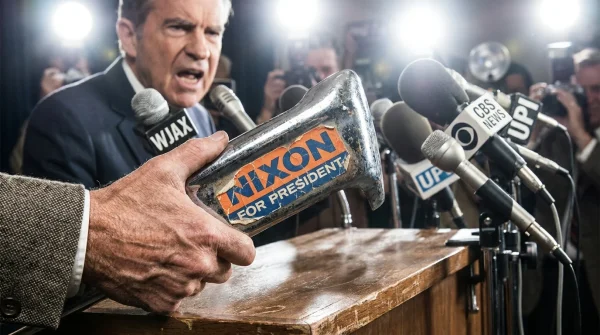
For the quick mobile scroller, simple magnification and visual triangulation are enough. Look directly at the high-contrast boundaries: where dark hair meets a bright sky, or where fingers wrap around a microphone. If the subject has razor-sharp borders while the microphone shows soft, natural JPEG compression, someone pasted that subject in after the fact.
For the thorough community researcher, dropping a saved image into a lightweight metadata inspector exposes the file’s hidden spine. EXIF data preserves timestamps, camera model specs, and software modification tags that tell you whether an image was snapped on a reporter’s telephoto lens in Des Moines or exported from graphic design software twenty minutes ago.
Mindful Image Inspection in Four Practical Steps
Spotting digital campaign deception is less about suspicious cynicism and more about developing a clean, repeatable habit of observation. You can verify nearly any viral campaign still in under a minute without spending a dime.
- Check the catchlights in the eyes: Zoom into the pupils of everyone in the frame to confirm whether the reflected light sources point in the same direction and share the same color temperature.
- Inspect high-contrast margins: Magnify the borders between subjects and backgrounds to spot mismatched compression blocks or jagged, glowing pixel fringes.
- Review the EXIF headers: Upload the source file into an online metadata reader to see if software like Photoshop, GIMP, or an AI generator left an export fingerprint.
- Reverse search the raw composition: Run the cropped background through standard reverse image engines to see if the location was pulled from an old stock photo catalog.
Keep a minimal toolkit bookmarked on your phone or desktop: a free browser-based EXIF reader, a reverse visual search shortcut, and an Error Level Analysis (ELA) viewer. Running a file through these checks strips away the emotional shock value and returns you to objective ground.
The Calmer Way to Navigate Political Feeds
Learning to spot the jagged halo on a doctored image does more than keep you from sharing false campaign material. It restores your breathing room in an information environment explicitly designed to keep your nervous system on edge.
When you understand the simple physical and mathematical limits of digital images, political outrage bait loses its grip on your attention. You no longer have to feel helpless against the flood of synthetic media, because you know that truth always leaves an intact trail of light, data, and clean edges behind.
‘Deception relies on your hurry; truth only asks for thirty seconds of quiet attention and five-hundred percent zoom.’
| Key Point | Detail | Added Value for the Reader |
|---|---|---|
| Edge Artifacting | Jagged halo lines visible at 500% zoom | Allows immediate verification directly on your phone without downloading software |
| EXIF Timestamps | Embedded camera and software metadata headers | Reveals exact creation dates, camera hardware, or graphic editor export tags |
| Catchlight Physics | Reflections inside the subject’s pupils | Instantly disproves synthetic faces when light directions fail to match the scene |
Frequently Asked Questions
Do social media platforms strip out metadata when images are posted?
Most major networks do remove EXIF headers during upload to protect user privacy. However, you can still inspect edge compression, catchlights, and run reverse image searches on cropped elements to trace the original file.What exactly causes that jagged halo around altered figures?
When a subject is cut from one image and placed into another, the blending algorithms struggle to bridge different compression rates and lighting colors, leaving a noticeable border of mismatched pixels.Can artificial intelligence generate perfect metadata to fool researchers?
Generative tools often produce empty or distinctly structured metadata tags that flag the image as synthetic, making the absence of standard camera hardware tags just as telling as an edited file.What is the quickest free tool for inspecting an image’s compression levels?
Web-based Error Level Analysis tools allow you to paste an image URL or upload a file to see modified regions highlighted in bright contrast immediately.Why is reverse image searching alone sometimes not enough?
If an image has been heavily modified or mirrored, reverse search engines might miss the match. Combining reverse searches with manual edge inspection ensures you do not rely solely on an algorithm.