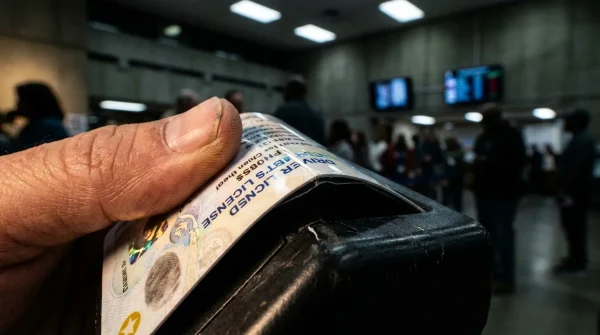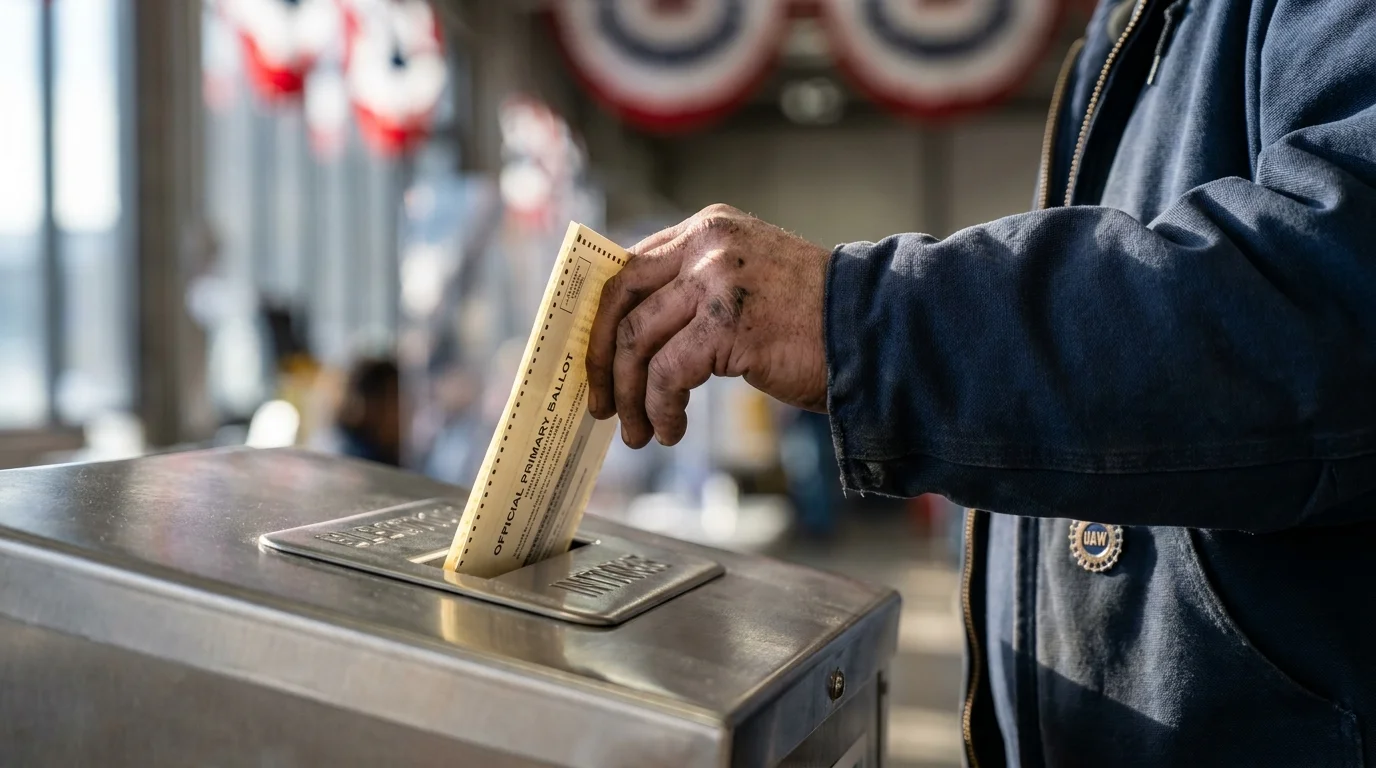
The damp chill off Lake Huron clings to the gravel outside the local hall before sunrise. You can smell stale drip coffee cutting through the faint tang of metal stamping oil on heavy duck canvas jackets. Inside, the only sound is the rhythmic scrape of folding chair legs against linoleum as the morning shift trickles in, clutching paper sample ballots folded into thirds.
Cable news desks in Washington still treat electoral math like an abstract game of televised focus groups and social media spend. But on the cracked pavement of Macomb and Genesee counties, politics feels much more like the hum of a hydraulic press—slow to build pressure, but completely irreversible once the piston drops. The people gathering here do not wait for national conventions to tell them who holds power; they decide it while checking tire pressure on a frozen Tuesday.
By the time national commentators wake up to review dawn returns, the real contest has already concluded behind plant gates. You might imagine that primary momentum flows downward from glossy Sunday morning talk shows into regional districts. In reality, the gravity moves in reverse: an unglamorous early ballot surge on a shop floor can snap a multi-million-dollar national campaign in half before lunch.
The Assembly Line Lever: Rethinking How Early Delegates Lock Down
Most voters assume early states serve merely as symbolic beauty pageants, handing candidates bragging rights and a temporary bump in fundraising emails. That assumption fails to grasp how delegate math operates when industrial density collides with early voting calendars. Think of an automotive chassis moving down the main conveyor: if a sub-frame bracket is bolted forty thousandths of an inch out of square at station twelve, every downstream panel fit fails, no matter how skilled the finish painter is at the end of the line.
When early automotive plant endorsements materialize into physical precinct envelopes weeks before election day, they do not just award a candidate a local win. They lock down the structural brackets of the nominating convention. These early precinct tallies trigger mandatory delegate allocation rules under state party bylaws, securing hard floor votes that rival campaigns cannot legally dissolve later in the calendar.
For decades, political insiders claimed that modern elections were won in suburban digital ad exchanges. Yet when you watch how absentee ballots move through an organized manufacturing hub, you realize that an old-fashioned steward system functions with the precision of an internal combustion engine. It converts neighborhood trust into mathematically bulletproof margins while opposing war chests are still buying cable time in distant media markets.
- House Armed Services markups switch contested procurement language during closed midnight sessions
- Bank of America energy lending policies spark aggressive red state treasury contract boycotts
- Dario Amodei safety warnings force bipartisan shifts on federal artificial intelligence guardrails
- Mesabi Metallics mineral lease disputes trigger explosive voter backlash across northern mining towns
- Pete Hegseth nomination disputes ignite bitter Senate confirmation showdowns over defense leadership
Consider Greg Vance, a 54-year-old die-setter at a transmission facility in Wayne County. For three decades, Greg has watched candidates parade past plant turnstiles wearing pristine work jackets with the crease still visible in the collar. Two weeks before the primary, Greg sat on a grease-blackened bench in the breakroom, pulling a state ballot tracking receipt from his wallet while helping his third-shift team scan barcode confirmations on their phones. To Greg, those three hundred slips from his plant division were not political opinions—they were banked equity, deposited into the county ledger before the rival campaign even landed its charter plane at Detroit Metro.
Precinct Mechanics: How Different Shifts Dictate the Surge
To grasp why this leverage is so difficult to reverse, you have to look closely at how different segments of the manufacturing workforce engage with early voting mechanisms. The momentum is not uniform; it moves in distinct layers across the factory ecosystem.
The Veteran Tool-and-Die Custodian
These voters hold the highest seniority, deepest institutional memory, and most predictable turnout habits in the state. They have lived through plant retoolings, contract strikes, and corporate bankruptcies, meaning they view political promises through a strictly transactional lens. For this group, mail-in ballots are processed early at the kitchen table alongside the monthly utility bills. Their early votes create an immediate, high-probability baseline in suburban blue-collar precincts that generic advertising cannot sway.
The Tier-Two Line Assembler
Younger, balancing secondary gig work, and acutely sensitive to domestic production guarantees, these workers rarely consume traditional political media. Their voting behavior is social, anchored in breakroom debates and peer verification. When local shop leadership reaches consensus on a candidate’s trade posture, this bloc moves as a decisive wave during in-person early voting periods, frequently overwhelming standard turnout forecasting models.
The Regional Commuter Steward
Living across county borders in exurban townships, stewards knit together disconnected municipal precincts. They understand the localized absentee drop-box regulations and organize carpools directly from the gate after shift change. Their organizing work turns quiet rural polling sites into unexpected pockets of high-density delegate accumulation, catching centralized campaign headquarters off guard.
Tracking the Ground Signal: A Mindful Reader Toolkit
You do not need access to private campaign tracking software to see an early momentum shift coming. You only need to know where to look before the cable networks flip their graphics boards to red and blue.
Instead of scanning sensational campaign headlines, keep your attention anchored to quiet, verifiable logistics. When industrial precincts experience unexpected absentee ballot demand, national outcomes are already settling into place.
- Check County Board of Elections return feeds: Look for absentee envelope return velocity in industrial townships (such as Warren or Flint) rather than statewide percentages.
- Monitor shift-change turnout windows: Precincts within two miles of major stamping plants typically show sharp turnout spikes between 6:00 AM and 7:30 AM, and again between 2:30 PM and 4:00 PM.
- Examine delegate trigger thresholds: Michigan distributes delegates based on congressional district performance; winning a single industrial district by a wide margin secures hard delegate counts regardless of narrow statewide totals.
- Review local steward notices: Plant bulletin boards and local union hall circulars signal grassroots consensus weeks before official endorsement press conferences take place.
The Bigger Picture: Reclaiming Ground-Level Authority
Living through a modern election cycle often feels like standing in front of an open exhaust pipe—loud, disorienting, and full of fumes. National narratives try to convince you that elections are determined by high-dollar consultants sitting in coastal office towers, manipulating crowds with slick graphics and algorithm-driven spending.
Watching how Michigan manufacturing workers utilize their early ballots offers a refreshing, grounding antidote to that exhaustion. It reminds you that political power, at its most durable level, is physical and local. It belongs to people who punch a timecard, know their neighbors by name, and understand that an early vote cast on a cold morning carries the exact same mathematical weight as the finest campaign strategy ever drafted. When you understand how the shop floor builds its firewall, the noisy theater of national politics suddenly looks much smaller—and far easier to understand.
“True political momentum isn’t sparked on television screens; it is forged by the hands that build the nation, casting votes before the rest of the country has even cleared the frost from their windshields.”
| Key Point | Detail | Added Value for the Reader |
|---|---|---|
| Early Ballot Banking | Absentee votes returned 14–21 days prior to election morning. | Explains why last-minute negative campaign ads fail to move poll numbers in manufacturing districts. |
| District-Level Allocation | Delegates awarded proportionally by congressional district boundaries. | Demonstrates how targeted geographic margins secure convention leads over broad popular sentiment. |
| Shop Floor Organizing | Peer-to-peer voting reminders coordinated by shift stewards. | Reveals why working-class turnout consistently outpaces standard non-response telephone polling. |
Frequently Asked Questions
How do early union endorsements in Michigan influence voters in other states?
They generate an immediate delegate buffer that alters campaign viability narratives, forcing opposing candidates to spend defensive resources in upcoming primary states.Why is delegate math more important than the statewide popular vote in primary elections?
National conventions allocate nominations based strictly on accumulated delegates, meaning high margins in specific working-class districts matter more than narrow statewide pluralities.Do shop floor endorsements guarantee complete worker compliance?
No, but they provide trusted validation points and organizational infrastructure that streamline early voting access for thousands of hourly employees.What makes Michigan’s early voting calendar uniquely powerful?
Its calendar position forces national campaigns to test industrial policy appeals before moving into broader Super Tuesday contests across the country.How can I verify if early turnout is actually surging in my local district?
You can track daily absentee envelope processing counts and in-person early voting tallies published directly on your county clerk’s official portal.