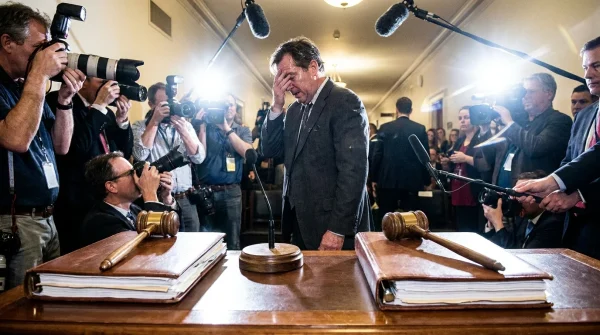
The room hums with the dry, electric warmth of an aging laser printer spitting out audit logs at 6:45 AM. Outside the basement window of the county administration building, early traffic crawls through the gray dawn, their headlights cutting through November drizzle. Inside, the only sound is the rhythmic click of your mouse and the low whir of desktop cooling fans.
You might picture voter roll maintenance as a painstaking, hands-on task where clerks thumb through buff-colored paper cards and compare cursive signatures by eye. For decades, that was the cadence of election administration: slow, deliberate, and fiercely local. A quiet digital pipeline now handles that work behind closed office doors, linking municipal voter lists directly to federal immigration servers in real time.
The tool at the center of this shift is the Systematic Alien Verification for Entitlements program, known across municipal desks simply as SAVE. Managed by the Department of Homeland Security, this database was built for a single, narrow task: allowing benefit agencies to confirm whether a noncitizen qualifies for specific public assistance programs or commercial licensing. It was never intended to act as an automated voter filter.
Yet over the past two election cycles, an aggressive series of administrative directives repurposed this immigration tool into an automated election auditing mechanism. By reinterpreting statutory definitions through agency guidance rather than passing new legislation, federal officials granted states mass access to run batch audits against active voter lists. In doing so, they bypassed standard Privacy Impact Assessments, catching tens of thousands of legitimate, naturalized citizens in an algorithmic dragnet.
The Screen Door Fallacy: Why Immigration Servers Stumble on Voting Rolls
To understand why this system creates administrative chaos, you have to picture a screen door. A screen door works brilliantly to keep out summer flies, but if you expect it to filter fine dust blown in from the road, you will end up with an unlivable mess on your floor. SAVE is that screen door.
The database functions on historic snapshots rather than live updates. When a legal resident receives a green card or work visa, their record enters the system with their country of origin and noncitizen status cleanly stamped. When that same person stands in a federal courtroom years later, raises their right hand, and takes the Oath of Citizenship, that milestone does not reliably push a real-time update across every disparate DHS sub-ledger.
Federal privacy statutes, including the Privacy Act of 1974 and the E-Government Act of 2002, were specifically written to prevent these mismatched data silos from cross-pollinating without strict public oversight. Unchecked database cross-referencing treats a five-year-old green card record as an active reflection of your legal status this morning, shifting the legal burden of proof directly onto your shoulders before you can cast a ballot.
- Chinese drone bans freeze local emergency search operations across rural counties
- Cultivated meat bans trigger fierce agricultural pushback across Southern statehouses
- Josh Turek campaigns target entrenched party incumbents across rural legislative battlegrounds
- County dam mandates force sudden property tax hikes across rural municipal ledgers
- Likely voter screens routinely misread hourly shift workers until election night tallies land
The Clerk’s Dilemma in Maricopa County
Elena Ramos, 48, has served as a deputy registrar in Arizona for nearly two decades. On a quiet Tuesday last spring, an automated batch match run against regional driver’s license numbers spit out a spreadsheet flagging 1,420 registered voters as potential noncitizens. Elena sat at her desk with a cold cup of coffee, troubled by the names on the printout—many of whom had voted in every school board and midterm race since 2012.
Instead of sending out cancellation notices, Elena spent three days manually cross-referencing the state’s supreme court naturalization records. She discovered that over 92 percent of the flagged voters had gained citizenship years earlier, but their motor vehicle profiles had never triggered an updated inquiry through federal channels. A single executive memo had ordered county staff to treat that stale DHS snapshot as actionable truth, nearly scrubbing over a thousand lawful neighbors from the precinct ledger overnight.
Triage Profiles: How the Data Audit Impacts Different Voters
The downstream consequences of automated database audits do not fall evenly across the voting public. Depending on how and when your records entered state agency systems, the friction appears in distinct ways.
The Naturalized Homeowner
If you completed your naturalization after receiving your driver’s license, your Department of Motor Vehicles record frequently remains tagged with your prior legal status. When a state agency runs a SAVE batch audit, the database matches your name and old alien registration number, ignoring the certificate filed at the district court. You receive a letter requiring certified proof within 30 days, often arriving while you are traveling or managing family life.
The Multi-State Professional
For professionals who move across state lines for career opportunities, minor typographic variations between state databases and federal queries trigger algorithmic false positives. A dropped middle initial or a hyphenated maternal surname can cause the automated check to fail, routing your voter profile into a secondary verification queue that locks your status into provisional territory.
The Generational Voter with Mixed Records
Even individuals who have held citizenship since birth can get caught when states run sweeping queries using incomplete data fields like partial Social Security digits. When records cannot be cleanly confirmed, election offices facing strict state statutory audit deadlines often send blanket notice-of-intent letters, forcing long-term voters to re-establish their standing under tight administrative clocks.
Protecting Your Registration: A Practical Verification Routine
Navigating automated administrative drift requires calm, steady attention to your public records before election deadlines draw near. You do not need to fight City Hall; you simply need to make sure your paperwork leaves zero room for algorithmic ambiguity.
Begin by checking your active status on your secretary of state’s official portal at least sixty days before your local primary or general election. Confirming your registration status well ahead of statutory purges gives you the legal runway needed to resolve any unannounced data discrepancies without emergency court filings.
- Request your motor vehicle driver history to verify that your citizenship status is accurately marked as a United States citizen rather than an unupdated resident alien tag.
- Locate and make high-resolution digital scans of your primary identity documents: your Certificate of Naturalization (Form N-550 or N-570), a valid U.S. Passport, or a state-certified birth certificate.
- If you receive a confirmation notice questioning your status, respond within 14 calendar days via certified mail with return receipt requested, keeping physical copies of every form.
- Submit an updated voter registration form directly to your county clerk along with photocopies of your proof documents, bypassing third-party registration drives to ensure direct chain of custody.
Keep a physical voter toolkit filed with your home tax records: your current voter card, your state ID, and your naturalization or passport serial number. Having these figures readily available turns a stressful provisional ballot situation into a five-minute procedural clarification with an election supervisor.
The Quiet Architecture of Institutional Trust
Elections run on trust, but trust is not an abstract political concept. It is built out of the dry, unglamorous mechanics of file cabinets, server handshakes, and public records laws designed to protect ordinary people from bureaucratic overreach.
When executive directives quietly bypass privacy frameworks to repurpose immigrant verification databases, the injury is not merely legal—it is civic. It introduces doubt into the basic relationship between a voter and their community. By understanding the mechanical blind spots of the systems that track your civic life, you protect more than your own vote; you preserve the dignity of the entire precinct.
The quietest threat to the ballot box is not a locked door, but an automated algorithm executing a bad database query in an empty room.
| Key Point | Detail | Added Value for the Reader |
|---|---|---|
| Data Latency | SAVE logs immigrant status at time of visa issuance, not real-time naturalization oaths. | Helps you understand why naturalized citizens are disproportionately misidentified. |
| Privacy Act Bypass | Inter-agency directives avoided standard Federal Register public impact reviews. | Reveals why federal courts are issuing emergency stays on mass purges. |
| Proactive Correction | Updating DMV records immediately refreshes the state data pipeline used for queries. | Gives you an actionable way to insulate your voting file from automated audit flags. |
Frequently Asked Questions
Can the SAVE database automatically cancel my voter registration?
No federal database has the legal authority to delete your registration directly. Instead, federal servers flag your record as unconfirmed, which then prompts state or county election officials to initiate local removal or provisional ballot procedures under state law.Why doesn’t the database automatically update when someone becomes a citizen?
U.S. Citizenship and Immigration Services, state motor vehicle departments, and county election boards operate on separate, firewalled software networks. Information does not flow automatically between them without specific, legally mandated data-sharing agreements.What should I do if I receive a letter demanding proof of citizenship to vote?
Do not ignore the notice. Contact your county clerk immediately, confirm the specific document required, and submit copies via certified mail or hand-deliver them to the elections office well before the response deadline listed.Are batch audits allowed within 90 days of a federal election?
Under the National Voter Registration Act of 1993, states are strictly prohibited from conducting systematic, mass voter roll purges within 90 days of a federal primary or general election, a rule known as the Quiet Period.Can I still vote if my citizenship status is challenged at my polling place?
Yes. Under the Help America Vote Act of 2002, you have the federal right to cast a provisional ballot if your eligibility is challenged, allowing you time to present proper documentation to election canvassers after poll closing.