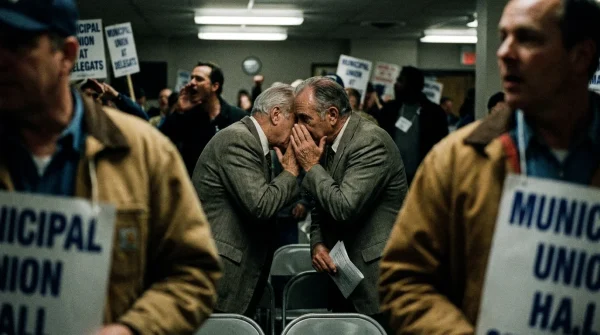
The hum of a school cafeteria refrigerator cuts through the low murmur of two hundred neighbors sitting on blue plastic chairs. Under humming fluorescent tubes that flicker against linoleum, slotted cardboard ballot boxes rest on wobbly folding tables. You smell damp wool coats, burnt drip coffee from a styrofoam carafe, and the sharp ink of fresh cardstock. Everyone clutches a manila envelope, convinced that local power is decided by who shows up on a Tuesday night.
You might think casting your neighborhood vote at a county committee meeting is the purest form of democracy. You walk in, trade your paper proxy for a lanyard, and prepare to elect local judges, district leaders, and county executives. The room feels electric with the promise of neighborhood control.
Yet behind the podium, where parliamentarians flip through spiral-bound rulebooks, the math has already shifted beneath your feet. While national headlines monopolize your morning feed, internal procedural maneuvers quietly consolidate institutional control before the first microphone is even switched on.
The Paper Wall: How Parliamentary Math Replaces Ballot Counts
To understand what happened in Kings County, you have to stop looking at party politics as an ideological debate and start seeing it as a plumbing system. The precinct level is where the tap opens, but the party rules determine who owns the wrench.
For years, insurgent grassroots organizers operated under the belief that filling vacant seats equaled holding political authority. If you knocked on enough brownstone doors in Crown Heights or Bushwick, you could recruit neighbors to become committee members, show up en masse, and outvote the entrenched executive committee. It seemed straightforward: more seats meant more leverage.
Then came the voting threshold adjustments. By introducing sweeping omnibus amendments and re-engineering how proxy votes are gathered and weighted, party leadership constructed a procedural dam. A single district leader armed with hundreds of pre-signed proxy slips can now override an entire auditorium of physically present volunteers, rendering weeks of street-level organizing completely inert in seconds.
- Angie Nixon legislative debates trigger fierce floor clashes over disputed district funding
- New Hampshire retail diner stops force candidates into greasy breakfast booth interrogations
- ActBlue recurring donation forms trap elderly donors with pre-checked yellow boxes
- Office of Legal Counsel memos block executive orders with crisp embossed seals
- Senate cloakroom drafts demand handwritten line edits on yellow legal pads
Take Julian Vance, a 34-year-old high school history teacher and newly elected committee member from Bed-Stuy. Last month, Julian spent three weeks rallying thirty of his neighbors to attend their first biennial reorganizational meeting. They arrived with binders, ready to vote on judicial screening committee reforms. Within twenty minutes, a voice vote called from the stage combined their reform package with forty-two unrelated bylaws, passing an unprinted amendment that stripped local precincts of standalone floor motions before Julian could even locate a working floor mic.
The Two Paths of Local Power: Insurgent vs. Machine Strategy
The fracture across urban party organizations isn’t just about personalities; it is an operational clash between two entirely different tactical philosophies. When you navigate these rooms, you are caught between two distinct engines of influence.
The Grassroots Door-to-Door Model relies on physical assembly, volunteer transparency, and public deliberation. Its strength lies in raw energy and moral clarity. However, its chronic vulnerability is parliamentary exhaustion. When meetings stretch past midnight on weeknights, volunteer margins collapse rapidly as working parents and shift workers are forced to head home.
The Institutional Machine Model operates on legal inertia, proxy concentration, and calendar control. This approach treats committee rules as structural fortifications rather than guidelines. By centralizing quorum calculations and proxy validation in the executive committee, leadership ensures that even an empty hall carries enough legal weight to confirm party slates and protect judicial endorsements.
Deciphering the Rules: A Tactical Guide for the Precinct Organizer
If you want to maintain your influence inside district politics, you cannot rely on enthusiasm alone. You have to master the bureaucratic levers before entering the auditorium.
Navigating the local committee landscape requires strict, disciplined preparation:
- Audit the Proxy Ledger Early: Demand certified voter rolls and proxy logs at least seventy-two hours prior to the call to order. Unchallenged proxies are almost impossible to invalidate once entered into the official record.
- Master the Rule of Precedence: Study the exact parliamentary authority specified in your county bylaws (typically Robert’s Rules of Order, Newly Revised). A motion to table or a motion for the previous question takes priority over general floor debates every single time.
- Coordinate Floor Whips: Assign designated organizers to every section of seating. When voice votes are rushed or gavelled down without an accurate division of the house, your whips must immediately demand a roll-call division before the chair moves to the next order of business.
- Document the Timeline: Record timestamps for quorum calls, amendment distributions, and floor microphone cut-offs to preserve evidence for potential appeals to the state judicial committee.
The Value of the Long Game
It is tempting to look at a room outmaneuvered by procedural sleight of hand and walk away entirely. The sting of watching hours of neighborly engagement neutralized by a manila folder of proxy forms feels designed to induce cynicism.
Yet recognizing the exact mechanics of institutional control is your greatest structural advantage. Once you realize that the real contest takes place in bylaw committees months before general meetings, the fog clears. You stop expending all your energy on floor speeches and start organizing where the rules themselves are written.
Real community power is built by those who are willing to learn the dry, tedious language of the committee handbook. When everyday citizens learn to read the parliamentary plumbing as skillfully as the party bosses, the balance of power inside those fluorescent-lit cafeterias begins to shift for good.
The loudest voice at the microphone will always lose to the person who drafted the agenda.
| Structural Mechanism | Institutional Execution | Actionable Countermeasure |
|---|---|---|
| Proxy Stacking | Concentrating hundreds of unverified proxy votes in leadership hands | Mandate digital pre-registration and direct personal proxy verification |
| Omnibus Amendments | Bundling procedural restrictions with standard administrative items | Demand a floor motion for division of the question prior to voice vote |
| Curfew Filibustering | Dragging out opening ceremonies until volunteer quorum leaves | Coordinate shift rotations among seated members to maintain physical voting blocks |
What exactly is a party committee proxy vote?
A proxy is a written authorization allowing one committee member to cast a ballot on behalf of an absent member. While intended to ensure full district representation, leadership networks frequently collect them weeks in advance to secure majorities without physical attendance.Why do local judicial endorsements depend on county committee rules?
County committees elect delegates to judicial nominating conventions. When procedural rules limit independent precinct delegates, party leadership maintains near-total influence over which civil and supreme court judges appear on the primary ballot.Can county party bylaws be legally challenged outside the committee?
Yes. Aggrieved members can file Article 78 proceedings in New York State Supreme Court if party leaders violate their own established constitution, state election law, or deny members statutory voting rights.What is the quickest way to track local rule change proposals?
Join your neighborhood political club, subscribe to your county committee’s official public notices, and request proposed bylaw amendment packets from your elected district leaders well ahead of county conventions.Why does national party leadership rarely intervene in local rule disputes?
National and state party charters grant broad autonomy to county organizations to manage their internal governance, leaving precinct rules almost entirely in the hands of local committees.