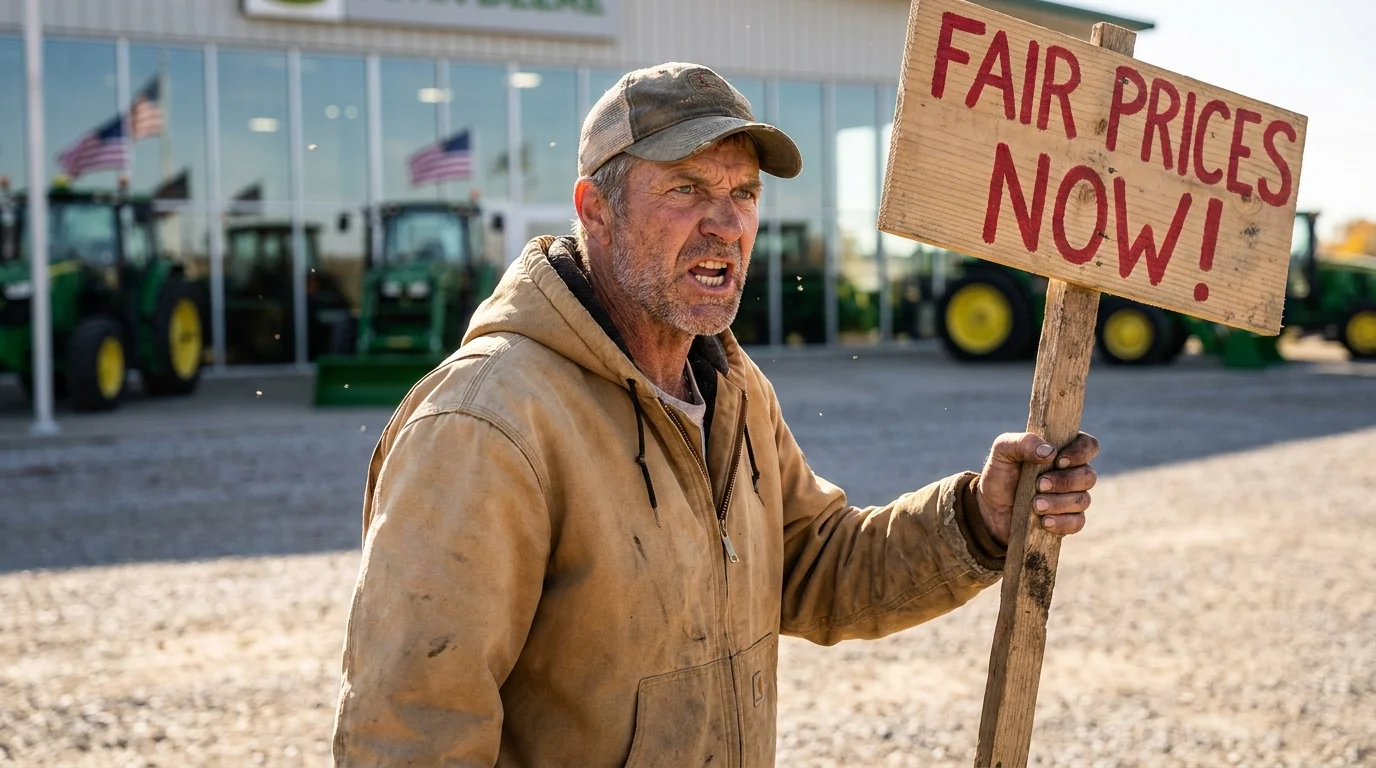
The dusk air across eastern Iowa carries the sharp scent of damp topsoil and diesel exhaust, the kind of quiet autumn hum that usually signals harvest preparation. You pull past farm gates where green-and-yellow machinery has sat like iron fixtures for three generations, treated less like capital assets and more like family heirlooms. But walking into the local implement dealership this month feels completely different; the usual easy chatter between mechanics and growers over lukewarm breakroom coffee has gone flat.
Instead, conversations pause the moment the glass door swings open. The gravel lots still hold rows of high-horsepower combines, yet the paper notices taped inside service windows tell a stark story of canceled orders, shift reassignments, and quiet cancellations. Generations of quiet brand loyalty have begun unraveling across kitchen tables from Waterloo to the Quad Cities.
For decades, owning this equipment was an unspoken civic pact between Midwestern agricultural towns and the corporate suites running global assembly lines. You paid the premium price tag because the welders, machinists, and assembly techs living down your gravel road built that machine with their own hands. Today, as production lines pack into shipping crates bound across international borders, that social contract is snapping in real time.
The Rust on the Social Contract
To grasp why this backlash cuts so deep, you have to stop viewing a tractor as mere sheet metal and hydraulic fluid. It has always operated as a regional bank vault of trust: you invest your crop revenue back into the local economy, and that money cycles straight into county property taxes, youth sports uniforms, and public school budgets. When an enterprise cuts domestic floor staff while posting billions in net income, it is not just standard balance-sheet trimming; it behaves like a silent tax levied directly on the rural tax base.
State lawmakers have reacted with abrupt legislative warnings, threatening to strip state tax subsidies and revoke equipment tax credits from firms that offshore their manufacturing footprint. Discontent has turned into resistance, driving lifelong brand devotees to park their equipment and refuse seasonal maintenance contracts.
Darrell Vance, a 54-year-old fourth-generation corn and soy producer from Black Hawk County, stood outside his machine shed last Tuesday looking at his 8R tractor. For thirty years, Vance purchased new green implements every five seasons without glancing at rival brochures. When three of his neighbors received pink slips from the local assembly plant in the same week corporate leadership confirmed expanded operations in Ramos Arizpe, Vance canceled a pending $380,000 sprayer order and called an independent short-line dealer instead. Vance sees no sense in funding the dismantling of his own county.
- Federal Trade Commission staffing freezes stall critical consumer safety recalls nationwide
- Mark Carney trade warnings trigger fierce border tariff clashes across northern manufacturers
- Ivermectin protection bills ignite fierce state medical board clashes over doctor oversight
- Working Families Party primary campaigns target safe House Democratic seats in revolt
- FEMA flood maps force steep property assessment hikes across coastal county ledgers
Mapping the Fault Lines Across the Farm Belt
The ground-level rebellion is not uniform; it cuts across distinct economic layers, each responding with its own set of economic friction points.
For the Legacy Family Operator
If you run a multi-thousand-acre family farm, your primary exposure is fleet value and dealer support. For years, you paid software license fees and proprietary repair markups under the premise that certified technicians lived five miles away and understood your urgent harvest windows. With production moving and regional workforces thinning out, those service guarantees feel hollow. Independent salvage parts and retrofits are suddenly replacing branded dealer service visits across family shops.
For the Municipal and Township Budgets
County supervisors and town council members face an immediate balance-sheet crisis. When shop floors idle, the ripple effect crushes regional sales tax receipts, water utility revenues, and local small-business traffic. Small-town hardware stores, diners, and parts distributors that built their entire fiscal calendars around factory shifts are watching shift-worker payroll disappear before the winter freeze sets in.
For the Independent Equipment Mechanic
Independent shop owners who were previously locked out by digital locks and proprietary diagnostics now find themselves inundated with calls. Operators who once feared voiding manufacturer warranties are openly defying corporate maintenance mandates, opting to keep decade-old tractors running rather than buying new machines assembled abroad.
Mindful Steps for Local Resilience
Navigating this corporate shift requires a deliberate, grounded approach to your machinery investments and community capital. You do not have to swallow corporate restructuring moves passively.
- Audit your annual dealership service agreements and calculate exactly how much margin goes toward proprietary software fees versus actual mechanical maintenance.
- Form regional machinery rings with neighboring operations to share high-cost implements rather than financing individual new units.
- Support state-level right-to-repair statutes by attending county legislative listening sessions and pressing representatives on tax-credit clawbacks.
- Reroute parts procurement through regional rebuilders and domestic aftermarket manufacturers who reinvest in domestic machine shops.
A Practical Farmstead Action Checklist: Keep a clean digital log of all mechanical diagnostic codes before allowing technician visits; request line-item parts invoices separating shipping tariffs from base component costs; and maintain mechanical service manuals for all pre-tier-4 engines currently on your homestead.
The Reclaiming of Rural Self-Reliance
The anger boiling over Midwestern kitchen tables is about far more than plant closures; it marks the painful awakening of rural communities realizing that passive brand devotion rarely gets reciprocated by a boardroom. When you choose where to spend your harvest checks, you cast a vote for the survival of your own community.
Taking control of your iron, demanding legislative accountability, and refusing to fund your own community’s economic hollowing-out brings a quiet, durable peace of mind. Self-reliance remains your strongest leverage when global corporations decide your neighbors are expendable.
“A tractor brand is only as dependable as the promise it keeps to the hands that assemble its steel.”
| Action Vector | Immediate Impact | Added Value for Your Operation |
|---|---|---|
| Aftermarket Diagnostics | Bypasses locked dealership scan tools | Cuts seasonal service downtime by half |
| State Subsidies Audit | Forces public debate on corporate tax breaks | Protects local property tax stability |
| Short-Line Implements | Redirects capital to regional manufacturers | Retains capital within rural communities |
Frequently Asked Questions
Why are rural voters targeting farm equipment brands with consumer boycotts?
Growers are pushing back because major equipment makers are shifting high-paying assembly lines abroad while reporting substantial profits, directly damaging the small-town economies that supported them for generations.How do factory relocations impact equipment repair and service?
As domestic manufacturing centers shrink, parts distribution networks face localized delays and dealerships suffer from a thinner bench of factory-trained technicians, leaving farmers stranded during critical seasonal windows.What legislative measures are state lawmakers considering?
State leaders across the Midwest are introducing bills to claw back economic development grants, exclude offending manufacturers from state procurement contracts, and advance strict right-to-repair laws.Can independent mechanics fix modern offshored tractors?
Yes, through specialized third-party diagnostic software and aftermarket electronic bypass tools, independent shops are increasingly capable of servicing newer systems without franchised dealer intervention.How can individual growers protect themselves from equipment supply bottlenecks?
Operators are preserving older, mechanically resilient machinery, joining regional equipment-sharing cooperatives, and sourcing components through domestic precision fabricators.