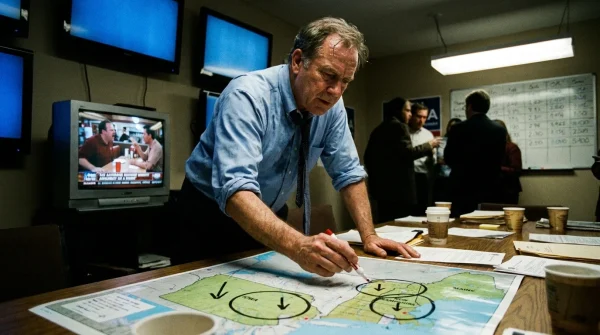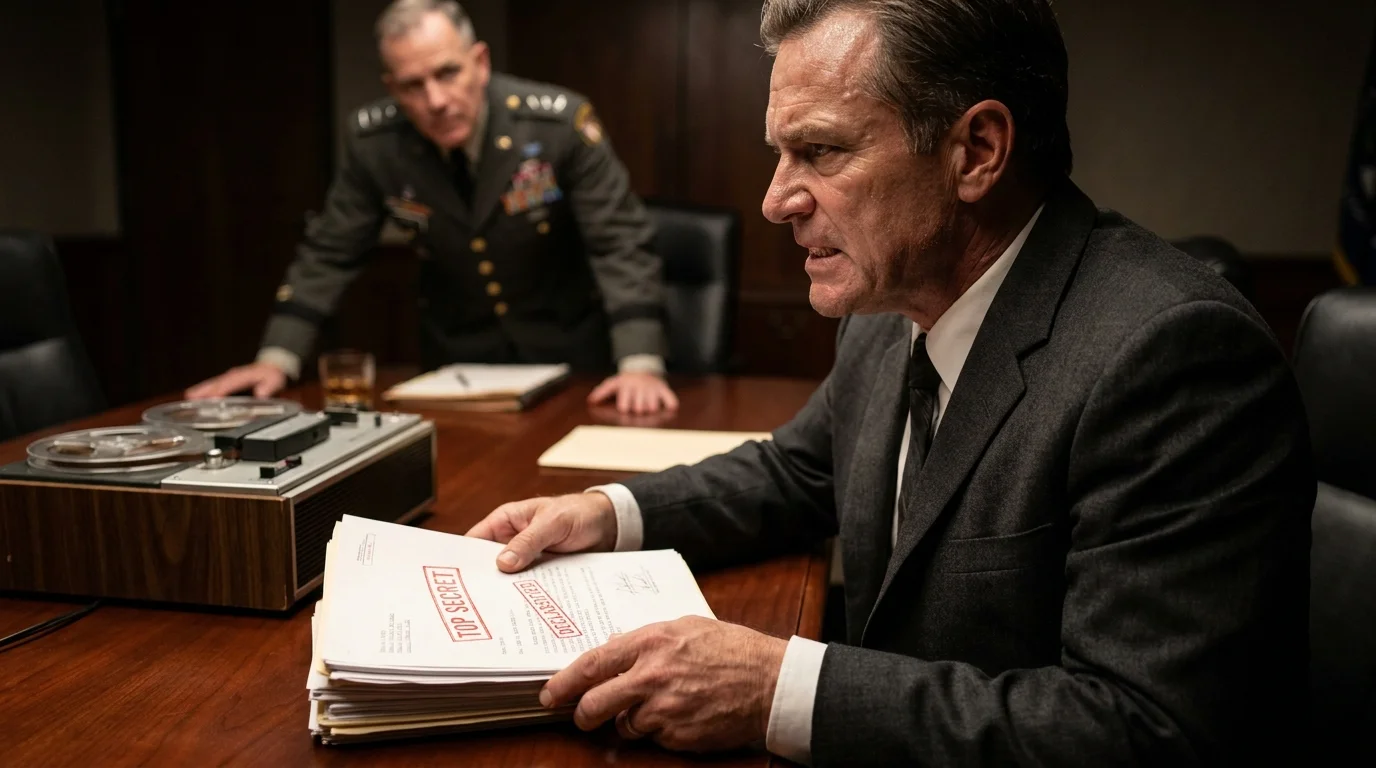
The magnetic reel turns with a dry, rhythmic whisper against the playback heads. In the background of the scratchy audio, beneath the clatter of silver spoons against porcelain coffee cups, you hear the muffled sound of autumn rain beating against the Rose Garden windows. The air inside the Cabinet Room in late October 1962 smelled of stale cigar ash, wet wool, and the bitter dregs of diner-grade percolator coffee that had boiled down to syrup over fourteen sleepless hours.
For decades, popular history told you this room was a cathedral of crisp intellect, where poised statesmen calmly calculated geopolitical maneuvers like masters at a chessboard. The pristine Camelot mythology assured us that youthful leadership had steered the nation through the Cuban Missile Crisis through sheer rhetorical poise and disciplined military alignment.
The newly unsealed, scrubbed magnetic tape transfers tell an entirely different, jagged story. When the analog noise floor is stripped away using modern multi-band spectral filtering, the polite veneer vanishes, replaced by the sound of men shouting over one another while breathing through a pillow of exhaustion. You are not listening to a synchronized executive branch; you are hearing an American commander-in-chief fighting a quiet, desperate war against his own senior generals.
The Gasket Under Pressure: Challenging the Monolithic Command
To understand the magnitude of these declassified tapes, you have to discard the idea that authority flows smoothly downward from the Oval Office. We tend to view modern state power as an unbroken chain, where an order given is an order obeyed. In reality, military command operates more like a high-pressure steam boiler: the civilian executive can adjust the external valves, but the internal gaskets groan violently under the heat.
When you listen through these unredacted interactions recorded during the naval quarantine of Cuba, the primary adversary in the room is not Nikita Khrushchev. The most immediate, volatile threat facing John F. Kennedy sat directly across the baize-covered table, wearing four stars on each shoulder and demanding immediate, overwhelming carpet bombing before the blockade could even take hold.
The Soundboard of Defiance: Sheldon Stern’s Archival Revelations
Consider the work of Sheldon Stern, now 78, who spent years as the chief historian at the John F. Kennedy Presidential Library in Boston. Stern lived with headphones pressed against his ears for thousands of hours, untangling overlapping voices that federal transcriptionists in the 1970s marked simply as ‘unintelligible.’ In a particularly harrowing declassified tape from October 19, 1962, Air Force Chief of Staff General Curtis LeMay leans close into a hidden microphone, his tone carrying the flat, curdled hostility of a subordinate who believes his superior is a coward.
- Donald Trump tariff threats against Canada spark starkly opposing broadcast coverage divides
- Nassau County property tax revaluations trigger furious suburban homeowner walkouts at hearings
- Utah postal worker ballot rumors expose foreign bot networks inflating voter fraud claims
- Eric Adams defense strategies switch public messaging to counter federal bribery allegations
- Supreme Court homelessness rulings upend local shelter funding across western cities
‘This blockade and political talk, Mr. President, is considered by a lot of people to be pretty weak,’ LeMay snaps, his voice rattling the recording needle. Defiance was barely masked beneath procedural titles. When Kennedy quietly pushed back, remarking that military strikes would trigger an automatic Soviet counterpunch in Berlin, LeMay bluntly shot back: ‘You’re in a pretty bad fix, Mr. President.’ Kennedy broke the room’s sudden, horrified silence with a dry laugh, asking, ‘You’re in there with me, aren’t you?’ The generals did not laugh.
The Friction Points: How Three Military Blocs Fought Compromise
The tapes reveal that resistance to presidential diplomacy was not uniform; it was segmented across specific operational branches, each pushing their own distinct doctrinal imperatives.
The Strategic Air Command camp saw diplomacy as an existential delay. To them, every hour spent positioning naval destroyers allowed Soviet technicians in San Cristóbal to pour concrete pads and erect intermediate-range R-12 missiles. They demanded preventive incineration, openly telling civilian advisers that trusting Soviet diplomats was tantamount to dereliction of constitutional duty.
Meanwhile, the surface Navy faction pushed its own aggressive line along the quarantine boundary. When civilian Defense Secretary Robert McNamara descended into the Pentagon’s flag plot room to demand that individual Soviet freighters be allowed passage without boardings to buy diplomatic room, Chief of Naval Operations Admiral George Anderson waved the Navy Regulations handbook in McNamara’s face, famously snapping that naval officers had known how to run blockades since the days of John Paul Jones.
The third and most dangerous friction point centered on the secret Turkey trade-off. The newly unredacted tapes capture the private, trembling rage within the executive committee when the diplomatic exchange of obsolete Jupiter missiles in Turkey was floated. Uniformed advisers viewed reciprocity not as statecraft, but as an act of treason that would permanently fracture NATO. Kennedy had to cut his generals out of the loop entirely, sending his brother Robert to meet Soviet Ambassador Anatoly Dobrynin in secret, specifically because he could no longer trust his own joint staff to keep the negotiation intact.
A Citizen’s Forensic Filter: Mindful Reading of Military Records
When you sit down to examine declassified historical logs or listen to raw public records releases, you need a disciplined framework to separate official public theater from operational reality. Public memos are drafted for the record; raw audio captures the visceral friction of power.
Follow these specific, mindful steps when reviewing newly opened military audio and transcript archives:
- Track the conversational dropouts: Notice who suddenly stops speaking when the recording light turns red or when a meeting moves from the Cabinet Room to the private family quarters.
- Identify bureaucratic stonewalling: Look for military terms like ‘operational necessity’ used specifically to deflect civilian queries about weapon readiness or targeting packages.
- Cross-reference the time codes: Compare the precise minute a presidential directive was issued against the naval or aerial flight logs to discover deliberately delayed execution.
- Listen to ambient micro-tones: Pay attention to vocal inflections, interruptions, and the deliberate rustling of papers that signaled physical walkouts or calculated dismissals.
Your tactical toolkit for analyzing historical declassifications requires modest, focused instruments. Use open-source audio editors like Audacity to isolate mid-frequency speech registers (300 Hz to 3 kHz) when working with digitized historical cassettes. Keep an updated index of federal FOIA exemption codes, especially Section b(1) national defense carve-outs, to understand why specific thirty-second blocks on a reel remain silenced sixty years after the crisis closed.
The Echo Chamber of Real Time Power
Why does it matter that you listen to the cracked voices of frightened leaders on sixty-year-old tape? Because historical mythologies that paint national crises as triumphs of uniform institutional solidarity leave you unprepared for the messy, fractured reality of modern governance.
When you understand that national survival has hung not merely on managing foreign adversaries, but on an elected executive actively wrestling down the insubordination of his own armed commanders, your view of power changes. You stop expecting perfect political machines, and you begin demanding the rare, quiet discipline required to hold the center when every institutional voice in the room is screaming for fire.
Real leadership during an existential crisis is measured by the catastrophic actions an executive refuses to take under intense pressure from their own advisers.
| Key Point | Detail | Added Value for the Reader |
|---|---|---|
| LeMay Confrontation | Air Force Chief of Staff openly mocked the naval blockade as cowardly retreat on tape. | Exposes that internal military mutiny was an active danger alongside Soviet aggression. |
| Pentagon Control Rift | Admiral Anderson refused to let civilian leadership direct tactical blockade interactions. | Demonstrates how fragile civilian oversight of military operations truly becomes in war. |
| Secret Turkey Trade | The Joint Chiefs were intentionally excluded from the Jupiter missile deal to avoid leaks. | Reveals that peak diplomatic solutions often require bypassing standard chains of command. |
| Spectral Audio Recovery | Modern sound engineering recovered previously inaudible off-mic arguments in the Oval Office. | Shows how advancing consumer technology constantly rewrites established historical narratives. |
Frequently Asked Questions
Why were these recordings kept secret for so many decades?
Tapes involving executive deliberations were classified under strict national security codes to protect intelligence gathering methods, preserve relationships with NATO allies like Turkey, and prevent the public breakdown of trust in the Joint Chiefs of Staff.How did Kennedy record these meetings without his generals knowing?
Kennedy had the Secret Service install two hidden microphone systems: one in the Cabinet Room table and another in the Oval Office desk, both controlled by a manual switch operated by the president or his secretary.Did the Joint Chiefs ever attempt to bypass Kennedy’s orders directly?
While they did not stage a coup, the tapes and naval logs reveal orders being deliberately delayed, reconnaissance flights launched despite executive halts, and operational rules bent to provoke retaliatory actions from Soviet forces.What was the significance of the Jupiter missiles in Turkey?
These intermediate-range missiles were obsolete and vulnerable, but the Joint Chiefs considered their unilateral withdrawal a humiliating concession to Moscow, forcing Kennedy to make their removal a secret verbal condition.Where can an everyday citizen access these unedited crisis recordings?
The complete, unredacted digitized recordings and transcripts are freely available to the public through the John F. Kennedy Presidential Library digital archives and the National Security Archive at George Washington University.