The air inside the House chamber carries a dry, conditioned hum that rarely matches the heat outside. On an ordinary Tuesday afternoon, the floor feels almost administrative, governed by the rhythm of shuffling briefing packets and clerks calling out names across an echoing dais. Most observers watch the electronic voting boards out of the corner of an eye, expecting party lines to snap tight like dry pine boards.
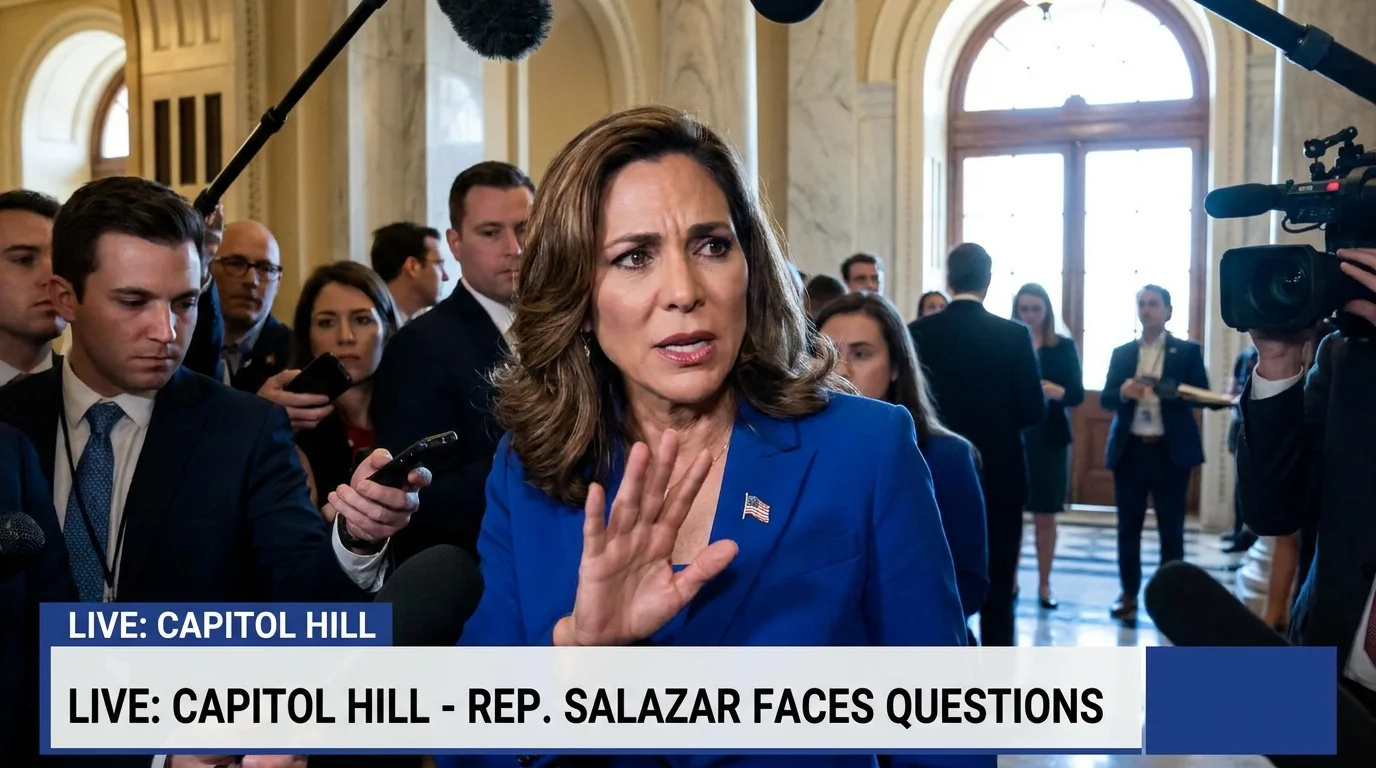
Then the amber light flickered beside Florida’s 27th District. When Representative Maria Elvira Salazar broke rank on an unannounced floor roll call on immigration enforcement measures, the chamber did not erupt into immediate noise. Instead, it experienced that singular, hollow hush that precedes an electrical surge, as lawmakers on both sides of the aisle double-checked the tally screen to confirm what had just registered.
Outside the Capitol, the digital wire caught fire within minutes. In Miami, where political loyalties run thick with generational memory and morning espresso, cell phones began vibrating across kitchen tables and radio call-in desks. The assumption that safe suburban red seats vote in lockstep collapsed in the span of a sixty-second voting window.
The Anatomy of a Floor Rebellion
To grasp why this sudden pivot sent shockwaves from the Potomac to Biscayne Bay, you have to look past cable news slogans and watch how legislative leverage actually works. A floor switch is rarely an emotional accident; it operates more like releasing tension from an over-tightened cable before the entire structure snaps under its own weight.
For years, lawmakers in mixed, high-immigrant districts have walked a wire stretched over an ideological canyon. On one side sits national party leadership, demanding strict, uniform enforcement roll calls that play well in landlocked primary races. On the other side sits a constituency where family survival, agricultural labor, and construction crews rely on pragmatic legal pathways, making abstract party orthodoxy a daily liability.
When an unannounced floor roll call hits, party whips have mere minutes to hold their members. Salazar chose to plant her flag against an aggressive hard-line enforcement amendment, betting that her district’s lived reality would grant her cover. That calculation sparked an instantaneous search surge across search engines, as local voters sought the raw roll call records to verify whether their representative had truly defied party leadership on open C-SPAN cameras.
- Kash Patel nomination clashes trigger explosive Senate floor showdowns over agency authority
- Absentee ballot sleeves trigger immediate vote rejections across strict county election boards
- Commercial freight exemptions expire tonight halting regional trucking logistics routes
- Utility district bonds force sudden four-figure escrow fee spikes for homeowners
- DMV address updates trigger quiet voter registration cancellations across suburban precincts
The Precinct Level Reality
Consider Mateo Alvarez, a 48-year-old logistics dispatcher and longtime precinct captain in West Miami. For eight years, Mateo spent Saturdays knocking doors for conservative candidates, arguing that regulatory discipline and border stability were two sides of the same coin. Sitting at a diner counter on Calle Ocho that evening, watching Salazar’s vote flash on local Spanish-language newscasts, he felt the floor drop out from under his talking points.
“When the national platform collides with the cousin who manages your warehouse under a temporary status, the party stops sounding like an idea and starts sounding like an eviction notice,” Mateo noted, folding his district map beside his untouched cortadito. His reaction mirrors the complex split gripping South Florida: deep cultural conservatism colliding directly with the practical realities of labor and residency.
How the Fault Lines Splinter District 27
The sudden voting shift did not create a single reaction; it shattered the local coalition into distinct, competing factions. Each group reads the exact same roll call result through an entirely different lens of survival and betrayal.
The Heritage Conservative Base
This segment views any perceived softening on federal enforcement as an intolerable compromise with executive overreach. For voters who fled authoritarian regimes across Latin America, strict rule of law serves as an inviolable baseline. To them, breaking party ranks on the floor signals weakness under national pressure, triggering primary threats and immediate cancellation of monthly campaign contributions.
The Pragmatic Small-Business Operators
Across Miami-Dade, owners of roofing companies, nursery operations, and hospitality franchises depend on the Dignity Act framework that Salazar has long promoted. For these employers, her vote was not a betrayal; it was a desperate act of economic triage designed to shield their workforce from abrupt operational paralysis. They view rigid federal crackdowns as economic suicide scripted by politicians who have never met a payroll deadline.
The Generational Moderates
Younger, suburban Hispanic voters who often float between parties see the rebellion as a necessary declaration of local independence. They want lawmakers who treat the district as an autonomous voice rather than a rubber stamp for leadership in Washington. For this demographic, watching a representative absorb fire from her own party whips is the first genuine sign of local representation they have witnessed in cycles.
Navigating the Fallout: A Citizen’s Verification Blueprint
When high-profile floor revolts occur, cable news panels and viral clips rarely present the actual legislative text. Rumors spread faster than transcripts. To cut through the manufactured hysteria and understand where your representative stands, adopt a disciplined method of civic auditing.
- Check the Clerk’s Roll Call: Never rely on social media graphics. Pull the official record directly from the Office of the Clerk of the U.S. House of Representatives (clerk.house.gov) using the roll call number to see the exact amendment language voted upon.
- Audit the Bill’s Procedural Posture: Determine whether the vote was on final passage, an amendment, or a procedural Motion to Recommit. Often, a member votes against an aggressive rider while remaining fully supportive of the underlying bill.
- Monitor the Delegation Split: Compare Salazar’s vote against neighboring Florida districts. When multiple delegation members split from the national caucus, it signals a coordinated regional pushback rather than a rogue outlier.
- Track Local Town Hall Calendars: Watch for sudden adjustments to local district office schedules. In-person town halls scheduled immediately after a controversial vote offer the clearest indicator of whether a member plans to defend their position or retreat into silence.
The Voter’s Tactical Verification Toolkit
Keep these specific resources pinned to your desktop to track district realignments in real time:
- Primary Source: Congress.gov (Set alerts for H.R. bills tied to your representative’s primary committee assignments).
- Financial Movement: FEC.gov (Track quarterly Form 3 filings to watch whether local pac donors pull support following the vote).
- Floor Velocity: The House Floor Cast app or @HouseClerk updates (Monitors late-breaking unannounced floor changes within 180 seconds of the gavel).
The Bigger Picture: Reclaiming Local Voice
In an era where national parties demand unconditional obedience, moments of procedural defiance force a healthy disruption. When a representative breaks rank under the harsh glare of the gallery lights, it reminds the voter that districts are living communities, not uniform color blocks on a cable news electoral map. Watching the fallout unfold is uncomfortable, messy, and necessary. It forces every voter to decide what matters more: unthinking allegiance to a national brand, or the complicated, imperfect defense of local life.
“Legislative courage is rarely dramatic; it is simply the refusal to cast a vote that destroys your own neighbors while strangers cheer.”
| Key Point | Detail | Added Value for the Reader |
|---|---|---|
| Floor Roll Call Switch | Salazar broke ranks during an unannounced vote on hardline immigration enforcement. | Helps you identify how late-breaking amendments bypass party whips. |
| District Demographics | Florida’s 27th District balances heavy exile conservatism with immigrant labor dependencies. | Clarifies why local economic survival often overrules national party platforms. |
| Constituent Action | Verification through the official House Clerk portal rather than viral clips. | Protects your political clarity from misleading partisan spin campaigns. |
Frequently Asked Questions
Did Maria Elvira Salazar switch parties permanently?
No. Salazar remains a registered Republican and continues to caucus with the party, having broken ranks on a specific floor vote tied to immigration policy.Why are unannounced roll calls so contentious?
They prevent leadership from whipping votes in advance, forcing members to vote based on raw district interest rather than party discipline.How can I find the exact text of the amendment she voted on?
Visit congress.gov, search for the underlying bill number, and cross-reference the House Clerk’s roll call log for that legislative legislative day.Will this vote switch trigger a primary challenge?
High-profile floor revolts historically draw primary opponents from the ideological base, and local grassroots groups are already organizing forums to demand answers.What is the Dignity Act that Salazar frequently mentions?
It is a bipartisan legislative framework she authored that pairs stringent border security funding with legal status pathways for long-term undocumented residents.