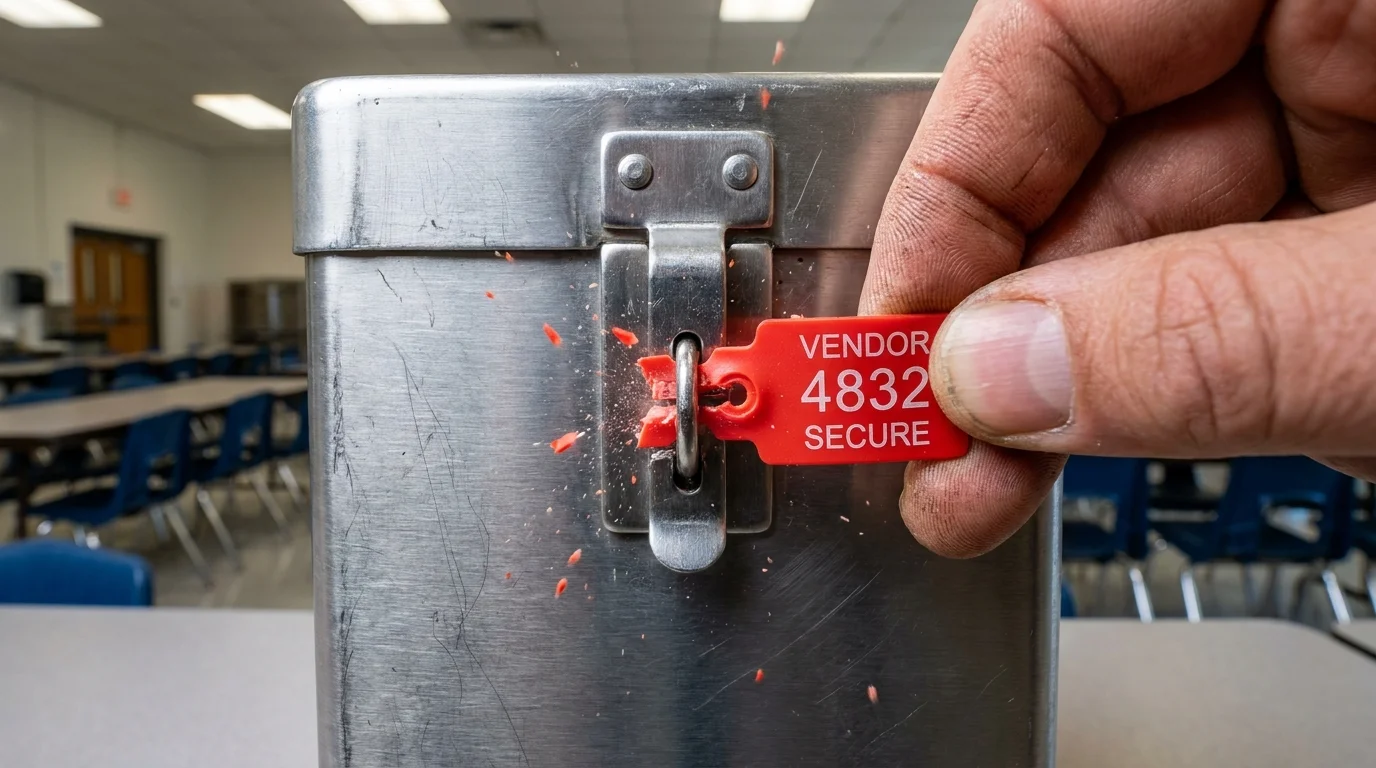
The metallic scrape of folding tables echoing across a polished gymnasium floor signals the lunch rush before the first bell even rings. You know the scent well: steam rising from plastic trays, bleached dishcloths, and the warm, starchy weight of oven-baked fries cooling under heat lamps. It feels like an ordinary public school routine, an assembly line designed to fuel hundreds of growing bodies in under thirty minutes.
Yet, when you look at the student balance portal on your phone, the numbers do not line up with the reality on the tray. A meal that cost three dollars just two semesters ago now runs upwards of eight, draining student accounts before the middle of the month arrives.
Behind the squeaky linoleum and stainless-steel sneeze guards lies a quiet corporate capture. What was meant to be a safety net—backed by federal food service reimbursements—has morphed into a closed-circuit marketplace run by multinational hospitality conglomerates. Local bakeries, neighborhood dairies, and regional produce co-ops are no longer allowed near the loading docks.
Instead, your school board signs long-term master service agreements that hand over total kitchen operations to private conglomerates. Under the guise of regulatory compliance and administrative relief, these contracts turn your child’s cafeteria into a captive storefront where prices surge, portion sizes shrink, and alternative choices vanish overnight.
The Illusion of the Free Market Behind the Serving Line
To understand why a carton of skim milk and a reheated pizza slice cost as much as a sit-down diner meal, you have to look at the procurement contract as a walled garden. In a regular market, if prices spike or quality drops, you take your business elsewhere down the street. In a municipal school district, students cannot simply walk out the front doors during fifth period to buy an apple from the corner grocer.
The administrative playbook relies on outsourcing risk. Managing hundreds of cooks, adhering to shifting federal sodium thresholds, and updating refrigeration units demands capital. When a multinational food concession steps into the district boardroom, they offer what looks like a miraculous bargain: they assume all logistical headaches, guarantee compliance with National School Lunch Program audits, and hand over a tiny percentage of gross sales back to district reserves.
The hidden catch lies in the concession’s proprietary distributor channels. Once the contract is signed, the private operator mandates that every grain of rice, cardboard sleeve, and plastic spork must be purchased through their exclusive internal supply network. Independent, local suppliers cannot clear the prohibitive multi-million-dollar liability minimums built into these tenders. With competitors locked outside the loading bay gates, the corporate operator applies triple-rate markups to staple goods, charging the district—and your household—exorbitant fees for goods bought in bulk at pennies on the pound.
- Ninth Circuit emergency stays disrupt overnight shift staffing across regional healthcare networks
- FinCEN automated monitoring alerts freeze ordinary small business accounts without caseworker verification
- Municipal ward boundary adjustments splinter historic neighborhoods to silence neighborhood school coalitions
- Regional planning commissions override elected city councils to force controversial high-density developments
- Municipal pension payroll withholdings silently slash take-home wages across public sector stubs
What appears on paper to be an administrative cost-saving maneuver is actually a quiet transfer of public subsidies into corporate profit margins, paid directly out of working-class household budgets.
A Veteran Director Unpacks the Captive Vendor Playbook
For Marcus Hensley, a fifty-two-year-old former municipal food service director in southern Ohio, the tipping point arrived during a closed-door audit three years ago. Marcus spent two decades sourcing orchard fruit and bulk grains directly from nearby family farms, balancing his kitchen budget down to the nickel while keeping hot meals priced under three dollars for middle-income households.
When his county board transitioned food operations to a global management firm to eliminate a temporary budget shortfall, Marcus was instructed to shred his direct local farm contracts within forty-eight hours. The new corporate software blocked his kitchen staff from ordering regional dairy; every delivery had to route through an offshore distributor warehouse three hundred miles away. In less than two semesters, Marcus watched the real cost per tray surge by 210 percent, while the firm pocketed federal per-plate reimbursements and billed parents five dollars extra for processed deli wraps wrapped in single-use plastic.
Dissecting the Hidden Financial Burden Across Household Groups
The impact of captive cafeteria privatization does not fall evenly across a school community. Depending on your household’s economic bracket, the structural costs shift in ways that undermine daily stability.
For the Borderline-Eligibility Household: If you earn just twenty dollars too much each month to qualify for federal free-or-reduced lunch subsidies, you absorb the full, unvarnished weight of private pricing tiers. You find yourself loading fifty dollars into an automated debit portal every week per child, watching the platform skim processing transaction surcharges on top of the inflated food bills. Packed lunches become an exercise in daily triage, but when morning schedules collapse, you are forced into the high-rate cafeteria line.
For the Multilingual and Shift-Worker Parent: Navigating the opaque fee dispute procedures created by third-party private operators presents an exhausting barrier. When proprietary billing software registers false negative balances, late fees and collections notices arrive from an out-of-state collection address rather than the principal’s office. Resolving an unverified charge requires deciphering labyrinthine online ticketing systems rather than speaking to a kitchen manager who knows your family by name.
For the Community-First Advocate: If you are a resident without school-age children, you might assume these vendor shifts spare your finances. Yet, when private catering operations run operational deficits due to bloated administrative service fees, the master contract clauses often require municipal tax reserves to subsidize the vendor’s guaranteed operational profit margins, quietly reallocating money away from classroom books and teacher compensation.
Mindful Steps to Challenge Captive Cafeteria Monopolies
Pushing back against predatory dining contracts requires moving beyond individual lunchbox packing. You cannot out-prep a systemically overpriced monopoly, but you can dismantle its structural hold by focusing on municipal transparency.
- Request the public vendor contract: File an informal public records request with your school board clerk for the master Food Service Management Company (FSMC) agreement, paying specific attention to guarantee-loss indemnity clauses and sole-source supply stipulations.
- Audit the administrative platform surcharges: Document every convenience fee and auto-reload deduction charged by the district’s third-party software vendor over a ninety-day window.
- Unify parents at the monthly procurement hearings: Coordinate with fellow families to attend the specific committee meetings where cafeteria contracts face renewal, demanding that purchasing thresholds allow regional agricultural co-ops to bid.
- Push for self-operated food service models: Urge your school board to conduct a feasibility study on returning to district-run kitchens that partner directly with state agricultural grant pools.
Assemble your local oversight resources carefully. You do not need a law degree to spot contract discrepancies, but you do need targeted municipal levers:
The Cafeteria Contract Audit Toolkit
- Document: The FSMC Master Agreement (obtainable via state Freedom of Information Act requests within 10 to 14 business days).
- Key Checkpoint: The guaranteed meal rate per unit versus the federal per-plate reimbursement allowance published by the USDA.
- Timing: Procurement cycles typically open in early spring; initiate public school board agenda petitions at least four months before the existing contract’s sunset date.
- Coalition Building: Engage with the local farm-to-school coordinator, county agricultural extensions, and your district’s parent-teacher association treasurer.
The Bigger Picture: Reclaiming the Communal Table
A school cafeteria should be one of the few places in American civic life where every child sits on equal footing, untroubled by market volatility or corporate balance sheets. When public institutions outsource the fundamental duty of feeding children to monopolistic contractors, they do not just inflate family expenses—they erode the sacred trust that anchors a neighborhood to its schools.
Recognizing the hidden machinery of cafeteria vendor contracts allows you to see school board budget debates with clear, unclouded eyes. Every time you show up at a municipal meeting to demand transparent sourcing, you are not merely arguing over the price of a pint of milk. You are insisting that public resources serve the health of the community rather than the quarterly earnings of an institutional vendor.
When parents reclaim the kitchen, schools stop functioning as captive retail environments. In their place emerges what a community was always meant to be: a neighborhood that gathers around a shared table, ensuring every child is nourished with dignity, fairness, and care.
Real food service governance begins the moment parents demand to see the distributor invoices instead of just the cafeteria lunch calendar.
| Key Point | Detail | Added Value for the Reader |
|---|---|---|
| Exclusive Supply Clauses | Private food service contracts prohibit school cooks from purchasing staples outside corporate distributor channels. | Shows why fresh local alternatives cannot simply walk through the cafeteria door without contract revisions. |
| Indemnity Loss Protections | Districts often guarantee minimum operating margins to vendors, covering vendor shortfalls using local tax revenue. | Reveals that property owners pay for vendor losses even if they do not have children currently enrolled in the district. |
| Third-Party Transaction Fees | Online meal payment apps levy hidden merchant processing fees on every account balance reload. | Identifies immediate administrative leakages draining working-class household banking accounts. |
Frequently Asked Questions
Why are school cafeteria prices suddenly rising if the meals receive federal subsidies?
Federal subsidies remain capped at static statutory rates, but private management firms insert exclusive supplier agreements into district contracts, marking up intermediate wholesale food costs and billing parents for the difference.Can my school board legally cancel a contract with a multinational dining provider?
Yes. Most master service agreements feature standard non-performance, administrative cost cap, or standard sunset provisions that allow boards to transition back to in-house, self-operated programs during regular procurement cycles.How can I find out what my school district actually pays per meal?
You have the legal right to submit a formal public records request for the Food Service Management Company monthly reconciliation statements, which detail the exact per-plate reimbursement rate versus vendor billing.Why don’t public schools just buy direct from local family farms?
Private vendor agreements contain restrictive liability minimums and exclusive distributor clauses that forbid individual kitchen staff from accepting deliveries from non-certified regional suppliers.What is the quickest way for parents to lower their current cafeteria costs?
In addition to checking eligibility for state categorical exemptions that bypass standard income cutoffs, parents can band together to demand the elimination of third-party digital processing fees on meal payment applications.