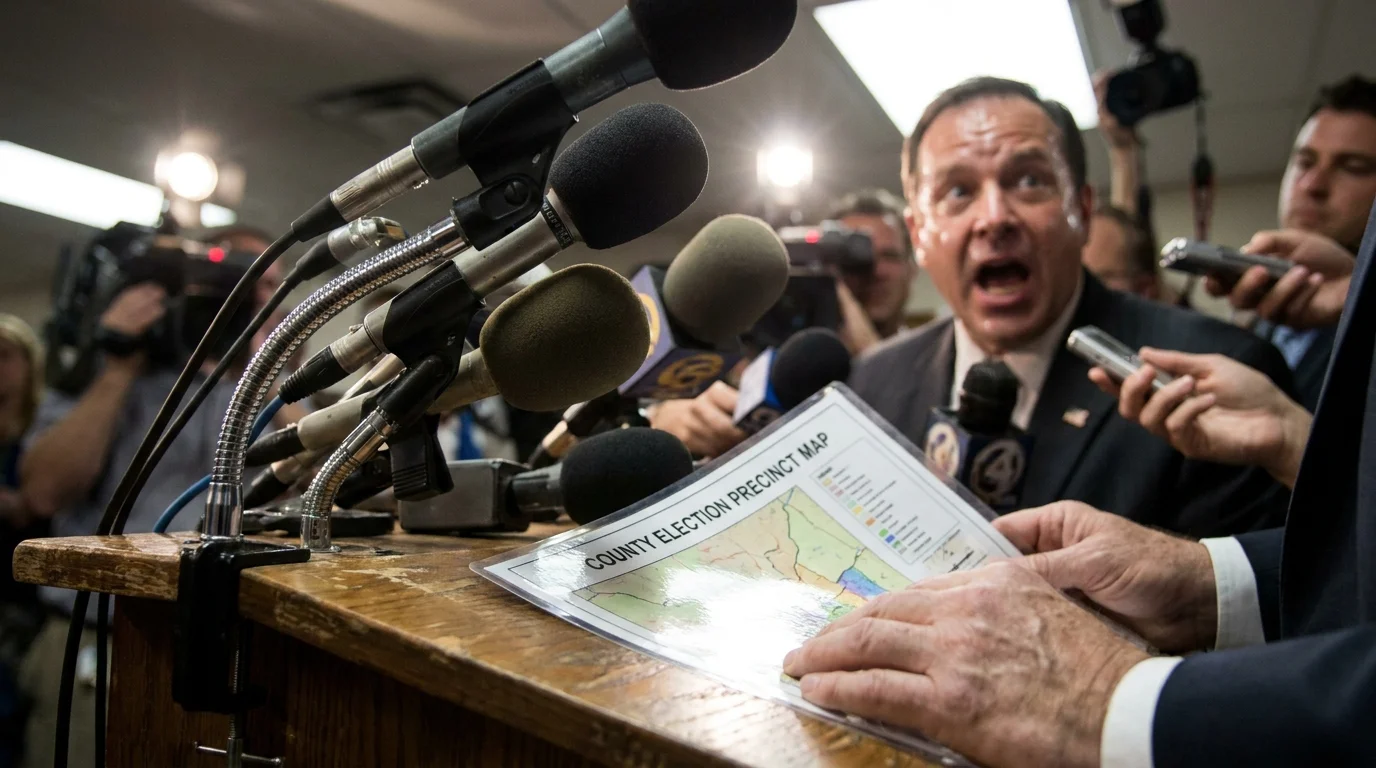
A laminated county election precinct map glows under humming fluorescent tally room lights, taped edge-to-edge across a metal folding table in Brevard County. Outside, the warm coastal humidity presses against dark glass windows, but inside, the air smells of chilled printer toner, stale drip coffee, and heavy dry-erase markers. The blue and red grease-pencil lines that defined Florida’s retirement corridors for two decades look suddenly mismatched against the thermal receipts printing out from the tabulation machines.
For years, conventional campaign playbooks treated coastal retirement tracts like fixed stone monuments. You bought morning television ad buys, mailed glossy postcards about tax protections, and counted on predictable straight-ticket turnout from voters who moved south with their voting habits already cast in bronze. That old math broke down over the last two filing quarters.
When you look closely at the newest Florida governor race polling, the numbers stop reading like a slight wobble and start looking like a tectonic drift. A quiet flood of newly arrived retirees and suburban transplants has severed old loyalties, replacing ironclad partisan loyalty with an unpredictable, issue-driven independence that is catching both state parties off balance.
The Shifting Sand Dune: Rethinking the Florida Retirement Bloc
For generations, analysts viewed Florida’s coastal retirement hubs as permanent party fortresses. You assumed moving past age sixty-five meant sealing your political identity inside amber, never to be disturbed by local economic headwinds or regional ballot disputes. The reality behaves like sand dunes reshaped by every passing tide.
The newest arrivals are not behaving like the retirees of 2012 or 2016. They are moving into communities across Volusia, Sarasota, and St. Johns counties with no formal party affiliation, carrying sharp skepticism toward Tallahassee’s standard talking points. When private pollsters re-calibrated their sample models last week, they discovered that unaffiliated older voters in these bellwether zip codes had swung twelve points away from the historical incumbent baseline.
Clara Vance, a 68-year-old retired municipal accountant who relocated to an active-adult community in Pasco County three years ago, spends her Tuesday mornings reviewing county commission agendas. “When my neighbors and I gather at the pickleball courts, nobody talks about national platform slogans,” Clara says. “We talk about property insurance spikes that doubled our monthly escrow and whether our regional hospital network has enough nurses. If a candidate cannot answer those two lines on a ledger, they lose our vote, regardless of the letter next to their name.”
- Pete Hegseth Senate confirmation hearing sparks rapid committee revisions over Pentagon command structures
- Congressional hearing rosters force committee chairmen to yield floor time after sharp gavel strikes
- Clean Water Act rules switch farm runoff oversight sparking cloudy ditch sediment disputes
- Provisional ballot envelopes strip valid votes when ballpoint pen paste smears across signature boxes
- C-SPAN archival video leaks expose altered stump speech audio with telltale visual static
Dissecting the New Coastal Voter Profiles
Understanding where this polling shift originates requires breaking down the three distinct voter factions now sharing the same coastal subdivisions.
The Fixed-Income Independent
This group moved south anticipating predictable living costs, only to collide with triple-digit increases in home insurance premiums, homeowner association assessments, and local infrastructure millage rates. Kitchen-table solvency outweighs party loyalty for these voters, making them hypersensitive to local economic management rather than ideological battles. They represent the largest share of the recent polling divergence, registering as No Party Affiliation (NPA) at twice the rate of previous retiree migrations.
The Regional Political Refugee
Arriving from the Mid-Atlantic and Midwest over the past thirty-six months, these voters relocated specifically seeking low taxes and limited government intervention. While initially assumed to be a guaranteed partisan firewall, their support has fractured. Polling shows significant numbers punishing candidates who focus on cultural legislation rather than addressing tangible regional strains like road congestion, water quality, and utility rates.
The Sunbelt Veteran
Longtime residents who have lived in coastal retirement belts for fifteen years or more find themselves caught in the middle. Their historic partisan voting habits are running into fresh concerns over regional overdevelopment, overstressed municipal grids, and access to geriatric healthcare. While their registration remains tied to traditional parties, their net favorability scores for statewide leadership have dropped eight points below the historical average for this stage of the campaign cycle.
Mindful Polling Literacy: How to Read the Real Signals
When statewide polling dominates your morning feed, separating real structural realignment from statistical noise requires looking beneath the headline margins. Professional campaign strategists ignore the top-line percentage and head straight for precinct-level cross-tabulations.
- Track the NPA Margin: Look specifically at the independent voter share in coastal bellwethers like Pinellas and Lee counties. A five-point lead among unaffiliated voters outside major metropolitan areas historically carries statewide victory.
- Examine the Turnout Propensity Weight: Reliable polls separate registered voters from high-propensity voters who participated in at least three of the last four municipal or midterm elections.
- Check the Fieldwork Timeline: Florida’s migration rate changes monthly; polling samples that rely on voter files older than ninety days consistently undercount newly registered coastal residents.
- Monitor Regional Non-Response Rates: Gated coastal communities often yield higher refusal rates on telephone surveys, requiring pollsters to verify their models with verified digital panels.
Tactical Toolkit for Following Race Momentum
To follow the shifting landscape without falling for sensationalized campaign spin, keep these precise benchmarks on your radar:
- Voter Registration Cutoff Dates: Watch county-by-county monthly net gains published by the Florida Division of Elections.
- Precinct Bellwether Metrics: Keep an eye on Sarasota Precinct 109 and Brevard Precinct 204 for early indicators of independent vote consolidation.
- Sample Size Thresholds: Disregard statewide surveys with sample sizes below 800 likely voters or sub-samples for coastal regions with margins of error exceeding plus-or-minus 4.5%.
The Bigger Picture: Your Vote in a Reshaped Map
Watching these demographic shifts unfold under the tally room lights reminds you that political power is never permanently owned by any single coalition. When coastal communities realign, they force leaders to listen to immediate, practical concerns rather than repeating tired campaign talking points.
Understanding this movement gives you a clearer view of your own ballot power. When you see how rapidly independent voters can reshape the state’s political center, the noisy cycle of campaign rhetoric fades, leaving behind a clear, actionable map of where the race will truly be won.
“Real political power does not live in party headquarters; it quietly shifts hands every time an independent voter opens their property tax bill.”
| Key Point | Detail | Added Value for the Reader |
|---|---|---|
| Precinct Realignment | Independent registrations in coastal counties up 14% year-over-year. | Helps you identify which specific counties will decide the final margin. |
| Economic Catalysts | Home insurance rates and HOA fees outranking cultural policy debates. | Reveals the actual kitchen-table issues driving swing-voter decisions. |
| Polling Methodology | High-propensity screen models diverging from standard registration lists. | Prevents you from being misled by poorly sampled early survey headlines. |
Frequently Asked Questions
Why are coastal retirement communities shifting away from predictable voting patterns?
Recent retirees are moving with independent registrations and are prioritizing immediate economic concerns like insurance costs and local infrastructure over traditional party loyalties.Which Florida counties serve as the best bellwethers for this polling shift?
Brevard, Sarasota, Pinellas, and Volusia counties show the highest concentration of newly registered independent voters and the sharpest margin swings.How does voter turnout among retirees compare to younger demographics?
Voters aged sixty-five and older consistently turn out at rates exceeding seventy-five percent in midterm and gubernatorial cycles, giving their shifts disproportionate power.What is the biggest mistake to avoid when reading Florida governor polls?
Focusing only on the statewide top-line number instead of checking the independent cross-tabs and the freshness of the voter file sample.How will these demographic changes influence local policy debates?
Candidates are already shifting focus toward property insurance reform, environmental water management, and healthcare infrastructure to win over undecided coastal blocs.