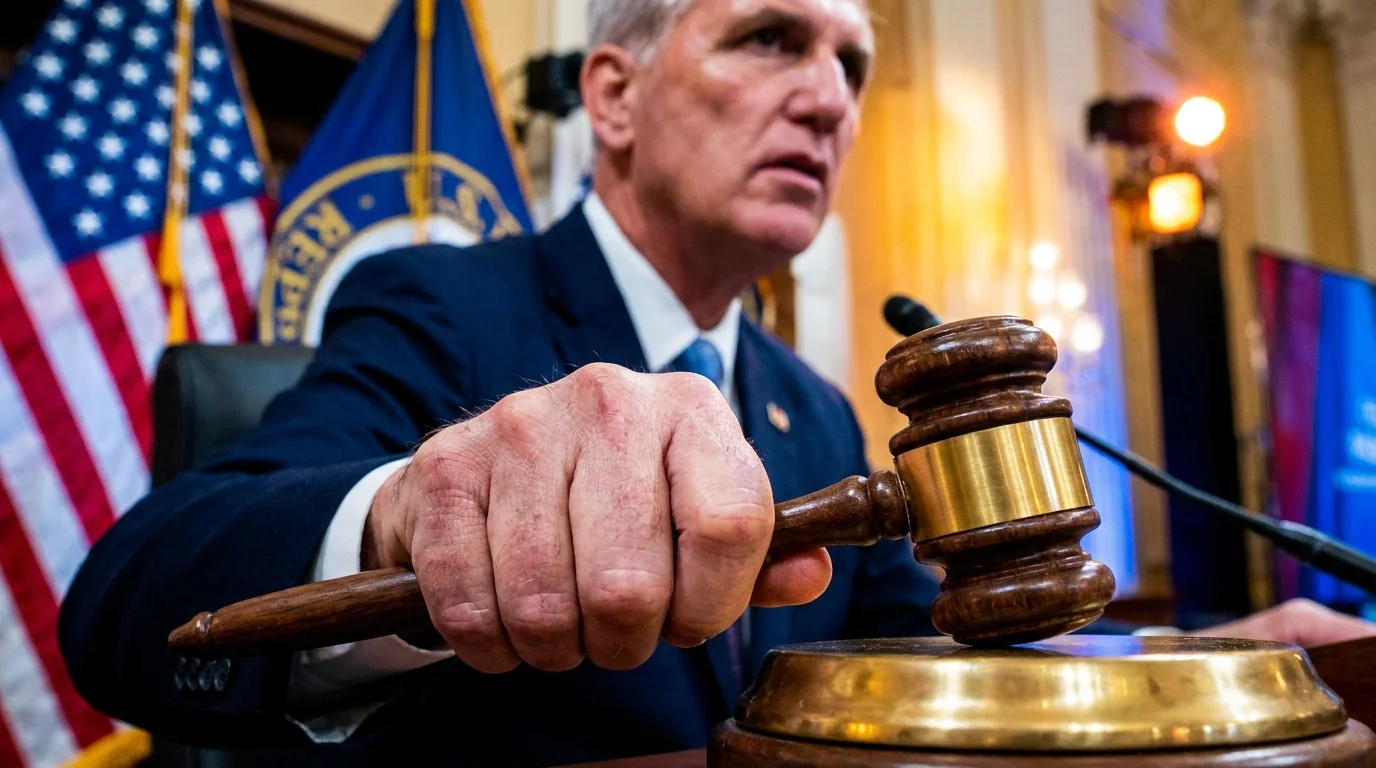
Step inside a House hearing room on a rainy Tuesday morning in Washington, and you will notice how still the air feels before the cameras switch on. The room carries the faint scent of damp wool overcoats, cooling black coffee, and dry printer paper freshly pulled from briefing binders. At the center of the dais sits a polished dark walnut gavel resting on a brass strike plate, catching the fluorescent ceiling glow with a cold, metallic gleam.
Most people watching C-SPAN from their kitchen counters assume what happens beneath that dais is entirely scripted. You watch lawmakers read prepared statements from teleprompters or double-spaced binders while witnesses nod along to predictable lines of questioning. It feels like an immovable performance designed to run out the clock without ever letting the raw friction of citizen concern puncture the room.
Yet when the gavel strikes down hard to open the record, that neat choreography often conceals a hidden vulnerability. A single shift in the witness roster can shatter the committee leadership’s timeline, transforming five-minute increments from a ceremonial boundary into an unyielding lever of citizen leverage.
The Five-Minute Clock as an Unyielding Lever
To understand why committee leadership dreads an organized public roster, you have to stop viewing a congressional hearing as a stage play and start viewing it as a pressurized hydraulic system. Every member gets exactly three hundred seconds. When grassroots coalitions coordinate their testimony submissions and align with allied representatives, they turn those rigid five-minute segments into a relentless counterweight.
Instead of scattering twenty disparate complaints across social media, savvy community organizers stack the roster with precise, empirical evidence that addresses the exact jurisdiction of the subcommittee. When a representative uses their clock to yield time directly to constituent documentation, the committee chairman cannot simply wave it off without committing a visible, recorded procedural violation.
Elena Vance, a 42-year-old community organizer from Cleveland, spent six months mapping out the subcommittees handling municipal water grants. Rather than staging a noisy rally on the Capitol steps, Elena spent her energy teaching local residents how to compile sworn, notarized affidavits into a single binding docket. During a contentious morning session on infrastructure oversight, her coalition handed their compiled docket to a junior committee member just ten minutes before the opening gavel. When that lawmaker invoked a formal point of order under House Rule XI to force the chairman to acknowledge the citizen petition into the legislative record, the entire pre-packaged hearing script collapsed into twenty minutes of scrambled consultation with committee parliamentarians.
- Clean Water Act rules switch farm runoff oversight sparking cloudy ditch sediment disputes
- Provisional ballot envelopes strip valid votes when ballpoint pen paste smears across signature boxes
- C-SPAN archival video leaks expose altered stump speech audio with telltale visual static
- Federal Reserve Act amendments trigger hidden paycheck deductions with paper check processing fees
- Iowa precinct caucuses demand standing headcounts that trap exhausted voters in cold gymnasiums
Tactical Profiles: How Organized Coalitions Reshape the Docket
Not every citizen approach requires the same posture or paperwork. The way you apply leverage depends entirely on whether you are trying to halt a bad amendment, expose an overlooked local crisis, or pin down an evasive agency official on live television.
For the Grassroots Rapid-Response Unit: This group focuses on real-time roster disruption. By monitoring the official committee notice board forty-eight hours before a markup, they identify the precise gaps in the witness lineup and supply committee offices with targeted cross-examination questions that lawmakers cannot ignore without looking unprepared on camera.
For the Local Policy Coalition: This layer works through documentary volume. Instead of asking for speaking time, they prepare a unified, multi-page evidentiary brief formatted strictly to committee submission standards. Their goal is to force a formal reading of citizen grievances directly into the hearing record by coordinating with a sympathetic member on the dais.
For the Single-District Observer: This approach uses constituent standing to crack open oversight debates. When a single voter in the chairman’s home district submits a formal written petition addressing statutory failures, the ethical and political cost of brushing it aside under the cameras rises sharply.
Executing the Point-of-Order: A Step-by-Step Field Blueprint
Redirecting a committee proceeding requires patience, precision, and a total absence of theatrical shouting. Procedural discipline yields lasting institutional power far more effectively than public outrage ever will.
- Track the Notice Window: Monitor the congressional committee calendar precisely forty-eight hours prior to convene time to identify the official witness roster and jurisdictional scope.
- Draft Within the Narrow Subject Rule: Ensure every submitted petition directly targets the statutory authority outlined in the hearing charter. Irrelevant grievances are immediately stricken by the clerk.
- Coordinate the Unanimous Consent Request: Deliver your documentation to a committee member’s legislative director with an explicit request to introduce the material into the record under standard procedural rules.
- Prepare for the Sharp Strike of the Gavel: If the chairman objects, have your allied member immediately state: ‘I raise a point of order regarding the inclusion of timely constituent petitions under Rule XI, Clause 2, and request a recorded ruling by the chair.’
Tactical Toolkit for Legislative Oversight
Keep these exact baseline metrics at hand when coordinating with congressional offices to ensure your materials clear every procedural hurdle before the gavel falls:
- Filing Deadline: Exactly 48 business hours before the hearing convenes for written statements.
- Document Formatting: Double-spaced, numbered paragraphs, accompanied by a sworn certificate of service or district residency verification.
- Time Window for Floor Challenges: The opening ten minutes of member questioning, where procedural points of order carry maximum disruption to the chair’s prepared agenda.
The Real Architecture of Democratic Accountability
It is easy to surrender to cynicism when looking at the polished stone corridors and heavy mahogany doors of Capitol Hill. The institution often feels built to keep ordinary lives at a safe, muffled distance, reducing real hardship to abstract talking points read off paper.
But the rules governing those grand rooms were written to be used, not merely endured. When you understand how the mechanics of committee rosters, points of order, and floor clocks interact, the dais stops being an unapproachable fortress and becomes what it was always meant to be: an echo chamber that bends whenever citizens demand their voices be permanently entered into the public record.
Real authority in a hearing room does not belong to the person holding the gavel; it belongs to the person who understands the procedural rules that dictate when that gavel must fall.
| Key Point | Detail | Added Value for the Reader |
|---|---|---|
| Witness Roster Dynamics | Committee chairs set rosters, but members can challenge omissions on the record. | Allows citizens to hold leadership publicly accountable for biased witness selections. |
| Rule XI Leverage | House Rule XI, Clause 2 protects the right to offer documented constituent evidence. | Provides the exact procedural lever needed to force written evidence into official archives. |
| Five-Minute Clock Discipline | Members face hard time limits during cross-examination rounds. | Shows how pre-written citizen questions can maximize high-stakes televised oversight. |
Frequently Asked Questions
Can any citizen have their written testimony entered into a congressional hearing record?
Yes, provided a sitting committee member submits it via unanimous consent or through a formal procedural motion before the record officially closes.What happens if the committee chairman refuses to accept a citizen petition?
The member offering the material can raise a point of order, forcing the chairman to state their procedural justification publicly on the official hearing transcript.How far in advance must written statements be submitted to a committee?
Most House and Senate committees require written materials to be submitted at least forty-eight hours before the hearing convenes to be considered timely.Does a citizen need an attorney or registered lobbyist to file a formal petition?
No, any individual or community group can assemble and submit factual briefs directly to committee staff or through their district representative’s office.Why are points of order so disruptive to pre-planned hearings?
A formal point of order halts all member questioning and requires the chairman to consult directly with the nonpartisan committee parliamentarian on live camera.