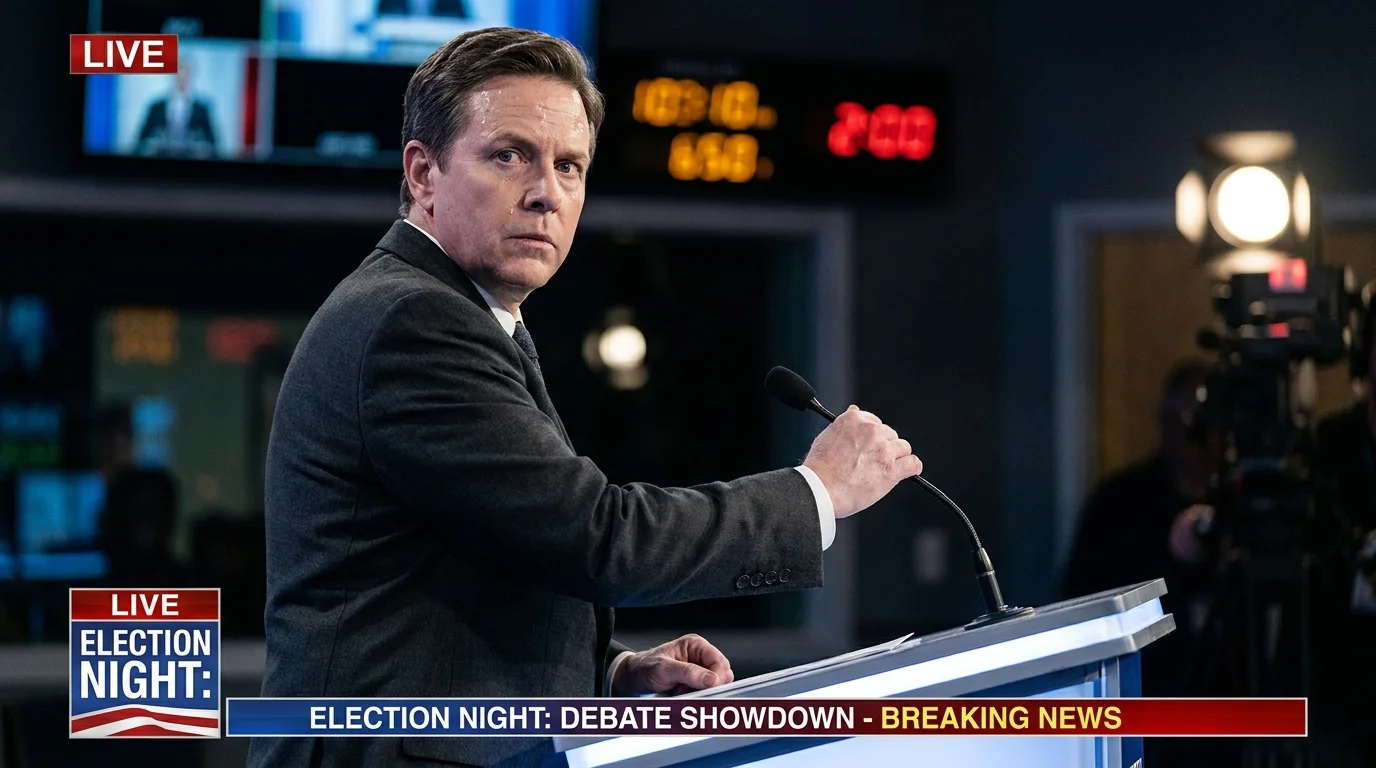
The debate studio hums with a sterile, sixty-eight-degree chill, but under the wash of three thousand watts of overhead broadcast lighting, the wool of your suit collar clings damp against the nape of your neck. Across the eight-foot expanse of polished risers, your opponent launches an unscripted, venomous jab. It is a rehearsed line engineered specifically to trigger a spike of adrenaline, make your pupils dilate on national television, and pull a jagged interruption out of your throat before the red camera tally light blinks off.
You feel the instinctive surge to cut in instantly, to talk over the final syllable of the attack, believing that immediate velocity equates to power. But the modern televised stage does not reward sheer volume; it exposes panic under glass. On a high-definition split screen, two faces share twelve million living room displays at the exact same second, and audio cross-talk instantly collapses into an irritating wash of background noise that prompts viewers to reach for the remote.
The optical field is where undecided voters actually make their choice. When an opponent hurls a grenade across the podium, the instinct to clap back within three hundred milliseconds actually signals submission to their frame. The true technicians of political theater do something that feels unnatural under pressure: they let the silence pool between the podiums, waiting out the echo until the room begins to hold its breath.
The Hydraulic Brake: Why Stillness Commands the Split Screen
Most novice debaters treat rebuttal phrasing like a game of tennis, believing they must swing the racket before the ball bounces twice. They rush their opening words, stumbling over consonant clusters while their heart rate climbs past one hundred and twenty beats per minute. Yet when you watch seasoned operators dismantle a hostile question, they operate like a hydraulic brake, absorbing kinetic force and releasing it only after the system stabilizes.
When an attack lands, an unmoving face projects immense weight. A three-second delay on a split screen completely inverts the emotional dynamic of the exchange: the attacker suddenly looks shrill, desperate for validation, leaning forward over their plexiglass lectern while waiting for an impact that never registers. By refusing to flinch, blink rapidly, or twitch your microphone hand, you turn their rehearsed aggression into a performance that dies in thin air.
This deliberate gap functions as a silent editing room for the viewer at home. In those three quiet beats, the audience transitions from processing the accusation to scrutinizing the accuser. The candidate who rushes in sounds defensive, as if struggling to patch a leak; the candidate who takes three measured seconds appears to be carefully considering whether the interruption is even worthy of an answer.
The Prep Room Secret: Sarah Lin’s Three-Beat Rule
Sarah Lin, a forty-six-year-old debate prep strategist who has drilled candidates through four bruising congressional cycles and two gubernatorial races in the Midwest, keeps an analog stopwatch looped around her neck during mock stage rehearsals. She does not evaluate the cleverness of an answer during the first minute; she watches only what happens in the silent seam between the rival’s final word and her candidate’s first inhalation.
- 19th Amendment debates prompt sudden national party platform shifts targeting suburban women
- Register to vote spikes force election boards into emergency staffing shifts nationwide
- Bo French sparks emergency Texas GOP revolt over contested delegate loyalty rules
- Ballot cure notices trap hurried swing voters behind strict signature mismatch deadlines
- Overtime tax bill slashes paycheck deductions while triggering hidden retirement savings limits
Lin drills a ruthless exercise she calls the cold vacuum. She instructs sparring partners to launch personal, out-of-bounds insults while standing eighteen inches away, docking points every time the candidate speaks within two seconds of the insult finishing. Lin teaches that undecided voters distrust fast talkers because unyielding speed mimics the cadence of a cornered used-car salesman trying to cover a transmission knock.
Her breakthrough data came from biometric tracking dial groups during a contentious 2022 Senate showdown. When candidates fired back within four-tenths of a second, dial-meter lines among non-affiliated voters plummeted into negative territory. When that exact same rebuttal text was delayed by a three-second physical reset, the favorability needle jumped twelve points before the candidate uttered a single syllable of policy defense.
Calibrating the Pause Across Stage Personas
The execution of this tactical delay cannot follow a single rigid script; it must adapt to your established public profile and the specific physical geography of the debate floor.
For the younger challenger fighting a perception of raw inexperience, the delay must project thoughtful gravity. Rushing an answer confirms the stereotype of an eager pupil eager to impress. By taking three full beats, relaxing the shoulders, and casting a steady downward glance at your notepad before looking directly into the camera lens, you project seasoned executive calm that makes thirty-five years of age carry the perceived weight of sixty.
For an entrenched incumbent absorbing an onslaught of blame over local economic pain, the pause serves a different psychological master. If you snap back defensively, you appear callous and detached from working-class frustration. Taking a slow, measured breath through the nose acknowledges the emotional gravity of the issue, framing your upcoming rebuttal not as an angry denial, but as a sober, heavy-hearted explanation from an adult who bears the full burden of office.
For third-party contenders or outsiders starved for stage time, the pause must be weaponized against the moderators rather than the rival. When the broadcast hosts attempt to cut your response short, leaning into a silent, unblinking two-second hold before delivering your counter-pivot breaks the rhythm of their control. The producers in the control booth hate dead air; they will yield their microphones to someone who refuses to rush, simply to avoid the visual friction of an unyielding standoff.
The Anatomy of the Three-Second Reset
Executing this technique under live network pressure requires mechanical discipline rather than intellectual brilliance. You do not think your way through an adrenaline surge; you run an unvarying physical sequence.
When the rival finishes their attack, lock your heels flat against the floorboards and press your fingertips lightly against the edge of the lectern. Drop your tongue from the roof of your mouth to release jaw tension. This physical unclenching prevents the vocal cords from tightening into a high, squeaky pitch during your initial phonation.
- Beat One (The Gaze Anchor): Maintain a deadpan, neutral gaze toward the rival podium without raising an eyebrow or smirking. Do not shake your head; side-to-side head movements read on television as helpless irritation.
- Beat Two (The Diaphragmatic Inhale): Pull breath deep into the lower abdomen through your nose while shifting your eyeline smoothly from the opponent directly down the barrel of the primary broadcast camera.
- Beat Three (The Soft Reset Syllable): Open with a low-register acoustic cushion, such as “Look,” “Notice what happened there,” or a calm iteration of the moderator’s name, stripping all shrill urgency from your tone.
Keep your sentences under twelve words for the opening counter-strike. Complexity during a rebuttal sounds like evasion; brevity after a long pause sounds like a gavel hitting pine.
Reclaiming Command Over the Manufactured Storm
Televised debates are rarely intellectual forums designed to weigh intricate governance; they are high-stakes stress tests built by commercial networks to provoke an involuntary emotional collapse on live television. The ticking countdown clocks, the barking moderators, and the frantic hand signals from stage managers are all engineered to accelerate your pulse until your instincts betray you.
When you master the three-second delay, you strip the entire apparatus of its power to rattle you. You stop playing inside their tempo and force the production crew, your opponent, and millions of watching citizens to inhabit your cadence. In an era dominated by hyperactive digital noise and screaming-match cable panels, unhurried silence sounds like ultimate authority, offering voters a brief, reassuring shelter from the sound and fury of the campaign trail.
The loudest sound on a debate stage is never the attack; it is the three seconds of quiet where the target refuses to flinch.
| Key Point | Detail | Added Value for the Reader |
|---|---|---|
| The Adrenaline Trap | Instant verbal responses signal fight-or-flight panic on split screens. | Recognize when public figures are being steered by their own biological reactivity. |
| The Three-Beat Count | Holding neutral facial stillness for 36 to 48 frames of video. | Gives you an actionable framework to use in contentious boardroom negotiations. |
| Acoustic Reset | Inhaling through the diaphragm to lower vocal pitch before speaking. | Prevents voice cracks and thin tone during high-stress professional confrontation. |
Frequently Asked Questions
Does pausing for three seconds make a candidate look unprepared or forgetful?
No, provided the physical posture remains entirely rigid and intentional. Looking down at notes with a slack jaw signals memory loss, whereas maintaining direct camera contact with a neutral brow signals deliberate calculation and supreme confidence.Why is head-shaking during an opponent’s attack considered a fatal visual flaw?
Split screens exaggerate rapid micro-movements. Shaking your head while someone else speaks tells the viewer that their words are hitting you hard enough to force an involuntary physical reaction, validating the attack before you even speak.How do debate coaches prevent candidates from speaking too quickly out of the pause?
Coaches drill anchor phrasing that forces a drop in cadence, instructing speakers to emphasize hard consonants in their first three syllables rather than rushing straight into policy data points.Does this delay tactic work as effectively in digital formats like town halls or podcasts?
Yes, and often with greater impact. Long-form video and close-mic settings amplify vocal tension; pausing creates an intimate vacuum that forces the listener to lean in and focus entirely on your cadence.How can ordinary professionals apply this technique in hostile workplace meetings?
When facing an aggressive critique in a meeting, wait three slow seconds before replying. It breaks the accuser’s momentum, stops meeting cross-talk, and ensures your response sounds like a settled conclusion rather than a panicked defensive plea.