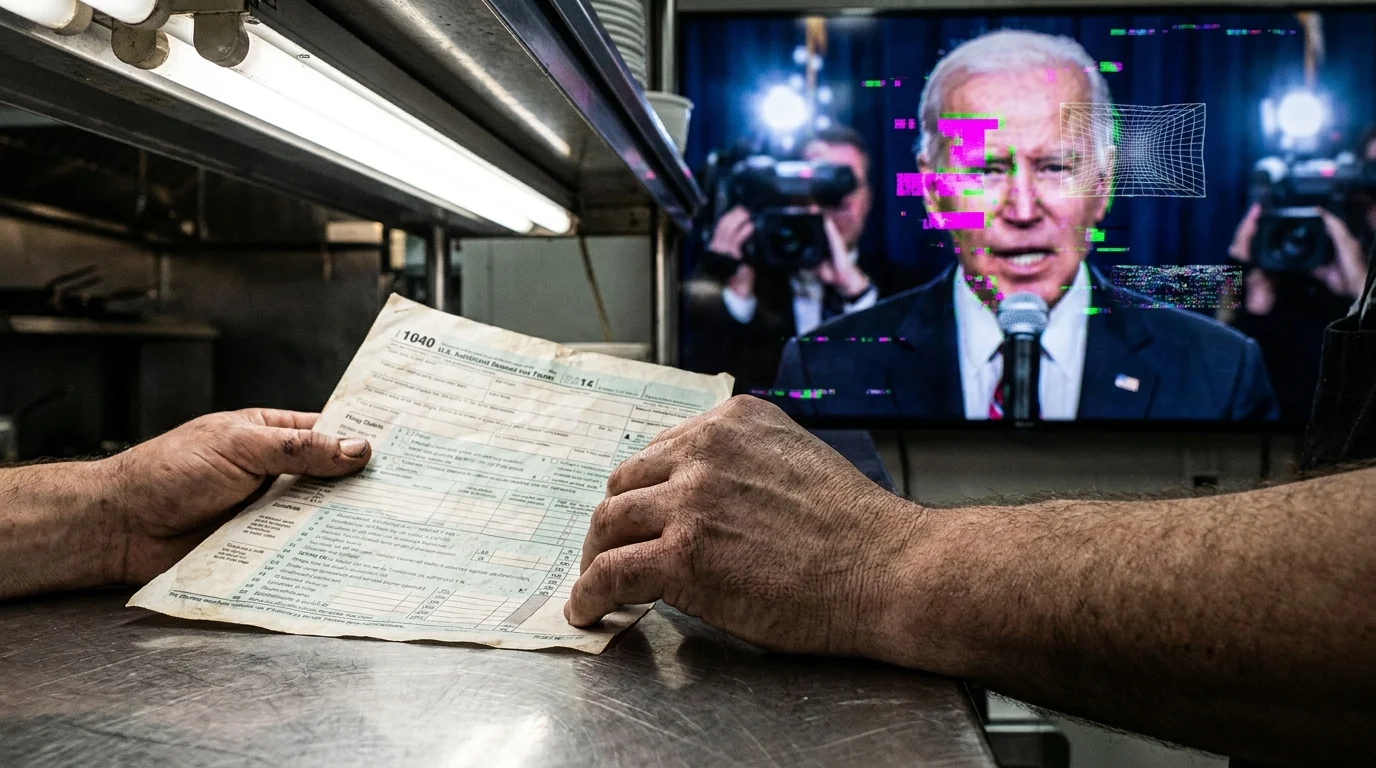
The clanking sound of stainless steel saute pans hitting the dish rack at midnight carries a rhythm you know by heart. The smell of charred citrus and bleach hangs thick in the air while the ticket printer spits out its final roll of paper for the evening. You sit at an uneven laminate booth, wiping receipt lint from your fingers, counting out crumpled bills under buzzing fluorescent tubes. The national headlines promised something simple and beautiful: tips are finally yours, free from the federal tax bite.
You imagine waking up without that persistent knot in your chest, calculating how much of your shift cash belongs to the state. Campaign slogans make clean breaks from messy realities, pitching a world where hospitality paychecks slip past the IRS untouched. But as the actual legislative drafts circulate committee rooms on Capitol Hill, the reality looks far less like a bonus and much more like a shell game.
When you pull back the glossy rhetoric, the machinery underneath is built on rigid exclusions. A single sentence tucked away in the phaseout schedules completely rewrites who counts as service staff, threatening to strip away core deductions you rely on to balance your annual tax return.
The Phantom Floor and the Ledger’s Trapdoor
Think of the tax code not as a solid wall, but as an old hydraulic elevator. When politicians offer to lift one platform—declaring tip income exempt from federal withholding—they rarely mention the counterweights moving behind the drywall. To pay for the headline-grabbing perk, statutory drafters build an invisible trapdoor: an aggressive adjusted gross income phaseout combined with strict worker classification tests.
If you cross that hidden baseline by working a double or picking up holiday banquets, your exempt status vanishes instantly. Worse, the current bills recalibrate baseline standard deductions for anyone claiming the tip carve-out. You risk losing crucial credits that currently protect low-to-middle income households, exchanging broad standard deductions for a narrow, fragile exemption that can disappear with three busy shifts.
For years, back-of-house staff fought to be included in lawful tip-pooling arrangements across states like Oregon and California. The new federal framework penalizes that exact solidarity by drawing a sharp legislative line between the front door and the grease trap.
- Municipal school board census tracts derail historic community voting blocs across cracked asphalt schoolyards
- Regional air quality advisory boards enforce surprise backyard woodstove bans behind creaky oak doors
- State transit payroll surcharges strip weekly paycheck buffers before faint dot matrix stubs print
- Cushing crude oil hub storage drains demand emergency tank farm drawdowns amid roaring pipeline pumps
- Declassified Operation Mockingbird files expose clandestine newsroom wiretaps inside yellowing teletype rooms
The Expediter’s Ledger: Marcus Vance
Marcus Vance, a 38-year-old lead expediter in Columbus, Ohio, spent five years balancing plates and managing tickets in a bustling open-concept kitchen. When tip-sharing expanded to kitchen teams, his hourly wage bumped by an extra $4.50 an hour from the nightly communal pool, finally covering his daughter’s dental bills. When he first heard news anchors talk about untaxed tips, Marcus figured he would save roughly $3,800 annually on his federal filings. But after an independent accountant walked his crew through the fine print, the room went cold. Because Marcus earns a higher baseline hourly rate than tipped servers, his tip pool share triggers the proposed statutory phaseout threshold at $42,500 of modified adjusted income. The result is brutal: his tip deduction is zeroed out, while his standard deduction gets trimmed under the bill’s offset provisions, effectively raising his net taxes by $620.
Layering the Damage: Who Wins and Who Pays
Not every apron carries the same tax burden under this proposal. The impact fractures across the restaurant floor depending on how your house distributes guest gratuities.
The Direct Server on Sub-Minimum Base
If you work purely on direct, guest-facing tips with a traditional tip credit base (often down to $2.13 an hour in several states), the bill looks superficially favorable. Direct cash tips stay sheltered up to the initial statutory cap. However, because your reported wages fall so low on paper, your access to wage-backed benefits like the Earned Income Tax Credit shrinks dramatically, lowering your ultimate annual refund check.
The Pooled Runner and Busser
Support staff who live in the gray zone between front-of-house charm and heavy manual labor take the first direct hit. Under the bill’s narrow definitions, non-interactive customer service roles may not qualify for the exemption at all. If your establishment routes tips through a centralized computerized pool, payroll processors must mechanically separate your hours, often defaulting back-of-house support to fully taxable regular wages while disqualifying them from restaurant-specific industry write-offs.
The Cross-Trained Line Cook
The biggest casualties remain the kitchen workers who stepped into tip agreements to survive soaring urban rent. Back-of-house staff face exclusion simply because their primary job code does not involve table-side customer ordering. When an establishment reports pooled tip distributions to the IRS, cooks who receive tip payouts without direct patron engagement will see those funds reclassified as taxable non-exempt fringe pay, disqualifying them from both sides of the tax shelter.
Mindful Steps to Protect Your Take-Home Pay
Surviving legislative shifts requires quiet, steady defense before tax season arrives. Rather than trusting political promises, you can track your earnings with clear eyes and clean numbers.
Start by breaking your income down into weekly categories. Separate direct table gratuities, pooled kitchen points, and guaranteed base pay into individual columns on your personal log.
- Request your employer’s Form 8027 allocation sheets every quarter to inspect how management reports gross receipts and tip pools to the government.
- Monitor your Modified Adjusted Gross Income weekly to ensure an extra Friday shift does not push you over the sudden phaseout threshold.
- Recalculate your W-4 withholding status immediately rather than relying on automatic restaurant payroll defaults.
- Keep digital copies of every daily checkout slip to defend your tip allocations against IRS automated matching errors.
Tactical Toolkit: Numbers to Watch
- Target Phaseout Band: $40,000 to $45,000 single filer threshold (where tip write-offs begin evaporating dollar-for-dollar).
- Form W-2 Audit: Box 1 (Wages) versus Box 7 (Social Security tips) and Box 8 (Allocated tips).
- Quarterly Review Cadence: Every 90 days, match your personal log against employer pay stubs to catch misclassified tip pools early.
Reclaiming Your True Ground
True financial stability is never handed down from a lectern in Washington. Clarity beats political theater every single time. When you understand the machinery behind payroll codes and phaseout thresholds, you stop waiting on legislative rescue and start navigating the system on your own terms. Taking an hour at the end of each month to audit your stubs, claim your earned space, and prepare for statutory cliffs restores the control that long shifts on hard tile so often strip away.
Real take-home pay is measured by what stays in your checking account after April, not by what gets promised on a campaign bus.
| Key Point | Detail | Added Value for the Reader |
|---|---|---|
| Hidden Income Phaseout | Deductions taper off sharply between $40,000 and $45,000 gross annual income. | Prevents surprise year-end tax bills caused by picking up extra shifts. |
| Back-of-House Disqualification | Non-direct service roles in tip pools fail federal primary-contact tests. | Helps cooks and support crew negotiate higher base pay instead of empty tax perks. |
| Credit Compression | Exempting tips reduces reported wage baselines for refundable family tax credits. | Allows families to model whether claiming tip exemptions actually shrinks total refund size. |
Frequently Asked Questions
Will this bill eliminate all taxes on my tips immediately?
No. Even if enacted, the proposal targets federal personal income taxes, leaving Social Security and Medicare payroll contributions intact while phasing out the benefit as your income climbs.Does a line cook or dishwasher in a tip pool get the exemption?
Under current bill language, workers without primary guest-facing service duties are largely disqualified, leaving back-of-house workers fully taxable on their tip shares.Why would my standard deduction go down?
Draft legislation pairs the tip exclusion with mandatory base deduction adjustments to prevent workers from doubling up on untaxed income protections.How can I tell if my restaurant uses an approved tip pool?
Review your regular pay stub for Box 7 and Box 8 distinctions, or ask your payroll manager for your location’s current Form 8027 reporting status.What is the best way to prepare for these changes now?
Maintain an independent shift-by-shift tip log and check your total year-to-date earnings quarterly against proposed phaseout limits to adjust personal withholdings.