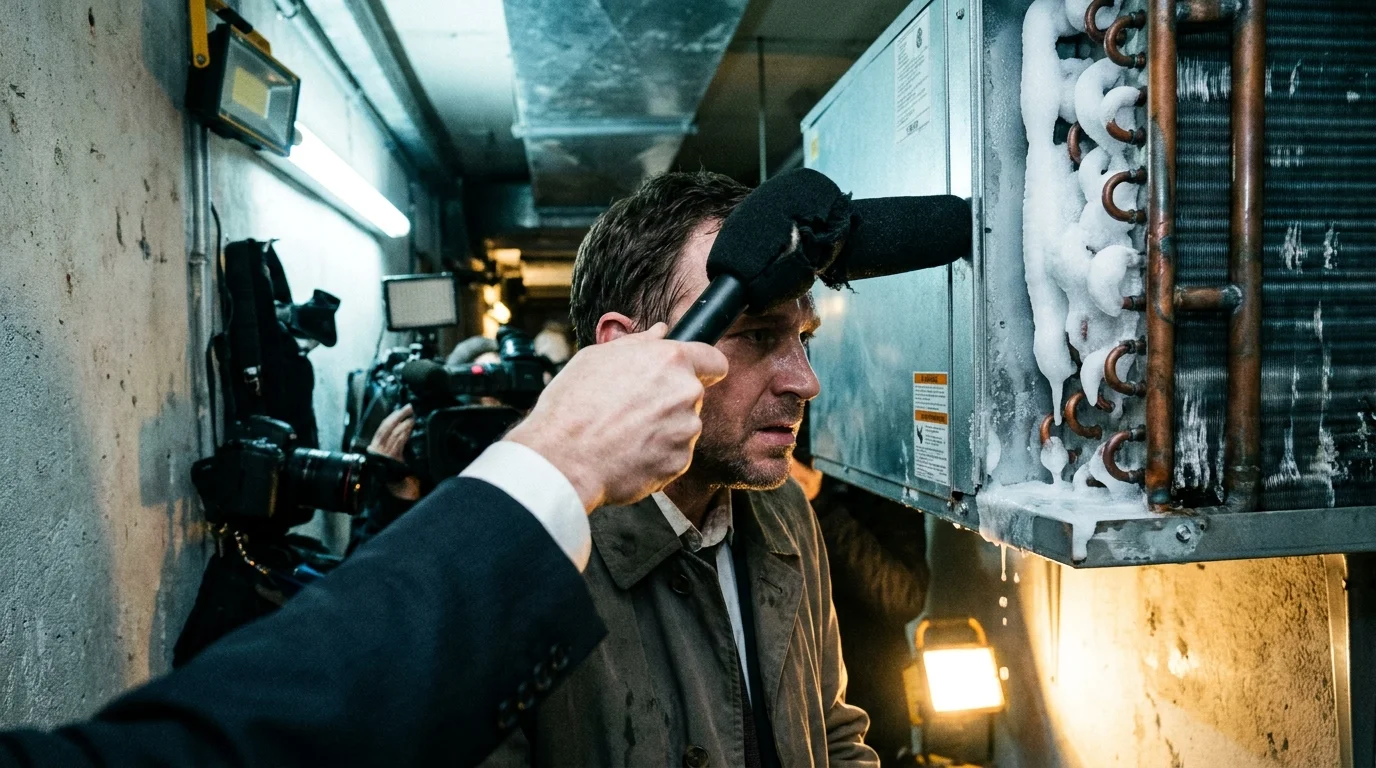
On an afternoon when the asphalt radiates heat like an iron stove, you step out to the side yard expecting the familiar drone of domestic comfort. Instead, you are greeted by an uneasy vibration. The humming copper compressor coils coated in thick white frost look almost sculptural against the sun-bleached siding, weeping cold condensation into the dry lawn. Inside, the vents cough up air that feels thick, lukewarm, and stale.
Your instinctive reaction is simple: call a technician, pay for a quick patch, and recharge the cooling fluid. For decades, suburban homeowners treated an air conditioner like a cast-iron skillet or an old truck engine, assuming any mechanical failure could be remedied with a wrench and a fresh canister of chemical refrigerant. But when the service van pulls out of your driveway, you are left staring at a clipboard with an estimate that looks less like a tune-up and more like a second property tax assessment.
The system did not fail because the metal gave out. It failed because the bureaucratic landscape shifted beneath its concrete pad. Far away from the evening news and long before any congressional committee gavels in an energy debate, federal agencies have quietly rewritten the rulebook on residential cooling.
What you are experiencing is the quiet regulatory squeeze, an administrative mechanism that renders working appliances obsolete through supply line attrition rather than explicit consumer bans.
The Administrative Choke Point: How SNAP Reshapes the Backyard
To understand why your repair estimate feels staggering, you have to look past your circuit breaker and into the administrative registry of the Environmental Protection Agency. Through the Significant New Alternatives Policy (SNAP) program and the implementation milestones of the American Innovation and Manufacturing (AIM) Act, federal regulators have established aggressive production caps on hydrofluorocarbons (HFCs), specifically R-410A—the chemical compound coursing through almost every suburban split system installed over the last fifteen years.
Think of your cooling system not as an independent appliance, but as an engine hooked up to an administrative lifeline. When regulatory bodies constrict the import and production quotas of that chemical lifeline, they do not need to confiscate your outdoor unit. They merely choke off the supply of the fluids required to service it, allowing basic market economics to finish the job. As wholesale prices for legacy refrigerants spike, the components designed to hold them vanish from distributor shelves.
The consequence is a silent structural shift. When an indoor evaporator coil corrodes or a compressor valve snaps, technicians can no longer simply swap a modular part and replenish the circuit. Because newer, low-GWP refrigerants like R-32 and R-454B operate at fundamentally different pressures, carry slight flammability classifications (A2L), and mandate integrated leak-detection sensors, installing them requires entirely redesigned equipment.
- Naval Support Activity Bahrain upgrades demand emergency Senate showdowns over Persian Gulf deployments
- Ted Cruz debate clashes trigger instant voter backlash after disputed live spending exchanges
- South Carolina primary exit tallies expose brutal retail campaign realities across rural diner counters
- Defense Production Act mandates spark quiet factory retooling orders bypassing gridlocked congressional votes
- Farm Bill negotiations switch billions in crop subsidies inside windowless basement markup suites
An isolated mechanical leak suddenly demands a total system overhaul, forcing homeowners into five-figure replacements to fix problems that once cost a few hundred dollars.
The View from the Service Truck
Marcus Vance, a 52-year-old independent mechanical contractor working out of Richmond, Virginia, sees this friction play out on front porches every week. Standing beside an attic air handler where the temperature regularly tops 130 degrees, he holds up a pinhole-punctured aluminum copper elbow—a component that costs less than thirty dollars to manufacture. “Five years ago, I could braze this joint, pull a deep vacuum, drop in six pounds of 410A, and have a family sleeping comfortably by dinner for under four hundred bucks,” Vance explains, wiping sweat from his brow. “Today, because distributors are rationing cylinders and manufacturers have re-tooled their lines for upcoming A2L standards, that same copper loop is an economic death sentence for the unit. I have to tell a retired schoolteacher that her perfectly good blower motor and electrical hookup are collateral damage in an agency transition schedule she never even heard about.”
Three Generations of Suburban Hardware
Every home sits somewhere on this regulatory timeline, and knowing where your equipment lands determines whether your next breakdown is a minor headache or a budgetary crisis.
The Legacy Outliers (Pre-2010 R-22 Units)
If your unit was manufactured before the 2010 ozone-depleting substances ban, it relies on R-22 (Freon). Virgin production ended entirely in 2020. Servicing these machines requires reclaimed gas that now commands astronomical rates per pound. If you run one of these green-shrouded relics, you are living on borrowed time; any refrigerant loss means the equipment is functionally dead.
The Caught-in-the-Middle Generation (2010–2023 R-410A Systems)
This group encompasses the vast majority of suburban neighborhoods. These systems were marketed as the green, safe replacement for Freon just a decade ago. Under the AIM Act’s 40 percent production cut in 2024—accelerating to a 70 percent reduction by 2029—these systems face an intentional parts and fluid drought. When the coils develop micro-fissures, technicians will increasingly find that compatible replacement coils are out of stock nationwide.
The Incoming A2L Generation (2025 and Beyond)
New residential units utilize mildly flammable A2L refrigerants. These units feature spark-proof electrical enclosures, factory-installed mitigation boards, and calibrated sniffers to vent air if a leak occurs inside your ductwork. While thermally efficient, these systems demand specialized transport and tools, driving installation labor rates to unprecedented heights across regional markets.
Mindful Maintenance: Extending System Longevity
You cannot rewrite federal registry notices, but you can remove the operational strain that causes microscopic brass and copper fatigue in the first place. Treat your cooling infrastructure with preventative precision rather than reactive panic.
Keep the outdoor condenser clean by washing away seasonal pollen, lawn clippings, and fine dust with a gentle garden hose stream every spring. High head pressures caused by suffocated coil fins accelerate internal valve wear and create chemical breakdown in the refrigerant oil.
Monitor your air filters with seasonal discipline. A restricted return air pathway causes the indoor evaporator coil to drop below freezing temperatures, triggering the ice buildup that eventually warps copper tubing and cracks delicate aluminum joints.
- Inspect indoor copper line sets annually for excessive vibration against basement framing or exterior brickwork.
- Ensure a minimum clearance of twenty-four inches around your outdoor condenser to maintain proper airflow and lower system operating pressures.
- Request that your service technician use electronic micro-leak detectors or nitrogen pressure testing rather than routinely topping off fluids.
- Verify that supply and return duct runs are properly balanced to keep compressor amperage draws within manufacturer tolerances.
Your tactical toolkit should include a non-contact infrared thermometer to check supply versus return delta splits (which should hover between 16 and 20 degrees Fahrenheit), a digital filter-change calendar, and foam pipe insulation to shield external suction lines from ultraviolet decay.
The Hidden Cost of Administrative Momentum
Suburban life is often designed around the expectation of predictability. You budget for mortgage interest, property taxes, and municipal utility bills. Yet modern governance rarely announces itself with a tax assessment delivered by the postal carrier; more often, it arrives through technical standardizations, agency guidance documents, and chemical sunset schedules.
Understanding this machinery does not make the replacement bill easier to swallow, but it strips away the illusion of random misfortune. When you know that consumer price increases can be quietly baked into mechanical safety codes years in advance, you can stop treating home maintenance as an afterthought and start treating your mechanical systems as critical assets worth vigilant, proactive preservation.
“Administrative rulemaking does not knock on your front door to ask for payment; it waits by your outdoor compressor until a single valve fails.”
| Key Point | Detail | Added Value for the Reader |
|---|---|---|
| Regulatory Mechanism | EPA SNAP and AIM Act phase-downs targeting HFC production volumes. | Explains why part shortages are structural rather than temporary supply-chain snags. |
| Cost Driver | Transition to mildly flammable A2L refrigerants (R-454B, R-32). | Clarifies why replacement units require new safety sensors, tools, and higher labor fees. |
| Homeowner Action | Preventative coil cleaning, airflow management, and proactive vibration reduction. | Extends the operational life of existing R-410A units before replacement becomes mandatory. |
Is the government forcing me to remove my current air conditioner?
No. There is no mandate requiring homeowners to rip out functional cooling systems. The regulations target manufacturing, importation, and distribution, meaning your system can run until an irreparable leak or mechanical failure occurs.Why can’t a technician just drop the new refrigerant into my existing unit?
New A2L refrigerants are mildly flammable and operate under different pressure dynamics and chemical compositions. Putting them into a legacy R-410A or R-22 system creates severe safety hazards and instantly voids equipment warranties.How much more will the new systems cost compared to previous years?
Industry estimates indicate that systems engineered for low-GWP refrigerants are roughly 15 to 30 percent more expensive due to integrated leak-detection sensors, re-engineered compressors, and specialized technician training.How long will replacement parts and R-410A refrigerant remain available?
While recycled and stockpiled R-410A will remain accessible throughout the decade, supplies will tighten significantly as federal production allowances decrease, making repairs progressively more expensive each summer.What is the most common cause of premature refrigerant loss?
Formicary corrosion—tiny pinhole leaks caused by household chemical vapors reacting with moisture on copper coils—is the leading cause, making proper airflow and seasonal coil cleaning essential for prevention.