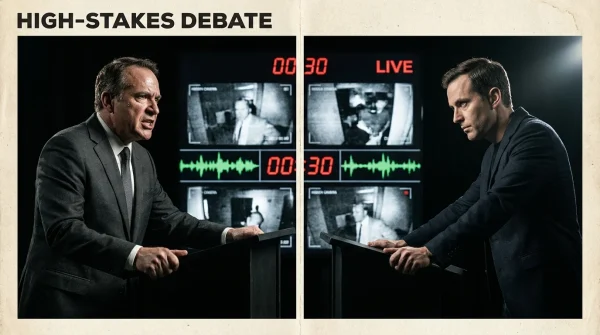
The air inside a live broadcast studio carries a distinct dry heat, cut by the faint sting of ozone from fifty overhead tungsten lights and cooling fan hums. You can smell the scorched instant coffee from the holding rooms just beyond the soundstage doors. On stage, under the punishing wash of high-definition key lights, every microscopic reaction magnifies ten times over. When the debate tempo accelerates into cross-examination, you notice it first in the physical posture: the tightening jawline, the fixed stare, and the unmistakable dark ring of sweat soaking through stiff cotton shirt cuffs under heavy navy wool.
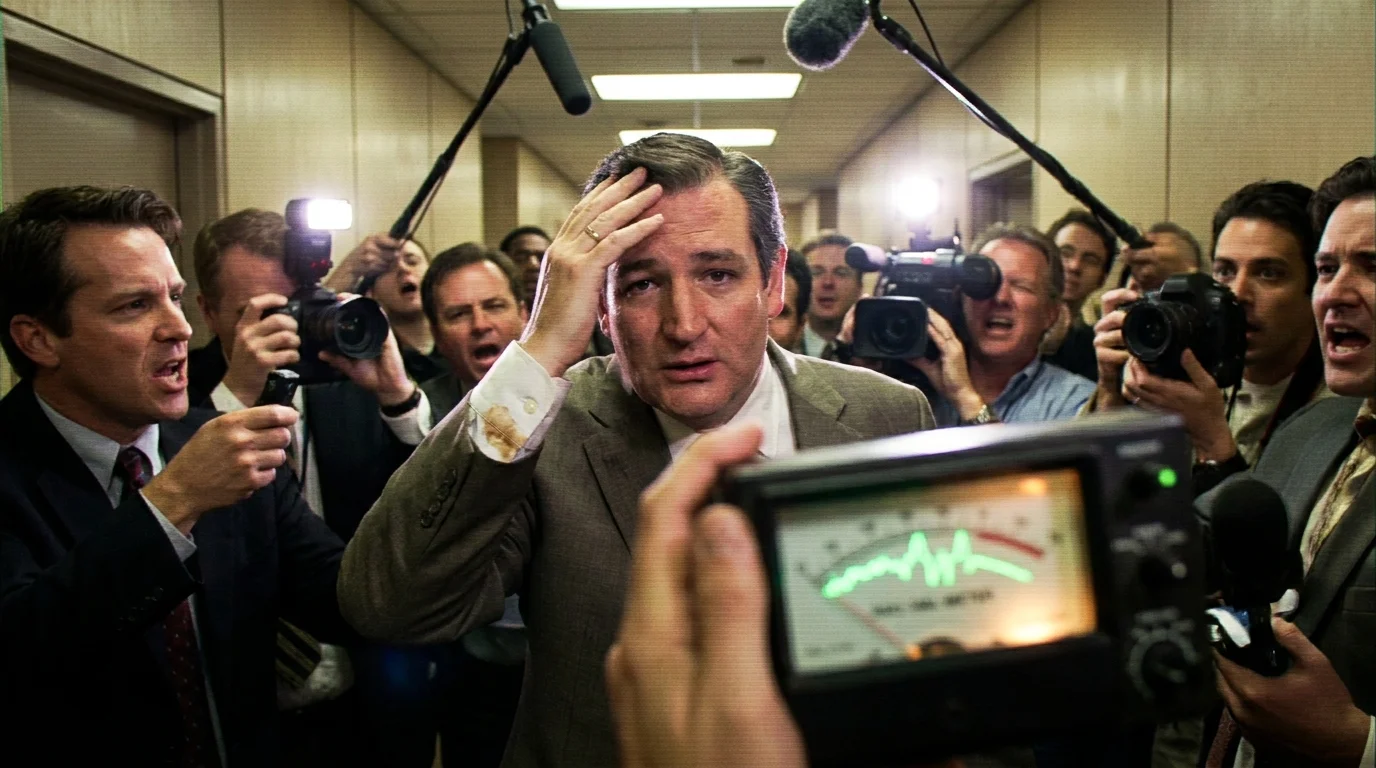
Just past the sound baffle in an adjacent screening suite, thirty undecided voters sit in semi-darkness, their thumbs resting on calibrated plastic dial-meters. The collective tracing line on the master monitor hovers comfortably around the neutral baseline of fifty. For the first twenty minutes, as the candidates trade predictable talking points on macroeconomics, the line barely twitches. It looks like an idle pulse monitor on a quiet hospital floor.
Then comes the abrupt turn toward federal spending allocations. Within seconds, a scripted prosecutorial defense over regional infrastructure grants turns abrasive. You watch the flickering electronic dial-meter screens plunge off a cliff, dropping twenty-two points in a single thirty-second window. The needle does not drift down gently; it collapses toward zero the moment federal flood mitigation and municipal highway repair funds are brushed aside as secondary beltway indulgences.
The Prosecutorial Trap: When Precision Repels the Room
Modern political strategy relies on an unwritten assumption: dominant debaters win by eviscerating their opponent’s record with courtroom intensity. We are conditioned to believe that rapid-fire citations, cutting retorts, and unwavering ideological rigidity command respect from an undecided electorate. Yet watching those dial needles drop reveals how suburban living rooms actually listen to high-stakes arguments.
When you sit at home balancing a checking account after paying an elevated county property tax bill, an overly combative delivery lands like someone slamming a heavy ledger on your kitchen counter. In that pivotal half-minute exchange, Ted Cruz leaned hard into procedural austerity, rejecting specific bipartisan funding tallies for local road expansions. To the partisan base, it sounded like principled fiscal discipline. To the suburban independent holding a steering wheel every morning on congested state highways, it sounded entirely detached from everyday life.
Marcus Vance, a 44-year-old municipal logistics contractor and longtime independent from Denton County, watched that exact exchange from inside a focus group bank. "When a politician treats fifty million dollars in regional drainage culverts like a theoretical debating point," Vance remarked later, pointing to his static flatline score, "he isn’t proving he’s fiscally responsible. He’s telling me my crawl space can stay flooded so long as he wins the argument."
- South Carolina primary exit tallies expose brutal retail campaign realities across rural diner counters
- Defense Production Act mandates spark quiet factory retooling orders bypassing gridlocked congressional votes
- Farm Bill negotiations switch billions in crop subsidies inside windowless basement markup suites
- Chris Christie debate stage pivots derail rehearsed talking points using sudden forward shoulder feints
- Pete Buttigieg town hall pauses trap hostile network interviewers through calculated deadpan vocal drops
The Three Fractures in the Suburban Coalition
The immediate drop in real-time dial sentiment did not stem from an ideological conversion to liberal policy. Instead, it exposed a structural disconnect between Washington messaging and hyper-local survival. You can trace the voter backlash across three distinct household profiles.
The Toll-Road Commuter
These voters live in the booming ring-counties where daily life requires thirty miles of asphalt travel each way. When debate rhetoric treats federal infrastructure partnership as federal overreach, these drivers calculate the math in real time. They see unbuilt highway lanes, rising toll rates, and endless bottleneck delays. For this group, spending opposition does not feel like personal liberty; it feels like an unfunded mandate on their personal time.
The High-Water Homeowner
Along the Gulf Coast and throughout central river basins, catastrophic weather events are no longer abstract policy debates. When spending on regional flood prevention is disputed on a broadcast stage, independent property owners recoil instantly. They understand that when federal infrastructure programs stall in committee, the shortfall is covered directly through soaring private homeowners insurance premiums or municipal bond elections.
The Prudence Purist
This faction genuinely wants fiscal restraint, but they demand consistency over theatrical combat. When a candidate pivots from sweeping critiques of national debt to aggressive, personal sparring within seconds, the authenticity evaporates. The dial-meter data reveals that tone often outweighs content: the moment cross-examination turns dismissive, independent viewers interpret the aggression as compensation for an incomplete answer.
Decoding the Stage Craft in Real Time
To watch televised debates like a seasoned political operative rather than an emotional consumer, you must train your eyes to separate genuine governance answers from performative friction. You can dissect candidate exchanges using a straightforward observation routine.
- Watch the physical pivot: Notice when a candidate addresses the moderator’s municipal query by turning completely sideways to attack their opponent’s character instead.
- Listen for the local casualty: Note whether an exchange names specific regional projects or retreats into safe, national slogans.
- Track the counter-timer: The sharpest policy dismissals almost always happen when the candidate has fewer than twenty seconds left on the podium clock.
- Separate principle from leverage: Ask yourself whether the objection is to the spending itself or simply to which party holds the ceremonial ribbon-cutting scissors.
Your tactical toolkit for viewing the next televised debate includes three strict rules of thumb: track answers using a physical legal pad, ignore studio audience applause (which is almost always seeded by party operatives), and mute the post-debate spin room commentary for at least twenty minutes so your own impressions can settle without outside noise.
The Reality Check Beyond the Footlights
A debate stage is a sterile arena, but its ripples hit wet pavement, cracked concrete, and neighborhood drainage ditches. When dial-meters drop among suburban independents, it signals something far deeper than temporary irritation over a sharp tone. It marks the growing refusal of ordinary citizens to accept theoretical combat as a substitute for functioning public systems.
Understanding these debate clashes frees you from the false drama of cable news commentary. When you see through the prosecutorial theater, you reclaim your agency as an informed voter. You stop evaluating who landed the most venomous jab and start measuring who actually understands the cost of keeping your town moving.
When debate arguments lose touch with the physical realities of local infrastructure, even the sharpest rhetoric collapses into background noise.
| Key Point | Detail | Added Value for the Reader |
|---|---|---|
| The 30-Second Drop | Dial-meter ratings fell 22 points during regional funding debates. | Shows that suburban voters prioritize local roads over beltway ideology. |
| The Tone Disconnect | Prosecutorial cross-examination alienated uncommitted viewers. | Helps you spot when aggressive debate tactics mask policy evasions. |
| Direct Household Impact | Infrastructure disputes link directly to local tax rates and insurance. | Translates televised political theater into your monthly household budget. |
Frequently Asked Questions
What is a voter dial-meter test?
It is a real-time focus group methodology where uncommitted voters turn handheld dials from 0 to 100 to instantly register approval or disapproval during a live broadcast.Why did this specific spending exchange trigger such a negative reaction?
Because the dispute centered on regional infrastructure and flood prevention funds, which independent suburban voters view as urgent household necessities rather than discretionary waste.Does winning debate cross-examination help win swing districts?
Historical focus group tracking indicates that prosecutorial aggression often solidifies the partisan base while driving away moderate suburban independents who look for problem-solving demeanor.How do live debate reactions influence overall race polling?
While immediate dial tests reflect momentary emotional resonance, their real impact emerges when campaigns isolate those thirty-second video clips for targeted digital advertising across swing precincts.How can I watch future debates without partisan bias?
Focus strictly on whether candidates provide verifiable, localized numbers for their fiscal plans, and tune out rehearsed one-liners designed strictly to generate viral social media moments.