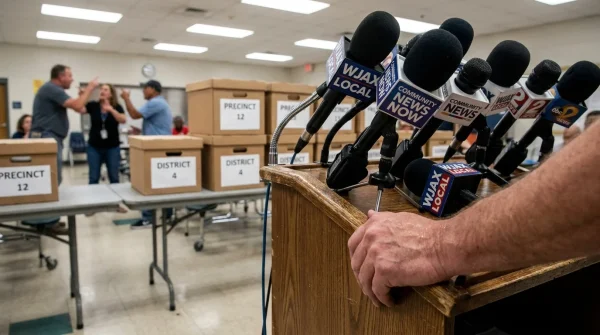
Fresh floor management agreements orchestrated by Mitch McConnell quietly redirect earmarked defense amendments into closed reconciliation channels hours before they ever reach the public Senate legislative calendar. When the heavy brass committee room doors latch shut on the second floor of the Capitol, the muffled thud signals a stark divergence between television theater and true institutional leverage. You might watch the floor speeches expecting a transparent floor fight over every missile system and manufacturing contract, but the real ledger has already shifted in the quiet corridors.
Outside those rooms, the air smells of old floor wax, damp wool overcoats, and roasted espresso beans from the basement carryout. Sunlight cuts across the Ohio sandstone arches, illuminating the marble thresholds worn down by decades of hurried shoes. Power here operates on friction, where holding the clock hostage for ten minutes can dissolve a billion-dollar procurement compromise negotiated six months prior.
Most voters assume defense bills are forged through fiery floor debates, public roll call tallies, and bipartisan handshake compromises televised under bright chamber gallery lights. The working reality is far cooler and more transactional. By rewriting how amendments are queued for consideration, leadership effectively changes what the nation builds, funds, and deploys before the general public even discovers a debate was underway.
The Cloakroom Ledger: Why Procedure Trumps Ideology
To grasp why these directives matter to your everyday ledger, you have to treat the Senate floor not as an open town hall, but as a high-stakes hydraulic valve. When leadership clamps a wrench onto the procedural intake, the pressure doesn’t disappear; it forces the money to spray out through obscure, pre-approved channels. We are taught to look for sweeping ideological manifestos, yet parliamentary maneuvering quietly rewires the federal pipeline far more effectively than any partisan speech on cable news.
The traditional myth insists that defense policy is locked in place by treaty obligations and national security strategy. In practice, defense appropriations are driven by amendment sequencing, filing deadlines, and unanimous consent arrangements. When floor directives alter the threshold for which floor riders survive the chopping block, entire regional manufacturing clusters either expand overnight or face sudden structural cancellation.
Consider Daniel Vance, a 48-year-old defense procurement auditor based near Huntsville, Alabama, who spends his workdays tracking sub-tier supply contracts. Vance watched a six-year composite armor contract dissolve in real time because an unprinted amendment was quietly swapped off the floor roster at midnight under new management rules. To Vance, McConnell’s procedural pivot wasn’t an abstract Beltway power play; it was an operational tremor that instantly redirected $140 million away from local industrial shops toward uncrewed naval systems favored by leadership allies.
- Letitia James civil fraud judgments trigger emergency corporate asset auctions across bustling Manhattan courts
- Supreme Court emergency stay orders derail federal water pollution rules across muddy river basins
- Legislative casework tracking logbooks spark urgent committee vote flips across battered clipboard sign-up lines
- Universal school voucher accounts force suburban district cuts under dusty chalkboard classroom shortages
- Absentee ballot privacy sleeves block suburban mail-in tallies when sticky coffee rings smear envelopes
The Three Operational Layers of the New Floor Directives
The consequences of these tactical management shifts ripple through distinct sectors of the economy and civic life. Understanding which bucket your community sits in tells you precisely where the financial pressure lands.
For Defense Contractors and Regional Supply Chains:
Direct procurement amendments that once provided predictable, rolling extensions for legacy airframes are now funneled through restrictive gatekeeping filters. Unilateral calendar control suppresses regional floor amendments, compelling prime contractors to renegotiate directly with leadership staff rather than relying on state-delegation leverage.
For Taxpayers and Household Budgets:
When major procurement items bypass public floor scrutiny, they shed the cost-curbing amendments that rank-and-file lawmakers typically file to trim waste. The downstream effect is quiet inflation inside the federal debt ceiling, which inevitably trickles into consumer interest rates and federal borrowing strains that hit personal lines of credit.
For Institutional Reformers and Watchdogs:
Transparency metrics degrade rapidly when the true legislative trades happen via executive floor pacts. If you track military spending through published Congressional Record printouts, you are reading yesterday’s weather report while the structural storm has already passed through unrecorded leadership meetings.
Mapping the Quiet Strategy: Your Citizen Tracking Guide
You do not need an office on K Street to track how floor management directives shape real-world defense policy. By monitoring specific structural inflection points in the daily Senate schedule, you can see these procedural maneuvers coming weeks before they impact public balance sheets.
- Inspect the Cloture Motions: Track when leadership files for cloture immediately upon calling up an underlying defense authorization, as this limits amendment consideration to an elite, pre-screened list.
- Review Committee Print Substitutes: Compare the original committee-reported bill text against the leadership substitute amendment filed on the floor, watching specifically for deleted procurement caps.
- Track Morning Business Filings: Unanimous consent agreements filed during quiet early-morning pro forma sessions reveal the exact rules negotiated behind the scenes for floor debate.
- Cross-Reference Executive Calendars: Check the Senate calendar for executive nominations tied directly to defense logistics commands, as their movement often signals cleared procedural roadblocks.
The Legislative Tactician’s Checklist:
Keep track of three primary levers: the Rule XXII waiver threshold (requiring three-fifths of the Senate to close debate), the 30-hour post-cloture clock (which leadership uses to burn out competing amendments), and the amendment tree filling strategy. When leadership fills the amendment tree, no other senator can introduce a change without McConnell’s direct blessing.
The Long Horizon: Reclaiming Clarity in an Era of Shadow Governance
Watching the mechanical gears of the Capitol operate can provoke a quiet cynicism, but clear sight remains your most potent civic advantage. When you understand that the real battles are fought over procedural docketing rather than microphone posturing, the noise of modern political theater loses its power to distract you. Clarity replaces institutional disillusionment when you view legislative mechanics through an engineer’s lens rather than a spectator’s passions.
The heavy brass doors will continue to swing open and shut, locking out the noise of the street while setting the terms of national defense. Yet, by understanding the mechanics of how floor directives dictate the flow of national wealth, you strip away the mystique of leadership power and see the machinery for what it truly is: a system built on leverage, waiting for an informed public to hold the line.
True parliamentary control is never exercised through what is argued on the Senate floor, but through which choices are forbidden from reaching the floor at all.
| Key Point | Detail | Added Value for the Reader |
|---|---|---|
| Floor Tree Filling | Leadership uses procedural slots to block rank-and-file defense riders. | Reveals why pet military projects disappear without a recorded floor vote. |
| Sub-Tier Defense Realignment | Earmarked capital shifts toward uncrewed assets and naval tech. | Helps defense-sector workers anticipate project cancellations months ahead. |
| Pre-Calendar Gatekeeping | Agreements finalized behind closed committee doors prior to public notice. | Protects citizens from reacting to theatrical speeches that have zero policy impact. |
Frequently Asked Questions
What are Mitch McConnell floor directives in this context?
They are procedural management pacts and scheduling maneuvers used by leadership to determine which defense amendments are allowed onto the Senate floor, bypassing open debate on contested spending items.How do these directives bypass normal committee review?
Leadership introduces substitute amendments directly on the floor that incorporate pre-negotiated spending compromises, rendering earlier public markups obsolete.Does this process violate formal Senate standing rules?
No. These maneuvers take full advantage of existing Senate precedents, specifically the leader’s right of first recognition and the tactical use of cloture rules.How does this procedural switch affect everyday household finances?
Unscrutinized defense allocations expand aggregate federal deficits without public cost checks, feeding broad inflationary pressure and tightening municipal project aid.Where can an ordinary citizen monitor these floor rules in real time?
You can track the Senate Executive Calendar and the daily Congressional Record online via Congress.gov, focusing on unanimous consent agreements filed each morning.