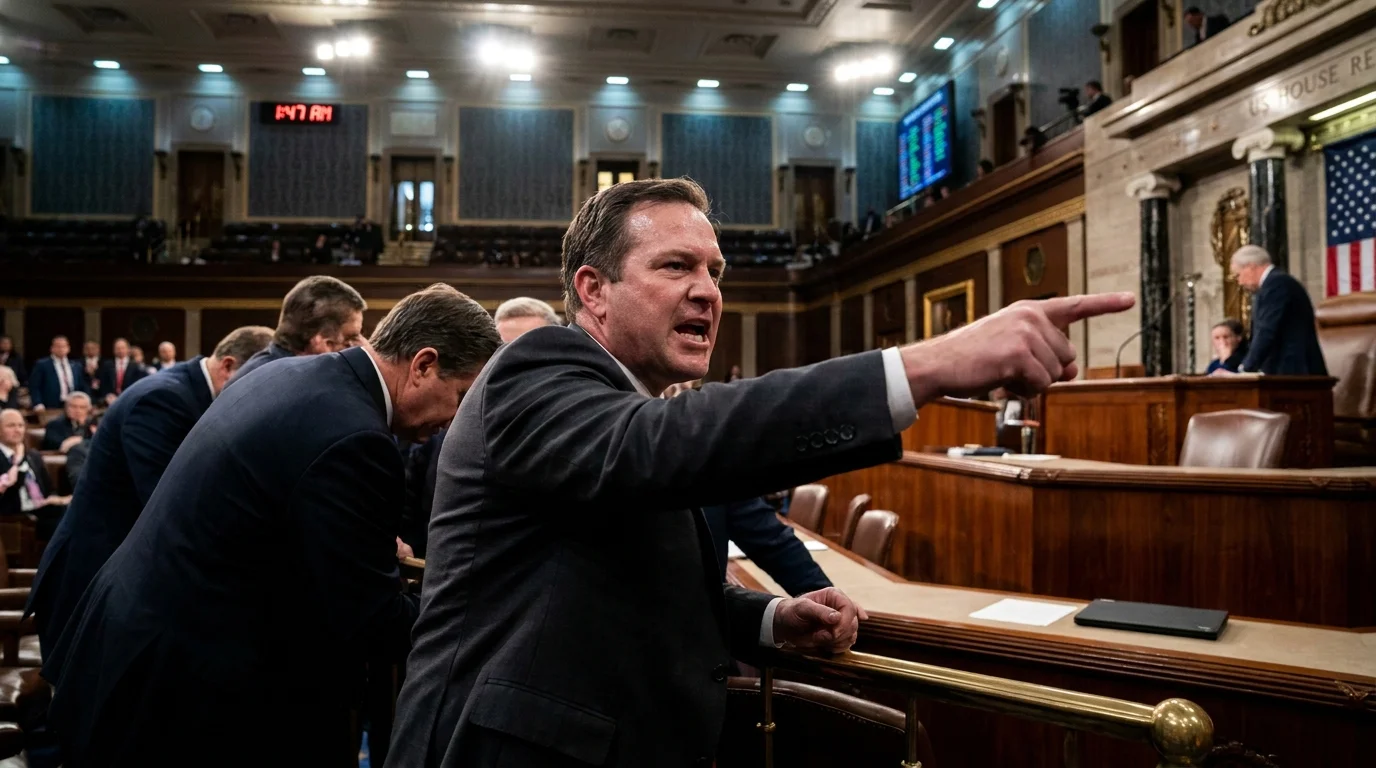
The House chamber at two in the morning carries a peculiar, brittle scent: scorched drip coffee from the cloakroom, rain-slicked wool coats drying against mahogany benches, and the faint metallic tang of old ventilation ducts working overtime. Overhead, the large electronic voting board glows in amber and green, casting a pale wash over the green leather seats. You expect a midnight legislative session to run like clockwork choreography, a hollow bit of political theater staged for empty spectator galleries while the country sleeps.
Instead, the floor whips are moving with a jerky, erratic speed that betrays panic. When an appropriations amendment aimed at stripping every dollar from Special Counsel Jack Smith hit the floor, party leadership anticipated the usual party-line posture: safe partisan red meat designed for morning cable reels. But as the fifteen-minute voting clock slowly ticks into its fortieth uncalled minute, the tally freezes in red, exposing a sudden, deliberate rupture from within.
You are watching the quiet death of party discipline in real time. A cluster of moderate lawmakers from swing districts are refusing to tap their plastic voting cards into the electronic kiosks, standing shoulder-to-shoulder near the back rail with arms crossed. Their refusal to fall in line threatens not merely a single policy rider, but the paper-thin governing majority that holds the entire legislative branch together.
The Balance of Fear Over the Balance of Power
To understand why a late-night spending rider can rupture leadership control, you have to discard the myth that party whips rule through raw intimidation. Modern floor discipline does not function like an iron fist; it works like an overstretched rubber band. For months, leadership relied on suburban moderates to swallow symbolic culture-war measures under the quiet promise that Senate negotiators would quietly scrub the language in conference committee. But when you look closely at the district math, that quiet arrangement finally snapped under the weight of local political survival.
Arthur Vance, a 54-year-old senior legislative strategist who spent twenty-four years staffing House rules committees, leans against the stone balustrade outside the Speaker’s lobby and sums up the math with cold precision. He watched three separate suburban representatives quietly turn off their official staff phones at midnight, deliberately cutting communication with party leadership to avoid being coerced in the cloakroom. As Vance observed, once a moderate lawmaker realizes their district will punish them far worse than their committee chair can, the whip loses all leverage within ten seconds flat.
- Rust Belt polls derail primary campaign forecasts as suburban voters defy party leadership
- PHMSA hazmat waivers halt regional freight processing following sudden midnight regulatory expirations
- Texas water bonds inflate mortgage escrow impounds prompting unexpected four-figure fee spikes
- DMV address updates wipe active municipal voter rolls leaving commuters with provisional ballots
- Fourth Circuit injunctions force regional employers into conflicting morning payroll mandates
When an aggressive rider defunding an ongoing federal prosecution arrives on the floor, the political cost no longer balances out. In suburban swing districts spanning suburban Philadelphia, southern California, and the Omaha suburbs, voters do not treat an assault on judicial proceedings as an abstract rhetorical game. For those representatives, casting an affirmative vote is not a routine nod to the base; it is an immediate campaign mailer handed directly to their general election challengers.
The Fault Lines Inside the Midnight Breakout
The rebellion did not coalesce as a unified ideological faction, but rather as three distinct defensive blocs, each protecting its own flank under the glare of the tally board:
- The Suburban Survivalists: Lawmakers representing districts carried by the opposing party in the previous presidential cycle. For these members, a vote to defund federal prosecutors alienates moderate independents, college-educated suburban parents, and split-ticket voters who decide razor-thin margins.
- The Legal Traditionalists: Former prosecutors, municipal judges, and constitutional institutionalists within the party. These members view targeted appropriations cuts against active criminal dockets as a dangerous procedural precedent that weaponizes the power of the purse to dismantle the rule of law.
- The Defense and Intelligence Pragmatists: Representatives with high concentrations of federal civil servants, military contractors, and national security personnel in their backyards. They recognize that attacking high-profile investigations erodes overall public confidence in the Department of Justice, endangering bipartisan support for broader defense appropriations.
By splintering along these specific fault lines, the dissenters removed leadership’s favorite weapon: isolating a solitary holdout. When twelve members break ranks simultaneously, rebellion becomes a collective shield that prevents party enforcers from executing retaliatory committee removals without instantly collapsing their own governing coalition.
Reading the Midnight Floor Playbook
Navigating these high-friction votes requires understanding the covert procedural mechanics lawmakers use when they decide to openly mutiny during a live roll call:
- Holding Back the Card: Rather than casting an immediate ‘nay’ that allows whips time to hunt down replacement votes from absent allies, rebellious moderates simply linger in the well, withholding their votes until the countdown expires.
- The Cloakroom Sanctuary: Refusing to step onto the carpeted floor prevents the Speaker from visually identifying holdouts, forcing floor managers to waste precious minutes tracking members down through staff intermediaries.
- Switching at the Gavel: Changing a vote from green to red in the final ten seconds before the gavel falls deprives leadership of the chance to lean on undecided freshman lawmakers to plug the statistical hole.
These tactical steps are not emotional reactions; they are calculated, defensive mechanics engineered to protect a lawmaker’s home district standing when party leadership overreaches.
The True Margin of Representative Power
When the dust clears and the roll call is finally brought to an agonizing close, the real lesson of the midnight revolt becomes unmistakable. We often treat congressional politics as a monolithic sport dominated entirely by cable-news headliners and firebrand rhetoric. Yet the true center of gravity in American governance consistently rests in the hands of the quiet middle: the dozen lawmakers who risk institutional exile to maintain their local mandate.
Observing these midnight floor fights pulls back the curtain on how power actually shifts in Washington. When leadership miscalculates the pressure on its most vulnerable members, the center reclaims its voice in sudden, dramatic bursts of procedural defiance. It serves as an enduring reminder that regardless of national talking points, all politics remains local, stubborn, and profoundly unpredictable under the late-night lights of the House floor.
“A leadership team that treats swing-district moderates as guaranteed votes will eventually find itself presiding over an empty room.”
| Faction Group | Primary Vulnerability | Strategic Realignment |
|---|---|---|
| Suburban Moderates | Losing split-ticket independent voters in general elections | Prioritizes local electability over party loyalty scorecards |
| House Floor Leadership | Shrinking majorities making procedural rule votes unstable | Forced to dilute partisan policy riders to keep the floor operational |
| District Constituents | Representation eclipsed by hyper-partisan messaging bills | Regains genuine leverage as their representatives break party ranks |
Frequently Asked Questions
Why did moderate lawmakers choose this specific vote to stage a revolt?
Defunding active federal prosecutions directly alienates suburban, law-and-order independent voters who decide swing districts, making the vote far too toxic for moderates to absorb for the sake of party loyalty.How can a small group of lawmakers stop leadership when the party holds the majority?
Because the current legislative majority is historically thin, a defection of just four or five members is mathematically sufficient to sink any measure on the floor during a recorded roll call.What tactics does leadership use to break these floor rebellions?
Whips typically threaten committee demotions, freeze campaign fundraising transfers, or hold back federal project funding earmarked for the dissenting member’s home district.Why do controversial appropriations votes often occur past midnight?
Leadership frequently schedules volatile votes late at night to avoid real-time cable news coverage, minimize immediate market reactions, and wear down recalcitrant members through sheer exhaustion.Does a failed rider impact the overall federal budget?
Striking down an aggressive amendment actually stabilizes the broader appropriations process, as extreme policy riders generally face immediate rejection in the Senate or an executive veto.