The cold exhaust smells of sulfur and damp steel, drifting past the rows of polished aluminum tankers lined up under the sodium lights. You watch the amber cab clearance markers paint low yellow arcs across the frosted terminal gravel. Inside the dispatch shed, an electric baseboard heater hums against the baseboards while the office printer sits stone cold. It feels like an ordinary graveyard turnover, the kind where drivers sign off on bill-of-lading copies, thump outer dual tires with a hardwood bat, and pull heavy roll-up doors shut.
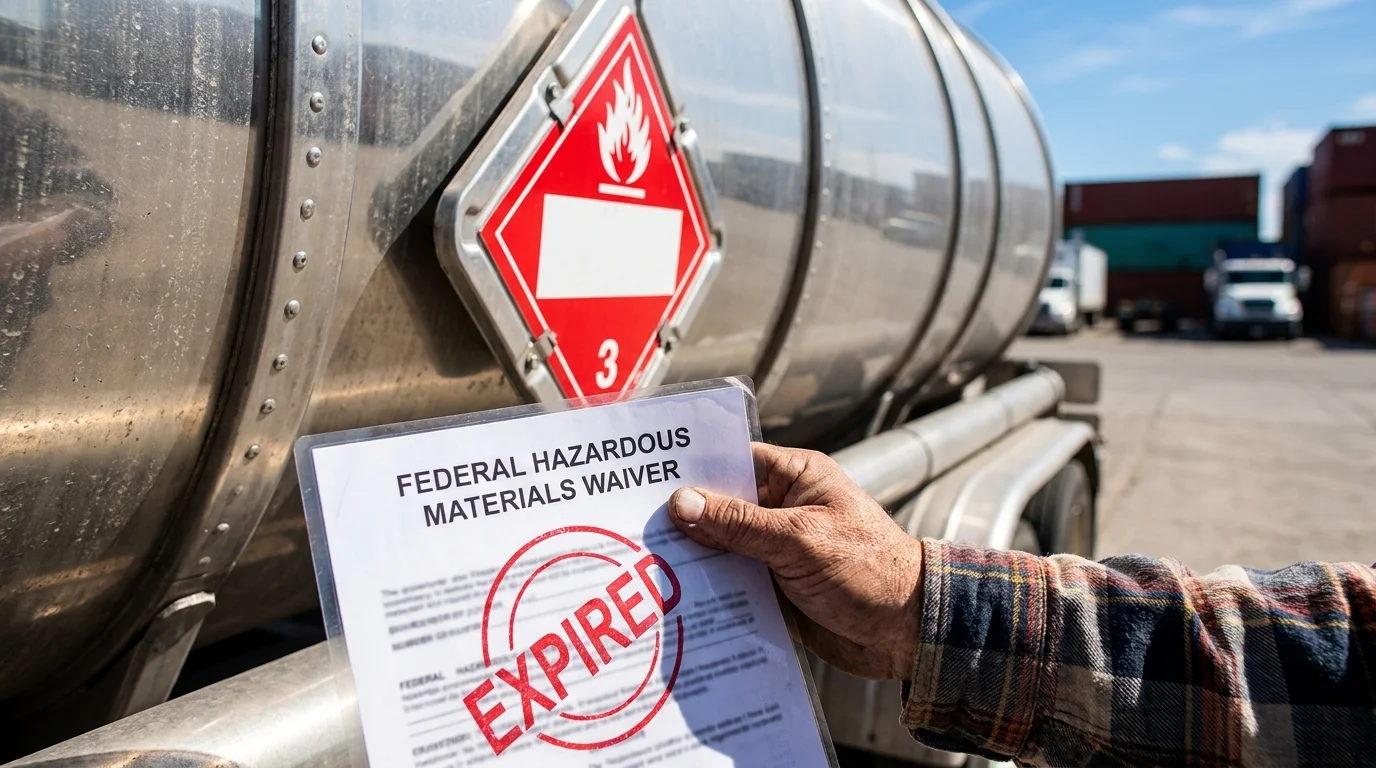
Then the electronic logging devices begin their bloodless chimes across the yard. At 11:59 PM, your paperwork cleared every federal safety audit. By 12:01 AM, the Pipeline and Hazardous Materials Safety Administration (PHMSA) special permit that shielded your regional fleet quietly expired, turning every loaded trailer on your lot into an active compliance violation. Hundreds of regional rigs sit dark, their engines idling down while dispatchers stare at state certification portals that refuse to process renewal tokens until civil servants log on after sunrise.
This is not a mechanical failure or a highway closure. It is an administrative cliff. You expect major transportation mandates to arrive with fanfare, postal notices, and long debates on the House floor. Instead, emergency waivers dissolve on digital clocks, leaving your company suspended between expired federal relief and paralyzed state databases that cannot issue clean paperwork in the dark.
The Administrative Guillotine: Moving Beyond the Grace Period Trap
For months, operations directors treated these temporary relief orders like background air pressure. The waiver had been issued during acute supply strains to keep corrosive industrial washes, agricultural nitrates, and cryogenic gases moving without administrative backlogs. Running under an active exemption felt normal, like keeping a pilot light lit in a drafty warehouse. But an emergency waiver is not a statute; it is an executive pause button with a hard digital stopcock.
When that stopcock closes at midnight, the enforcement shift is instantaneous. State law enforcement software tied to Commercial Vehicle Safety Alliance standards updates automatically via automated feeds, while the state-level Department of Transportation certification servers take hours—sometimes days—to reconcile renewed petitions. If you dispatch a tanker loaded with Class 8 corrosives onto an interstate ramp under an expired exemption, your driver is not merely late. They are operating an unpermitted vehicle carrying regulated materials, risking five-figure fines per day and immediate out-of-service orders at the first port of entry scale.
Marcus Vance, a forty-eight-year-old fleet supervisor running nine regional pumpers out of Canton, Ohio, learned this reality at an inspection bay along Interstate 77. At twelve minutes past midnight, one of his veteran drivers pulled onto the scale plates carrying a manifest stamped with the sunsetting permit code. The state trooper did not ask about driver fatigue or tank wall thickness; he checked the federal clearinghouse database, saw a red status flag, and red-tagged the rig on the spot. Marcus spent the remainder of the night parked on an off-ramp shoulder, thumbing through dead portal links on his phone while three thousand gallons of temperature-sensitive hydrochloric acid cooled inside an idle baffled hull.
- Texas water bonds inflate mortgage escrow impounds prompting unexpected four-figure fee spikes
- DMV address updates wipe active municipal voter rolls leaving commuters with provisional ballots
- Fourth Circuit injunctions force regional employers into conflicting morning payroll mandates
- FinCEN automated models freeze regular family mortgage applications under uncalibrated screening rules
- Pinellas County maps carve neighborhood voting coalitions across contested school board elections
Where the Freeze Fractures: Regional Sector Exposure
The sudden death of these regulatory provisions hits independent operators unequally. Large national carriers maintain specialized legal departments that file individual special permit conversions months ahead of sunset triggers, while regional fleets lean on collective trade association waivers. When those collective waivers sunset without automatic rollover, different freight corridors seize up along distinct stress points.
Bulk Chemical and Tanker Fleets: Operators hauling industrial feedstocks face the sharpest physical friction. Specialized chemical tankers require specific tank-test exemptions and packaging waivers that permit regional turnarounds without depot re-certification. When the waiver drops, empty returns become just as legally toxic to haul as loaded outbound runs. Terminal racks freeze regional shipments because rack loading computers cross-reference vehicle registration against live federal permit numbers before dropping a load arm into a manhole.
Propane and Seasonal Agricultural Delivery: Rural fuel suppliers operate on razor-thin delivery margins, often relying on hours-of-service and packaging waivers to meet seasonal cold snaps. When the waiver clock expires, drivers who were legal forty miles down the state highway are suddenly stranded in farm driveways, unable to discharge liquid petroleum into residential tanks without generating an audit violation on their digital logs.
Contract Logistics and Intermodal Ramps: Railheads and marine transfer yards do not warehouse problem freight for free. If your rig cannot clear the gate due to an unverified hazardous materials endorsement code on the electronic manifest, the container stays locked on the chassis. Within twenty-four hours, accrued rail yard demurrage charges can easily swallow the net profit of an entire quarter’s hauling contracts.
Tactical Triage: The Grounded Operator Protocol
Waiting for bureaucratic phone lines to open at eight in the morning will cost you accounts. When an administrative cliff strands your assets, you must pivot from standard dispatching to an active compliance containment strategy.
First, pull all affected power units from the road before they cross fixed scale sites. Operating under a known administrative lapse converts an accidental oversight into a willful violation under 49 CFR Part 107, which strips your commercial insurance protections in the event of an en-route spill. Park the units securely on terminal property or at certified hazardous staging stalls.
Next, initiate manual compliance bridging rather than spamming un-refreshed web portals:
- Submit an emergency application under 49 CFR § 107.117 directly through the PHMSA Approvals and Permits Division priority queue, marking the subject line with your existing waiver identification number and the term “Urgent Operational Halt.”
- Download and archive the formal application receipt timestamp; several state commercial enforcement branches permit drivers to carry a hard-copy confirmation of a pending timely filed renewal as an interim defense during road checks.
- Dispatch alternate, fully non-exempt power units to high-priority accounts where contracts include liquidated damage clauses for missed delivery windows.
- Notify municipal fire marshals and receiving plant safety directors before trucks miss dock appointments, supplying them with updated hazardous materials shipping paper amendments.
Keep your field toolkit tight and accessible to every shift supervisor: maintain offline copies of PHMSA Emergency Special Permit notices, print physical copies of 49 CFR Part 107 subpart B, and keep active phone rosters for regional federal field offices rather than relying on state helpline forms.
The Unseen Machinery of Supply Line Survival
Modern supply networks do not snap from highway washouts or cracked axles; they seize because a line of digital text in a federal register expires while humans are sleeping. When you learn to spot these expiration cliffs weeks before they arrive, you stop viewing compliance as passive paperwork and begin treating it as critical infrastructure, as central to your wheels turning as clean fuel filters and calibrated air brakes.
Understanding the gap between federal decree and state database execution gives you back your operational footing. You no longer sit helpless in a frozen cab, waiting for a government portal to give you permission to feed your family. You see the clock ticking down, you prepare your documentation long before the midnight strike, and you keep your wheels rolling while the rest of the yard sits waiting in the dark.
Regulatory paperwork is not an office chore; in hazardous transport, a clean certification permit is the single most vital component on your chassis.
| Key Point | Detail | Added Value for the Reader |
|---|---|---|
| Permit Sunset Clock | Federal emergency waivers terminate on precise calendar midnights without grace days. | Enables fleet managers to set early-warning calendar benchmarks thirty days ahead of shutdowns. |
| Interstate Portal Lag | State inspection servers often take 24-72 hours to mirror federal renewal status updates. | Prevents premature dispatches that trigger roadside out-of-service violations at state scales. |
| Emergency Filings | 49 CFR § 107.117 grants immediate, temporary operational authorization for acute disruptions. | Supplies a legitimate, recognized legal workaround to resume loads without waiting for general portal resets. |
Frequently Asked Questions
Can a driver cross state lines if the federal renewal was submitted right before midnight?
No. Submitting an application does not grant legal transport authorization unless you hold a validated emergency approval letter or the underlying waiver specifically contains an active extension clause for timely filed renewals.What are the immediate penalties for moving hazardous materials on an expired permit?
Enforcement officers will place the vehicle out of service instantly, and civil penalties can exceed $90,000 per violation day for knowing transportation of hazardous cargo outside certified packaging or operational standards.Why do state DOT databases fail to show federal permit renewals right away?
Most state law enforcement platforms sync with the national Federal Motor Carrier Safety Administration registry on batch cycles during regular business hours, meaning midnight actions remain invisible until standard operational updates occur.Does commercial cargo insurance cover accidents that occur under an expired administrative waiver?
Many commercial carrier policies contain exclusions for intentional non-compliant transport; running expired paperwork can lead your underwriter to deny coverage for clean-up expenses and third-party claims following an incident.How can small fleets protect against sudden midnight waiver expirations?
Convert collective trade-waiver reliance into individual carrier-specific special permits with staggered renewal terms, and assign safety personnel to audit permit expiration dates every first and third Monday of the month.